Maglev trains
Magnetically levitated trains achieving high speeds without wheels.
Last updated

Chainwit. · CC BY 4.0
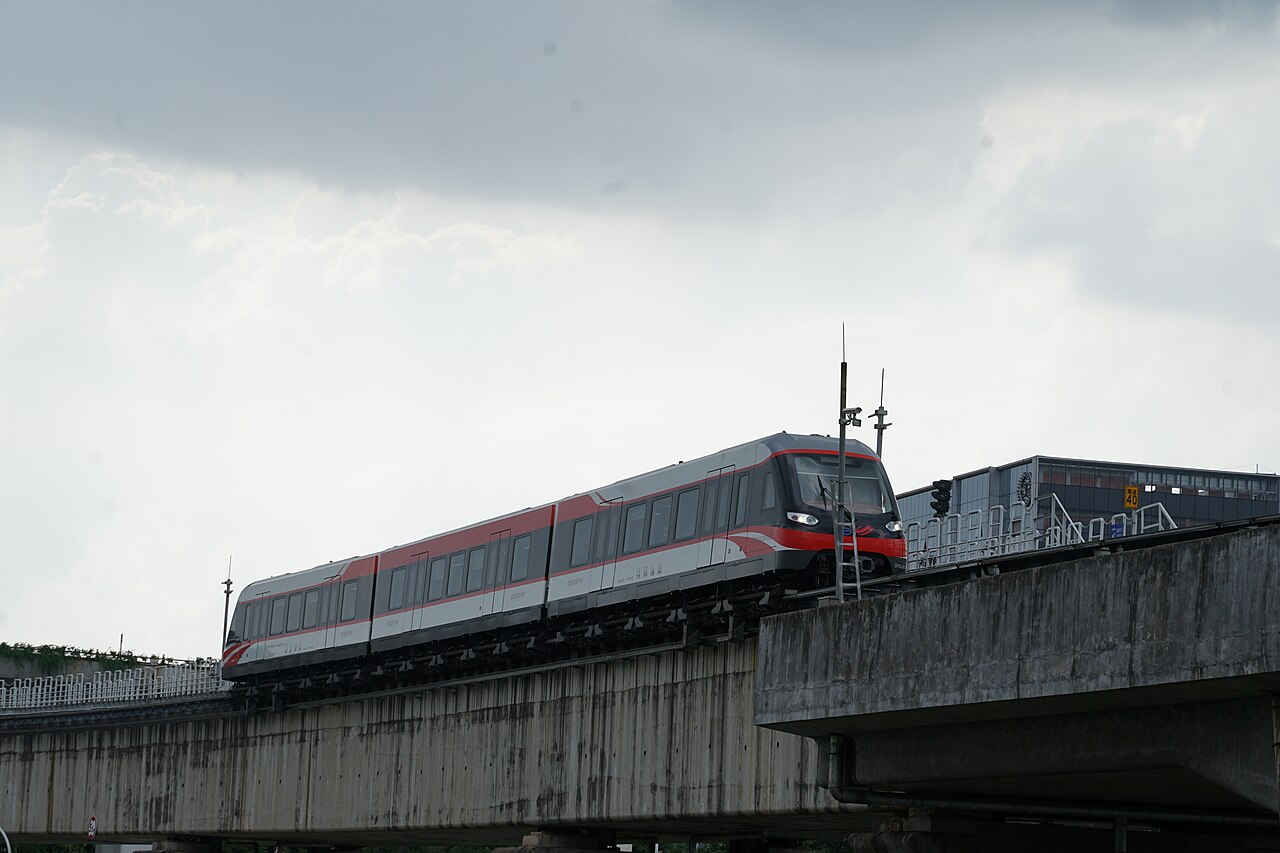
Maglev trains use magnets to levitate and propel vehicles without wheels, allowing higher speeds and lower maintenance than conventional railways.[1][2] The first commercial maglev system opened in 1984 near Birmingham, England, operating a 600-meter shuttle at up to 42 km/h.[3] By 2018, the count of maglev lines in revenue service globally stood at six, with China hosting four, Japan one, and South Korea one.[4]
Quick Facts
- Number of operational systems
- Six (four in China, one in Japan, one in South Korea)
Facts from the source article.
How it changed
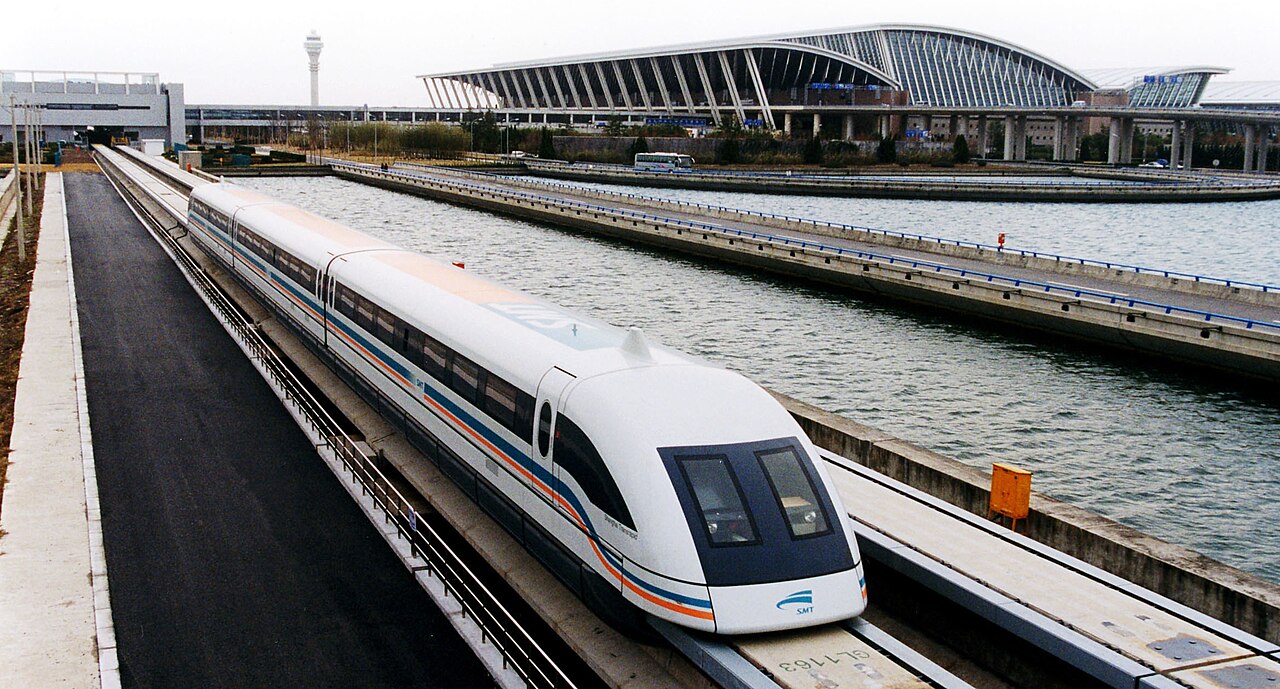
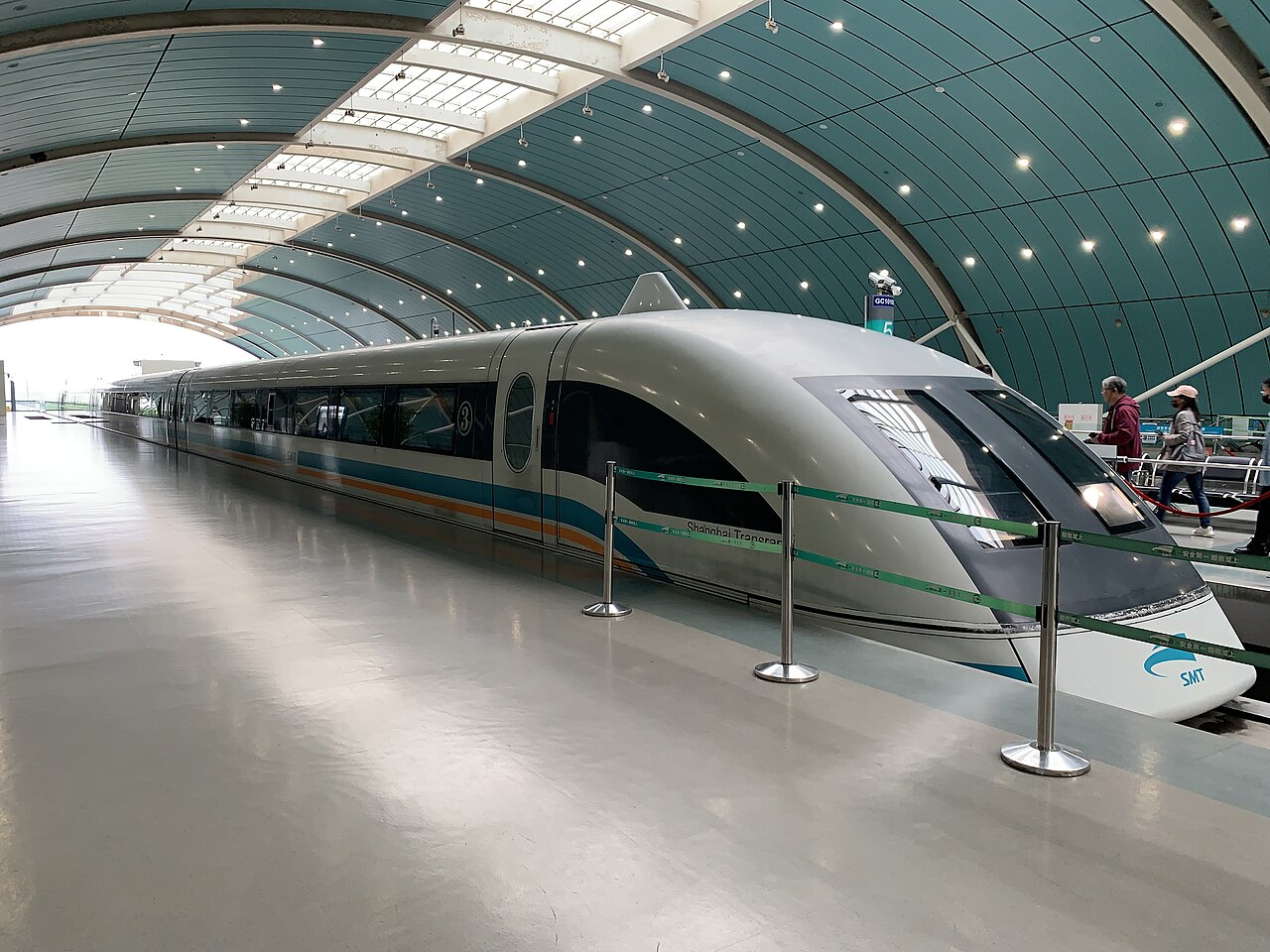
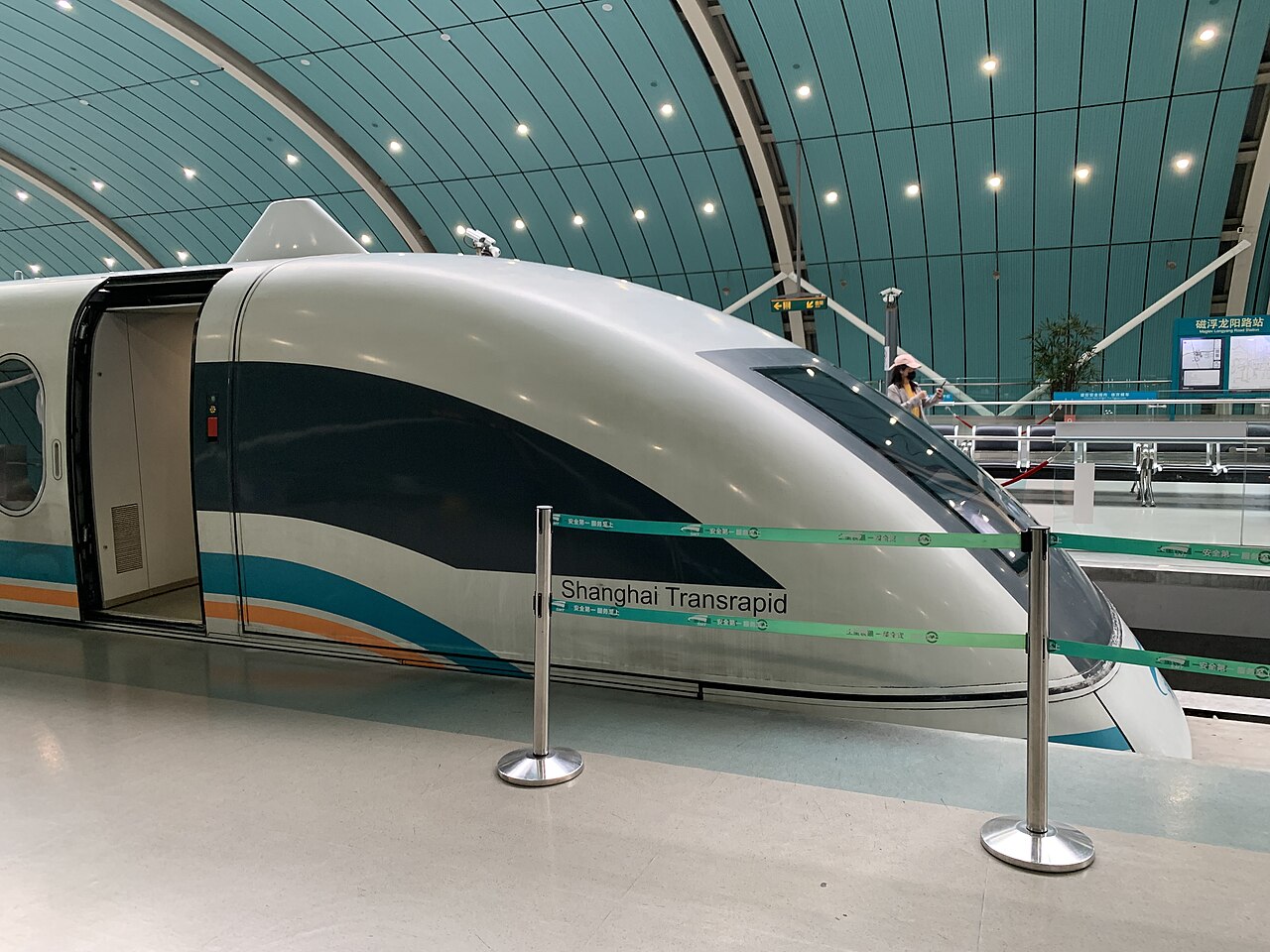
The USSR built an experimental maglev test site in Ramenskoye in 1979, constructing five prototypes from TP-01 to TP-05.[5] Japan's superconducting maglev (SCMaglev) development began in 1962, with the first successful run on a short track in 1972.[6] The Shanghai maglev train, using German Transrapid technology, held the operational speed record of 431 km/h from 2002 to 2021.[7] The Japanese L0 Series maglev set the absolute train speed record of 603 km/h in 2015.[7][8]
South Korea opened its own self-developed maglev line at Incheon Airport in February 2016, becoming the fourth country to operate such a system.[9] The first patent for magnetic levitation to reduce wheel weight was issued to Albert C. Albertson on 2 December 1902.[10] British electrical engineer Eric Laithwaite, a professor at Manchester University, completed the first full-size working model of a linear induction motor in the late 1940s.[11]

What the maker and period sources say
The same source stated that by 2045, maglev trains are expected to cover the 410 km between Tokyo and Osaka in one hour and seven minutes.[8] The China Daily account also noted that CRRC Zhuzhou Locomotive was developing a 200 km/h model suitable for intercity travel.[12] A 2020 Kyodo News report stated that Central Japan Railway Co. gave up on opening the Tokyo–Nagoya maglev line in 2027 due to a local government's environmental concerns.[13] A 2015 Guardian report described the maglev's 603 km/h test run as "comfortable and stable," noting the train hovers 10 cm above tracks propelled by electrically charged magnets.[8]
References
- Wikipedia, "Maglev" (CC BY-SA 4.0), which cites: "Japanese Maglev Train: World's Fastest Bullet Train – JRailPass", 27 February 2017; Clark, "The Green Industrial Revolution", 2015, p. 173–190; Qadir, "A prototype of an energy-efficient MAGLEV train: A step towards cleaner train transport", Cleaner Engineering and Technology, 2021 (we also read that source) en.wikipedia.org
- Wikipedia, "Maglev" (CC BY-SA 4.0), which cites: "Will maglev ever become mainstream?", www.railway-technology.com, 17 January 2018 (original not read by us) en.wikipedia.org
- Wikipedia, "Maglev" (CC BY-SA 4.0), which cites: "Evolving High-Speed Rail: The Maglev And Hyperloop Era", metrorailnews.in, 2025-10-24 (original not read by us) en.wikipedia.org
- Wikipedia, "Maglev" (CC BY-SA 4.0), which cites: "The Six Operational Maglev Lines in 2018", www.maglev.net; "High-speed rail trains are stalled in the US—and that might not change for a while", Popular Science, 2022-10-05 (original not read by us) en.wikipedia.org
- Wikipedia, "Maglev" (CC BY-SA 4.0), which cites: "Дорога на магнитном подвесе: второе дыхание в России?" , РЖД-Партнёр, 2009-10-01; "Советский маглев: 25 лет под целлофаном", Популярная механика (we also read that source) en.wikipedia.org
- Wikipedia, "Maglev" (CC BY-SA 4.0), which cites: "Superconducting Maglev (SCMaglev)", Central Japan Railway Company; "Superconducting Maglev (SCMaglev)", Central Japan Railway Company; U.S.-Japan Maglev, "History", USJMAGLEV, 2012 (original not read by us) en.wikipedia.org
- Wikipedia, "Maglev" (CC BY-SA 4.0), which cites: "Japan's maglev train breaks world speed record with 600km/h test run", The Guardian, 21 April 2015; "Everything about Shanghai Maglev Train: Speed, Station, Map, Ticket & Price, Facts...", www.chinadiscovery.com (original not read by us) en.wikipedia.org
- "Japan's maglev train breaks world speed record with 600 km/h test run", The Guardian, 21 April 2015. facts only, no text reused. theguardian.com
- Wikipedia, "Maglev" (CC BY-SA 4.0), which cites: Hamer, "Birmingham maglev off to flying start", New Scientist, 1984-03-15, p. 25–27; Sponseller, "Magnetic train", Popular Science, December 1988, p. 97–98; "도시형 자기부상철도 3일 개통…세계 두번째", 매일경제, 2 February 2016; "KBS WORLD"; "인천공항 자기부상철도 3일 개통…무료로 운행한다", 연합뉴스, 2 February 2016 (original not read by us) en.wikipedia.org
- Wikipedia, "Maglev" (CC BY-SA 4.0), which cites: , 21 January 1972. Page 10, Column 1 Line 15 to Column 2 Line 25. (original not read by us) en.wikipedia.org
- Wikipedia, "Maglev" (CC BY-SA 4.0), which cites: Radford, "Nasa takes up idea pioneered by Briton – Magnetic levitation technology was abandoned by government", The Guardian, 11 October 1999 (original not read by us) en.wikipedia.org
- "China's new maglev train passes speed test at 160 kph", China Daily, 28 April 2018. facts only, no text reused. chinadaily.com.cn
- "JR Central gives up on opening new maglev train service in 2027", Kyodo News, 3 July 2020. facts only, no text reused. english.kyodonews.net
Each numbered sentence above was checked against the source it cites before publication. Sentences citing Wikipedia adapt text from the English Wikipedia article Maglev (contributors), used under CC BY-SA 4.0; this entry is available under the same licence. Other sources were used for facts only; no text or images are copied from them.
More in Legendary Trains
Sources
Compiled from Wikipedia and the sources listed below. Text from Wikipedia is available under CC BY-SA 4.0; this entry is adapted from it.
- Wikipedia: Maglev (CC BY-SA 4.0).
Spotted an error? Know more?
Reader corrections go straight into our review queue. Suggest an edit · How this site is sourced