The Glacier Express
The slowest express train in the world.
Last updated

JoachimKohler-HB · CC BY-SA 4.0
The Glacier Express is a Swiss Panorama Express that links the mountain resort stations of Zermatt and St. Moritz, passing through Andermatt in the central Alps. It offers a direct, 8-hour, 291-kilometre ride without the local stops, and has earned the nickname 'the slowest express train in the world'. Because Zermatt sits near the Matterhorn and St. Moritz near Piz Bernina, the route is often described as travelling from one peak to the other.
Furka section
The journey begins at the dead end of the Mattertal valley, 1,606 metres above sea level, just below the Matterhorn. It then descends into the broad Valais valley at Brig. Over 291 kilometres, the train crosses 291 bridges and passes through 91 tunnels, including the 15.4-kilometre Furka Tunnel at 1,500 metres, which bypasses the Furka Pass.
Albula line
An intermediate stop is made at Andermatt, a remote high Alpine valley. The line reaches its highest point on the Oberalp Pass at 2,033 metres, then drops to its lowest at Chur, 585 metres above sea level. From Chur, the capital of Graubünden, the train climbs again, stopping at Filisur—where passengers can change for Davos—before crossing the Albula Range via a tunnel at 1,800 metres to reach St. Moritz in a southern valley.
Recent developments
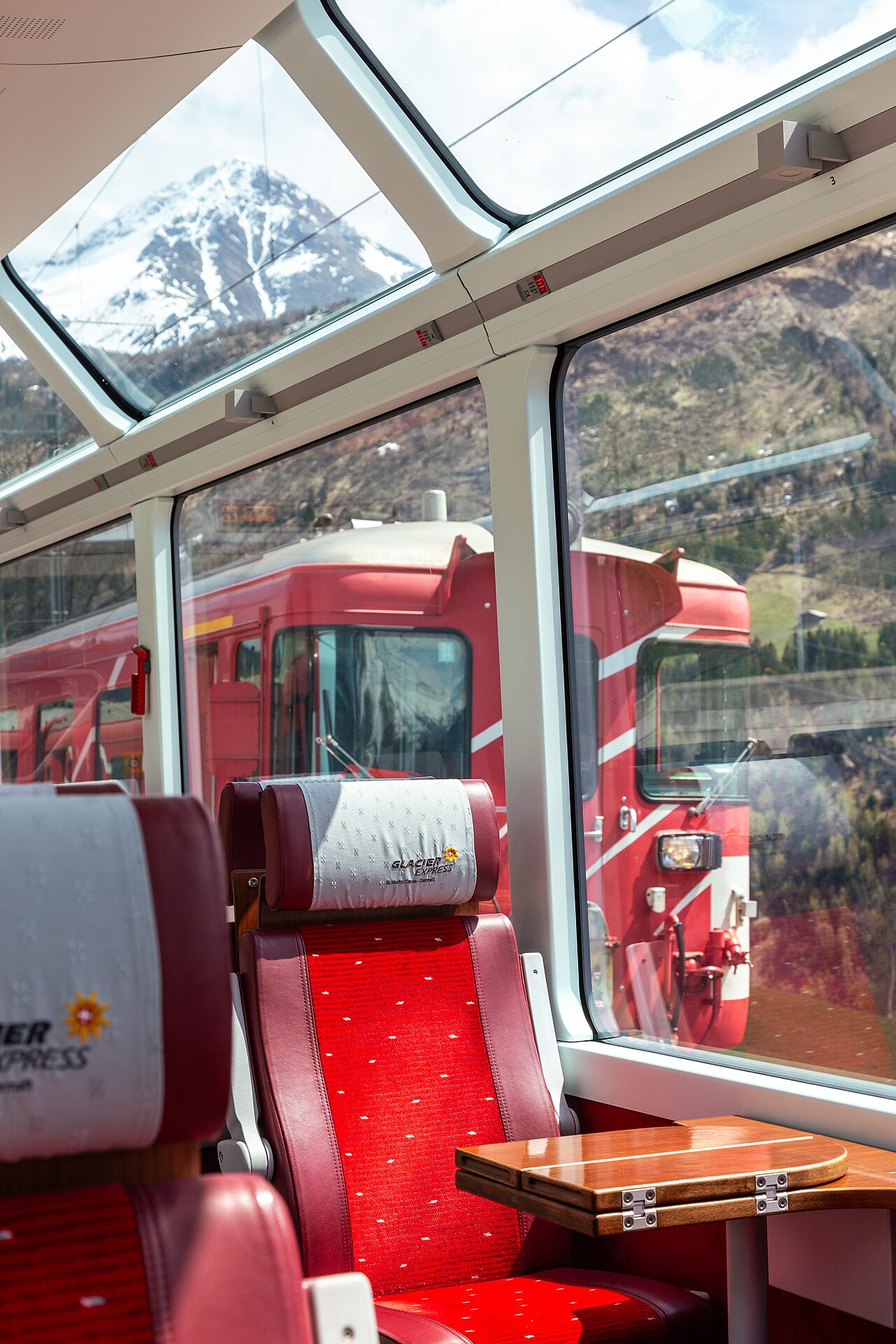
Since 2017, the Glacier Express AG, a joint venture owned by the former operators Matterhorn Gotthard Bahn (MGB) and Rhaetian Railway (RhB), has run the service. For much of the route, the train travels through the UNESCO World Heritage site known as the "Rhaetian Railway in the Albula / Bernina Landscapes."
Early years
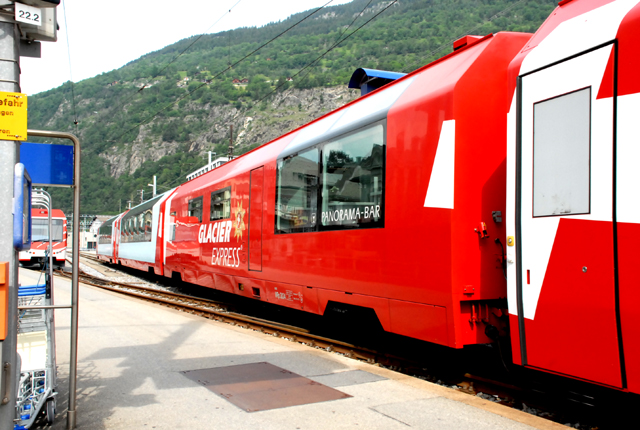
The first Glacier Express departed Zermatt on 30 June 1930 at 07:30. It was initially operated by three companies: the Visp-Zermatt-Bahn (VZ), the Furka Oberalp Bahn (FO), and the Rhätische Bahn (RhB). From 2003 to 2017, the RhB and MGB (formed from a merger of BVZ and FO) ran the train. The entire line uses metre-gauge track, with 23.9 kilometres employing a rack-and-pinion system for steep grades and controlled descents.
The same journey can be made on regular passenger trains (RhB lines IR38 and RE7, MGB lines R45, R43, and R41/42) without seat reservations, taking just over eight hours with changes at Reichenau-Tamins, Disentis/Mustér, Andermatt, and Brig.
The completion of the FO's final section in 1926 opened Valais and Graubünden to more tourism, enabling through coaches between Brig and Chur, and Brig and St. Moritz. In early June 1930, the Visp–Zermatt Bahn extended to Brig via a new metre-gauge line along the Rhone Valley, making a through coach from Zermatt to St. Moritz possible. On 25 June 1930, the first such train ran, named the Glacier Express after the Rhone Glacier near Gletsch on the Furka Pass.
Until 1982, the Glacier Express ran only in summer because the Furka and Oberalp passes were snowed over in winter. Early trains consisted of first to third class salon and passenger coaches from all three companies. Between Chur and Disentis/Mustér, a Mitropa dining car served hot lunch. From 1933, the through coaches were attached to regular trains between Brig and Zermatt.
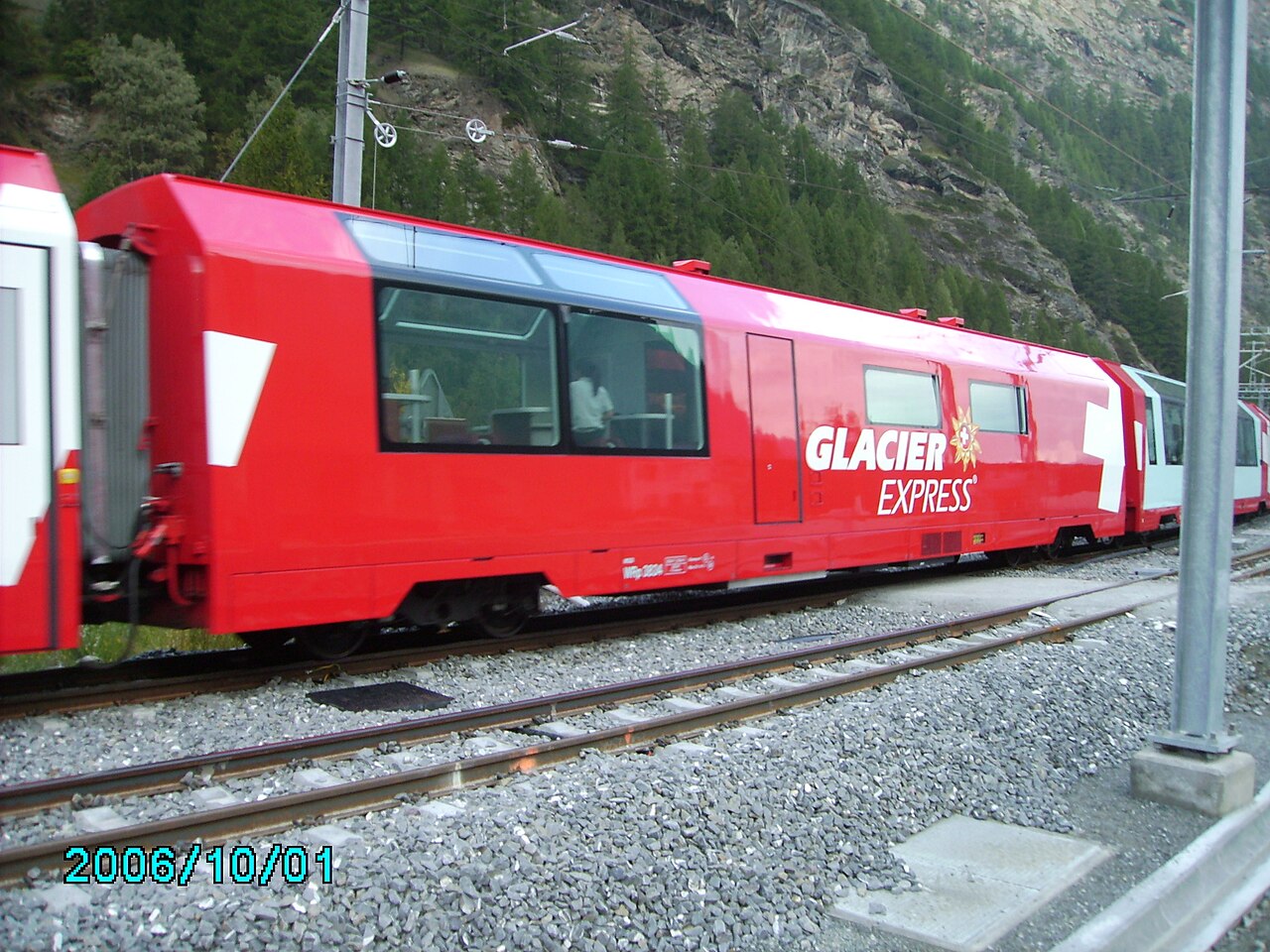
Initially, electric locomotives hauled the train on the BVZ and RhB, while steam engines were used on the FO. Overhead catenary was installed on the FO in 1941–1942, allowing fully electric operation, though no through trains ran from 1943 to 1946 due to World War II. When daily service resumed in 1948, the dining car was extended from Disentis/Mustér to the top of the Oberalp Pass. Between the 1950s and 1970s, new locomotive classes on the BVZ and RhB shortened schedule times, and the dining car service reached Andermatt.
In 1981, the FO line over the Furka Pass and through the Furka Summit Tunnel closed for the last winter. In June 1982, the Furka Base Tunnel opened, replacing that line. The Glacier Express lost its connection to the Rhone Glacier but could now run year-round.
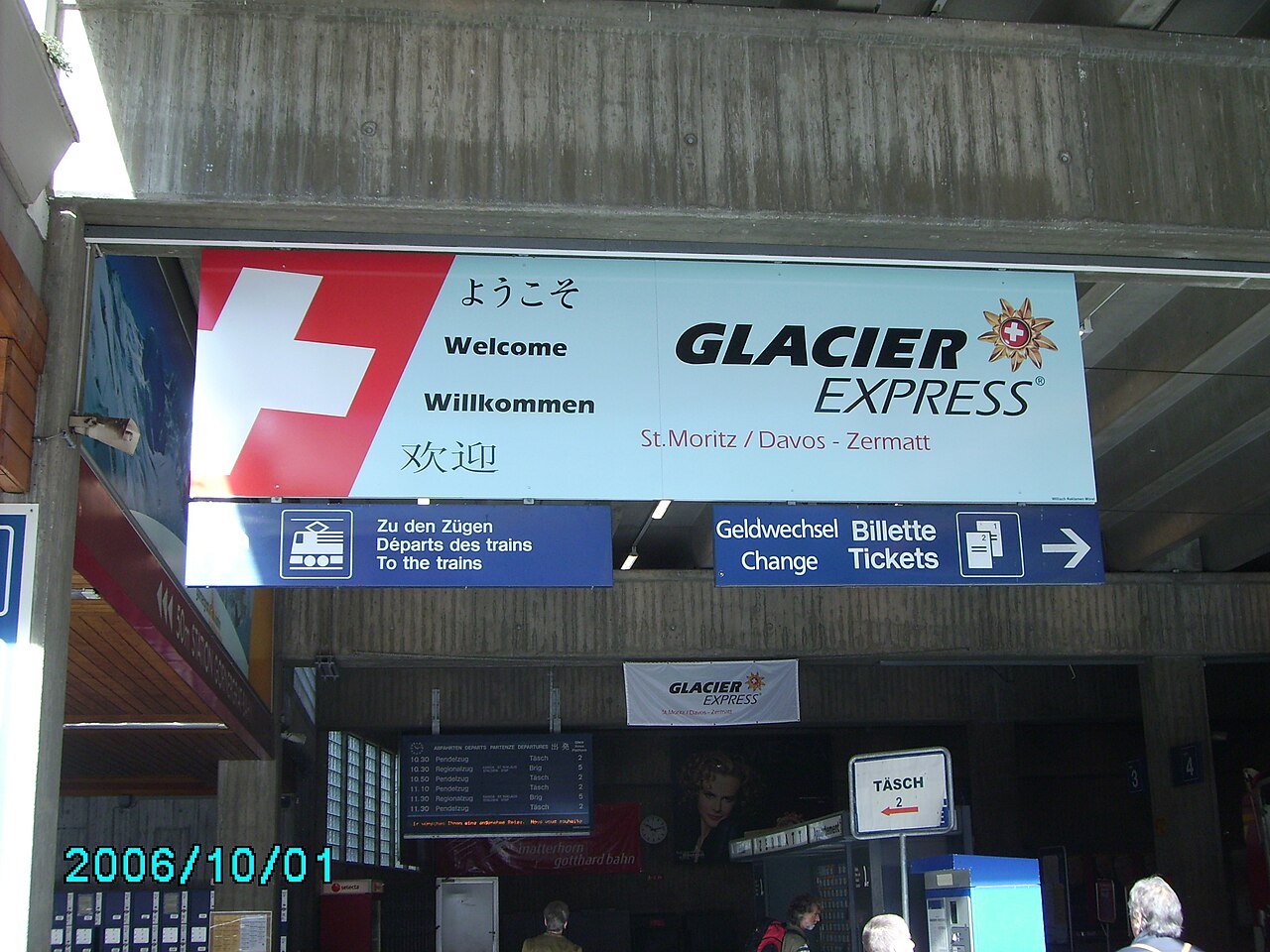
The BVZ, FO, and RhB relaunched it as a tourist attraction, promoting it as "the slowest express train in the world" with 291 km, 91 tunnels, and 291 bridges. A promotional wine glass with a sloping base highlighted the steep gradients. Passenger numbers rose from 20,000 in 1982 to over 53,000 in 1983, and to just over 80,000 in 1984.
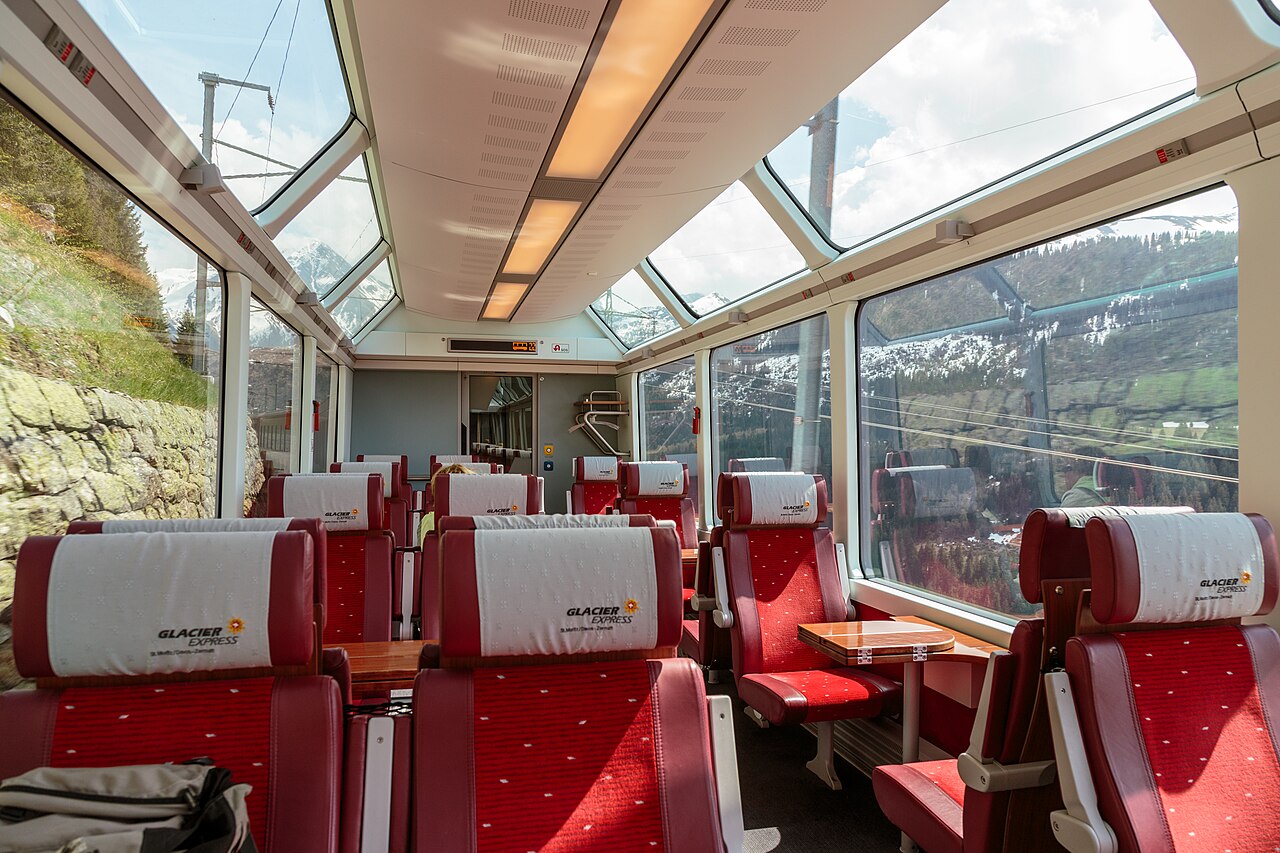
In 1985, the timetable was completely revised. Between 1986 and 1993, the BVZ and FO invested nearly 40 million Swiss francs in 18 new first class panorama cars. By 2005, annual passengers exceeded 250,000.
Lore & Background
The first Glacier Express started on 30 June 1930 at 07:30 in Zermatt, initially operated by three railway companies: the Visp-Zermatt-Bahn (VZ), the Furka Oberalp Bahn (FO), and the Rhätische Bahn (RhB). The train's name honored the Rhone Glacier, near Gletsch on the Furka Pass. Moritz. The entire line is metre gauge, with 23.9 km (14.9 mi) using rack-and-pinion system.
Common Misconceptions (Editorial)
Some people think the Glacier Express is the "world's fastest express train," but it’s actually known as the "slowest express train in the world." Others may believe it connects only one major resort, but in fact it directly links Zermatt and St. Moritz via Andermatt. Additionally, some assume the train was named after a glacier in St. Moritz or Zermatt, but the name honors the Rhone Glacier near Gletsch on the Furka Pass.
Why It Matters (Editorial)
The Glacier Express endures as a masterpiece of alpine engineering and leisurely luxury, turning a mountain crossing into a world-class experience rather than mere transit. Its 91 tunnels and rack-and-pinion sections prove that even the slowest journey can be the most memorable, preserving a golden age of rail travel amid Switzerland’s most dramatic scenery.
More in Legendary Trains
Sources
Compiled from Wikipedia and the sources listed below. Text from Wikipedia is available under CC BY-SA 4.0; this entry is adapted from it.
- Wikipedia: Glacier Express (CC BY-SA 4.0).
Spotted an error? Know more?
Reader corrections go straight into our review queue. Suggest an edit · How this site is sourced