The Eurostar
High-speed rail service linking the UK and continental Europe via the Channel Tunnel.
Last updated

Kenneth Yarham · CC BY-SA 2.0
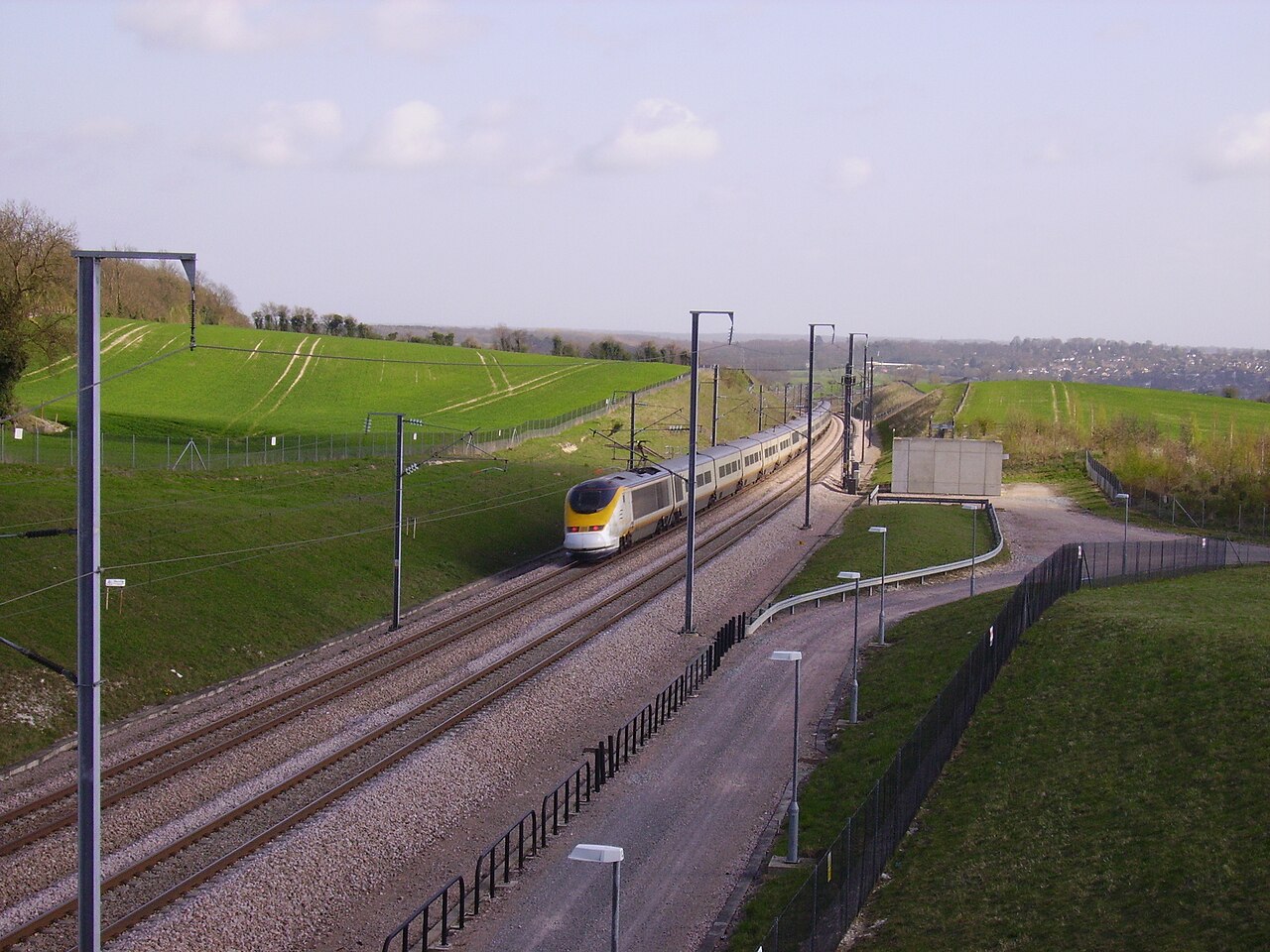
Eurostar is a high-speed rail service linking Belgium, France, Germany, the Netherlands, and the United Kingdom via the Channel Tunnel. It is run by the Eurostar Group, created when the original Eurostar (which ran trains through the tunnel to the UK) merged with Thalys (which operated within continental Europe). Since launching in 1994, the service has carried over 400 million passengers, with a record 20 million in 2025. The operator plans to expand its network and double passenger numbers between 2022 and 2030.
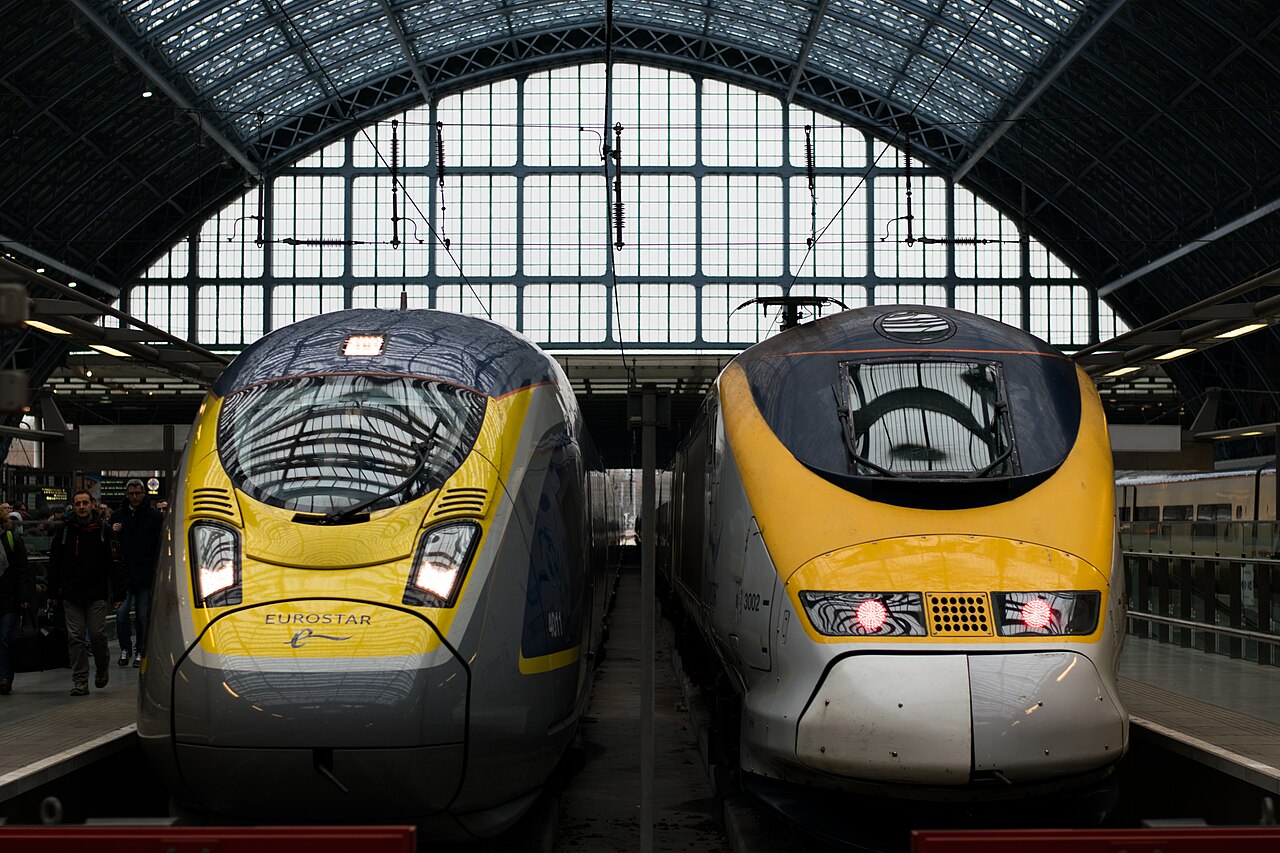
Since 1998, Eurostar has won multiple World Travel Awards, including World’s Leading Passenger Rail Operator for 15 straight years, plus environmental and sustainability awards from Network Rail, the Sunday Times, PETA, and the Chartered Institution of Railway Operators. Ideas for a cross-Channel tunnel date back to 1802, but national security concerns stalled progress. The modern project began with the 1986 Treaty of Canterbury between France and the UK, creating Eurotunnel to own and manage the tunnel. Tunnelling started in 1988.
Early planning and construction (1986–1993)
Besides shuttle trains for cars and lorries between Folkestone and Calais, the tunnel allowed through passenger and freight services from farther afield. British Rail and France’s SNCF contracted with Eurotunnel to use half the tunnel’s capacity. In 1987, Britain, France, and Belgium formed an International Project Group to design a high-speed passenger train for the tunnel. French TGV technology was chosen, and an order for 30 train sets—built in France with some British and Belgian parts—was placed in December 1989.
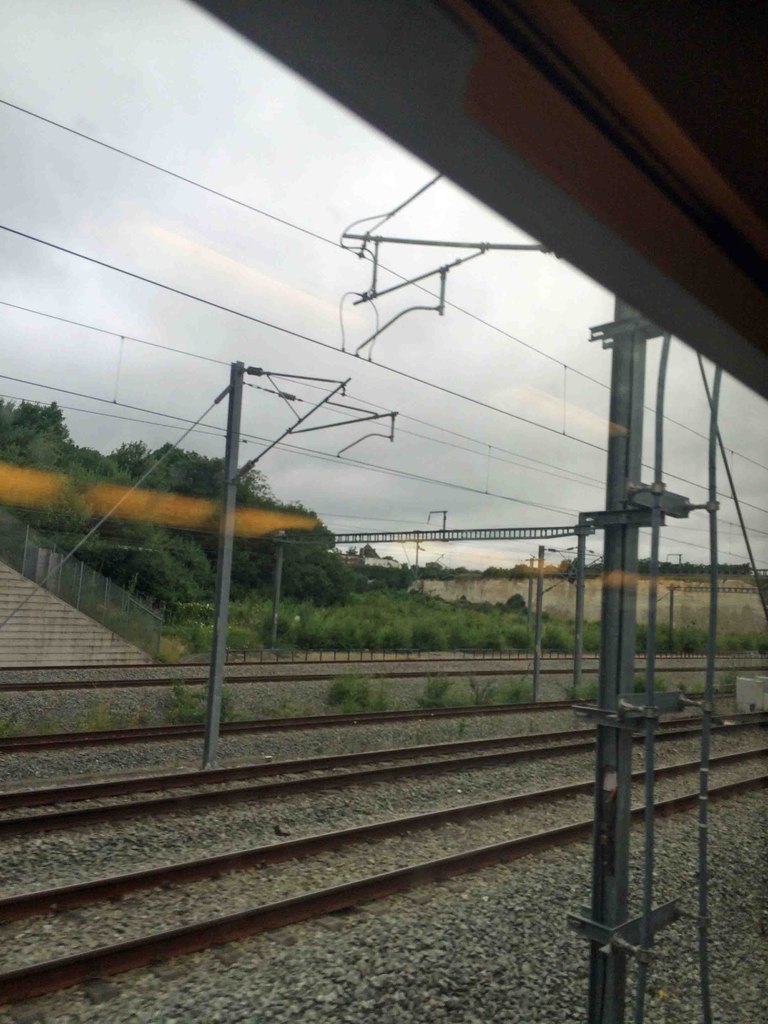
France, which had run high-speed TGV services since 1981, began building the 333 km (207 mi) LGV Nord line north from Paris to speed connections to the tunnel and Brussels; it opened in 1993. On 20 June 1993, the first Eurostar test train traveled through the tunnel to the UK, and technical issues with British tracks were quickly resolved. On 6 May 1994, the tunnel was officially opened by Queen Elizabeth II and French President François Mitterrand, at a final cost of £4.65 billion (€5.99 billion, equivalent to £9.8 billion in 2025). Eurostar services began on 14 November 1994 from London’s Waterloo International station to Paris Nord and Brussels-South.
Launch and early operations (1994–2002)
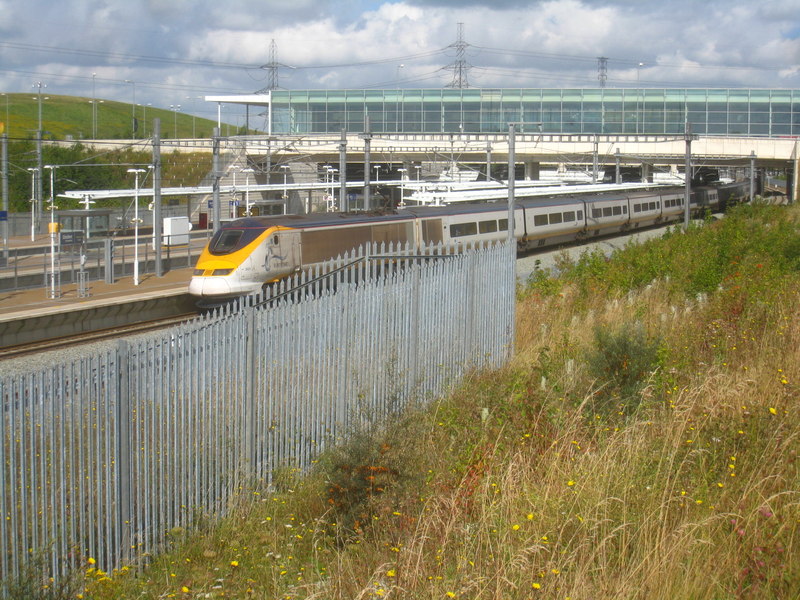
A limited Discovery service started, with full daily service from 28 May 1995. The typical Waterloo-Paris trip took 2 hours 55 minutes, with an average speed of 171.5 km/h (106.6 mph). On 8 January 1996, Eurostar added a second UK station at Ashford International, and on 29 June announced year-round London-to-Disneyland services. In 1997, winter services to the French Alps began, and on 14 December the Belgian HSL 1 line opened, connecting Brussels to the LGV Nord at Lille.
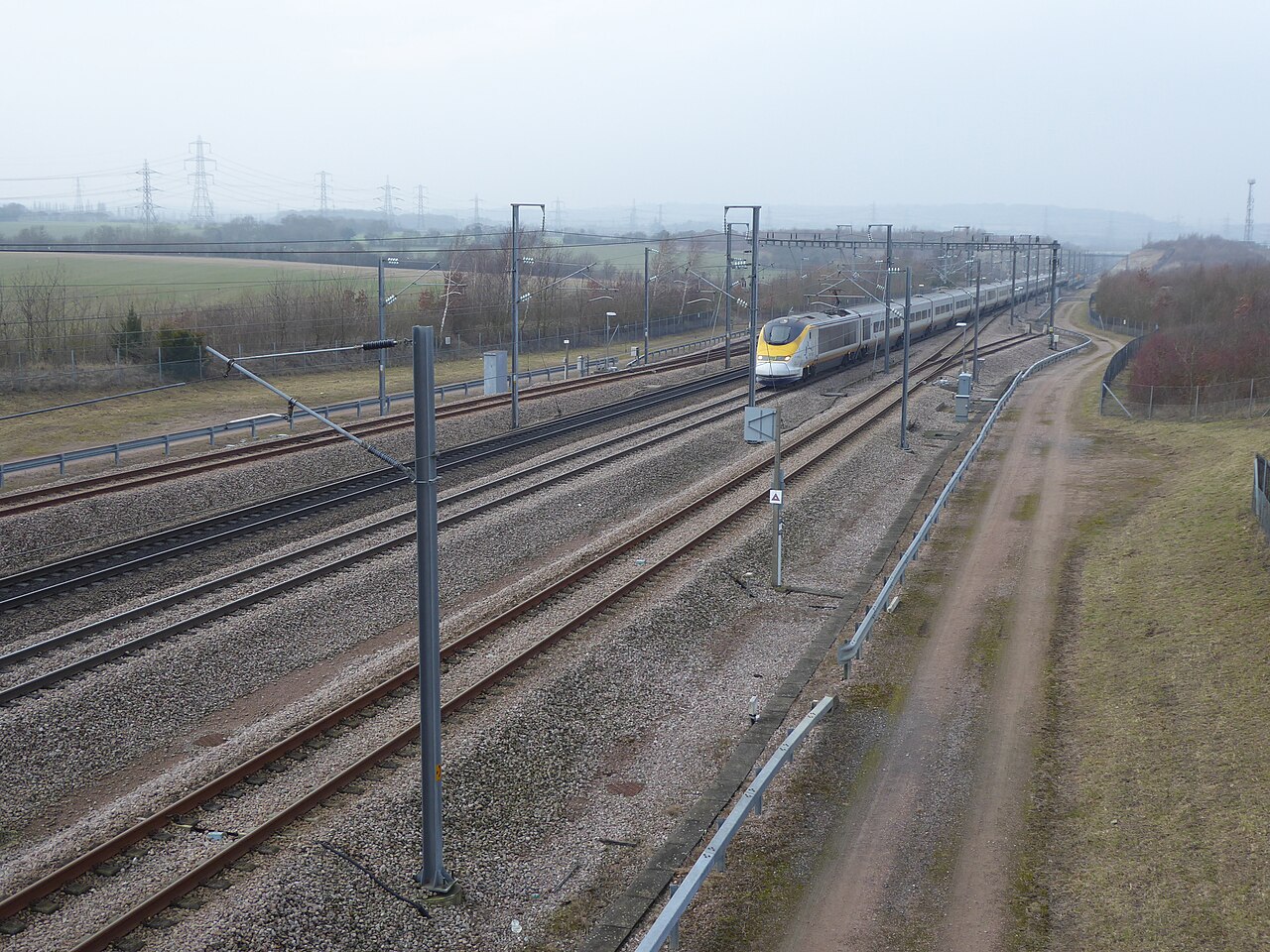
This 88 km (55 mi) line (71 km of dedicated high-speed track, 17 km modernised) cut London-Brussels travel time by 45 minutes. On 20 July 2002, a summer seasonal service from London to Avignon-Centre launched. The first decade was rocky. In June 2003, Eurostar was recovering from its worst period: negative media, poor sales, low public opinion of British rail, post-9/11 travel fears, management changes, and poor punctuality due to UK rail infrastructure problems.
High Speed 1 and St Pancras relocation (2003–2007)
The gradual opening of High Speed 1 tracks in the UK improved competitiveness with airlines. On 23 September 2003, the first completed section of High Speed 1 shortened travel times by 21 minutes; the full line opened on 14 November 2007, cutting journeys by another 20 minutes. That same day, after a glamorous opening ceremony and advertising campaign, Eurostar moved from Waterloo to the expanded and refurbished London St Pancras International. The £800 million (€1.17 billion) redevelopment accommodated 394-meter-long (431-yard) Eurostar trains.
Network expansion (2008–2019)
From St Pancras, the London-Paris trip reached its current time of 2 hours 15 minutes. In 2009, the UK government nationalised London and Continent Railways, including its Eurostar stake. In 2014, it sold that stake for £760 million (€943 million), leaving ownership as: France’s SNCF (55%), Belgium’s SNCB (5%), Caisse de dépôt et placement du Québec (30%), and Hermes Infrastructure (10%). On 1 May 2015, the operator launched...
A Grim Decade of Accidents
The Rome Express's pre-war years were marred by a grim string of accidents that cast a long shadow over an otherwise celebrated service. On 24 March 1936, the train derailed just beyond Florence, claiming three lives and injuring twenty others. These incidents, spaced across four years, underscored the dangers of long-distance express travel on infrastructure not always designed for such speeds.
A Brief Resurrection and Final Farewell
Yet the resurrection was short-lived.
Common Misconceptions (Editorial)
A common misconception is that Eurostar is a single company wholly owned by one national railway. In fact, Eurostar is headquartered in London and has multiple major shareholders, with SNCF holding only 55%, while CDPQ holds 30%, Hermes Infrastructure holds 10%, and SNCB holds 5%. Another misconception is that Eurostar only serves London to Paris or Brussels; however, its key routes also include Amsterdam, Rotterdam, Lyon, Avignon, and Marseille.
Why It Matters (Editorial)
Eurostar endures as a symbol of practical European integration, physically linking the UK to the continent via the Channel Tunnel and moving millions of passengers annually. Its resilience is also notable: despite a devastating pandemic-era collapse to under 1% of normal ridership, the service rebuilt to a record 20 million passengers in 2025, proving its lasting importance for cross-border travel and commerce.
More in Legendary Trains
Sources
Compiled from Wikipedia and the sources listed below. Text from Wikipedia is available under CC BY-SA 4.0; this entry is adapted from it.
- Wikipedia: Eurostar (CC BY-SA 4.0).
Spotted an error? Know more?
Reader corrections go straight into our review queue. Suggest an edit · How this site is sourced