Dollhouse
Miniature houses for play and collection since the 16th century.

Slyronit · CC BY-SA 4.0
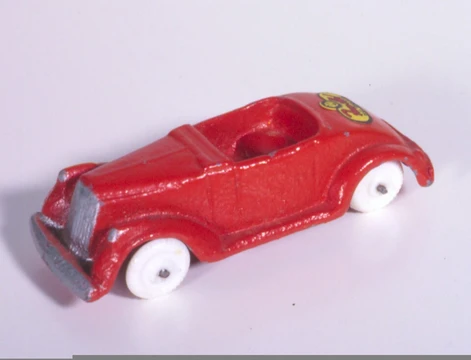
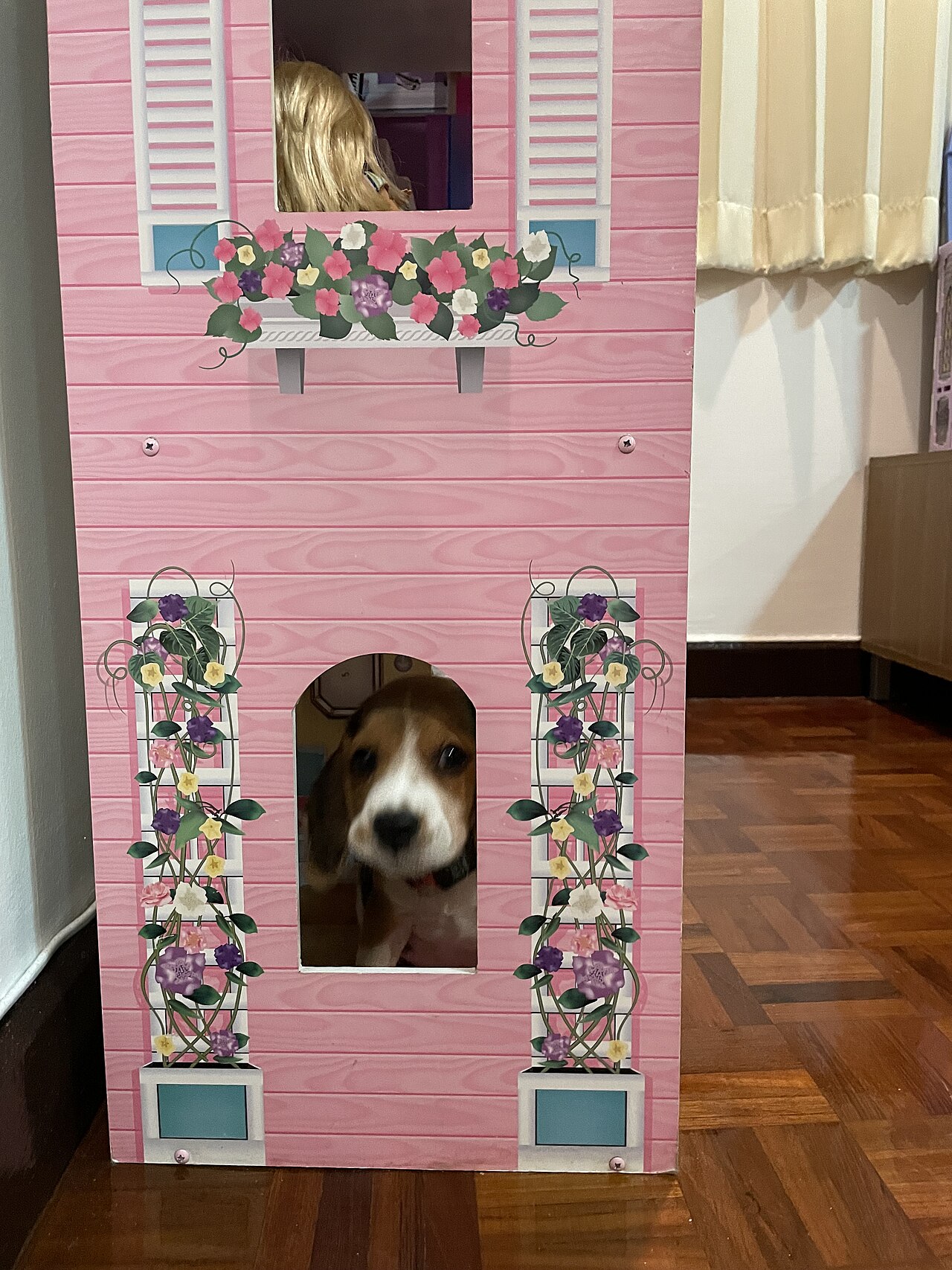
A dollhouse, also called a doll's house, is a miniature toy house. While they have been mainly children's toys since the early 1900s, many adults also collect and craft them. The modern dollhouse traces back roughly four hundred years to European "baby house" display cases, which featured idealized interiors.
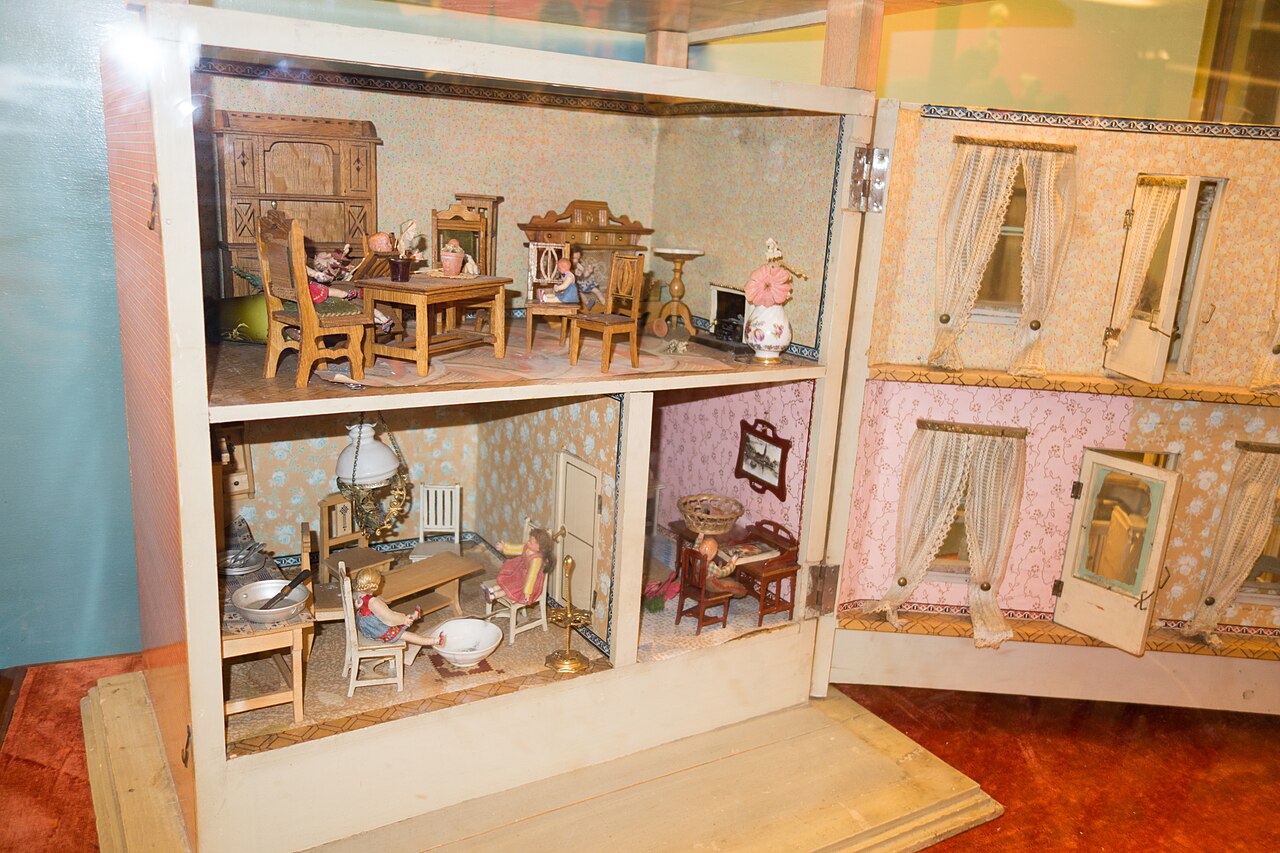
The earliest known miniature homes, complete with furnishings and figures, date back nearly five thousand years to Egyptian Old Kingdom tombs. These wooden models of servants, furniture, boats, and animals were made for religious purposes. The first known European dollhouses were 16th-century baby houses—cabinet display cases with individual rooms. The term "baby" came from an old English word for doll, referring to the scale, not the intended audience. These cabinets were handmade, filled with miniature household items, and meant only for adults. They were expensive trophy collections owned by wealthy women in Holland, England, and Germany; a fully furnished example could cost as much as a modest full-sized house. The earliest recorded baby house was commissioned between 1557 and 1558 by Albrecht V, Duke of Bavaria.
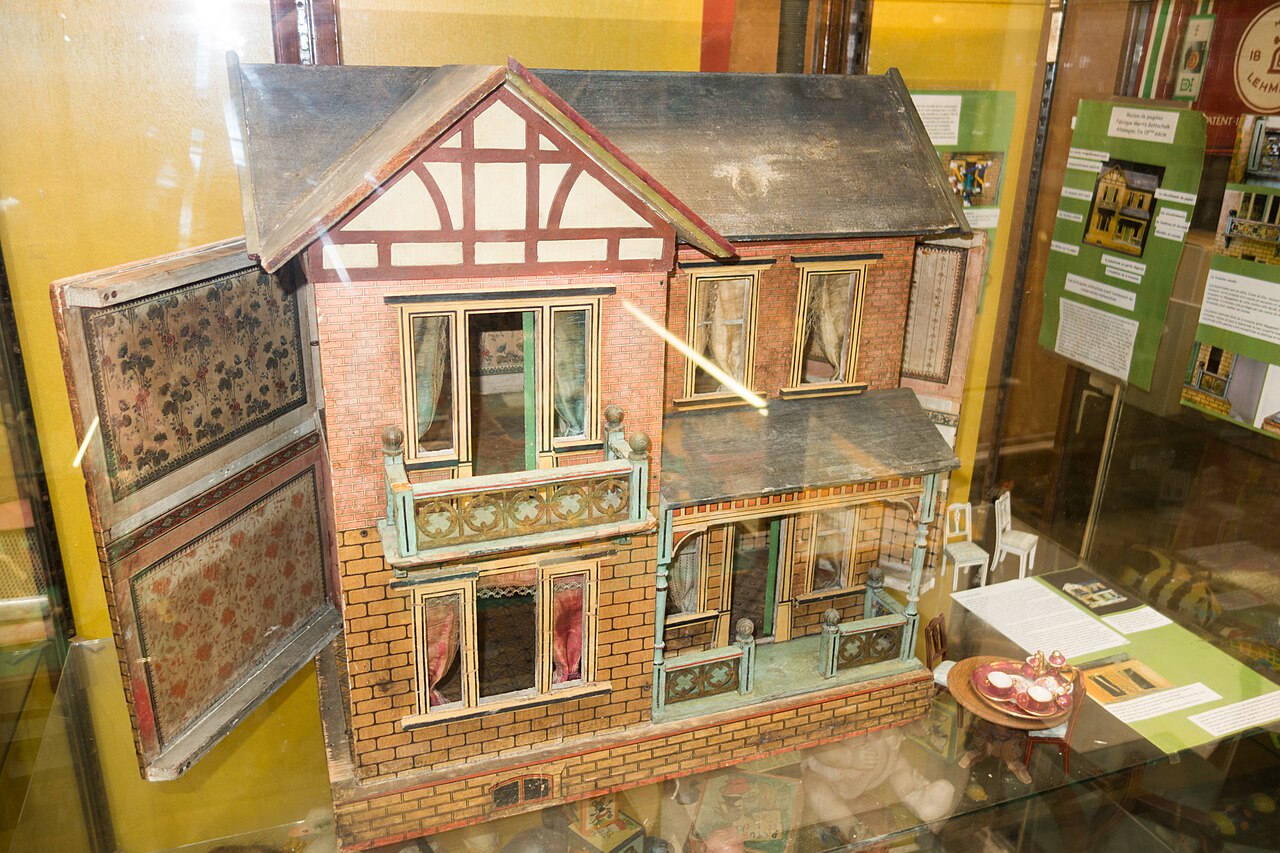
In the 18th century, smaller dollhouses with more realistic exteriors, like the Tate house, appeared. Nuremberg kitchens, single-room dollhouses, date back to at least 1572, when one was given to princesses of Saxony who were approximately 4 and 5 years old. Early European dollhouses were custom-built by individual craftsmen. After the Industrial Revolution, factories began mass-producing dollhouses and miniatures. Notable German companies included Christian Hacker, Moritz Gottschalk, Elastolin, and Moritz Reichel. Important English firms included Silber & Fleming, Evans & Cartwright, and Lines Brothers (later Tri-ang). By the late 1800s, American dollhouses were made by The Bliss Manufacturing Company. In France, Villard & Weill produced Deauville dollhouses in the early 20th century.
Germany was the leading producer of prized dollhouses and miniatures until World War I, with Nuremberg known as the "toy city." German baby houses are considered the origin of basic dollhouse standards. Companies like Märklin and Rock and Graner exported widely to Britain and North America. Germany's involvement in WWI severely disrupted production and exports, leading to new manufacturers elsewhere. The Deauville dollhouses, made by Villard & Weill mainly
- earliest_known_examples
- Egyptian tombs of the Old Kingdom, nearly five thousand years ago
- earliest_known_European_dollhouses
- 16th century baby houses
- earliest_recorded_baby_house
- commissioned 1557–1558 by Albrecht V, Duke of Bavaria
- common_children's_scale
- 1:18 (2/3 inch scale)
- common_adult_collector_scale
- 1:12 (1 inch scale)
- major_historical_producer_country
- Germany (up to World War I)
Lore & Background
Miniature homes have been made for thousands of years, with the earliest known examples found in Egyptian tombs of the Old Kingdom, created nearly five thousand years ago. These wooden models of servants, furnishings, boats, livestock and pets were almost certainly made for religious purposes. The earliest known European dollhouses were the baby houses from the 16th century, which consisted of cabinet display cases made up of individual rooms. The term 'baby' in baby house is coined from the old English word meaning doll. These cabinets were built by hand with architectural details, filled with miniature household items, and were solely intended for adults. They were off-limits to children, not because of safety concerns but to protect the dollhouse. Such cabinet houses were trophy collections owned by wealthy matrons in Holland, England and Germany, and fully furnished were worth the price of a modest full-size house's construction. The earliest known recorded baby house was commissioned from 1557-1558 by Albrecht V, Duke of Bavaria. Smaller dollhouses with more realistic exteriors appeared in Europe in the 18th century. Nuremberg kitchens, a type of single-room dollhouse, date back at least to 1572, when one was given to the Princesses of Saxony, aged five and ten.
Reader's Guide
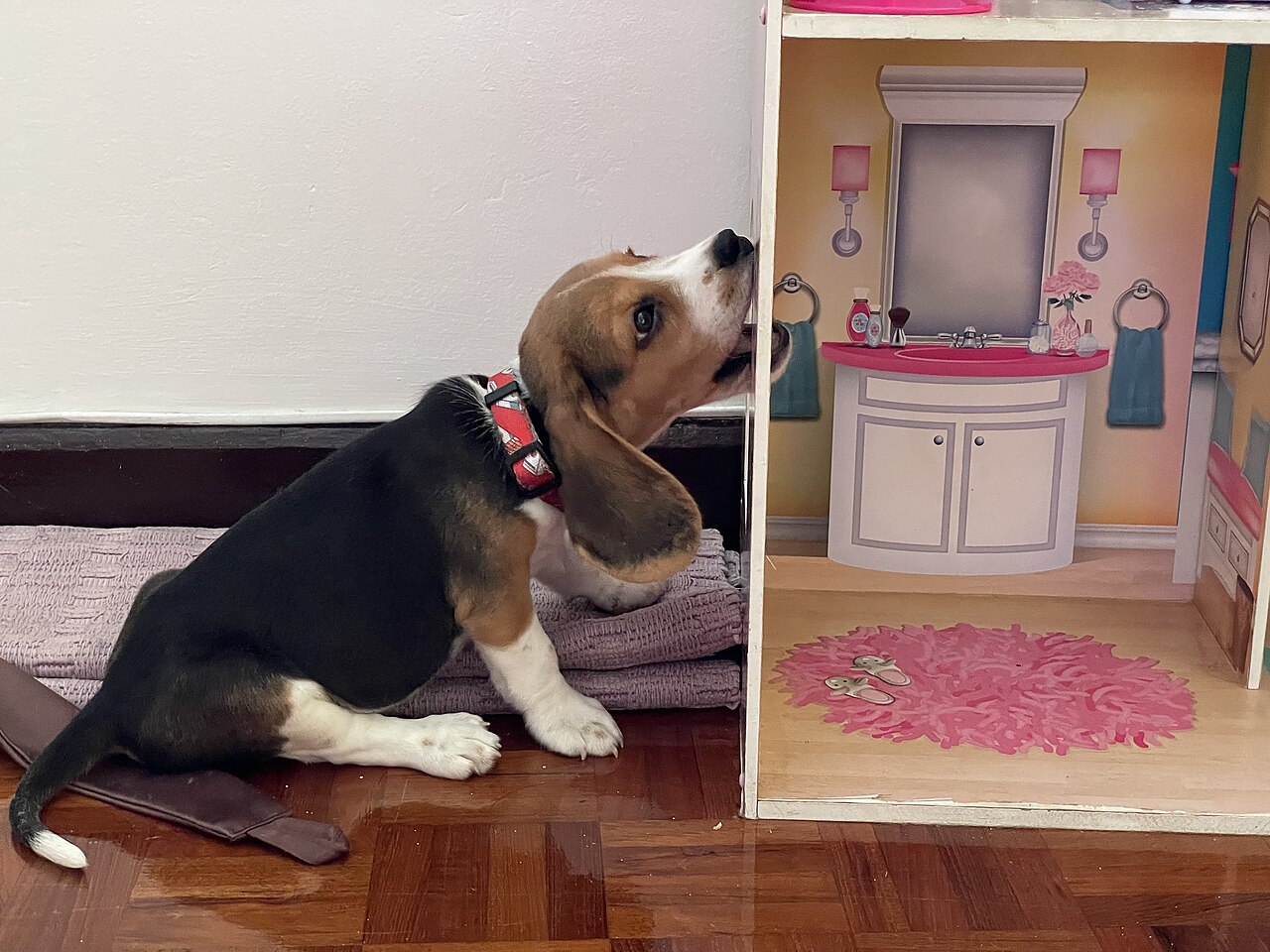
Dollhouses have evolved from exclusive adult cabinet collections to mass-produced children's toys and adult hobbyist items. Early European dollhouses were each unique, constructed on a custom basis by individual craftsmen. With the Industrial Revolution, factories began mass producing dollhouses and miniatures. Germany produced the most prized dollhouses and miniatures up until World War I, with companies like Märklin, Rock and Graner exporting to Britain and North America. After World War II, dollhouses were mass-produced on a much larger scale with less detailed craftsmanship, often made of painted sheet metal and plastic furniture, making them affordable for many children in developed western countries. The hobby today has two main focuses: construction and/or purchase of dollhouses made by or for adult enthusiasts, and collection of contemporary, vintage or antique dollhouses. Standard scales have emerged, with 1:18 common for children's play and 1:12 for adult collectors. The largest common size is 1:6, proportionate for dolls like Barbie and Ken. Construction materials have included metal, fibreboard, plastic, and wood, with contemporary kits often made of plywood or medium-density fiberboard.
Did You Know?
- The earliest known dollhouse-like objects were wooden models found in Egyptian tombs of the Old Kingdom, nearly five thousand years old.
- The term 'baby' in baby house comes from the old English word meaning doll, and these houses were intended only for adults.
- Germany produced the most prized dollhouses and miniatures up until World War I, with Nuremberg known as the 'toy city' since the sixteenth century.
- The largest common size for dollhouses is 1:6 scale, proportionate for dolls 11-12 inches tall such as Barbie and Ken.
Creative Origins & Production DNA
Gabby's Dollhouse arrived on Netflix on January 5, 2021, carrying the creative fingerprints of two veterans from the Blue's Clues era: Traci Paige Johnson and Jennifer Twomey. Their shared background in interactive, child-centered television shaped a show that explicitly invites young viewers into play rather than simply watching a story unfold. The production sits under the DreamWorks Animation Television banner, giving the series access to a polished animated pipeline while preserving the tactile, real-world charm of its live-action segments. At the center of the format is Laila Lockhart Kraner, who both portrays and voices Gabby, the cat-obsessed host who shrinks into her own dollhouse. The show's defining structural choice is its seamless blend of filmed reality and handcrafted animation: a child in a bedroom becomes a character in a miniature world, and the transition feels like opening a toy box. This hybrid approach, combined with the participatory rituals baked into every episode, positions the series as a direct descendant of the interactive preschool formats that Johnson and Twomey helped pioneer years earlier.
Episode Rituals & Interactive Structure
Every episode of Gabby's Dollhouse follows a carefully choreographed ritual that turns passive viewing into a shared experience. The sequence opens in live-action, with Gabby in her bedroom, before a miniature package arrives via the Dollhouse Delivery at her Meow-Meow Mailbox. That tiny parcel serves as the narrative spark for the animated adventure. Gabby dons her magical cat-ear headband, recites a specific incantation involving pinching and grabbing Pandy Paws's hand, and shrinks down to toy-size alongside her stuffed companion, who springs to life with a signature hug attack. Throughout the dollhouse, the sneaky CatRat pops up unannounced in random rooms, adding a layer of playful unpredictability. The Cat-A-Vator, a silent sentient elevator, shuttles characters between floors. Episodes close with the Gabby Cat of the Day segment, where a single Gabby Cat or occasionally Gabby herself guides the viewer through crafting, cooking, singing, or another hands-on activity. The episode then returns to live-action Gabby for a warm sign-off, completing the full circle from real room to miniature world and back.
The Gabby Cats & Dollhouse Ecosystem
The animated dollhouse is populated by a colorful ensemble of Gabby Cats, each a hybrid of feline and object that anchors a specific room or function. Carlita, a purple-and-teal kitty-car, drives around the house and doubles as a bellhop when the Dollhouse shifts into its Hotel form. Cakey, a tiny white kitty-cupcake, bakes in the kitchen and produces sprinkles either from tears of sadness or an excited spin-and-yell. DJ Catnip, a lavender kitty-disc jockey in a glittery hoodie, runs the music room and serves as hotel manager in the alternate setting. Other residents include Pillow Cat, a multicolored storyteller who naps in the bedroom; Kitty Fairy, who tends the Fairytail Garden with watering-can magic; and MerCat, a turquoise kitty-mermaid who runs a science-themed spa in the bathroom. The Box Cat Family, crafted from cardboard, occupies the craft room, while Marty the Party Cat, who debuted in season ten, presides over the attic Party Room. CatRat, the blue kitty-rat, weaves through every room as both comic relief and occasional antagonist.
Expansion, the Film & New Characters
The franchise's momentum carried it well beyond its 2021 debut. In April 2024, DreamWorks Animation officially announced Gabby's Dollhouse: The Movie, which Universal Pictures released on September 26, 2025. The majority of the original cast returned to their roles, preserving the familiar voices that young audiences had grown to expect. The film also planted seeds for the show's next chapter: near its conclusion, Grandma Gigi mentions that Gabby's younger sister Doozie has built a dog-shaped dollhouse of her own. Doozie, portrayed and voiced by Celestina Harris, is set to debut in the upcoming fourteenth season, bringing a parallel storyline centered on dogs rather than cats. Her sidekick, Puggy, voiced by Sebastian Billingsley-Rodriguez, mirrors Pandy Paws's arc, beginning as an inanimate stuffed toy before coming alive when Doozie shrinks into the dollhouse. This expansion signals the creators' intent to grow the dollhouse universe while maintaining the show's core interactive spirit, inviting a new generation of young viewers into a world where stuffed toys, cardboard families, and magical headbands all coexist in one playful ecosystem.
Gallery
Frequently Asked Questions
What is a dollhouse?
A dollhouse is a miniature house furnished with tiny rooms, furniture, and figures, used for play or display. The modern form descends from European 'baby house' display cases that appeared roughly four centuries ago and showcased idealized interiors.
How far back does dollhouse history go?
The oldest known miniature homes are wooden models of servants, boats, and animals found in Egyptian Old Kingdom tombs, dating to nearly five thousand years ago, where they served a religious purpose. In Europe, the tradition began in the 16th century, with the earliest recorded baby house commissioned by Albrecht V, Duke of Bavaria, in 1557–1558.
What scale do dollhouses typically use?
Children's dollhouses most commonly follow a 1:18 scale, meaning roughly two-thirds of an inch stands in for one foot. Adult collectors generally prefer the larger 1:12 scale, or one inch per foot.
Which country led dollhouse production historically?
Germany was the dominant country for dollhouse manufacturing up through World War I, making it the heart of the craft for centuries before the war disrupted that tradition.
Are dollhouses only for children?
While they became primarily marketed as children's toys from the early 1900s onward, dollhouses are also widely collected, built, and displayed by adults today.
More in Toys 1-20
Spotted an error? Know more?
This is a living reference — every entry is fact-audited, and reader corrections feed straight into our audit queue. Suggest an edit · See this site's audit record