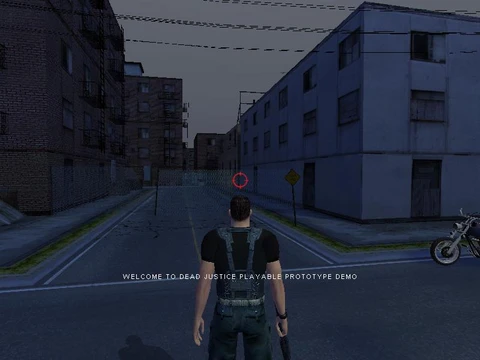
Resident Evil
Japanese horror franchise that defined survival horror and popularized over-the-shoulder shooting.

Pop Culture Geek · CC BY 2.0
Resident Evil, released in Japan as *Biohazard*, is a horror franchise from Capcom that spans video games, films, TV, comics, novels, audio dramas, and merchandise. The games blend survival horror with third-person and first-person shooting, tasking players with navigating environments overrun by zombies and mutant creatures. It ranks as Capcom’s top-selling series, the ninth best-selling video game franchise overall, the highest-selling horror game line, and one of the most profitable horror media properties, with over a certain number of copies sold worldwide.
The first game, created by Shinji Mikami and Tokuro Fujiwara, launched on PlayStation in 1996. It is widely recognized for establishing the survival horror genre and reviving zombies as a pop-culture staple. *Resident Evil 4* (2005) shifted the series toward more action-oriented gameplay, popularizing the over-the-shoulder third-person view now common in action-adventure games. Later, *Resident Evil 7: Biohazard* (2017) and *Resident Evil Village* (2021) returned to survival horror with a first-person perspective. Capcom has released four remakes—of the original (2002), *Resident Evil 2* (2019), *Resident Evil 3* (2020), and *Resident Evil 4* (2023)—with a remake of *Code: Veronica* (2000) scheduled for 2027. The ninth main installment, *Resident Evil Requiem*, came out in 2026.
The film series began in 2002 with Milla Jovovich, followed by five sequels and two reboots: *Welcome to Raccoon City* (2021) and *Resident Evil* (2026). A Netflix television series ran for one season in 2022. Though the films received mostly negative reviews, they earned over $1.2 billion, making *Resident Evil* the third highest-grossing video game film series and the third highest-grossing horror film series.
Development of the first *Resident Evil* started in 1993 when Capcom’s Tokuro Fujiwara instructed Shinji Mikami and colleagues to build a game using elements from Fujiwara’s 1989 title *Sweet Home* for the Famicom. In late 1994, marketing executives preparing a U.S. release found that the name *Biohazard* was already taken by a DOS game and a New York hardcore punk band. A company-wide contest produced the name *Resident Evil*. The game debuted on PlayStation in 1996 and was later ported to the Sega Saturn.
The first entry was the first game called “survival horror,” a term coined for the genre it created.
Quick Facts
- Creator
- Shinji Mikami / Tokuro Fujiwara
- Origin
- Resident Evil (1996)
- Owner
- Capcom
- Years
- 1996–present
- Novels
- Novel list
- Comics
- Comic list
- Films
- Live-action series · Animated film list
- Tv
- Television list
- Vgs
- Video game list
Facts from the source article.
Lore & Background
The development of the first Resident Evil, released as Biohazard in Japan, began in 1993 when Capcom's Tokuro Fujiwara told Shinji Mikami and other co-workers to create a game using elements from Fujiwara's 1989 game Sweet Home on the Family Computer (Famicom) in Japan. When in late 1994 marketing executives were setting up to release Biohazard in the United States, it was pointed out that securing the rights to the name Biohazard would be very difficult as a DOS game had been registered under that name, as well as a New York hardcore punk band called Biohazard. A contest was held among company personnel to choose a new name; this competition turned up Resident Evil, the name under which it was released in the west. Resident Evil made its debut on the PlayStation in 1996 and was ported to the Sega Saturn.
The first entry in the series was the first game to be dubbed a 'survival horror', a term coined for the new genre it initiated, and its critical and commercial success led to the production of two sequels, Resident Evil 2 in 1998 and Resident Evil 3: Nemesis in 1999, both for the PlayStation. With Resident Evil 4 (2005), the franchise shifted to more dynamic shooting action, popularizing the now-ubiquitous 'over-the-shoulder' third-person view in action-adventure games. The franchise returned to survival horror with Resident Evil 7: Biohazard (2017) and Resident Evil Village (2021), which both used a first-person perspective. Capcom has also released four Resident Evil remakes: Resident Evil (2002), Resident Evil 2 (2019), Resident Evil 3 (2020) and Resident Evil 4 (2023), with a remake of Resident Evil – Code: Veronica (2000) releasing in 2027. The ninth and most recent main installment, Resident Evil Requiem, was released in 2026.
Reader's Guide
Resident Evil is notable for defining the survival horror genre with its first game in 1996, a term coined for the new genre it initiated. The series returned zombies to popular culture and, with Resident Evil 4 in 2005, popularized the over-the-shoulder third-person view that became ubiquitous in action-adventure games. The franchise has been Capcom's best-selling franchise and the ninth best-selling video game franchise overall, as well as the bestselling horror game franchise and one of the highest-grossing horror media franchises. The live-action film series, beginning in 2002, grossed more than $1.2 billion, making Resident Evil the third highest-grossing video game film series and the third highest-grossing horror film series, despite mostly negative reviews. The series has seen multiple remakes, with the 2019 remake of Resident Evil 2 outselling the original game. The franchise has also expanded into light gun games, online cooperative games, and mobile titles, though some projects such as Resident Evil Portable were canceled. The shift back to horror elements began with Resident Evil 7: Biohazard in 2017, built on the newly developed RE Engine, and continued with Resident Evil Village in 2021 and Resident Evil Requiem in 2026.
Did You Know?
- The first Resident Evil game was originally released as Biohazard in Japan.
- The name 'Resident Evil' was chosen through a company contest after the name Biohazard was unavailable due to a DOS game and a punk band.
- The live-action film series has grossed more than $1.2 billion, making it the third highest-grossing video game film series.
Dual-Character Gameplay Architecture
Requiem's core design philosophy rests on a deliberate contrast between two playable protagonists. Grace Ashcroft's chapters demand the cautious, resource-starved tension that defined Biohazard and Village, with limited inventory slots managed through supply boxes, puzzle-solving, and evasion as primary tools. Her sections introduce a relentless pursuer called the Girl, an entity immune to conventional damage that stalks through walls and ceilings, only vulnerable when drawn into light. Players can crouch, hide beneath furniture, and hurl glass bottles to create distractions, while using a lighter or flashlight to navigate darkness at the risk of attracting the Girl's attention. On Classic and Insanity difficulties, progress is saved via ink ribbons at typewriters, echoing the series' oldest checkpoints. Leon's chapters flip the formula entirely: abundant firearms, a parry-capable hatchet, enemy weapon pickups, and a briefcase-based inventory system replace scarcity with tactical abundance. His sections feature traditional boss encounters against large monsters and BSAA containers for upgrades. Both characters can be viewed in first or third person, with Grace defaulting to first-person for immersion and Leon to third-person for action clarity.
Narrative & Setting
The story unfolds in October 2026, twenty-eight years after Raccoon City's annihilation. FBI intelligence analyst Grace Ashcroft, daughter of Outbreak protagonist Alyssa Ashcroft, is dispatched to investigate a pattern of mysterious deaths among survivors of the original incident, deaths linked to lingering T-virus mutations dubbed Raccoon City Syndrome. Her investigation leads her into the condemned Wrenwood Hotel, where her mother met her death eight years prior, and the Rhodes Hill Chronic Care Center, before culminating in the ruins of Raccoon City itself. Grace is characterized as an introverted bookworm who feels powerless without combat skills, a deliberate departure from action-oriented heroes like Claire Redfield or Jill Valentine. She is aided by DSO agent Leon S. Kennedy, who himself suffers from RCS, and supported by Sherry Birkin, the child he rescued from Raccoon City's fall. Their shared adversary is Victor Gideon, a former Umbrella scientist executing the late founder Oswell E. Spencer's will, alongside Zeno, a Connections syndicate agent bearing a striking resemblance to Albert Wesker. Grace also encounters Emily, a blind girl subjected to captivity and experimentation.
Development & Design Evolution
Requiem's path to release was anything but linear. Initially conceived as an open-world online multiplayer experience, the project had pivoted to a conventional single-player structure by 2021, a decision that ultimately shaped its identity. Capcom announced the title in July 2024 and gave it a full public unveiling at Summer Game Fest in June 2025. Koshi Nakanishi, who helmed Biohazard, returned as director, bringing the intimate, claustrophobic sensibility that defined that entry. Built on the RE Engine, Requiem became the first mainline Resident Evil title designed specifically for ninth-generation hardware. Perhaps most significantly, the game marked Leon S. Kennedy's first major narrative appearance since Resident Evil 6 in 2012, with the character redesigned to reflect the passage of years. The project spanned multiple console and PC platforms, landing simultaneously on PlayStation 5, Xbox Series X/S, Nintendo Switch 2, and Windows, signaling Capcom's commitment to a unified multi-platform release for the series' ninth main entry.
Commercial Impact & Critical Response
Requiem's February 27, 2026 launch was met with near-universal critical praise, with reviewers singling out its dark tonal atmosphere, narrative depth, and the seamless equilibrium between survival horror tension and action-driven combat. The commercial performance was equally extraordinary: the title moved five million copies within its first five days and surpassed eight million units by the six-month mark, earning the distinction of being the fastest-selling entry in the entire Resident Evil franchise. This milestone underscored the series' enduring cultural relevance nearly three decades after its inception. Capcom followed up with a post-launch update on March 27, 2026, introducing a Photo Mode accessible from the pause menu. Drawing on the system established in Village, the feature allows players to adjust camera angles, zoom, focus, and character poses, apply stickers and frames, and modify facial expressions before capturing screenshots, adding a creative layer to an already richly detailed world.
Gallery



More in Third-Person Shooters 1-24
Spotted an error? Know more?
Reader corrections go straight into our review queue. Suggest an edit · How this site is sourced