Ghostbusters: The Video Game
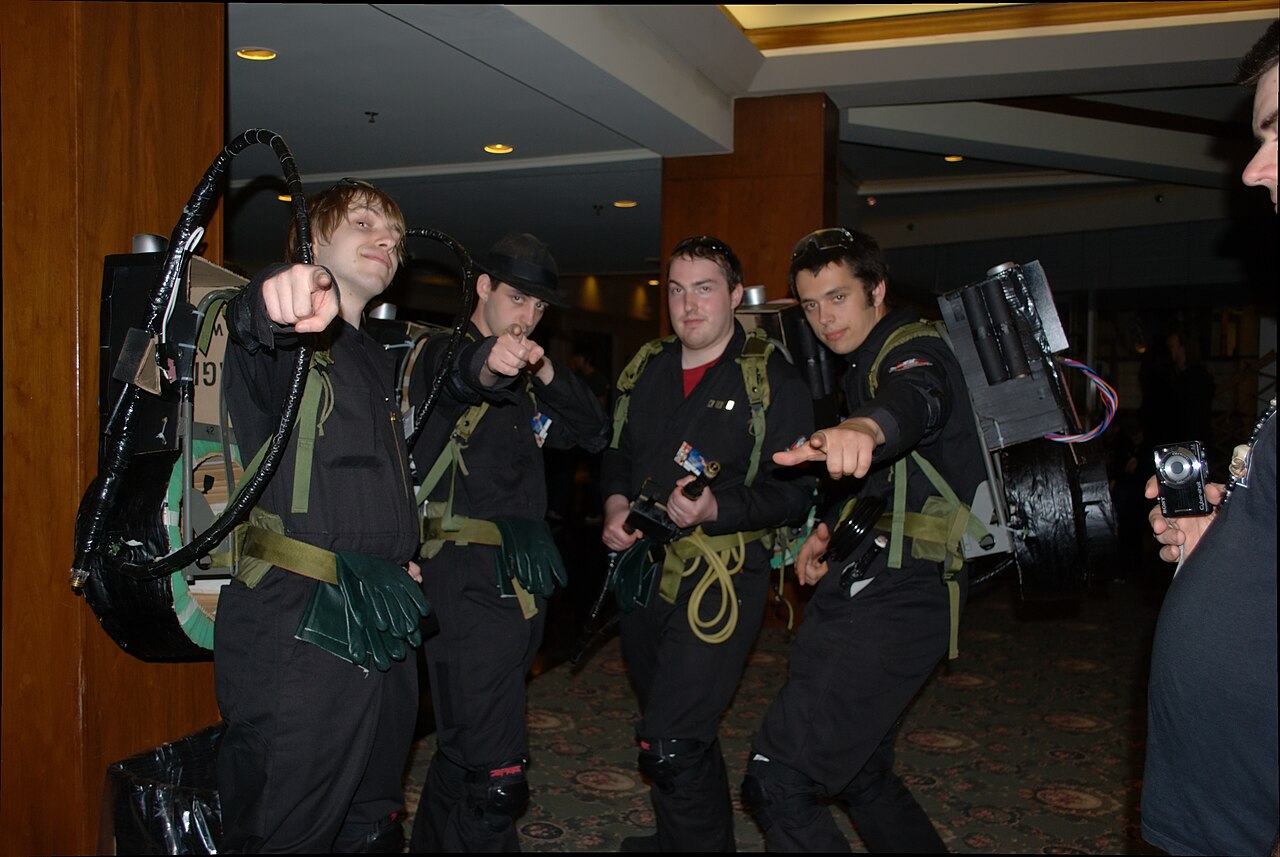
A third-person shooter set two years after Ghostbusters II.

Dave Monk from Seattle, USA · CC BY-SA 2.0
Ghostbusters: The Video Game is a 2009 action-adventure third-person shooter based on the Ghostbusters media franchise. It was developed by Terminal Reality for Windows, PlayStation 3, and Xbox 360, and by Red Fly Studio for PlayStation 2, PlayStation Portable, and Wii. The game follows a new recruit to the Ghostbusters team, known as the Rookie, as they investigate paranormal activities in New York City. Many of the principal cast members from the films reprised their roles, and the game's plot was described by Dan Aykroyd as 'essentially the third movie.'
Quick Facts
- Title
- Ghostbusters: The Video Game
- Developer
- Terminal Reality (PS3, Windows, X360) / Red Fly Studio (PS2, PSP, Wii) / War Drum Studios (PS2) / Saber Interactive / (Remastered) · A.C.R.O.N.Y.M. Games
- Publisher
- Atari Interactive PAL-region releases for PlayStation consoles were published by Sony Computer Entertainment Europe. / Mad Dog Games / (Remastered)
- Director
- Drew Haworth
- Producer
- Michael Duane Fetterman
- Designer
- Andy Dombroski / Glenn Gamble
- Programmer
- Craig Reichard / Nathan Peugh
- Artist
- Austin Cline / Grant Gosler / Robert St Aubin / Daniel Soni
- Writer
- Dan Aykroyd / Harold Ramis / Flint Dille / John Zuur Platten / John Melchior / Patrick Hegarty
- Composer
- Kyle Richards / Chris Rickwood
- Series
- Ghostbusters
- Engine
- Infernal Engine
Facts from the source article.
Lore & Background
Ghostbusters: The Video Game is set in November 1991, two years after the events of Ghostbusters II. The player controls a new recruit called the Rookie, who tests experimental devices for the Ghostbusters. The game features a Proton Pack instead of a traditional gun, with weapons such as the Shock Blast, Slime Blower, and Meson Collider. Players weaken ghosts with a Proton Stream, then use a Capture Stream to maneuver them into a ghost trap. The Proton Pack can overheat, requiring venting. Upgrades are earned by capturing ghosts and identifying cursed artifacts and new ghost species. The game tallies monetary destruction caused by the player, with achievements named after quotes from the films. Health and weapon status are displayed on the back of the Proton Pack, and health regenerates over time. The single-player campaign is the same for PlayStation 3, Windows, and Xbox 360, while the PS2 and Wii versions have a significantly different campaign with mostly identical stories. The Wii version uses the Wii Remote and has a Simon Says-type minigame for slamming ghosts. The DS version, developed by Zen Studios, shares the same plot but is a squad-based tactical game with driving sections and RPG elements, where the player controls the original cast. The PlayStation 3 and Xbox 360 versions feature online multiplayer for up to four players in missions such as capturing ghosts or defending ghost disruptors. The Wii version has offline split-screen multiplayer for the entire single-player mission. Atari shut down the PlayStation 3 online servers in December 2012.
Reader's Guide
Ghostbusters: The Video Game received generally favorable reviews from critics and sold over three million copies. It is notable for featuring the voices and likenesses of the original film cast, including Dan Aykroyd, Harold Ramis, Bill Murray, and Ernie Hudson. Aykroyd and Ramis also aided in script doctoring. The game is Harold Ramis's final portrayal as Egon Spengler in the franchise before his death in 2014, and the remastered edition was posthumously dedicated to him. A remastered version for Windows, Nintendo Switch, PlayStation 4, and Xbox One, developed by Saber Interactive and published by Mad Dog Games, was released on October 4, 2019. The game's plot, set two years after Ghostbusters II, introduces Ivo Shandor as the chief adversary, a character unseen in the films. The game includes the soundtrack from the original film, along with various characters, locations, and props. Aykroyd described the game as 'essentially the third movie.' The game's legacy includes its faithful recreation of the film's atmosphere and its role as a canonical continuation of the story for many fans.
Did You Know?
- Dan Aykroyd and Harold Ramis, who wrote the films, also aided in script doctoring for the game.
- A remastered version was released on October 4, 2019, for Windows, Nintendo Switch, PlayStation 4, and Xbox One.
A Turbulent Path to Release
Ghostbusters: The Video Game emerged from a turbulent production period marked by repeated delays and a shifting roster of publishers before finally reaching shelves in 2009. Two separate development teams handled the various platform builds: Terminal Reality crafted the versions for PlayStation 3, Windows PC, and Xbox 360, while Red Fly Studio took on the PlayStation 2, PlayStation Portable, and Wii editions. Publishing rights were split geographically—Atari Interactive handled every North American release, whereas Sony Computer Entertainment Europe distributed the PS2, PSP, and PS3 titles in European markets. Adding to the complexity, Zen Studios produced an entirely separate Nintendo DS entry under the same name, one that diverged substantially in both gameplay structure and narrative presentation. Despite the logistical challenges of coordinating multiple studios, publishers, and regions, the project ultimately delivered a cohesive franchise experience across an unusually wide range of hardware, from high-definition consoles to handheld and family-friendly systems.
Reimagining the Shooter Through Paranormal Containment
At its core, the game reimagines the third-person shooter through the lens of paranormal containment. Players step into the role of the Rookie, a new recruit learning the ropes alongside the established Ghostbusters team. Rather than wielding conventional firearms, the player's primary tool is the Proton Pack, which fires a stream to weaken spectral entities before switching to a capture mode that funnels them into a ghost trap. The pack carries an overheat limit, forcing players to vent and wait before resuming combat. As the campaign progresses, capturing ghosts and identifying cursed artifacts or new ghost species unlocks additional firing modes—including the Shock Blast, Slime Blower, Meson Collider, Boson Dart, Stasis Stream, Slime Tether, and Overload Pulse. Health is displayed not on a traditional HUD but as meters on the back of the backpack, regenerating over time when no further damage is taken. If the Rookie is knocked down, any surviving team member can revive them; however, if the entire active squad falls, the player must restart from the last checkpoint. The game also tracks monetary destruction, rewarding players through platform-specific achievements for either minimizing or maximizing collateral damage.
The Cast's Final Crew
The game's most enduring quality is the genuine involvement of the original film cast. Dan Aykroyd, Bill Murray, Ernie Hudson, and Harold Ramis all returned to voice and lend their likenesses to their respective Ghostbusters characters, bringing an authenticity that a typical licensed title rarely achieves. Because Aykroyd and Ramis had co-written the original films, they also contributed to script doctoring for the game's dialogue, ensuring the humor and tone matched their source material. Supporting cast members William Atherton and Annie Potts likewise reprised their roles. The production also incorporated the original film's soundtrack along with recognizable characters, locations, and props, weaving the game tightly into the existing cinematic world. For Ramis, this marked his final performance as Egon Spengler before his passing in 2014; the 2019 remastered edition carried a posthumous dedication in his honor. Aykroyd himself later summarized the experience by calling the game essentially the third movie, a sentiment that captures how deeply the cast embraced the project as a natural continuation of their shared creative history.
Sales, Servers, and a Second Life
Critical reception was broadly positive, and commercial performance confirmed the franchise's enduring appeal, with the title moving more than three million copies worldwide. The multiplayer component offered distinct experiences depending on platform: PlayStation 3 and Xbox 360 players could team up with up to three friends in online missions ranging from timed ghost-capture challenges to defending ghost disruptors during their charge-up sequences. The Wii edition stood alone in providing offline split-screen co-op for two players across the full single-player campaign, though an advertised adversarial mode never made it into the final build. The online service ultimately had a finite lifespan—Atari shut down the PlayStation 3 servers in December 2012, citing a steady decline in active players over the preceding three years. The game's legacy was extended a decade later when Saber Interactive developed a remastered edition for Windows, Nintendo Switch, PlayStation 4, and Xbox One, published by Mad Dog Games and launched on October 4, 2019, introducing the experience to a new generation of players.
Gallery


More in Third-Person Shooters 1-24
Spotted an error? Know more?
Reader corrections go straight into our review queue. Suggest an edit · How this site is sourced