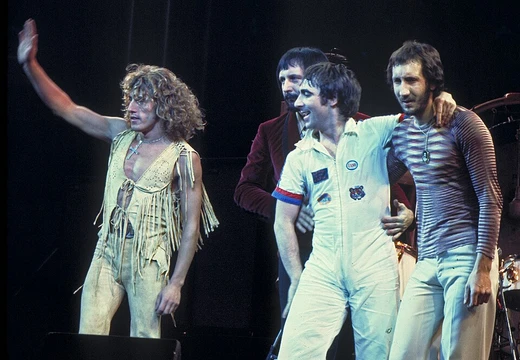
Ball and Chain
A twangy, possessive rockabilly number that turned a metaphor into a howl.
Ball and Chain is a rockabilly-flavored track by The Who, written by Pete Townshend and recorded for the 1967 album The Who Sell Out. It stands apart from the band's usual power-chord anthems, trading wall-of-sound aggression for a twangy, walking-bass groove that channels early rock and roll. The song's subject matter — a possessive narrator treating a woman as a chained commodity — made it one of the most provocative and talked-about cuts on an already controversial record.
In the broader context of The Who Sell Out, which wove together consumerist satire and genuine rock songs, Ball and Chain functions as a dark, swaggering interlude. It showcases the band's willingness to flex genre muscles and confront uncomfortable social dynamics with a grin, cementing Townshend's reputation as a songwriter who was as sharp-tongued as he was sonically inventive.
Quick Facts
- Artist
- the Who
- Album
- Who
- Released
- 13 September 2019
- Recorded
- 2019
- Genre
- Blues rock
- Length
- 4:29
- Label
- Polydor
- Writer
- Pete Townshend
Facts from the source article.
Lore & Background
The Who Sell Out arrived in 1967 as a deliberate provocation: a concept album framing the band as a product to be consumed, with some tracks presented as 'jokes' and others as straight rock. Ball and Chain sits among the latter, yet its subject matter is anything but light. Townshend paints a narrator who speaks of a woman in terms of ownership — a ball and chain she wears, a leash he holds — and the song's rockabilly bounce makes the lyrical content land all the harder. The contrast between the bouncy, almost playful instrumentation and the possessive, dehumanizing words creates a tension that fans still discuss decades later.
Musically, the track is a showcase for John Entwistle's walking bass and Pete Townshend's twangy, chicken-pick guitar work, with Keith Moon laying down a steady, shuffling groove rather than his more typical thunderous fills. Roger Daltrey's vocal delivery is sly and half-smiling, as if the narrator is winking at the listener while saying something deeply uncomfortable. The production, shaped by Shel Talmy, keeps the arrangement tight and let the instruments breathe, giving the song a vintage feel that sits in deliberate contrast to the heavier tracks on the same album.
In the band's broader narrative, Ball and Chain represents Townshend's range beyond the stadium-rock template. It is a song about power, control, and the performance of masculinity, wrapped in a genre that itself carries a history of racial and sexual politics. Fans often point to it as evidence that The Who were never just a 'youth-funk' act — they were a band that could be funny, furious, and deeply unsettling within the span of a single LP.
Reader's Guide
Ball and Chain, from The Who Sell Out (1967). The hook is immediate and physical: a walking bass line that plods forward like a slow stomp, underpinned by a twangy, chicken-picked guitar that snaps and twirls with every downbeat. The chord progression is deceptively simple — a rockabilly loop that never quite resolves, keeping the listener in a state of restless forward motion. Keith Moon's drums sit in the pocket, a steady shuffle that feels more like a jukebox than a stadium, while Roger Daltrey's vocal rides the top of the arrangement with a sneer that is equal parts charm and menace. The production is dry and close, letting each instrument's texture — the bass's growl, the guitar's steel-string bite — speak without a wall of reverb.
Live, the song was a less frequent but memorable set piece. When The Who did play it, the shift from their usual thunder to this lean, bouncy groove caught audiences off guard; the band would often let the rockabilly energy build before the next song exploded back into full power. The contrast made the song hit harder in a live context than on the record.
Culturally, Ball and Chain endures as a touchstone for fans who appreciate The Who's range beyond the obvious anthems. It has been referenced in discussions of rockabilly's afterlife in British rock, and its unflinching lyrical subject matter keeps it in conversation about the band's willingness to write songs that made people squirm. It is not the song most casual listeners reach for, but it is the one that makes them reconsider what the band was actually doing in the studio.
More in Songs & Singles
Elsewhere in The Who
Spotted an error? Know more?
Reader corrections go straight into our review queue. Suggest an edit · How this site is sourced