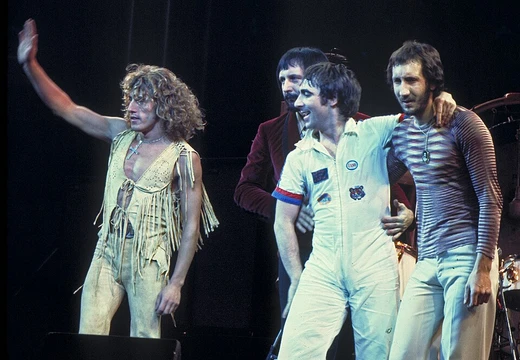
The Small Faces
The mod-rock twin flame of The Who's era—same streets, same swagger, different guitar.
The Small Faces were a British rock band from the mid-to-late 1960s, fronted by the songwriting and performing duo of Steve Marriott and Ronnie Lane. While they were never a literal offshoot or side project of The Who, they occupied the same mod-inflected, working-class London scene and shared the same circuit of clubs, radio stations, and record labels that defined the era in which The Who were forging their identity. In any fan encyclopedia of The Who's broader musical orbit, The Small Faces belong as essential contemporaries—bands that helped define the sound, style, and swagger of British rock in the years immediately surrounding The Who's rise. Their story is one of raw energy, mod aesthetics, and a songwriting partnership that produced some of the era's most distinctive pop-rock. For fans of The Who, The Small Faces represent the other face of the same coin: the same generation, the same London streets, the same hunger to make rock and roll feel like it belonged to the people in the front row.
Quick Facts
- Years active
- 1965–1969; 1975–1978
- Origin
- London, England
- Genre
- Rock
- R&B
- freakbeat
- psychedelia
- Label
- Decca
- RCA Victor
- Immediate
- Atlantic
- Spinoffs
- Faces; Humble Pie
- Past members
- Kenney Jones
- Steve Marriott
- Ronnie Lane
- Jimmy Winston
- Ian McLagan
- Rick Wills
- Jimmy McCulloch
Facts from the source article.
Lore & Background
In the mid-1960s London, the mod scene was the beating heart of British youth culture, and The Small Faces were one of its most electrifying musical expressions. Steve Marriott and Ronnie Lane, both from the East End, brought a street-level grit and melodic instinct that set them apart from the more polished pop acts of the time. Their sound married jangly, surf-influenced guitar work with tight, driving rhythms and lyrics that felt like overheard conversation in a Soho café. Where The Who were building their thunderous, power-chord architecture, The Small Faces were crafting something leaner, more melodic, and deeply rooted in the mod lifestyle—parkas, scooters, and a restless, forward-looking energy. The band's peak came in the latter half of the decade, when tracks like "Itchycoo Park" and "Sha La La La La Lee" became anthems of a generation that identified with both The Who's volume and The Small Faces' wit. They shared the same club circuit, the same radio airwaves, and the same cultural moment. Fans of the era often remember them side by side: The Who for the spectacle and the wall of sound, The Small Faces for the hook, the attitude, and the sense that rock and roll could be both serious and fun simultaneously. When the group eventually split, the musical world did not lose them. Ronnie Lane, with Rod Stewart, formed Faces, carrying forward the same London-rock ethos in a slightly different key. Steve Marriott continued to write and perform, his voice and guitar remaining a touchstone for fans of that particular brand of 1960s British rock. The Small Faces' legacy is inseparable from the broader tapestry of the era that also produced The Who, and any complete picture of that world must include them.
Reader's Guide
The Small Faces were not a sub-unit or spin-off of The Who; they were a separate, fully independent band operating in the same London mod-rock ecosystem during the mid-to-late 1960s. The core partnership was Steve Marriott on lead vocals and guitar and Ronnie Lane on bass and harmonies, supported by a shifting rhythm section that included keyboardist Ken Fordham and drummer Ian Wallis (later replaced by others). Their output was a run of mod-inflected rock singles and albums that captured the restless, stylish energy of the era—tracks like "Itchycoo Park" and "Sha La La La La Lee" became touchstones of the period. Their relationship to The Who's orbit is one of parallel rather than direct connection. Both bands drew from the same well of British working-class rock, shared the same club venues and radio playlists, and contributed to the cultural landscape that made the mid-60s British rock scene so distinctive. Where The Who pushed into power, volume, and theatrical spectacle, The Small Faces leaned into melody, wit, and a lighter touch. They were, in the eyes of many fans, the melodic counterweight to The Who's thunder. After the group's dissolution, Ronnie Lane co-founded Faces with Rod Stewart, extending the London-rock lineage in a new direction. Steve Marriott pursued a solo career. Neither trajectory was a continuation of The Who, but both remained part of the same broad family of British rock that The Who helped define. For a fan exploring The Who's world, The Small Faces are the essential "what else was happening in that same room, that same year" answer.
Did You Know?
- Steve Marriott and Ronnie Lane were both from London's East End, bringing a distinctly working-class sensibility to a scene that was often dominated by more polished, middle-class acts.
- Ronnie Lane's post-Small Faces project, Faces, featured Rod Stewart on vocals and became one of the defining British rock bands of the late 1960s and early 1970s.
- Steve Marriott's distinctive vocal style and jangly guitar work influenced a generation of British rock musicians well beyond the 1960s, even after his solo career following the band's split.
More in Band Members & Collaborators
Elsewhere in The Who
Spotted an error? Know more?
Reader corrections go straight into our review queue. Suggest an edit · How this site is sourced