Hunter (1984 American TV series)
A rule-breaking detective cleans up Los Angeles' dark streets.
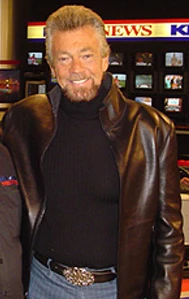
Hunter, a crime drama on NBC from 1984 to 1991, followed Los Angeles homicide detective Rick Hunter, a rule-bending sergeant played by Fred Dryer. Stepfanie Kramer co-starred as his partner, Sergeant Dee Dee McCall, with Charles Hallahan as Captain Charlie Devane. Stephen J. Cannell executive-produced the first season. Kramer left after season six; the final season featured two new partners. Dryer and later Kramer returned for TV movies in the 1990s, and a short-lived revival aired in 2003.
Quick Facts
- Genre
- Crime drama
- Action
- Thriller
- Mystery
- Creator
- Frank Lupo
- Composer
- Mike Post (1984–90)
- Pete Carpenter (1984–90)
- Walter Murphy (1990–91)
- Christopher Franke (2003)
- Country
- United States
- Language
- English
- Seasons
- 7
- Episodes
- 153
- Runtime
- 45–49 minutes
Facts from the source article.
Did You Know?
- Stepfanie Kramer left after the sixth season to pursue other acting and musical opportunities.
- A short-lived revival aired in 2003, consisting of five feature-length episodes.
Premise
Rick Hunter is a plainclothes police detective whose world is filled with pimps, low-lifes and psychopaths, and he will sometimes go to dangerous extremes to apprehend a criminal. This puts him in constant conflict with his straight arrow administrative officer, Lester Cain, a desk-bound officer more concerned with paperwork than cleaning up the streets. Cain requires Hunter to work with a full-time partner, so Hunter recruits Sergeant Dee Dee McCall on the pretense that they will report to headquarters together but then go their own ways. McCall, a hard-edged policewoman with unorthodox detective work, initially agrees only with the assurance they will not actually work together. Forced against their wills, Hunter and McCall gradually develop mutual respect and a close personal bond, making them a very effective team. Hunter's father was a mobster involved in organized crime who was nearly killed in a shoot-out with rival gangsters, leading Hunter to become a police officer. Hunter occasionally contacts relatives and acquaintances in criminal families for information on difficult cases.
Episodes
The two-part pilot aired on a Tuesday night in September 1984, following the third-season opener of The A-Team, and earned strong ratings. Ten days later, starting with its third episode, the show shifted to its regular Friday slot, where it went up against Dallas, the second most-watched program of the 1984–85 season. The series had trouble drawing viewers and faced criticism for its frequent, graphic violence. During the first season, the producers gave the lead character a catchphrase, "Works for me," which appeared up to three times an episode and was even worked into the end of the opening theme by Mike Post and Pete Carpenter. Several early episodes included montages set to songs from the 1960s, 1970s, and 1980s, similar to the style of Miami Vice, another new NBC show that originally aired right after Hunter. Midway through the first season, with ratings still low, Stephen J. Cannell screened the unaired two-part episode "The Snow Queen" for network chief Brandon Tartikoff and asked for more time. Tartikoff agreed and put the show on hiatus until a better slot opened. Two months later, Hunter returned on Saturday nights, and viewership slowly increased. The first season ended ranked 65th. For the second season, Cannell brought in his mentor Roy Huggins, known for Maverick and The Rockford Files, as executive producer. Huggins increased the violence, softened the lead's tense relationship with his bosses, dropped a backstory about Hunter’s mob ties, and highlighted the chemistry between Hunter and McCall. Captain Cain was replaced by Captain Wyler, who treated Hunter with ordinary respect and generally backed him and McCall. The setting moved from back streets to nicer parts of Los Angeles. Dryer and Kramer often improvised scripts, and Hunter broke the fourth wall for the first time at the end of the episode "The Beautiful and the Dead."
Production
In the pilot movie, Hunter’s cars were a blue 1977 Dodge Monaco and a 1970 Ford LTD. Because he wrecked every police car he drove while chasing suspects, the department gave him old, barely running models. During the first season, his rides included a 1972 Chevrolet Impala, a 1971 Chevrolet Nova, a 1974 Plymouth Satellite, and a 1979 Chevrolet Caprice Classic. A 1971 Impala was blown up at the end of episodes that featured Chevrolets. For season two, Hunter sometimes used a beat-up 1977 Monaco with mismatched side panels, plus other 1977 Monacos in yellow, brown, and black. From season three until the first episode of season seven, he drove a moss green 1977 Monaco, which became his signature car; when it was destroyed in season three, an identical one replaced it. In the final season, Hunter got a new silver 1991 Ford LTD Crown Victoria. McCall’s vehicles changed over time: a garnet red and silver 1984 Dodge Daytona Turbo Z for the first two seasons, a bright red 1987 Daytona Shelby Z from season three through five, and a gold 1990 Dodge Dynasty for her last season. During the final season, Officer Joanne Molenski and Sergeant Chris Novak both drove a tan 1991 LTD Crown Victoria. Other undercover officers in season seven used three 1987 Chevrolet Caprice 9C1 sedans in navy blue, silver, or brown.
International airings
In Australia, the show aired on regional station GTS/BKN and PRIME, and on STW-9 in Perth and ATN-7 in Sydney in the 1980s. In Barbados, it was shown on CBC TV 8. In Brazil, Rede Globo broadcast it dubbed in Portuguese. In Canada, it aired on the Global Television Network. In China, it was dubbed in Standard Chinese and aired on STV, becoming one of the first US series to air regularly there. Kramer was invited to China to sing at the Shanghai TV & Film Festival. The series is a favorite of disgraced former Beijing Mayor Chen Xitong. In Mexico, the series was shown as El Cazador on Canal Cinco. In Chile, it aired as Hunter on TVN until the sixth season. In Croatia, it was shown on HRT. In Colombia, it aired as El Cazador on Cadena Uno from 1987 to 1991, with the final season in 1993. In Costa Rica, it was shown on Teletica Canal 7 as El cazador. In the Czech Republic, it aired on TV Prima. In Egypt, it was shown on Channel 2 during the 1990s. In France, it aired on TF1 as Rick Hunter inspecteur choc. In Germany, it was shown on Sat.1. In Greece, it aired on Star Channel. In Hungary, it was shown on Viasat 3. In Gibraltar, it aired on GBC TV. In Hong Kong, ATV broadcast it. In Indonesia, it was shown on TVRI. In Israel, it aired on Israel 10. In Italy, it was shown on Rai Due. In Japan, it aired on TBS and TV Tokyo. In Lebanon, it was shown on LBCI. In the Netherlands, it aired on RTL 4. In Pakistan, it aired on Pakistan Television. In the Philippines, it aired on RPN-9. In Sweden, it was shown on TV4. In Thailand, it aired on Channel 3. In Turkey, it was shown on Star TV and Kanal D. In the United Kingdom, the first two seasons aired regionally on ITV, the remainder on Sky One.
Frequently Asked Questions
Who created Hunter (1984 American TV series)?
Hunter was created by Frank Lupo.
How many episodes of Hunter (1984 American TV series) are there?
Hunter has 153 episodes across 7 seasons.
When did Hunter (1984 American TV series) first air?
Hunter first aired on 18 September 1984.
When did Hunter (1984 American TV series) end?
Hunter last aired on 26 April 1991.
More in Television Series by Stephen J. Cannell Productions
Spotted an error? Know more?
Reader corrections go straight into our review queue. Suggest an edit · How this site is sourced