City of Angels (1976 TV series)
A private eye navigates 1930s Los Angeles corruption.
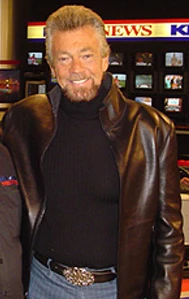
A 1976 American private eye series, City of Angels was the creation of Stephen J. Cannell and Roy Huggins, who had previously worked together on The Rockford Files. Mystery writer Max Allan Collins has called it the finest private eye series ever made.
Quick Facts
- Creator
- Stephen J. Cannell; Roy Huggins
- Starring
- Wayne Rogers
- Elaine Joyce
- Clifton James
- Philip Sterling
- Timmie Rogers
- Country
- United States
- Executive producers
- Jo Swerling Jr.
- Company
- Roy Huggins-Public Arts Productions; Universal Television
- Network
- NBC
- First aired
- 3 February 1976
- Last aired
- 18 May 1976
Facts from the source article.
Plot
Wayne Rogers stars as Jake Axminster, a private eye scraping by in 1930s Los Angeles who is tough and resourceful but not above cutting corners to survive the city’s pervasive corruption. He gets help from his secretary, Marsha Finch, a blonde who runs a call-girl operation on the side, and his lawyer, Michael Brimm, who often bails him out of charges—usually fabricated—brought by Lieutenant Murray Quint, a corrupt, overweight LAPD officer who never seems to put down his cigar. Axminster doesn’t fully trust anyone, not even Brimm. He tools around in a 1934 convertible Studebaker and works out of the historic Bradbury Building in downtown L.A., charging $25 a day plus expenses. Despite being called “Mr. Play-It-Safe” by his attorney, he regularly stirs up trouble by helping friends and badgering the police, which usually gets him beaten up. To document police brutality, he has nude photos taken of himself after interrogations. He’s a heavy coffee drinker, always in debt, and borrows cash from friends and his shoeshine man, Lester.
Background
Drawing from the 1974 film Chinatown, City of Angels offered a grim look at Depression-era Los Angeles, a city where Hollywood glamour and crime were locked in a fierce rivalry. The series also took inspiration from Roy Huggins’ 1946 detective novel The Double Take, which had previously served as the basis for another Huggins show, 77 Sunset Strip. Each episode was rooted in real historical events. The three-part pilot, “The November Plan,” dramatized the 1933 Business Plot, a scheme by wealthy businessmen to oust President Franklin D. Roosevelt. Another episode, “The Castle of Dreams,” centered on a high-end brothel where prostitutes resembled movie stars, modeled after the real T&M Studio, later reimagined in L.A. Confidential as the “Fleur de Lis Club.” Storylines also touched on Nazism, communism, hoboes riding the rails, and the Ku Klux Klan. Like the earlier series Banyon, City of Angels had a brief run, with only 13 hour-long episodes produced before NBC pulled the plug. Critics felt audiences struggled to warm to Wayne Rogers as a hard-boiled detective. TV Guide’s Cleveland Amory noted that Rogers didn’t seem fully comfortable in the role but delivered the Bogart-style dialogue with charm. Co-creator Huggins reportedly believed Rogers was miscast. Rogers himself was unhappy, with an associate claiming he tore up scripts and rewrote them on set. He called the show “a classic example of convoluted, disconnected, bad storytelling.” The first three episodes, written by Steve Cannell, drew audience shares of 50%, 31%, and 29%, but Rogers said later installments couldn’t keep up Cannell’s pace, and the show’s ratings collapsed.
Frequently Asked Questions
Who stars in City of Angels (1976 TV series)?
City of Angels stars Wayne Rogers, Elaine Joyce, Clifton James, Philip Sterling and Timmie Rogers.
When did City of Angels (1976 TV series) first air?
City of Angels first aired on 3 February 1976.
When did City of Angels (1976 TV series) end?
City of Angels last aired on 18 May 1976.
More in Television Series by Stephen J. Cannell Productions
Spotted an error? Know more?
Reader corrections go straight into our review queue. Suggest an edit · How this site is sourced