Superior mesenteric artery syndrome
Compression of the duodenum between the aorta and superior mesenteric artery.
Last updated
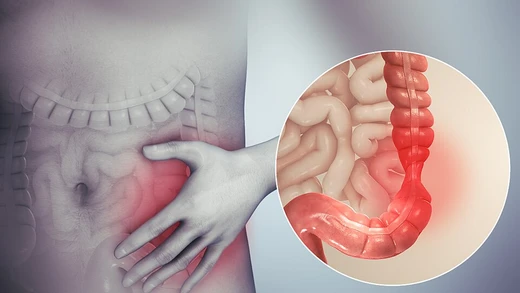
Superior mesenteric artery (SMA) syndrome is a rare gastro-vascular disorder in which the third portion of the duodenum is compressed between the abdominal aorta and the superior mesenteric artery. It is typically caused by a narrowed angle of 6–25° between these vessels, due to a lack of retroperitoneal and visceral fat. The condition is also known as Wilkie's syndrome, cast syndrome, and several other names, and is distinct from nutcracker syndrome.
Quick Facts
- Field
- Gastroenterology, general surgery
Facts from the source article.
Signs and symptoms
Symptoms include early satiety, nausea, vomiting, extreme stabbing postprandial abdominal pain, abdominal distention, burping, external abdominal tenderness, reflux, and heartburn. Infants may show feeding difficulties and poor weight gain.
Severe malnutrition can create a worsening cycle of duodenal compression. Fear of eating is common in chronic cases. Symptoms are partially relieved by the left lateral decubitus, knee-to-chest, or prone position, and by the Hayes maneuver, but aggravated by leaning right or lying face up.
Causes
Retroperitoneal fat and lymphatic tissue normally cushion the duodenum; their insufficiency triggers SMA syndrome. The chronic congenital form involves a lengthy history of abdominal complaints and risk factors such as asthenic body build, high duodenal insertion at the ligament of Treitz, low SMA origin, or intestinal malrotation.
Predisposition is aggravated by poor motility, retroperitoneal tumors, weight loss, cachexia, exaggerated lumbar lordosis, abdominal trauma, rapid adolescent growth, and neurological injury. The acute form develops rapidly after traumatic incidents or sudden weight loss, including prolonged supine bed rest, scoliosis surgery, left nephrectomy, or ileo-anal pouch surgery. Differentiation from anorexia nervosa is difficult.
Diagnosis
Diagnosis is difficult and usually one of exclusion after extensive gastrointestinal evaluation. X-ray may show duodenal dilation with abrupt constriction proximal to the SMA and a 4–6 hour gastroduodenal transit delay. Standard exams include abdominal and pelvic CT with contrast, upper gastrointestinal series, and hypotonic duodenography.
Vascular imaging such as ultrasound and contrast angiography can indicate increased SMA bloodflow velocity or narrowed SMA angle. Controversy exists because symptoms do not always correlate with radiologic findings and may persist after surgical correction, sometimes due to remaining reversed peristalsis. Females aged 10–30 are most frequently affected, leading to possible misattribution of emaciation to patient choice.
Treatment
At least 70% of cases can be treated medically, with the rest requiring surgery. Medical treatment aims at weight gain and resolving underlying conditions, and may include nasogastric tube decompression, prone or left lateral decubitus positioning, nutritional support via jejunal feeding tube, nasogastric intubation, or total parenteral nutrition, and pro-motility agents like metoclopramide. A six-week medical trial is recommended in pediatric cases.
If medical treatment fails or is not feasible, surgical intervention is needed. The most common operation is duodenojejunostomy, first proposed in 1907 by Bloodgood, performed open or laparoscopically. Less common options include Roux-en-Y duodenojejunostomy, gastrojejunostomy, anterior transposition of the duodenum, intestinal derotation, division of the ligament of Treitz (Strong's operation), and transposition of the SMA, the latter two avoiding intestinal anastomosis.
Did You Know?
- Delay in diagnosis can lead to fatal catabolysis, acute gastric rupture, intestinal perforation, hypovolemic shock, or aspiration pneumonia.
- Two studies reported mortality rates of 0% (2006, 22 cases) and 6.3% (2012, 80 cases).
- The most common co-morbid conditions include eating disorders, depression, tuberculosis, muscular dystrophy, Parkinson's disease, and cerebral palsy.
More in Syndromes Affecting the Gastrointestinal Tract
Sources
Compiled from Wikipedia and the sources listed below. Text from Wikipedia is available under CC BY-SA 4.0; this entry is adapted from it.
- Wikipedia: Superior mesenteric artery syndrome (CC BY-SA 4.0).
- Word definitions: the , each quoted from its Wikipedia article.
Spotted an error? Know more?
Reader corrections go straight into our review queue. Suggest an edit · How this site is sourced