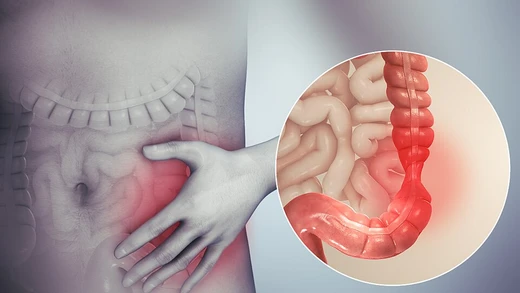
SIBO
Excess bacteria in the small intestine causing malabsorption and diverse symptoms.
Last updated
Small intestinal bacterial overgrowth (SIBO) is a disorder marked by excessive bacterial growth in the small intestine, where bacterial counts are normally low. It can produce symptoms such as nausea, bloating, diarrhea, and malabsorption, and is diagnosed via jejunal aspirate culture or breath tests. Treatment often involves antibiotics or an elemental diet, sometimes with prokinetic drugs to prevent recurrence.
Quick Facts
- Synonym
- bacterial overgrowth, small bowel bacterial overgrowth syndrome (SBBOS)
Facts from the source article.
Signs and symptoms
SIBO produces a range of symptoms that overlap with other conditions, complicating diagnosis. Many arise from malabsorption due to bacterial metabolism or inflammation of the small bowel. Common complaints include nausea, flatus, constipation, bloating, abdominal distension, abdominal pain or discomfort, diarrhea, fatigue, and weakness.
Increased intestinal permeability may occur. Some patients experience weight loss, and children may develop malnutrition with impaired growth. Steatorrhea, a fatty diarrhea from fat malabsorption, can also appear. Long-standing SIBO may lead to nutritional deficiencies detectable in blood tests.
Elevated folate levels are common, while vitamin B12 deficiency occurs less often; the combination of high folate and low B12 is unusual. Anemia can result from various mechanisms, as nutrients needed for red blood cell production are absorbed in the affected small bowel. Iron malabsorption in the duodenum and jejunum may cause microcytic anemia with small red blood cells, whereas vitamin B12 malabsorption in the ileum can produce megaloblastic anemia with large red blood cells.
Causes
Certain factors predispose individuals to SIBO, grouped into four categories: motility disorders or anatomical changes causing stasis; immune system disorders; interference with proteolytic enzymes, gastric acid, or bile; and conditions that allow colonic bacteria to enter the small bowel. Impairment of the migrating motor complex (MMC), especially phase III, is linked to SIBO development. MMC dysfunction may result from post-infectious IBS, drug use, or intestinal pseudo-obstruction.
There is overlap among tropical sprue, post-infectious IBS, and SIBO in pathophysiology, and SIBO can be triggered by acute gastrointestinal infection. As of 2020, controversy remains about SIBO's role in common functional symptoms like those in IBS. Scleroderma causes diffuse bowel slowing, raising bacterial concentrations. Anatomical problems such as diverticula can accumulate bacteria.
After stomach or duodenal surgery, particularly Billroth II antrectomy, a blind loop may form, leading to stasis and overgrowth (blind loop syndrome). Systemic disorders like diabetes can cause intestinal neuropathy; pancreatitis may impair digestive enzyme production; cirrhosis can affect bile. Use of proton pump inhibitors is associated with increased SIBO risk.
Diagnosis
Malabsorption can be assessed with the D-xylose absorption test, where a patient drinks D-xylose and levels are measured in urine and blood; absence suggests poor small bowel absorption rather than enzyme problems. However, aspiration reliability is questioned because SIBO can be patchy, and reproducibility may be as low as 38%. Some clinicians incorporate response to treatment into diagnosis. Breath tests are based on bacterial metabolism of carbohydrates to hydrogen, methane, or hydrogen sulfide, or on detection of by-products of carbohydrate digestion.
The hydrogen breath test involves fasting for at least 12 hours, then drinking glucose or lactulose, and measuring exhaled hydrogen and methane over several hours; it compares well to jejunal aspirates. Carbon-13 and carbon-14 tests use bacterial metabolism of D-xylose. The glycocholic acid breath test administers 14C glycocholic acid and detects elevated 14CO2 in SIBO. Breath tests can be imperfect: methanogens in the mouth may affect results, and they yield multiple false positives, but are commonly used due to being noninvasive and inexpensive.
Treatment
Treatment strategies aim to identify and correct root causes, resolve nutritional deficiencies, and administer antibiotics, especially for patients with indigestion and malabsorption. Whether antibiotics should be first-line is debated; some experts recommend probiotics first, reserving antibiotics for more severe cases. Prokinetic drugs are another option, but human research is limited. Various antibiotics have been used, including tetracycline, amoxicillin-clavulanate, metronidazole, neomycin, cephalexin, and trimethoprim-sulfamethoxazole, but the best evidence supports rifaximin, a poorly absorbed antibiotic.
Although IBS responds to poorly absorbed antibiotics, evidence for SIBO is limited, and randomized controlled trials are still needed as of 2020. A one-week antibiotic course is usually sufficient, but if recurrence occurs, antibiotics may be given cyclically—for example, one week on, three weeks off—or the antibiotic choice can be cycled to prevent tolerance. Data guiding antibiotic strategies remain limited, and therapy is largely empiric, with concerns about long-term broad-spectrum antibiotic risks.
Probiotics alter bowel flora beneficially; animal research shows barrier-enhancing, antibacterial, immune-modulating, and anti-inflammatory effects. Lactobacillus casei improved breath hydrogen scores after six weeks. Lactobacillus plantarum, Lactobacillus acidophilus, and Lactobacillus casei have shown effectiveness, while Lactobacillus fermentum and Saccharomyces boulardii were ineffective. A combination of Lactobacillus plantarum and Lactobacillus rhamnosus suppresses abnormal gas-producing organisms in the small intestine.
Did You Know?
- As of 2020, the definition of SIBO as a clinical entity lacks precision and consistency.
- The main obstacle to accurately defining SIBO is limited understanding of the normal intestinal microbial population.
More in Syndromes Affecting the Gastrointestinal Tract
Sources
Compiled from Wikipedia and the sources listed below. Text from Wikipedia is available under CC BY-SA 4.0; this entry is adapted from it.
- Wikipedia: Small intestinal bacterial overgrowth (CC BY-SA 4.0).
- Word definitions: the , each quoted from its Wikipedia article.
Spotted an error? Know more?
Reader corrections go straight into our review queue. Suggest an edit · How this site is sourced