Peutz–Jeghers syndrome
A hereditary polyposis syndrome with elevated cancer risk.
Last updated
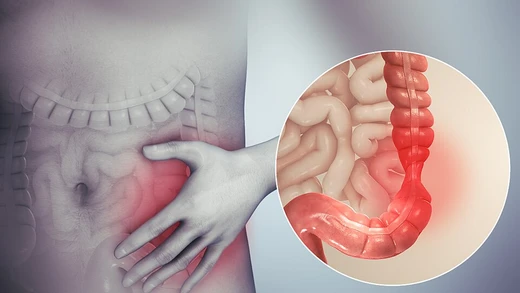
Peutz–Jeghers syndrome is an autosomal dominant genetic disorder marked by benign hamartomatous polyps in the gastrointestinal tract and hyperpigmented macules on the lips and oral mucosa. It is classified among hereditary intestinal polyposis syndromes and hamartomatous polyposis syndromes. The condition has an incidence of approximately 1 in 25,000 to 300,000 births.
Quick Facts
- Named after
- Jan Peutz, Harold Jeghers
Facts from the source article.
Signs and symptoms
The syndrome carries a substantial cancer risk, particularly for breast and gastrointestinal malignancies. Colorectal cancer is the most common, with a lifetime risk of 39 percent, followed by breast cancer in females at 32 to 54 percent. Other organs at increased risk include the liver, lungs, ovaries, uterus, testes, and others; specifically, sex-cord stromal tumor with annular tubules in the ovaries is associated.
The first presentation is often bowel obstruction or intussusception from hamartomatous polyps. Over 95 percent of individuals have dark blue, brown, or black pigmented mucocutaneous macules, which usually appear before age 5 and may fade during puberty; these macules are not malignant. Complications include obstruction and intussusception in up to 69 percent of patients, typically first between ages 6 and 18, and anemia from gastrointestinal bleeding.
Genetics
In 1998, a mutation in the STK11 (LKB1) gene on chromosome 19 was found to be associated with the syndrome; this gene is a possible tumor suppressor. It is inherited in an autosomal dominant pattern, giving a 50 percent chance of passing the condition to offspring. The syndrome is rare, and studies are limited by small patient numbers, selection bias, and historical bias, leading to variable cancer risk estimates. Reported risks include 18–21 percent for ovarian cancer, 9 percent for endometrial cancer, and 10 percent for cervical cancer (specifically adenoma malignum).
Diagnosis
Clinical diagnosis requires two of three criteria: family history; mucocutaneous hyperpigmentation on the mouth, hands, and feet (oral lesions appear first and are key for early diagnosis, most often on the gingiva, hard palate, inside the cheek, and lower lip); and hamartomatous polyps in the gastrointestinal tract. Oral findings are also seen in Addison's disease and McCune–Albright syndrome, which should be considered in the differential diagnosis. 90–100 percent of clinically diagnosed patients have a mutation in STK11/LKB1, and molecular genetic testing is available.
Prognosis
Most patients develop melanotic macules on the lips and oral mucosa during the first year of life, and the first bowel obstruction from intussusception usually occurs between ages 6 and 18. Cumulative lifetime cancer risk rises in middle age; by age 70, risks for all cancers, gastrointestinal cancers, and pancreatic cancer are 85%, 57%, and 11%, respectively.
A 2011 Dutch study of 133 patients over 14 years found cumulative cancer risks of 40% at age 40 and 76% at age 70; 42 patients died, 28 from cancer, at a median age of 45, with increased mortality versus the general population. A family with sinonasal polyposis followed for 28 years had two cases of sinonasal adenocarcinoma, suggesting possible need for sinus polyp follow-up. Suggested surveillance includes small bowel radiography every two years, esophagogastroduodenoscopy and colonoscopy every two years, yearly pancreatic CT or MRI, yearly pelvic and testicular ultrasound, annual mammography from age 30, and annual Pap smear from age 18–20.
Did You Know?
- The syndrome was first described in a 1921 case report by Dutch internist Jan Peutz, and later formalized by Harold Joseph Jeghers, Kermit Harry Katz, and Victor Almon McKusick in 1949.
- The American Cancer Society advises yearly physical exams with blood counts and gastrointestinal cancer screening no later than age 10.
- Regular surveillance of polyps helps prevent complications including bleeding and intussusception.
More in Syndromes Affecting the Gastrointestinal Tract
Sources
Compiled from Wikipedia and the sources listed below. Text from Wikipedia is available under CC BY-SA 4.0; this entry is adapted from it.
- Wikipedia: Peutz–Jeghers syndrome (CC BY-SA 4.0).
- Word definitions: the , each quoted from its Wikipedia article.
Spotted an error? Know more?
Reader corrections go straight into our review queue. Suggest an edit · How this site is sourced