Ogilvie syndrome
Acute colonic pseudo-obstruction without mechanical obstruction.
Last updated
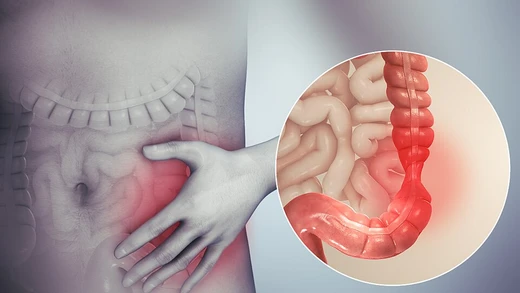
Ogilvie syndrome, also known as acute colonic pseudo-obstruction, is the sudden dilatation of the colon in severely ill patients without any mechanical blockage. It is characterized by massive dilation of the cecum and right colon, often exceeding 10 cm in diameter on abdominal X-ray. The condition was first reported in 1948 by the British surgeon Sir William Heneage Ogilvie.
Quick Facts
- First reported by
- Sir William Heneage Ogilvie
- Year first reported
- 1948
- Cecal diameter threshold
- > 10 cm / 3.94 in
- Mortality rate
- up to 30%
Facts from the source article.
Pathophysiology
The precise mechanism underlying Ogilvie syndrome remains unknown, but an imbalance in autonomic nervous system regulation of colonic motor activity is the probable explanation. Reactivation of varicella zoster virus in the enteric ganglia has been postulated as a possible cause. Normal colonic motility depends on the integration of myogenic, neural, and hormonal influences; the enteric nervous system, though independent, connects to the central nervous system via sympathetic and parasympathetic nerves.
Enteric neurons target muscle, secretory, endocrine, and inflammatory cells as well as microvasculature. A food bolus stimulates these neurons by distending the gut and activating mucosal surfaces, releasing factors that excite interneurons. These interneurons send excitatory signals proximally and inhibitory signals distally, mediated by neurotransmitters such as acetylcholine and serotonin.
Massive dilation can lead to ischemic necrosis, explained by Pascal's law and Laplace's law. Pascal's principle states that pressure in an enclosed fluid is transmitted equally; Laplace's law shows wall tension is proportional to radius, so a dilated segment experiences greater tension, potentially obstructing blood flow and causing ischemia. Ogilvie syndrome may also precipitate volvulus.
Treatment
The condition often resolves with conservative measures such as stopping oral intake and placing a nasogastric tube. If needed, colonoscopic decompression succeeds in about 70% of cases. Neostigmine is a potent pharmacological option for colonic decompression and, according to the American Society for Gastrointestinal Endoscopy, should be considered before colonoscopy. However, neostigmine carries risks of bradyarrhythmia and bronchospasm, so atropine must be kept immediately available.
Did You Know?
- Ogilvie syndrome may occur after surgery, particularly coronary artery bypass surgery and total joint replacement.
- Drugs that disturb colonic motility, such as anticholinergics or opioid analgesics, contribute to its development.
- Drug-induced megacolon from clozapine has been associated with mortality as high as 27.5%.
More in Syndromes Affecting the Gastrointestinal Tract
Sources
Compiled from Wikipedia and the sources listed below. Text from Wikipedia is available under CC BY-SA 4.0; this entry is adapted from it.
- Wikipedia: Ogilvie syndrome (CC BY-SA 4.0).
- Word definitions: the , each quoted from its Wikipedia article.
Spotted an error? Know more?
Reader corrections go straight into our review queue. Suggest an edit · How this site is sourced