Underweight
A health condition defined by low body weight.
Last updated

Health Icons contributors · CC0
Underweight refers to a person whose body weight is low enough to be considered unhealthy. It is typically defined as having a body mass index (BMI) below 18.5, or weighing 15% to 20% less than the average for someone of the same age and height. Although obesity gets more attention in wealthy nations, being underweight also poses serious health risks and is a leading cause of death in developing countries.
To assess underweight, BMI—a ratio of weight to height—is commonly used, with a cutoff of 18.5 kg/m². Another method compares a person’s weight to the average for a similar age and height group; those falling 15% to 20% below that average are considered underweight. Body fat percentage offers an alternative measure, accounting for differences between fat and muscle. The American Council on Exercise sets essential fat levels—below which a person is underweight—at 10–13% for women and 2–5% for men, with women needing more fat for reproductive health.
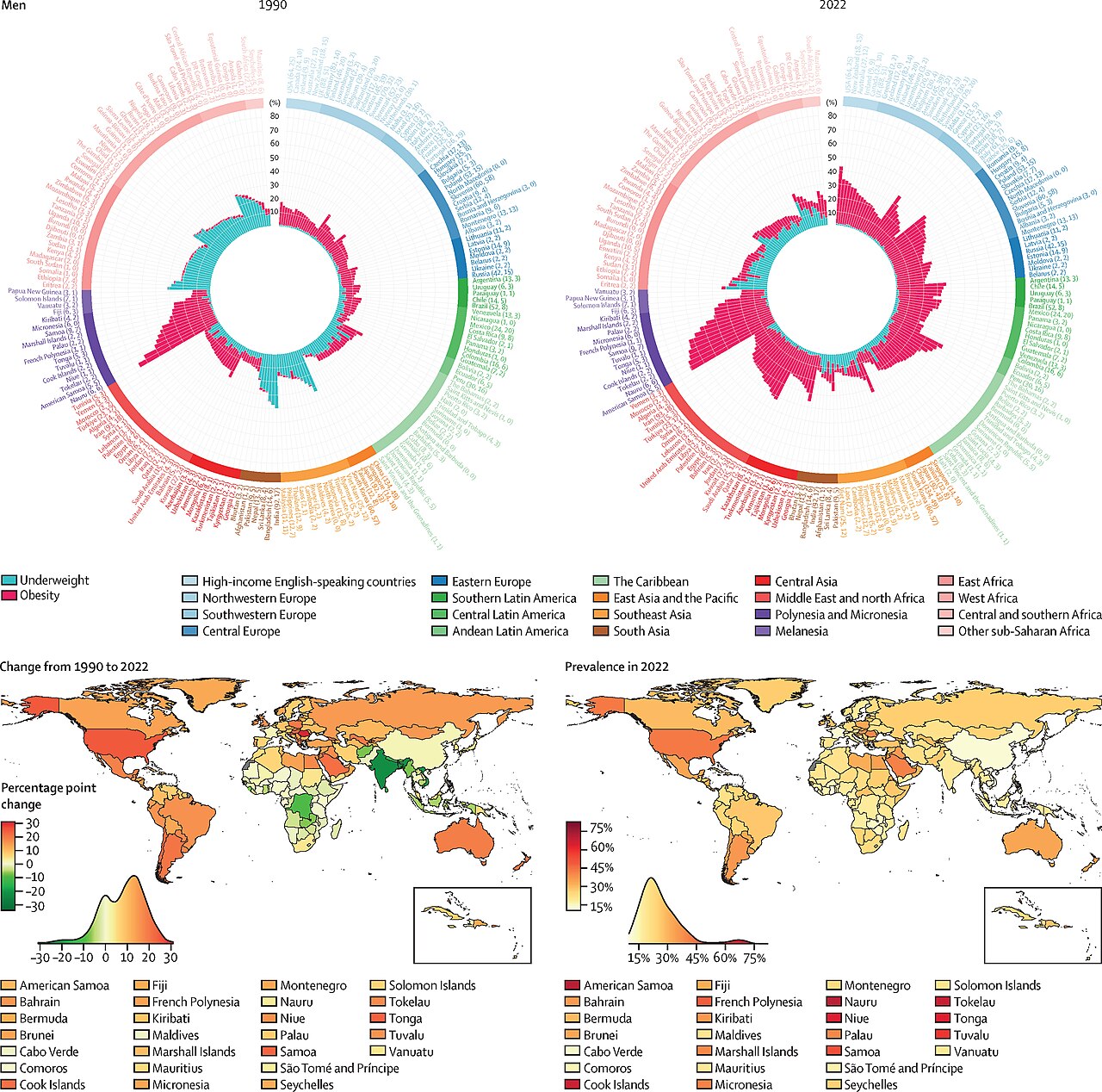
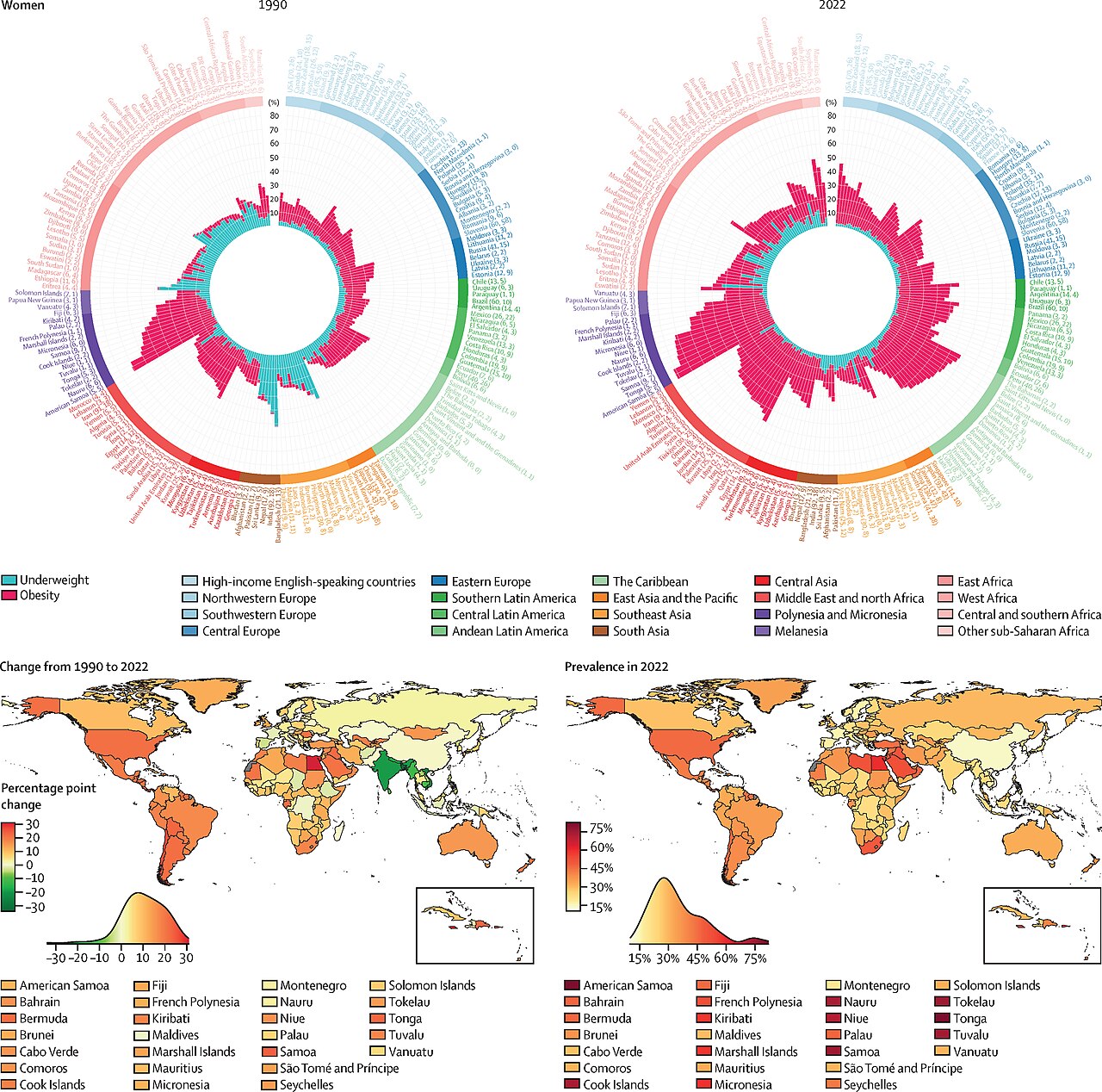
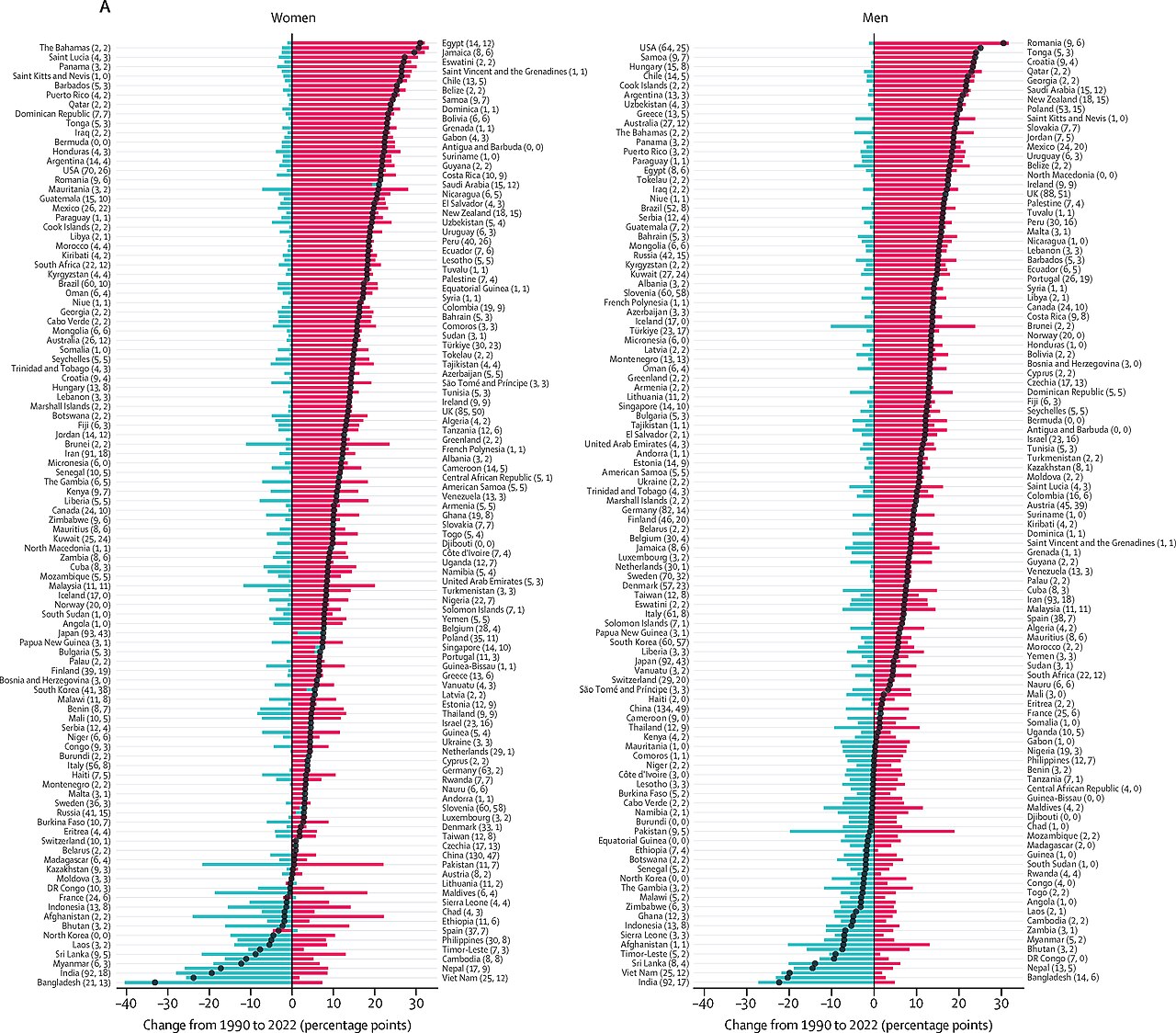
Globally, underweight prevalence has declined. In 2014, age-standardized rates were 9.7% for women and 8.8% for men, down from 14.6% and 13.8% in 1975.
Causes
Causes include genetics, poor nutrient absorption, a fast metabolism, high energy expenditure, food scarcity (often due to poverty), low appetite, appetite-affecting drugs, physical or mental illness, and anorexia nervosa. Medical conditions like type 1 diabetes, hyperthyroidism, cancer, and tuberculosis are linked to underweight, as are gastrointestinal or liver problems that hinder nutrient absorption. Eating disorders can also lead to underweight through nutrient deficiencies or excessive exercise. Contrary to common belief, underweight individuals (BMI under 18.5) actually eat about 12% fewer calories and are 23% less physically active than those with a normal BMI, often due to low appetite and infrequent eating.
Problems
Being underweight can be secondary—a symptom of an underlying condition—or primary, causing other health issues. Severely underweight people may have poor stamina and weakened immune systems, increasing infection risk. Malnutrition also impairs immune defenses and is considered an underlying cause of death when followed by infectious diseases. Inadequate intake of calories, essential amino acids, and micronutrients like vitamins and minerals is a major concern.
Quick Facts
- Field
- Endocrinology
Facts from the source article.
Lore & Background
Underweight is assessed primarily through body mass index (BMI), a ratio of weight to height, with a cut-off point of 18.5 kg/m². Another measure compares an individual's weight to the average of a similar age and height cohort, with those 15% to 20% below considered underweight. Body fat percentage has also been suggested as an alternative assessment, with the American Council on Exercise defining essential fat thresholds below which a person is underweight as 10–13% for women and 2–5% for men, reflecting the greater essential fat needed for reproductive function in women.
Causes of being underweight include genetics, poor nutrient absorption, increased metabolic rate or energy expenditure, lack of food (often due to poverty), low appetite, drugs affecting appetite, illness (physical or mental), and the eating disorder anorexia nervosa. Associated medical conditions include type 1 diabetes, hyperthyroidism, cancer, and tuberculosis. Underweight individuals tend to eat about 12% fewer calories than those with normal BMI and are 23% less physically active.
Being underweight can be a symptom of an underlying condition (secondary) or can cause other conditions (primary). Severely underweight individuals may have poor physical stamina, a weak immune system, and increased infection risk.
In women, severe underweight can result in amenorrhea, infertility, or pregnancy complications. It is also an established risk factor for osteoporosis, even in young people. Treatment approaches include increasing calorie intake through diet or liquid supplements, exercise to promote muscle hypertrophy and bone density, and appetite stimulants such as certain antidepressants, antipsychotics, or medicinal cannabis where approved.
Defining and Measuring Underweight Status
The concept of underweight is typically anchored to a body mass index threshold of 18.5, calculated by dividing a person's mass in kilograms by the square of their height in meters. Anyone falling below that line is classified as underweight by conventional standards. An alternative approach compares an individual's weight against the average for a peer group of similar age and height; a deficit of fifteen to twenty percent below that cohort average also flags underweight status.
Beyond these proxy measures, body fat percentage offers a more nuanced lens because it distinguishes between adipose tissue and muscle tissue rather than treating all mass as equivalent. The American Council on Exercise sets essential fat floors at ten to thirteen percent for women and two to five percent for men, with the higher female threshold reflecting the physiological demands of reproductive function. Together, these tools provide a multi-dimensional picture of whether a person's weight falls into a range that poses genuine health risks.

Root Causes and Contributing Factors
Underweight status rarely springs from a single source. Genetic predisposition, a naturally elevated metabolic rate, and chronic low appetite can all keep a person's mass below healthy levels. In developing regions, poverty-driven food scarcity remains a dominant driver. Medical conditions also play a major role: type 1 diabetes, hyperthyroidism, cancer, and tuberculosis are all linked to low body weight, while gastrointestinal or liver disorders can impair the body's ability to absorb nutrients even when food is available.
Eating disorders, particularly anorexia nervosa, compound the problem through deliberate restriction or excessive exercise that deepens nutrient deficiencies. A persistent myth holds that slim, healthy individuals simply eat whatever they like and burn it off through activity or a fast metabolism. Research contradicts this: people with a BMI below 18.5 actually consume roughly twelve percent fewer calories than those in the normal range and are about twenty-three percent less physically active. They tend to eat small amounts, irregularly, and with low overall appetite.
Health Consequences and Mortality Risk
The dangers of being underweight extend well beyond visible frailty. Severely underweight individuals often suffer diminished physical stamina and a compromised immune system, making them vulnerable to infections. Robert E. Black of the Johns Hopkins School of Public Health emphasized that underweight status and micronutrient deficiencies weaken both immune and non-immune host defenses, and should be classified as underlying causes of death when followed by terminal infectious diseases. In women, severe underweight—frequently tied to eating disorders or extreme exercise regimens—can trigger amenorrhea, infertility, and dangerous complications during pregnancy when gestational weight gain is insufficient.
Malnourishment also manifests as anemia and hair loss. Perhaps most critically, underweight is a well-established risk factor for osteoporosis, even in young people. In the context of relative energy deficiency in sport, formerly called the female athlete triad, disordered eating or overtraining leads to hormonal shifts that erode bone mineral density; once spontaneous fractures occur, the damage is often irreversible. While underweight has been linked to mortality rates comparable to morbid obesity, the effect softens considerably when limited to non-smokers without pre-existing disease, suggesting smoking and illness-related weight loss drive much of the observed risk.
Treatment and Recovery Strategies
Recovering from underweight status typically involves a combination of nutritional and physical interventions. The most direct approach is increasing caloric intake through calorie-dense foods consumed in sufficient volume, or through liquid nutritional supplements that deliver concentrated energy. Exercise, particularly weight lifting, serves a dual purpose: it builds muscle mass through hypertrophy and simultaneously improves bone mineral density, a deficit common among underweight individuals. Although exercise is initially catabolic and causes a brief mass reduction, the recovery phase triggers anabolic overcompensation—muscles grow through increased protein synthesis and enhanced glycogen storage—resulting in net mass gain.
Physical activity can also stimulate appetite in individuals who struggle to eat regularly. For those whose appetite remains suppressed, certain medications may help. Antidepressants such as mirtazapine and amitriptyline, antipsychotics including chlorpromazine and haloperidol, and tetrahydrocannabinol have all been noted for their appetite-stimulating properties, whether as a primary pharmacological effect or a secondary side effect.
Reader's Guide
Underweight is a significant health concern globally, particularly in developing countries where it is a primary cause of mortality. Its prevalence has declined worldwide from 1975 to 2014, with age-standardized rates dropping from 14.6% to 9.7% in women and from 13.8% to 8.8% in men, indicating progress in reducing undernutrition. However, the condition remains a major public health issue, carrying risks comparable to those of morbid obesity in terms of increased mortality, though this effect is less drastic when restricted to non-smokers without disease history, suggesting smoking and disease-related weight loss are leading contributors.
The assessment of underweight has evolved beyond simple BMI to include body fat percentage, which accounts for differences between adipose and muscle tissue. This nuance is important because underweight individuals may have inadequate intake of not only calories but also essential amino acids and micronutrients, leading to conditions like anemia, hair loss, and weakened immune defenses. The condition's association with osteoporosis, even in young people, highlights the long-term consequences of low body weight, particularly in cases of relative energy deficiency in sport.
Treatment strategies focus on weight gain through increased caloric intake, exercise for muscle and bone health, and appetite stimulants when necessary. The complexity of underweight—ranging from genetic predisposition to poverty and eating disorders—requires a multifaceted approach. Its recognition as both a symptom and a cause of disease underscores the need for careful medical evaluation, especially when weight loss is unexplained.
Frequently Asked Questions
How widespread is Underweight across the globe?
By 2014, roughly 9.7 % of women and 8.8 % of men worldwide met the underweight criterion, down from 14.6 % and 13.8 % respectively in 1975. The condition remains a leading cause of mortality in developing regions despite receiving less public attention than obesity in wealthier nations.
What are Underweight's critical fat thresholds?
For women, essential fat sits in the 10–13 % range, while for men it is 2–5 %. Falling below these minimums strips the body of the lipid reserves needed for hormonal function, insulation, and organ protection, making the condition especially dangerous.
More in Symptoms and signs: Endocrinology, nutrition, and metabolism
Sources
Compiled from Wikipedia and the sources listed below. Text from Wikipedia is available under CC BY-SA 4.0; this entry is adapted from it.
- Wikipedia: Underweight (CC BY-SA 4.0).
- Word definitions: the Codexery glossary, each quoted from its Wikipedia article.
Spotted an error? Know more?
Reader corrections go straight into our review queue. Suggest an edit · How this site is sourced