Chvostek sign
Clinical sign of facial twitching indicating possible hypocalcemia.
Last updated
The Chvostek sign is a clinical sign indicating a possible low blood calcium level (hypocalcemia). It is characterized by abnormal twitching of facial muscles innervated by the facial nerve when tapped in front of the ear, causing ipsilateral facial spasm. The sign is named after František Chvostek, a Czech-born Austrian surgeon who first described it in 1876.
Quick Facts
- Field
- Surgery, Neurology
- Nationality
- Czech-born Austrian
- Profession
- Surgeon
Facts from the source article.
Lore & Background
František Chvostek was a Czech-born Austrian surgeon who devoted himself to the study of etiopathogenesis and the treatment of neurological disorders, including by means of electrotherapy. In 1876, he first described the sign that bears his name. Later, in 1883, the sign was independently described by another Austrian physician, Nathan Weiss.
The Chvostek sign is elicited by tapping a point approximately 2 cm in front of the ear lobe and about 1 cm below the zygomatic process, causing ipsilateral contraction of some or all muscles innervated by the facial nerve. A second type involves tapping between the middle and upper third of the line from the mouth angle to the zygomatic process, resulting in contraction of mouth and nose muscles only.
The sign is found in tetany but also in hypomagnesemia, which can cause hypocalcemia, and is frequently seen in alcoholics, persons with diarrhea, patients taking aminoglycosides or diuretics. It can also occur in respiratory alkalosis, measles, tetanus, and myxedema.
The Clinical Mechanism & Presentation
The Chvostek sign manifests as involuntary twitching of muscles controlled by the facial nerve, also known as Cranial Nerve VII. When a clinician taps a specific point in front of the ear, the muscles on that same side of the face contract in a sporadic, spasmodic manner. The muscles most commonly affected are those governing the nose, lips, and eyebrows. The sign is subdivided into two types based on the exact location struck.
Type I involves tapping roughly 2 cm anterior to the earlobe and about 1 cm below the zygomatic process, producing ipsilateral contraction of some or all facial-nerve-innervated muscles, with visible lateral deviation of the labial and nasal folds toward the stimulated side. Type II targets a point between the middle and upper thirds of the line running from the mouth angle to the zygomatic process, eliciting contraction limited to the mouth and nose muscles. The underlying mechanism is nerve hyperexcitability driven by low serum calcium levels, making the facial nerve abnormally responsive to even light mechanical stimulation.
Etiology & Underlying Causes
The Chvostek sign is fundamentally a manifestation of hypocalcemia, though the root causes are diverse. Parathyroid dysfunction, specifically hypoparathyroidism, is a primary driver, as is vitamin D deficiency. Beyond these, the sign can emerge from conditions that disrupt calcium homeostasis more broadly. Respiratory alkalosis, sometimes triggered by hyperventilation syndrome, shifts the acid-alkaline balance in blood, causing a significant proportion of ionized calcium to bind with albumin and globulins, thereby dropping free calcium ion concentration even when total calcium appears normal.
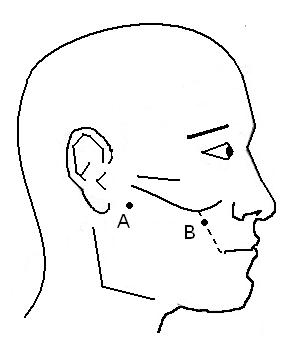
Hypomagnesemia represents another important pathway: magnesium serves as a cofactor for adenylate cyclase, the enzyme that converts ATP to cAMP, which is essential for parathyroid hormone activation. Low magnesium thus indirectly impairs calcium regulation. This condition is frequently encountered in chronic alcoholics, individuals with persistent diarrhea, and patients on aminoglycosides or diuretics. Additionally, the sign has been documented in measles, tetanus, and myxedema.
Historical Origins & Etymology
The sign carries the name of František Chvostek, a Czech-born surgeon who practiced in Austria. Chvostek dedicated his professional career to understanding the etiopathogenesis of neurological disorders and to developing treatments for them, including the use of electrotherapy. In 1876, he first described the facial spasm phenomenon that would bear his name. However, he was not the sole discoverer.
Seven years later, in 1883, another Austrian physician named Nathan Weiss (1851–1883) independently described the same clinical finding. The fact that two physicians in the same country identified the sign within a short span underscores how the phenomenon was becoming recognizable in clinical practice during the late nineteenth century. Chvostek's broader interest in neurological pathology and his work with electrical stimulation of nerves likely provided the conceptual framework that made the tapping maneuver and its characteristic response a natural observation in his clinical setting.
Diagnostic Limitations & Clinical Utility
Despite its long history, the Chvostek sign has significant limitations as a diagnostic tool. It is far from specific: studies indicate that 10% to 25% of healthy adults will exhibit a positive response when the facial nerve is tapped, meaning the sign can appear in the complete absence of any calcium abnormality. On the sensitivity side, the sign fails to appear in roughly 30% of patients who genuinely have hypocalcemia, making it an unreliable screen.
When both poor specificity and suboptimal sensitivity are considered together, the overall clinical utility of the Chvostek sign for diagnosing latent tetany is considerably diminished. Clinicians are therefore encouraged to rely on the Trousseau sign of latent tetany, in which occlusion of the brachial artery provokes hand muscle contraction. The Trousseau sign generally emerges earlier in the course of declining calcium and serves as a more accurate predictor of hypocalcemia, giving practitioners an earlier and more dependable window to recognize the condition.
Reader's Guide
The Chvostek sign serves as a clinical indicator of hypocalcemia, though its utility is limited by poor sensitivity and specificity. It is not a very specific sign of tetany, as it may be seen in 10% to 25% of healthy adults. The sensitivity is lower than that of the Trousseau sign of latent tetany, which generally occurs earlier and is a more accurate predictor of hypocalcemia. The Chvostek sign is negative in 30% of patients with hypocalcemia, further reducing its clinical reliability.
Despite these limitations, it remains a well-known bedside test for assessing neuromuscular irritability. The sign's association with conditions such as hypoparathyroidism, vitamin D deficiency, and respiratory alkalosis underscores its role in prompting further diagnostic evaluation of calcium metabolism disorders. Its historical significance lies in its naming after František Chvostek, who first described it in 1876, and its independent description by Nathan Weiss in 1883.
More in Symptoms and signs: Endocrinology, nutrition, and metabolism
Sources
Compiled from Wikipedia and the sources listed below. Text from Wikipedia is available under CC BY-SA 4.0; this entry is adapted from it.
- Wikipedia: Chvostek sign (CC BY-SA 4.0).
- Word definitions: the Codexery glossary, each quoted from its Wikipedia article.
Spotted an error? Know more?
Reader corrections go straight into our review queue. Suggest an edit · How this site is sourced