Trousseau sign of latent tetany
A medical sign of latent tetany elicited by arm occlusion.
Last updated

Tmdswan · CC BY-SA 4.0
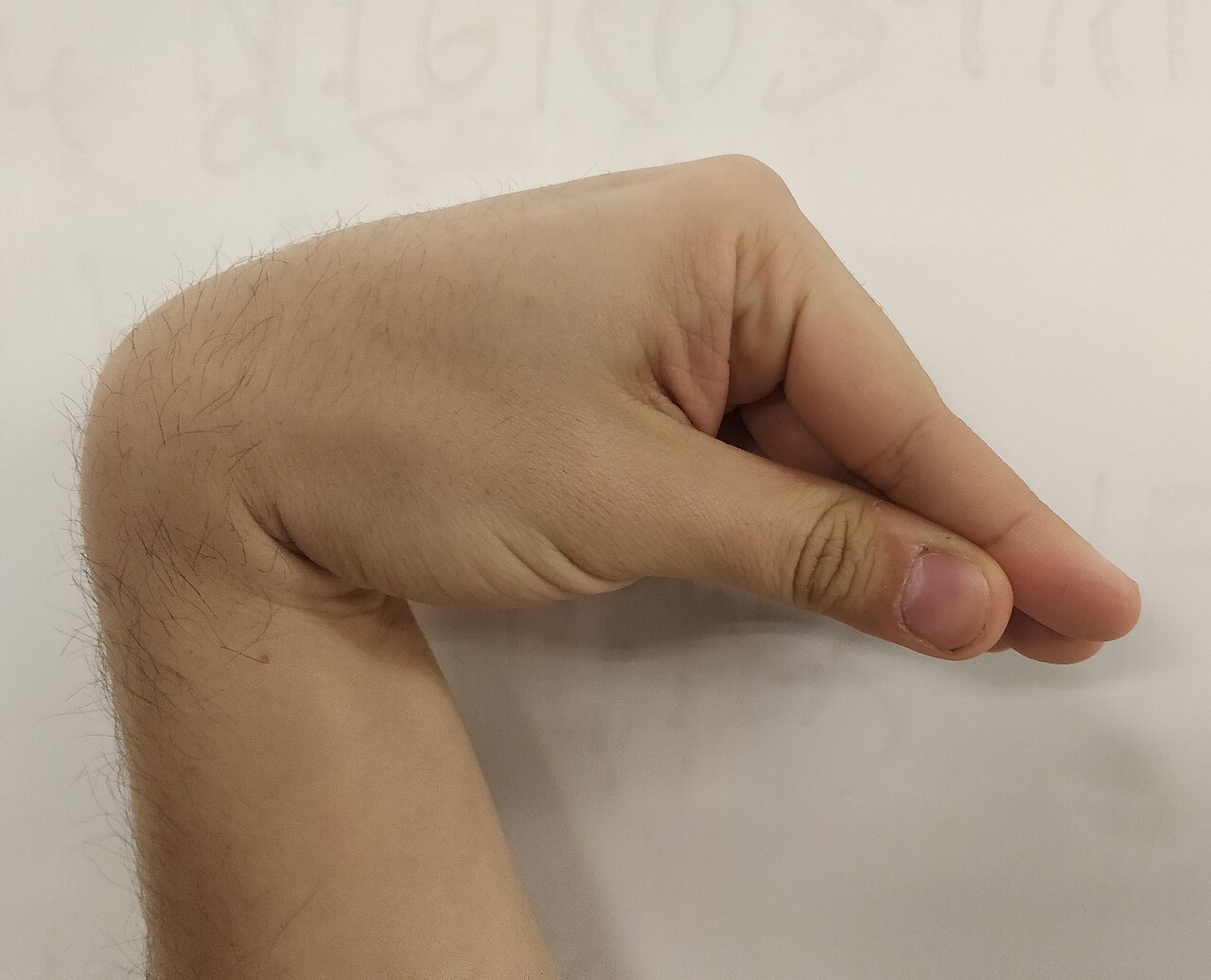
The Trousseau sign of latent tetany is a clinical indicator of low calcium levels. To test for it, a blood pressure cuff is placed on the arm and inflated above systolic pressure for three minutes, blocking the brachial artery. When blood flow stops, the patient’s low calcium and resulting nerve irritability cause the hand and forearm muscles to spasm. This produces a specific hand posture—flexion at the wrist and knuckles, extension at the finger joints, and fingers drawn together—called main d’accoucheur (French for “hand of the obstetrician”), because it resembles how an obstetrician’s hand looks during delivery.
The sign can appear before other symptoms of hypocalcemia, such as overactive reflexes or full tetany, and is considered more sensitive (94%) than the Chvostek sign (29%) for detecting low calcium. It may also occur in hyperventilation syndrome, where rapid breathing lowers blood calcium through hypocapnia. Between 1 and 4 percent of people with normal calcium levels will test positive. The sign is named after French physician Armand Trousseau, who described it in 1861, and is distinct from the Trousseau sign of malignancy, which involves abnormal blood clots linked to certain cancers.
Quick Facts
- Test of
- Hypocalcemia
Facts from the source article.
Lore & Background
The sign is named after French physician Armand Trousseau, who described the phenomenon in 1861. It is distinct from the Trousseau sign of malignancy, which is a type of abnormal blood clot due to certain types of cancer. The sign may be positive before other manifestations of hypocalcemia such as hyperreflexia and tetany, and it is generally believed to be more sensitive (94%) than the Chvostek sign (29%) for hypocalcemia.
Diagnostic Sensitivity and Clinical Context
The Trousseau sign holds a particularly important place in the clinical detection of hypocalcemia because it can manifest before other well-known signs of low calcium, such as hyperreflexia or overt tetany, appear. This early-detection capability makes it a valuable screening tool in patients where calcium deficiency is suspected but not yet clinically obvious. In terms of sensitivity, the sign outperforms the Chvostek sign considerably, with a reported sensitivity of 94 percent compared to just 29 percent for the Chvostek maneuver.
However, it is not without a degree of false positivity: between one and four percent of individuals with entirely normal calcium levels will still produce a positive result when the test is performed. Beyond its primary role in hypocalcemia, the sign can also emerge in the setting of hyperventilation syndrome. In that context, the mechanism is slightly different: rapid breathing drives down carbon dioxide levels in the blood, and this hypocapnia triggers a reduction in circulating calcium, which in turn provokes the same neuromuscular irritability that produces the characteristic hand spasm.
Eliciting the Sign: Procedure and Physiology
To perform the test, a clinician wraps a standard blood pressure cuff around the patient's upper arm and inflates it to a pressure that exceeds the individual's systolic reading. The cuff is then maintained at that elevated pressure for a full three minutes. During this period the brachial artery is effectively occluded, cutting off arterial blood flow to the forearm and hand. In a patient whose calcium levels are already depressed, this temporary ischemia acts as a trigger for neuromuscular irritability.
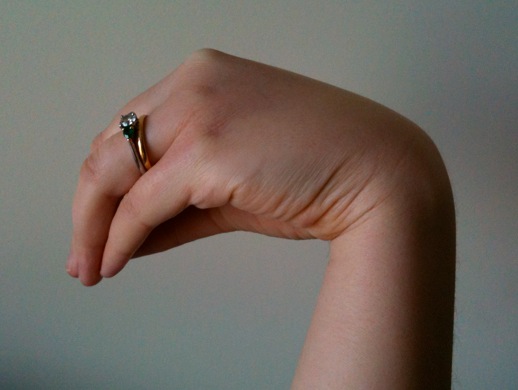
The muscles of the hand and forearm respond with a sustained spasm that produces a very specific and reproducible postural change. The underlying physiology is a combination of two factors working together: the pre-existing hypocalcemia lowers the threshold for muscle excitation, and the brief interruption of blood flow provides the additional stimulus needed to push that threshold past the point of visible contraction. The result is a dramatic, involuntary hand posture that is unmistakable once the clinician knows what to look for.
The Characteristic Hand Posture and Its Eponym
When the spasm takes hold, the hand assumes a highly distinctive configuration that has been described in precise anatomical terms. The wrist flexes, and the metacarpophalangeal joints—the knuckles at the base of the fingers—also flex. At the same time, the distal and proximal interphalangeal joints extend, so the fingers straighten at their middle and tip segments.
The fingers draw together in adduction, closing as a unit. This particular combination of flexion at the wrist and MCP joints, extension at the PIP and DIP joints, and adduction of the fingers creates a posture that has earned a memorable French nickname: main d'accoucheur, literally "hand of the obstetrician." The name derives from the observation that the resulting hand shape closely resembles the position an obstetrician's hand takes during the act of delivering a baby. This vivid visual analogy has helped the sign stick in the memory of medical students and clinicians alike, making it one of the more recognizable physical examination findings in the hypocalcemia workup.
Historical Origins and Naming Distinctions
The sign carries the name of Armand Trousseau, a French physician who first described the phenomenon in 1861. His observation was made in the context of patients presenting with low serum calcium, and he recognized the reproducible hand spasm that results from the blood pressure cuff maneuver as a reliable clinical indicator. The sign has remained in medical use for well over a century, a testament to its practical utility at the bedside. It is important, however, not to confuse this finding with another eponymous sign that also bears Trousseau's name.
The Trousseau sign of malignancy refers to a completely different clinical entity: a type of abnormal blood clotting associated with certain cancers. The two signs share only the surname of their namesake and are otherwise unrelated in mechanism, presentation, and clinical significance. In modern medical education and practice, the latent tetany sign is typically encountered in the context of electrolyte disturbances, particularly hypocalcemia, and is taught alongside the Chvostek sign as part of the standard physical examination battery for patients at risk of calcium deficiency.
Reader's Guide
The Trousseau sign of latent tetany is a clinical test for hypocalcemia, with a reported sensitivity of 94% compared to 29% for the Chvostek sign. It is elicited by inflating a blood pressure cuff above systolic pressure for three minutes, causing carpal spasm in the form of main d'accoucheur. The sign may also be observed in hyperventilation syndrome due to hypocapnia-induced reduction of calcium levels.
From 1 to 4 percent of normal patients will test positive, indicating that false positives can occur. Its historical significance lies in its description by Armand Trousseau in 1861, and it remains a standard bedside test for latent tetany. The sign is distinct from the Trousseau sign of malignancy, which involves abnormal blood clotting associated with cancer.
More in Symptoms and signs: Endocrinology, nutrition, and metabolism
Sources
Compiled from Wikipedia and the sources listed below. Text from Wikipedia is available under CC BY-SA 4.0; this entry is adapted from it.
- Wikipedia: Trousseau sign of latent tetany (CC BY-SA 4.0).
- Word definitions: the Codexery glossary, each quoted from its Wikipedia article.
Spotted an error? Know more?
Reader corrections go straight into our review queue. Suggest an edit · How this site is sourced