
Alcatraz (video game)
A 1993 shooter set on abandoned Alcatraz Island.

Oren Rozen · CC BY-SA 3.0
Alcatraz is a shooter game from 1993, developed by 221B Software Development and released by Infogrames for MS-DOS, Atari ST, and Amiga. It is a direct sequel to Infogrames' earlier title, Hostages (1988), and is often referred to as 'Hostages 2' or 'Alcatraz: Hostages 2'.
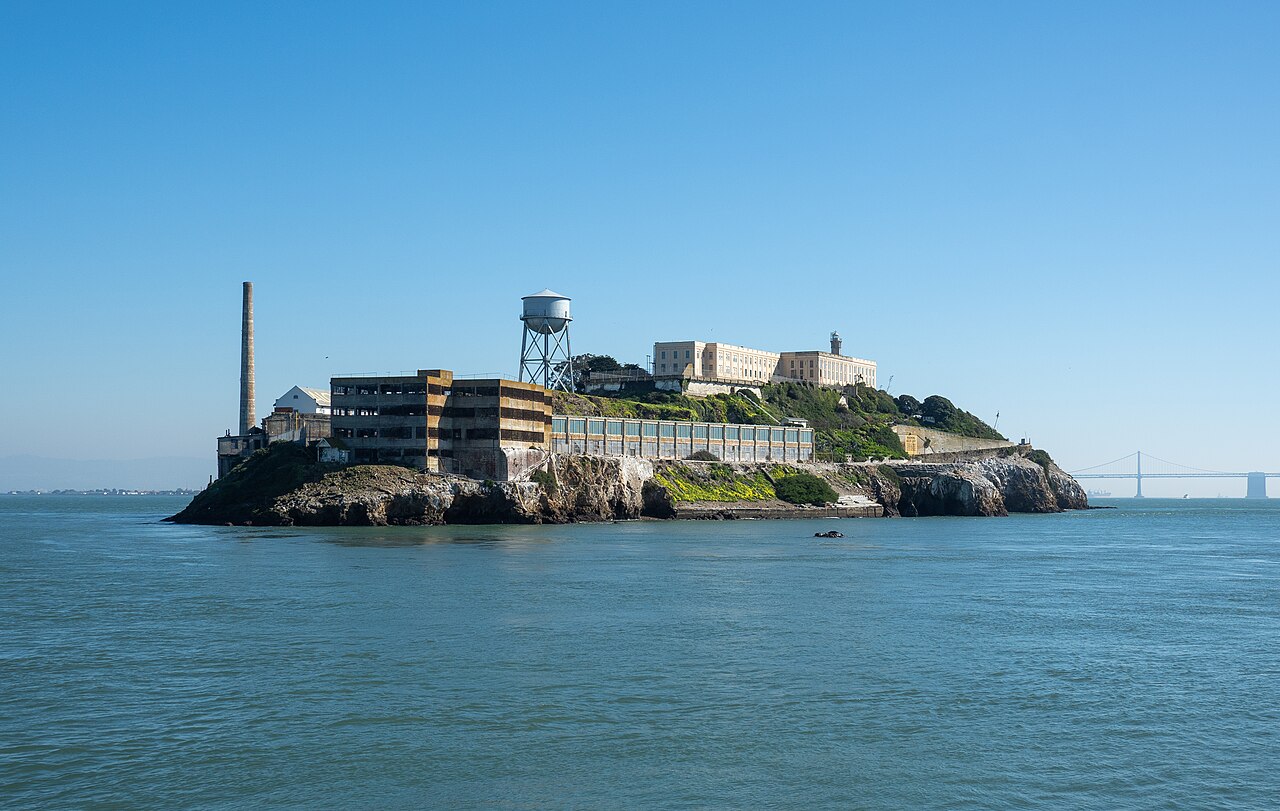
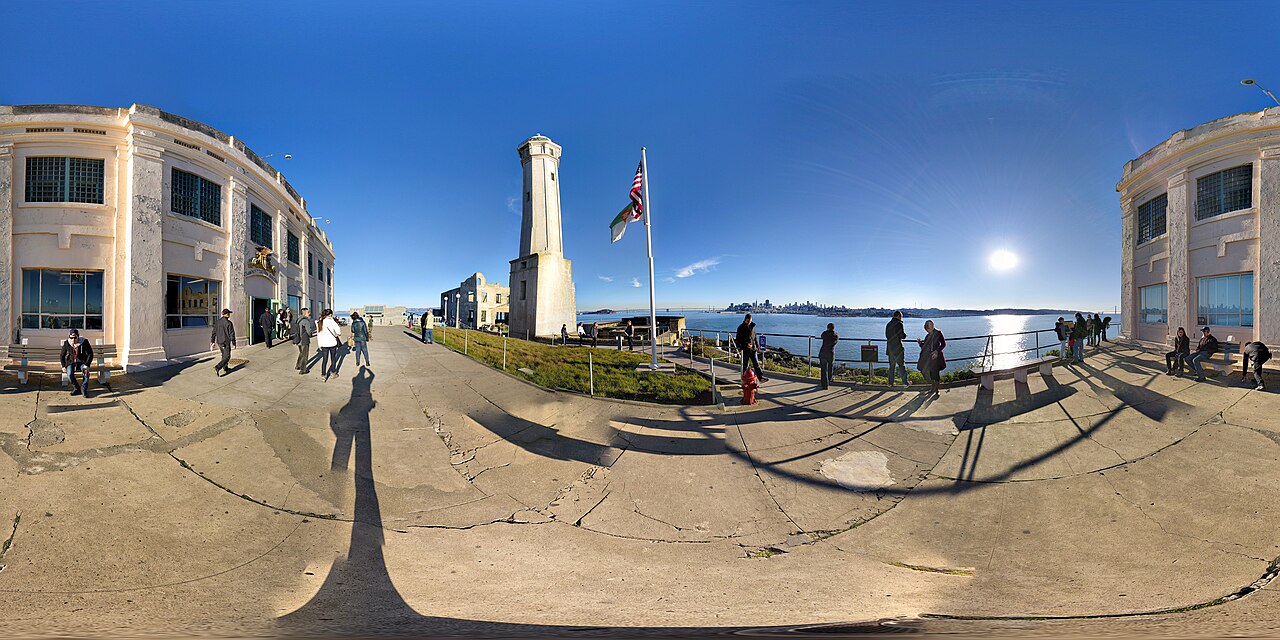
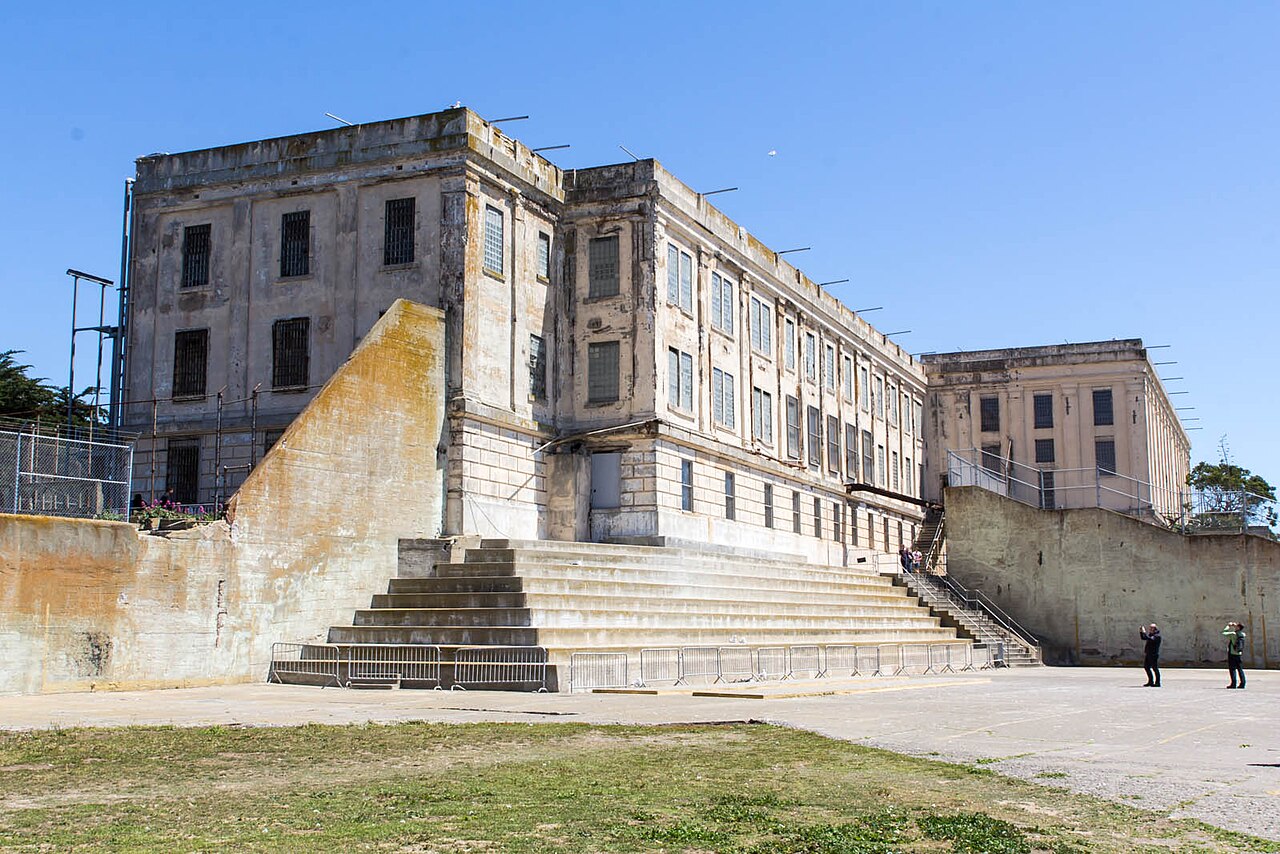
The story involves the abandoned Alcatraz Island prison, once a tourist site, now used by criminal Miguel Tardiez as a hub for drug, gun, and money laundering operations. The US Navy SEALs send operatives Bird and Fist to infiltrate the prison, destroy the caches of drugs and weapons, and capture Tardiez. The player fights through henchmen, using shadows and walls for cover, and burns or blows up caches with C4 or gunfire. The mission ends when the player reaches Tardiez's office and kills him as he attempts to escape by helicopter.
Gameplay spans six levels, shifting perspective based on the mission. Outdoor areas use a side-scrolling view, where the player can hide in shadows and pick up weapons from defeated enemies. Inside buildings, the view switches to first-person, requiring the player to explore a single floor to find rooms containing drugs, money, documents, or weapon caches—some collected, others destroyed with time bombs. Enemy soldiers patrol corridors and rooms. The game is single-player only. After level five, the player can go directly to the extraction point or visit the cell house, which involves climbing past searchlights, exploring, then sliding down a rope to continue.
Reception was mixed. Amiga Action noted that many would find the gameplay outdated and boring, while Amiga Computing was more positive, calling it an improvement on Hostages and praising the side-scrolling sections as "absolutely brilliant," though it found the 3D parts "not as good, but still fun."
Quick Facts
- Title
- Alcatraz
- Developer
- 221B Software Productions
- Publisher
- Infogrames
- Platforms
- Amiga, MS-DOS, Atari ST
- Released
- 1992
- Genre
- Shooter, stealth
- Modes
- Single-player
Facts from the source article.
Lore & Background
The game's plot centers on Alcatraz Island, once a prison for America's most undesirable criminals, later a tourist destination, and now used by the notorious criminal Miguel Tardiez as a hub for drug, gun, and money laundering operations. The US Navy SEALs dispatch operatives Bird and Fist to covertly breach the prison, destroy caches, and apprehend Tardiez. The player fights through henchmen, using shadows and walls for stealth, and eventually kills Tardiez as he attempts to escape by helicopter.
Reader's Guide
Gameplay spans six levels with shifting perspectives: side-scrolling outdoors and first-person inside buildings. Players can hide in shadows, change weapons picked up from enemies, and must find and destroy or collect caches of drugs, money, documents, and weapons using time bombs or gunfire. The screen is split horizontally or vertically for two-player independent action. After level 5, players may proceed directly to extraction or visit the cell house by climbing past searchlights and sliding down a rope. Reception was mixed: Amiga Action noted many would find the gameplay outdated, while Amiga Computing praised the side-scrolling sections as 'absolutely brilliant' but found the 3D sections less impressive. An unofficial remake was published by City Interactive in 2010.
Did You Know?
- The game is a direct sequel to Infogrames' 1988 game Hostages, often called 'Hostages 2' or 'Alcatraz: Hostages 2'.
- The player character can hide in shadows and behind walls to avoid enemies.
Dual-Identity Combat and Stealth
The game's core design hinges on alternating between two vastly different gameplay modes tied to the protagonist's dual nature. Controlling the Hulk, players engage in third-person brawling stages filled with enemy waves and destructible environments. His toolkit spans punches, grapples, throws, and signature specials like ground-shaking stomps, powerful claps, and swatting incoming missiles. A red rage meter, filled by collecting red orbs, unlocks an amplified Rage Mode that boosts every strike and enables two devastating wide-range attacks. The Hulk can also grab and hurl objects from small debris to entire cars and tanks to clear crowds from a distance.
Banner's segments shift the tone to stealth. Players crouch, dive, and climb across ledges while evading cameras, searchlights, and patrolling soldiers. Pushing and pulling objects reveals hidden passages, and locked doors require a hacking minigame at a security terminal. If spotted, Banner can freeze to fake surrender, then ambush the approaching guard. Both characters share a top-left health meter replenished by green orbs, while blue orbs act as checkpoint saves. Beyond the story, five Challenge Modes test players with timed destruction, survival against endless waves, and speed-based takedowns.
Narrative and the Alcatraz Siege
Though marketed as a tie-in to the 2003 film, the game's story functions as a sequel set years after the movie's events. Bruce Banner, a geneticist who studies gamma radiation's effects on damaged tissue, receives an offer of a cure from his old mentor Professor Geoffrey Crawford. Crawford, crippled by a neurodegenerative disease, has built a device called the Gamma Orb for siphoning and storing gamma energy. He guides Banner through a military raid led by John Ryker, only to betray him by siphoning a fraction of the Hulk's power and mutating himself into the Hulk-like creature Ravage.
The Hulk pursues Ravage through San Francisco, then confronts the energy vampire Half-Life, who reveals that Ravage has taken the Orb to Alcatraz. There, the Leader is assembling an army of gamma-powered soldiers. Banner infiltrates the island, deactivates the gamma detection system, and discovers his hostage is Betty Ross. The Hulk battles Madman, the Leader's brother, and later fights the gamma-powered soldier Flux at the military's subterranean Gamma Base. The narrative weaves together betrayal, rescue, and a final confrontation with the Leader's mutant army, all anchored by Eric Bana's voice performance reprising his film role.
Critical Reception and Commercial Success
Upon release, the game drew a mixed critical response. Reviewers consistently highlighted the immediate thrill of wielding the Hulk's destructive powers, the intuitive control scheme, and the cel-shaded visual style that gave the game a comic-book aesthetic. Interactive environments that could be torn apart, thoughtful sound design, and strong voice work—particularly Eric Bana's performance as Banner—earned additional praise. However, critics found the variety of fighting moves limited, the musical score uneven, and the storyline thin. The most common criticisms centered on repetitive combat loops, a narrow pool of enemy types, stealth sections that felt simplistic, and a static camera that hampered the action's fluidity.
Despite the divided critical picture, the title found a strong audience, moving over two million copies across the PlayStation 2, Xbox, GameCube, and PC. A notable piece of cross-media marketing saw one Xbox level packaged as a playable demo on the film's DVD release, a first for the integration of a full game segment onto a home video disc. This blend of commercial traction and polarized reviews cemented the game's place in the superhero gaming landscape of the early 2000s.
Development Lineage and Legacy
Developed by Radical Entertainment and published by Universal Interactive, the game shipped in 2003 for the PlayStation 2, Xbox, GameCube, and Microsoft Windows. Its primary purpose was to extend the narrative of the year's live-action Hulk film, with Eric Bana reprising his role as Bruce Banner in the game's voice cast. The story deliberately positions itself as a sequel, jumping years ahead of the film's conclusion to introduce a new threat in the form of the Leader and his gamma-powered army.
The game's commercial performance—exceeding two million units sold—demonstrated sustained audience appetite for the character in interactive form. That demand led to a follow-up project entering development, though the planned sequel was ultimately reworked into a standalone title. The result, The Incredible Hulk: Ultimate Destruction, arrived in 2005 and carried forward the franchise's momentum in a different direction. The 2003 original thus serves as both a bridge between the film and the broader gaming franchise and a snapshot of mid-2000s action-game design, where the cel-shaded aesthetic and dual-identity structure offered a distinctive take on superhero gameplay that few contemporaries matched.
Gallery



Frequently Asked Questions
What is Alcatraz (video game)?
Alcatraz is a 1993 action shooter in which the player infiltrates the abandoned Alcatraz Island prison to dismantle a criminal operation. It was created by 221B Software Development and published by Infogrames for MS-DOS, Atari ST, and Amiga.
What is the story of Alcatraz (video game)?
A criminal named Miguel Tardiez has turned the decommissioned Alcatraz prison into a base for laundering money, moving weapons, and trafficking drugs. Two US Navy SEAL operatives, Bird and Fist, are sent to break in, destroy the criminal caches, and put Tardiez behind bars.
How does Alcatraz (video game) relate to Hostages?
The title is a direct sequel to Infogrames' 1988 game Hostages, which is why it is commonly nicknamed 'Hostages 2' or 'Alcatraz: Hostages 2' in fan circles and some official references.
Who do you play as in Alcatraz (video game)?
You control two Navy SEAL operatives named Bird and Fist, tasked with sneaking into the island stronghold and taking out Tardiez's drug, gun, and money-laundering network.
What platforms was Alcatraz (video game) released on?
The game shipped in 1993 for three platforms: MS-DOS, Atari ST, and Amiga, all under the Infogrames publishing label.
More in Stealth video games 1-24
Spotted an error? Know more?
Reader corrections go straight into our review queue. Suggest an edit · How this site is sourced