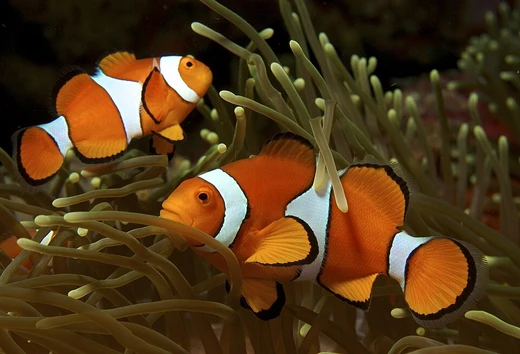
Tomato clownfish (Amphiprion frenatus)
Source-cited species reference: taxonomy from WoRMS, biology from FishBase, occurrence map from GBIF, conservation from IUCN Red List, description from Wikipedia, aquarium from Wikipedia (cited section).

Paul Korecky · CC BY-SA 2.0
The tomato clownfish (Amphiprion frenatus) is a species of marine fish in the family Pomacentridae, the clownfishes and damselfishes. It is native to the waters of the Western Pacific, from the Japan to Indonesia. Other common names include blackback anemonefish, bridled anemonefish, fire clown, and red tomato clown.
- Scientific name
- Amphiprion frenatus
- Authority
- Brevoort, 1856
- Family
- Pomacentridae
- Order
- Ovalentaria incertae sedis
- Maximum length
- 14 cm
- Depth range
- 1–12 m
- Habitat zone
- reef-associated
- Iucn red list
- Least Concern
- Gbif occurrence records
- 1,186
Classification (WoRMS)
Full classification as recorded by WoRMS: Kingdom: Animalia · Phylum: Chordata · Class: Teleostei · Order: Ovalentaria incertae sedis · Family: Pomacentridae · Genus: Amphiprion.
Accepted name: Amphiprion frenatus · Authority: Brevoort, 1856 · Taxonomic status: accepted · AphiaID: 278394.
Synonyms and superseded combinations recorded for this taxon: Amphiprion polylepis (Bleeker, 1877); Prochilus polylepis Bleeker, 1877.
Source: World Register of Marine Species (WoRMS) — https://www.marinespecies.org/aphia.php?p=taxdetails&id=278394 (CC BY 4.0). Accessed 2026-09-23.
Biology and life history (FishBase)
Measured values published by FishBase for Amphiprion frenatus. Only fields the database actually holds for this species are shown; these are database values, not aquarium guidance.
Maximum length: 14 cm · Depth range: 1–12 m · Habitat zone: reef-associated · Body shape: short and / or deep · Vulnerability index: 10 of 100 · Fishery importance: commercial · Aquarium trade: commercial.
FishBase notes: Found in lagoon reefs and embayment. Monogamous (Ref. 52884), protandrous hermaphrodite (Ref. 55367). Oviparous, distinct pairing during breeding (Ref. 205). Eggs are demersal and adhere to the substrate (Ref. 205). Males guard and aerate the eggs (Ref. 205). Associated with the anemone Entacmaea quadricolor (Ref. 5911). Has been reared in captivity (Ref. 35413, 35415, 35418, 35420).
Source: FishBase species summary (SpecCode 6522) — https://www.fishbase.se/summary/Amphiprion-frenatus.html (CC BY-NC 3.0 — non-commercial use only). Accessed 2026-09-23.
Distribution and occurrence records (GBIF)
1,186 georeferenced occurrence records for Amphiprion frenatus are published through GBIF from 18 countries or marine areas. The map above plots 120 distinct locations from a sample of 1,186 records, omitting 20 inland records that carry an institution's coordinates rather than a collection site; it shows where the species has been observed and reported, not a modelled range.
Most records by country or area: Philippines (717); Japan (172); Chinese Taipei (123); Malaysia (67); Singapore (30).
The full country table, WoRMS marine regions and the sampling notes are on this species' Distribution page.
Source: GBIF Occurrence Search (taxonKey 5212111) — https://www.gbif.org/occurrence/search?taxon_key=5212111&has_coordinate=true (records CC0 / CC BY); WoRMS distribution records (MarineRegions) — https://www.marinespecies.org/aphia.php?p=taxdetails&id=278394 (CC BY 4.0); Natural Earth 110m basemap — https://www.naturalearthdata.com/ (public domain). Accessed 2026-09-23.
Conservation status (IUCN Red List)
The IUCN Red List assesses Amphiprion frenatus Brevoort, 1856 as Least Concern (code LC). No trend, population estimate or threat analysis is given here, because none is available from this source without the Red List API; follow the source link for the full assessment, including its date.
Source: IUCN Red List of Threatened Species (taxon 188518) — https://www.iucnredlist.org/species/188518/0; GBIF IUCN Red List category endpoint (taxonKey 5212111) — https://api.gbif.org/v1/species/5212111/iucnRedListCategory. Accessed 2026-09-23.
Description and natural history (Wikipedia)
Clownfish or anemonefish are fishes that, in the wild, form symbiotic mutualisms with sea anemones and are unaffected by the stinging tentacles of the host anemone, see. The sea anemone protects the clownfish from predators, as well as providing food through the scraps left from the anemone's meals and occasional dead anemone tentacles. In return, the clownfish defends the anemone from its predators, and parasites. Clownfish are small, 10 - 18 cm, and depending on species, they are overall yellow, orange, or reddish or blackish color, and many show white bars or patches. Within species there may be color variations, most commonly according to distribution, but also based on sex, age and host anemone. Clownfish are found in warmer waters of the Indian and Pacific oceans and the Red Sea in sheltered reefs or in shallow lagoons.
In a group of clownfish, there is a strict dominance hierarchy. The largest and most aggressive fish is female and is found at the top. Only two clownfish, a male and a female, in a group reproduce through external fertilization. Clownfish are sequential hermaphrodites, meaning that they develop into males first, and when they mature, they become females.
One of the most serious ectoparsitic diseases that effects warmwater marine fishes is the Marine Velvet disease (amyloodiniosis) which is caused by Amyloodinium ocellatum, a species of Dinoflagellate. The Tomato clownfish has a strong and long-lived immunity to this parasite. It gains this immunity by having several nonleathal infections and the production of specific antibodies. This immunoglobulin antibody is reduced and consist of heavy chain of 70 kD and a light chains of 32 kD. The estimated weight of the entire antibody is 816 kD.
The only color variation is sex related with females having darker coloration or dark spots on their sides.
The Australian clownfish (A. rubrocinctus) has a similar coloration, however the female does not have the distinctive black outline of the white band, the band is poorly developed and may be discontinuous on top of the head. Geographic location is the easiest way to distinguish small juveniles as they are otherwise difficult to distinguish. The cinnamon clownfish (A. melanopus) is also similar, but has a broader white headbar and outside Melanesia it has black pelvic and anal fins.
This species is found as far north as Ryukyu Islands, Japan, to the South China Sea and surrounding areas including Malaysia and Indonesia. Some authors report that this species is associated with a single species of anemone, the bubble-tip anemone (Entacmaea quadricolor). Other authorities report that it may be associated with the sebae anemone (Heteractis crispa), as well.
As a pet, many marine hobbyists agree that at least 20 USgal of tank volume is necessary for the fish, however others believe larger is necessary for this fish to have ample room for maneuvering. Many hobbyists use a quarantine tank prior to introduction into the main tank as it helps to rid the tomato clownfish of saltwater-borne diseases.
This species of fish thrives well even without a host anemone. In the absence of a host, it may "adopt" corals of a tank to reside. It will eat most meat or vegetable food preparations, including dried algae, mysis shrimp, and brine shrimp. The tomato clownfish has been reported to be aggressive and territorial when mature, and specimens have been known to be extremely aggressive even towards clownfishes of other species. For this reason, it is best kept singly or in mated pairs. It can be bred in captivity, and the fry can be fed on baby brine shrimp and rotifers.
Source: Wikipedia: Tomato clownfish — https://en.wikipedia.org/wiki/Tomato_clownfish (CC BY-SA 4.0). Accessed 2026-09-23.
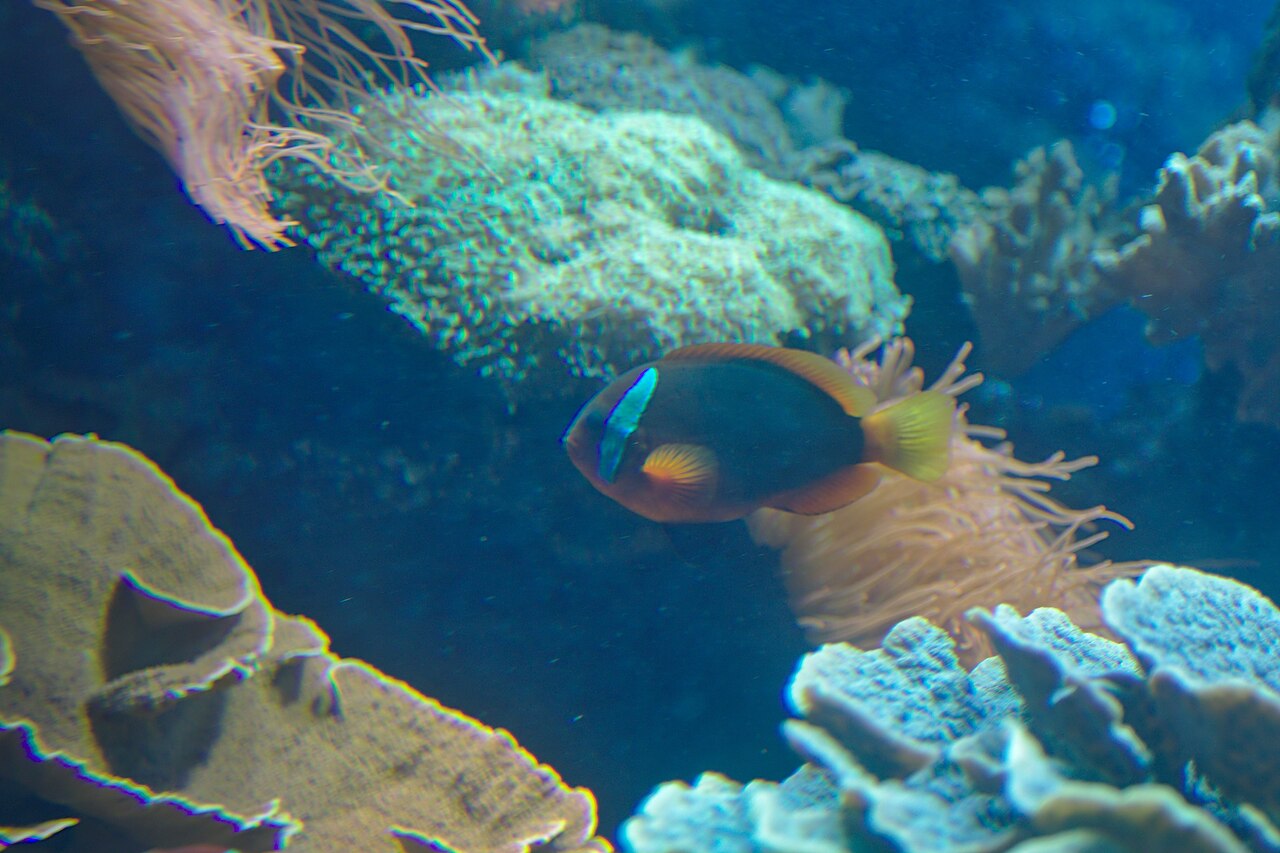
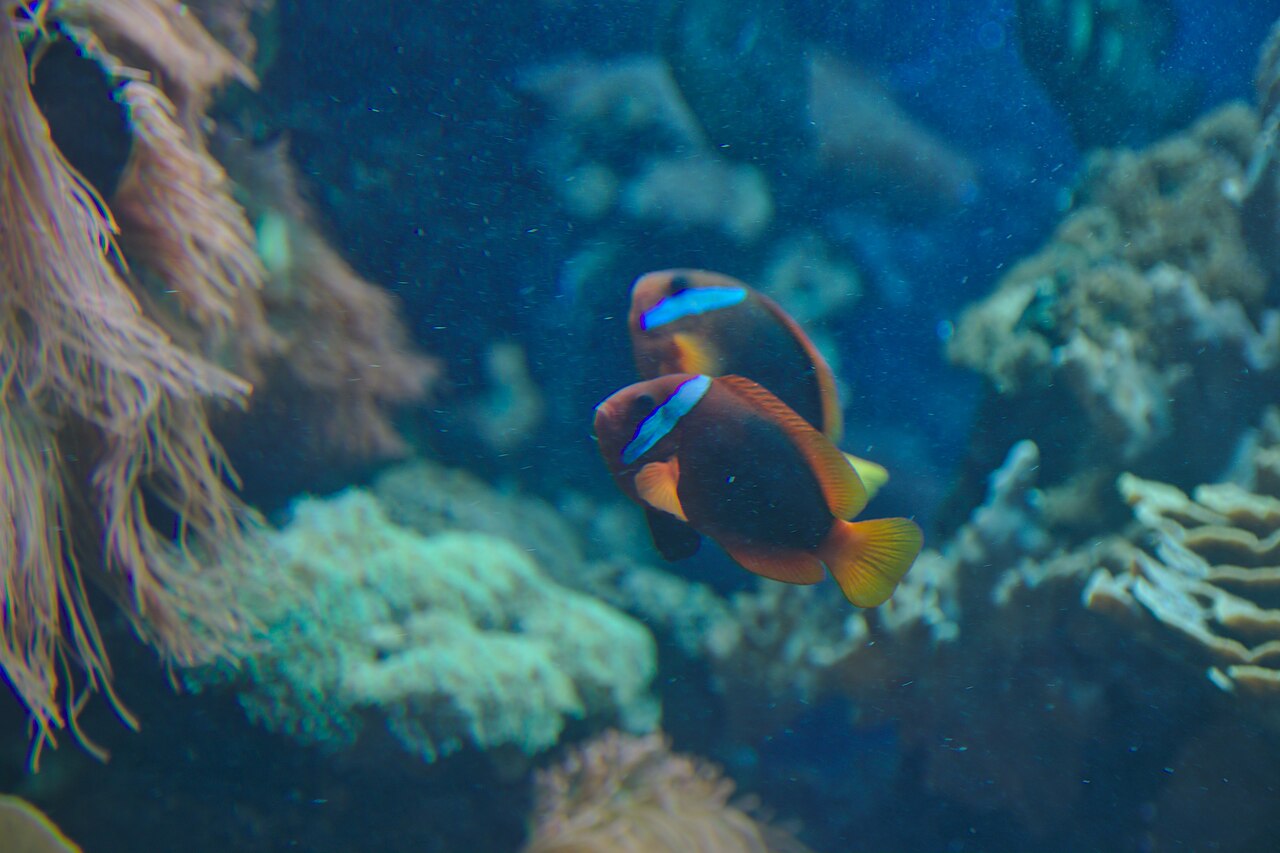
Gallery
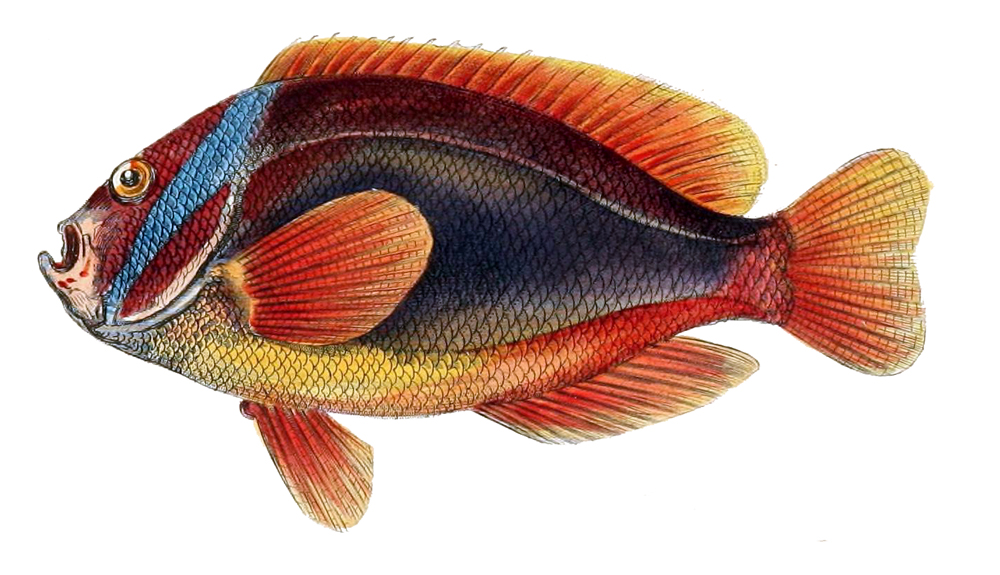
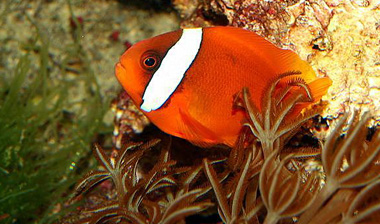
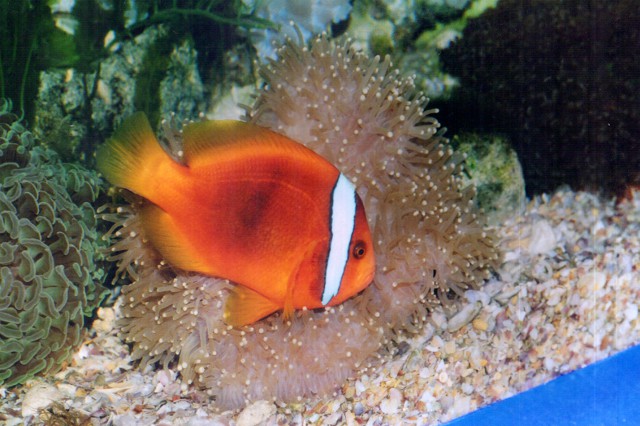
Related in Tomato clownfish
Links follow this subject's own source article.
Elsewhere in Tomato clownfish
Spotted an error? Know more?
Reader corrections go straight into our review queue. Suggest an edit · How this site is sourced