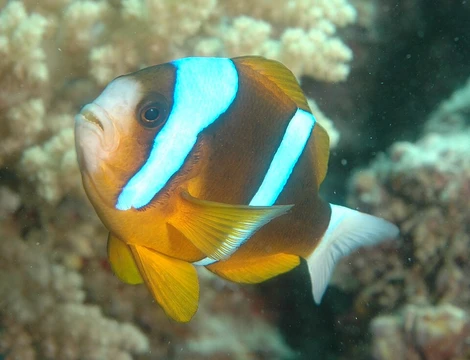
Barrier reef anemonefish (Amphiprion akindynos)
Source-cited species reference: taxonomy from WoRMS, biology from FishBase, occurrence map from GBIF, conservation from IUCN Red List, description from Wikipedia.

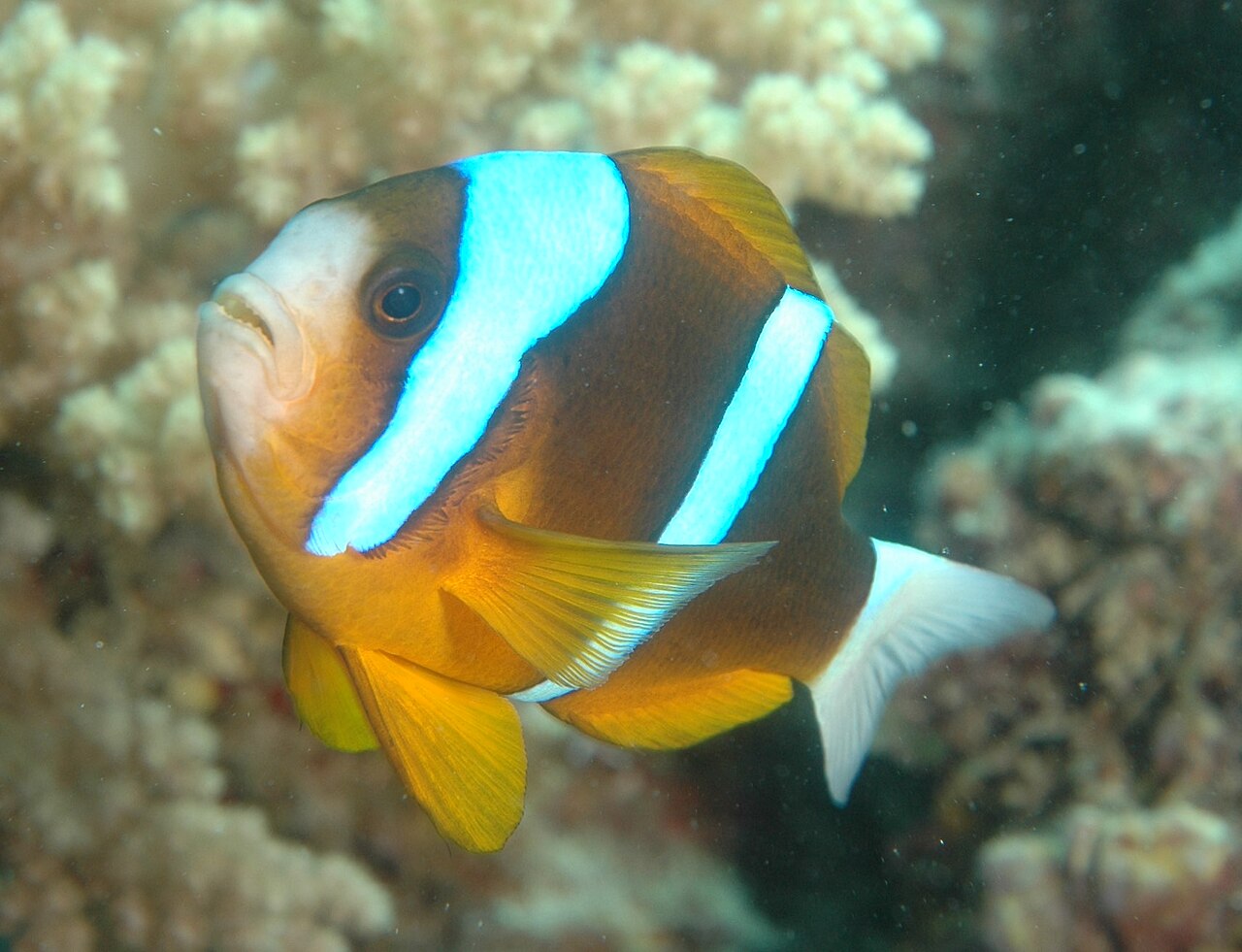
★Kumiko★ · CC BY-SA 2.0
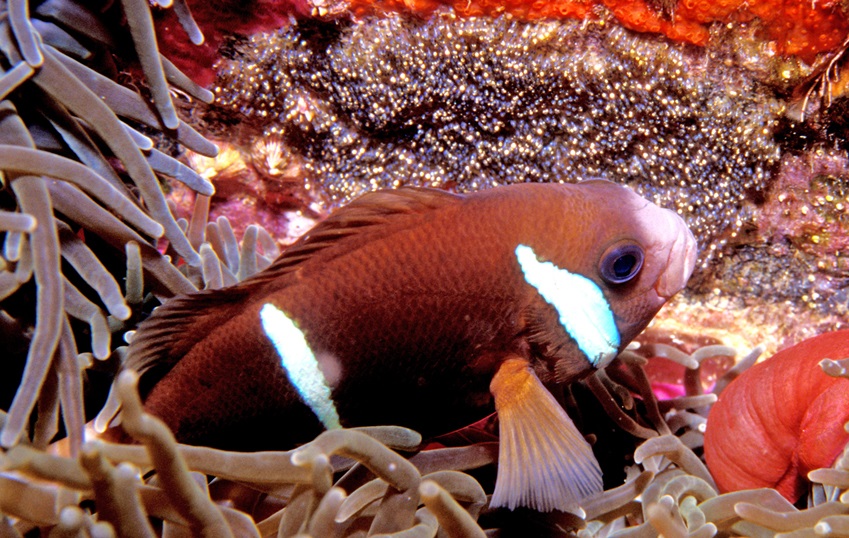
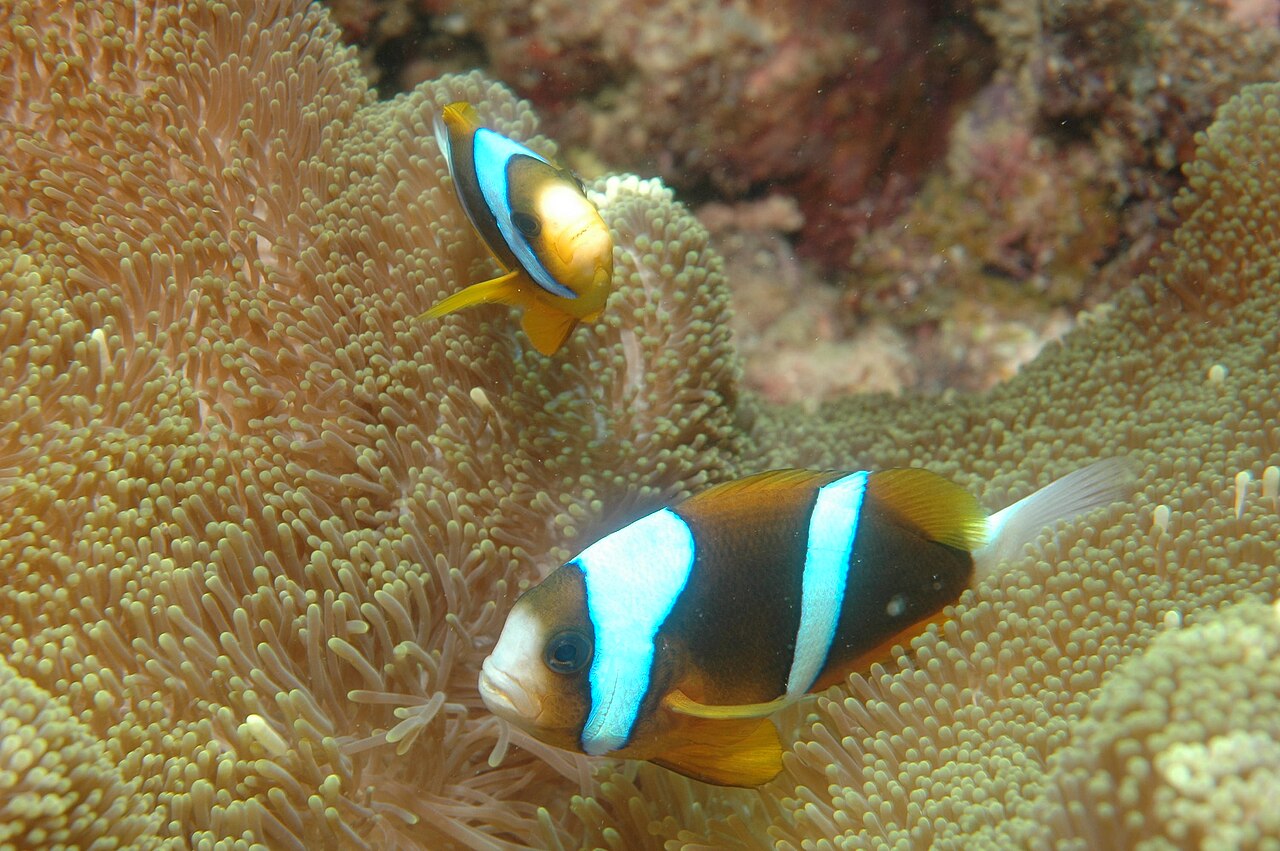
Amphiprion akindynos, the Barrier Reef anemonefish, is a species of anemonefish that is principally found in the Great Barrier Reef of Australia, but also in nearby locations in the Western Pacific. The species name 'akindynos' is Greek, meaning 'safe' or 'without danger' in reference to the safety afforded amongst the tentacles of its host anemone. Like all anemonefishes it forms a symbiotic mutualism with sea anemones and is unaffected by the stinging tentacles of the host anemone. It is a sequential hermaphrodite with a strict size-based dominance hierarchy: the female is largest, the breeding male is second largest, and the male non-breeders get progressively smaller as the hierarchy descends. They exhibit protandry, meaning the breeding male will change to female if the sole breeding female dies, with the largest non-breeder becomes the breeding male.
- Scientific name
- Amphiprion akindynos
- Authority
- Allen, 1972
- Family
- Pomacentridae
- Order
- Ovalentaria incertae sedis
- Maximum length
- 9 cm
- Depth range
- 1–25 m
- Habitat zone
- reef-associated
- Iucn red list
- Least Concern
- Gbif occurrence records
- 2,593
Symbiosis with Sea Anemones
The anemonefish genus Amphiprion, to which the Barrier reef anemonefish belongs, has built its entire ecological identity around a partnership with sea anemones. These saltwater fish, found in warm tropical waters across the Indo-Pacific, depend on anemones for shelter and predator protection. The relationship is genuinely mutual: anemonefish drive away anemone-eating fish, fan and clean their hosts, and their waste attracts beneficial microorganisms. They typically inhabit coral reef environments, and their distinctive appearance—white vertical bars set against red, orange, yellow, brown, or black backgrounds—makes them visually striking against the reef backdrop. This symbiosis is so central to their biology that speciation events across the genus have been directly linked to different anemone host species occupying different habitats, creating ecological separation that drives divergence.
Social Hierarchy and Sex Change
Anemonefish live in structured groups that include a breeding female, a breeding male, and several non-breeding individuals. A strict size-based dominance hierarchy governs these groups: the breeding female sits at the top, followed by the breeding male, then the largest non-breeder, and so on down the line. This arrangement has a remarkable biological consequence. When the dominant female dies or disappears, the breeding male undergoes a sex change to assume her role, and every other member of the group shifts upward in the hierarchy. Reproduction itself is a coordinated act—the female deposits eggs on a rock near their anemone, and the male fertilises them. After hatching, the young disperse into open ocean as larvae before eventually settling on the seafloor and searching for an anemone host as juveniles. These fish are omnivorous, feeding primarily on plankton.
Evolutionary Origins and Diversification
The clownfish lineage split from other living damselfishes roughly 35 million years ago during the late Eocene, with the most recent common ancestor of all extant species dating to about 10.5 million years ago in the Early Miocene. A 2014 study traced their origin to the waters of the Malay Archipelago. Beginning around 5 million years ago, the genus underwent a notable acceleration in species diversification, driven by two major adaptive radiations—one centred on the Malay Archipelago and a later one in the western Indian Ocean. Genetic evidence reveals substantial interbreeding between species throughout their evolutionary history. Speciation in anemonefishes has been tied to their sea anemone hosts, which occupy different habitats and thus create ecological separation. As of 2025, 29 living species are recognised, including the newly classified Polynesian anemonefish (A. maohiensis), which was previously mistaken for a colour morph of the orange-fin anemonefish.
Taxonomic History and Classification
The genus Amphiprion was established in 1801 by Marcus Elieser Bloch and Johann Gottlob Theaenus Schneider, with the name derived from Greek words meaning 'on both sides' and 'saw'—a reference to the saw-shaped edges along the operculum and under the eyes. The red saddleback anemonefish served as the type species. For over two centuries, classification has been contested. In 1816, Georges Cuvier argued the maroon clownfish was distinct enough to warrant its own genus, Premnas, a status that has oscillated between synonymy and independent genus designation. In 2021, two broad phylogenetic analyses of damselfishes confirmed the species belong within Amphiprion, making Premnas a junior synonym. Gerald R. Allen proposed a separate subfamily Amphiprioninae in 1975, while a 2009 genetic study suggested placing them in the tribe Amphiprionini within subfamily Pomacentrinae. Allen also identified five major morphological clades in 1972, a framework later expanded by additional genetic studies.
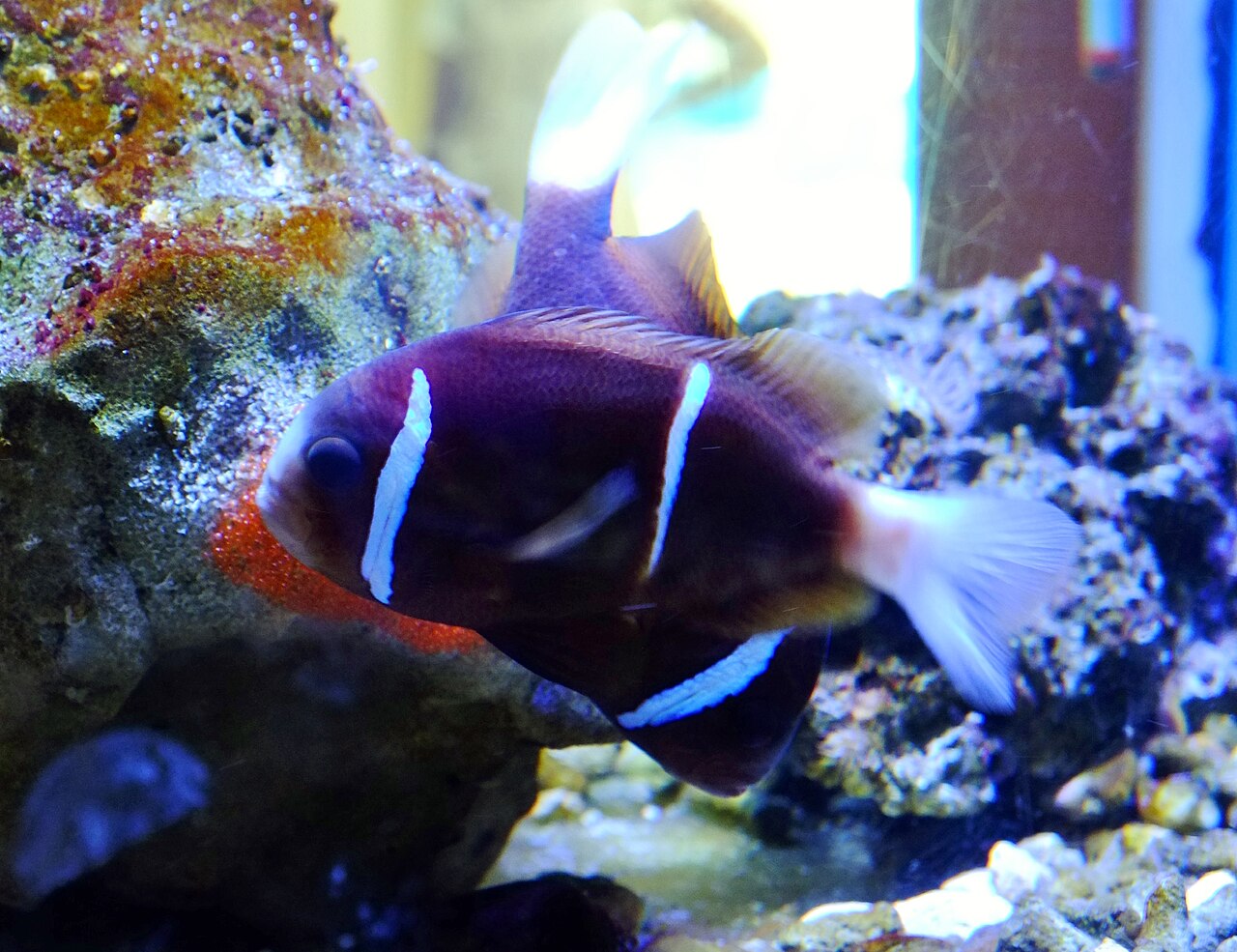
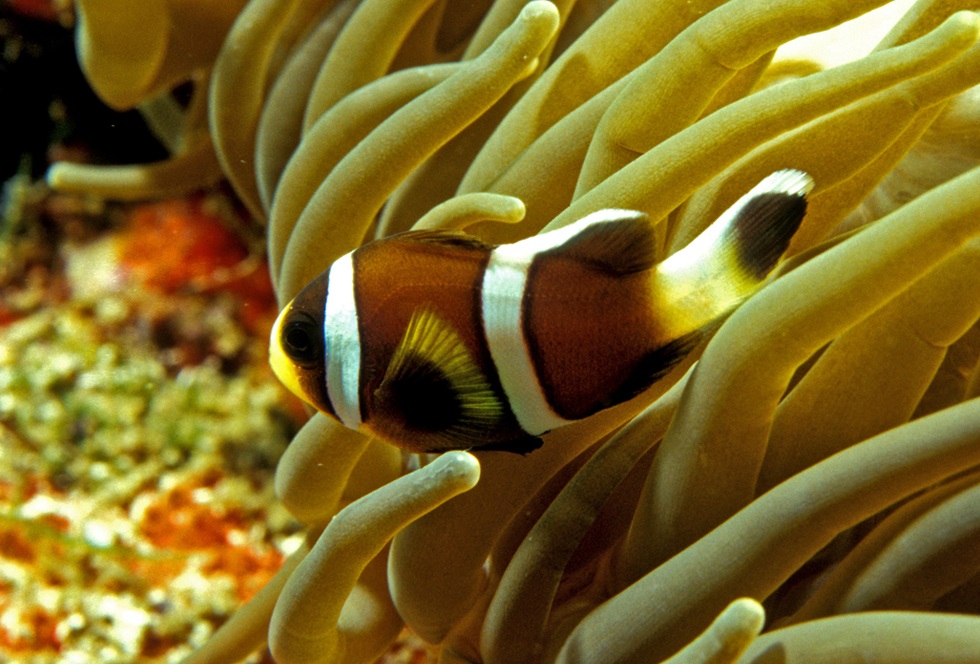
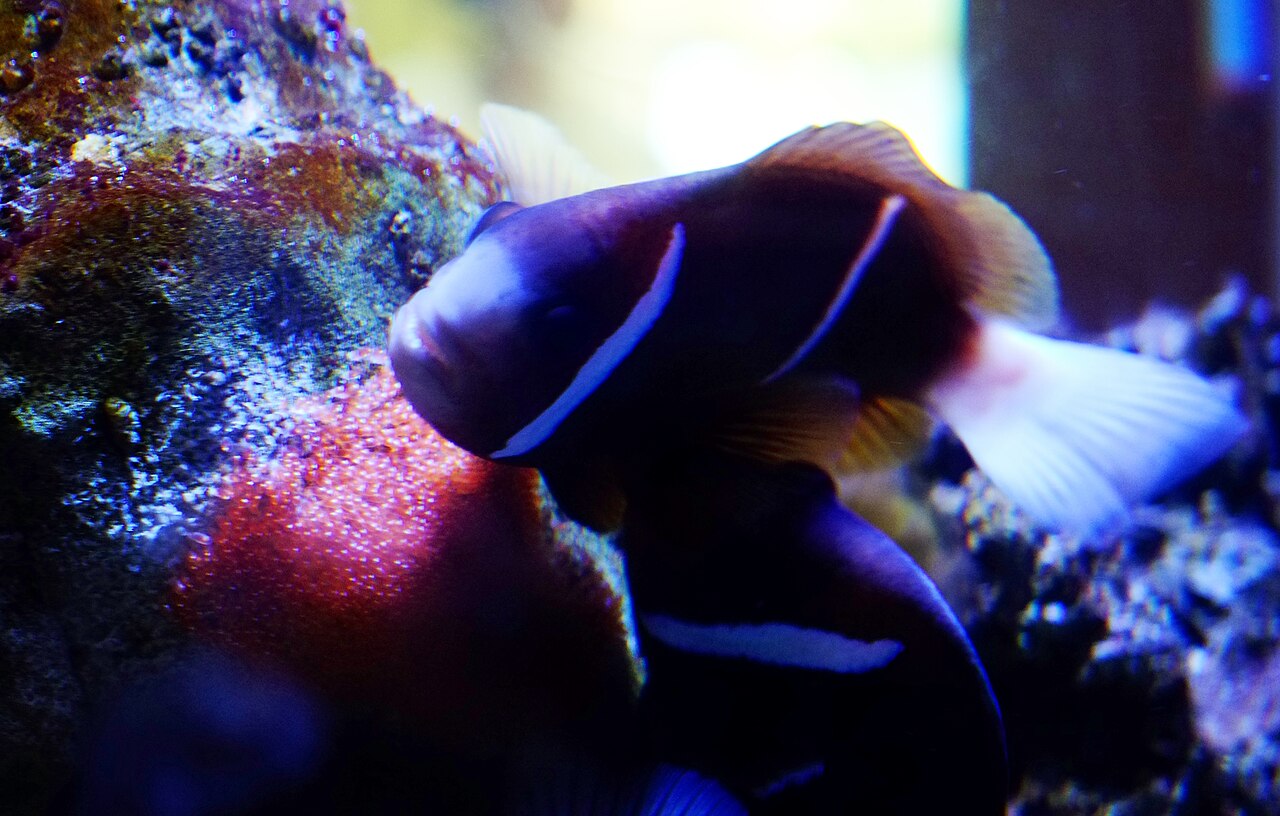
Gallery
Frequently Asked Questions
What is the Barrier Reef anemonefish (Amphiprion akindynos)?
It is a small reef-dwelling anemonefish, reaching up to 9 cm, first formally described by Allen in 1972 and classified in the family Pomacentridae. It is most commonly encountered in the Great Barrier Reef region of Australia and adjacent Western Pacific waters, typically at depths of 1 to 25 meters.
What does the name 'akindynos' actually mean?
The species epithet is drawn from Greek and translates roughly to 'safe' or 'free from danger.' The name is a nod to the protection the fish enjoys while nestled among the stinging tentacles of its host sea anemone, which cannot harm it.
How does the Barrier Reef anemonefish interact with its anemone host?
It forms a mutualistic partnership in which the fish gains shelter from predators and the anemone receives cleaning, water circulation, and nutrient-rich waste. The fish has evolved a tolerance to the anemone's nematocysts, so it can move freely among the tentacles without being stung.
How does the Barrier Reef anemonefish handle reproduction?
It is a sequential hermaphrodite, meaning each individual can transition sex over the course of its life. Groups follow a rigid size-based dominance order: the largest member serves as the breeding female and the next-largest as the breeding male, with smaller non-breeding members filling the remaining ranks.
Why does the Barrier Reef anemonefish matter to the reef ecosystem?
As a keystone member of anemone-fish symbiotic communities on the Great Barrier Reef, it helps sustain the health of its host anemones and contributes to the broader biodiversity of shallow tropical habitats. Its presence is often used as an indicator of a functioning reef food web.
Related in Barrier reef anemonefish
Links follow this subject's own source article.
Elsewhere in Barrier reef anemonefish
Spotted an error? Know more?
Reader corrections go straight into our review queue. Suggest an edit · How this site is sourced