Familial Amyloidosis, Finnish Type
Amyloidosis from mutated plasma gelsolin, primarily in Finland.
Last updated
Familial Amyloidosis, Finnish Type (FAF), also known as hereditary gelsolin amyloidosis and AGel amyloidosis, is an amyloid condition arising from aberrant proteolysis of a mutated form of plasma gelsolin. It was first described in 1969 by Finnish ophthalmologist Jouko Meretoja. The disorder is uncommon, with 400–600 cases reported in Finland and 15 elsewhere, and mutations are inherited in an autosomal dominant pattern.
Quick Facts
- First described
- 1969
- Described by
- Jouko Meretoja
- Cases in finland
- 400–600
- Cases elsewhere
- 15
- Inheritance
- Autosomal dominant
- Most common mutations
- D187N/Y (G654A/T on GSN, chromosome 9)
Facts from the source article.
Presentation
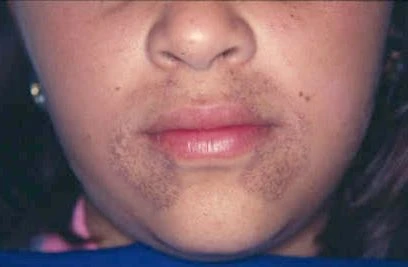
The disorder primarily involves eye, skin, and cranial nerve symptoms, with onset between the thirties and fifties. The most common characteristic is type II lattice corneal dystrophy. Additional signs include polyneuropathy, dermatochalasis, open-angle glaucoma, bilateral progressive facial paralysis, cutis laxa, skin fragility with ecchymosis, facial mask, diffuse hair loss, dry skin, carpal tunnel syndrome, nephrotic syndrome, cardiomyopathy with conduction alterations, and early aging. No specific treatments are available.
Plasma gelsolin amyloid
Plasma gelsolin is an 83 kDa, 755 amino acid plasma protein involved in inflammation regulation, composed of six gelsolin domains. Single point mutations in the GSN gene cause loss of structure in residues 254–258 of the second domain, increasing flexibility and exposing a furin cleavage site. The protein is cleaved in the Golgi before secretion; a 68 kDa C-terminal fragment is further processed into 5 and 8 kDa amyloidogenic fragments. Additional reported mutations include G167R, N184K, P432R, A551P, and Ala7fs.
More in Skin Conditions Resulting from Errors in Metabolism
Sources
Compiled from Wikipedia and the sources listed below. Text from Wikipedia is available under CC BY-SA 4.0; this entry is adapted from it.
- Wikipedia: Familial Amyloidosis, Finnish Type (CC BY-SA 4.0).
- Word definitions: the , each quoted from its Wikipedia article.
Spotted an error? Know more?
Reader corrections go straight into our review queue. Suggest an edit · How this site is sourced