Gaucher's disease
A lysosomal storage disease from glucocerebroside accumulation.
Last updated
Gaucher's disease is a genetic disorder in which glucocerebroside, a sphingolipid, accumulates in cells and organs due to a hereditary deficiency of the enzyme glucocerebrosidase. It is the most common of the lysosomal storage diseases and a form of sphingolipidosis. The condition is characterized by bruising, fatigue, anemia, low blood platelet count, and enlargement of the liver and spleen.
Signs and symptoms
Painless hepatomegaly and splenomegaly are common; the spleen can reach 1500–3000 g, increasing rupture risk. Hypersplenism leads to pancytopenia, causing anemia, neutropenia, leukopenia, and thrombocytopenia, raising infection and bleeding risks. Severe bone and joint pain often occurs in hips and knees. Neurological symptoms appear only in some types: Type II includes seizures, hypertonia, developmental delay, and apnea; Type III includes myoclonus, seizures, slowed horizontal saccadic eye movement, and possible cognitive impairment.
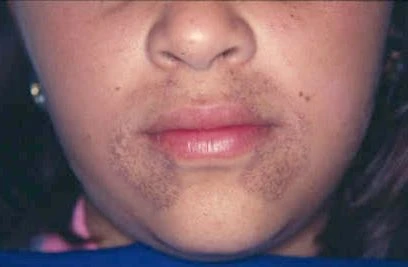
Osteoporosis affects 75% of patients, and a distal femur deformity resembling an Erlenmeyer flask is frequently described. Yellowish-brown skin pigmentation may develop. Pulmonary involvement, such as interstitial lung disease, is uncommon.
Pathophysiology
The disease results from a defect in the gene for lysosomal glucocerebrosidase on chromosome 1q22. This enzyme normally breaks down glucocerebroside, a cell membrane constituent of red and white blood cells. When the enzyme is defective, glucocerebroside accumulates in macrophages, which become engorged and appear on light microscopy like crumpled paper; these are called Gaucher cells. The exact mechanism of neurotoxicity is not understood but may involve glucosylsphingosine.
Different mutations in the GBA gene determine residual enzyme activity; in type I some activity remains, accounting for the lack of neuropathology. However, neither stored lipid amount nor residual enzyme activity correlates well with symptoms, leading to alternative explanations such as endo/lysosomal system jamming, ER stress, altered membrane lipid composition, inflammation from cytokine secretion, and neurodegeneration from glucosylsphingosine accumulation.
Heterozygotes for certain mutations have about a five-fold risk of developing Parkinson's disease. Cancer risk, particularly myeloma, may be increased. Inflammatory processes are poorly understood, but markers of macrophage activation are elevated.
Diagnosis
Diagnosis is suggested by the clinical picture and confirmed by enzyme testing; activity lower than 15% of mean normal is diagnostic. Genetic testing often follows, and sequencing of the beta-glucosidase gene may be necessary. Biochemical abnormalities such as high alkaline phosphatase, angiotensin-converting enzyme, and immunoglobulin levels can imply the diagnosis, as can cell analysis showing glycolipid-laden macrophages with crinkled-paper cytoplasm.
Elevated lysosomal enzymes, including tartrate-resistant acid phosphatase, hexosaminidase, and chitotriosidase, are useful; chitotriosidase helps monitor disease activity and may reflect severity. Three common clinical subtypes are recognized, though this classification has been criticized for not covering the full symptom spectrum. Type I (non-neuropathic) is the most common and least severe, affecting liver, spleen, and bone without brain involvement; symptoms may begin early or in adulthood. Type II involves neurological problems in small children, and Type III occurs in older patients.
Treatment
For type I and most type III, enzyme replacement therapy with intravenous recombinant glucocerebrosidase can reduce liver and spleen size, improve skeletal abnormalities, and reverse other manifestations. Treatment costs about US$200,000 annually and must continue for life. Dose-finding studies have been difficult due to the disease's rarity, so optimal dose and frequency remain controversial. The first drug, alglucerase (Ceredase), was harvested from human placental tissue and modified with enzymes; it has been withdrawn in favor of recombinant versions.
Available recombinant glucocerebrosidases include imiglucerase, velaglucerase, and taliglucerase alfa. Miglustat, an oral small molecule approved in Europe in 2002, works by substrate reduction therapy, preventing formation of glucocerebroside. Eliglustat (Cerdelga), approved in 2014, inhibits glucosylceramide synthase.
Did You Know?
- The Gaucher-causing mutations may have entered the Ashkenazi Jewish gene pool in the early Middle Ages (48–55 generations ago).
- Type III Gaucher's disease is especially common in the northern Swedish region of Norrbotten, where the incidence is 1 in 50,000.
- The neuronal damage associated with the disease was discovered in the 1920s, and the biochemical basis was elucidated in the 1960s by Roscoe Brady.
More in Skin Conditions Resulting from Errors in Metabolism
Sources
Compiled from Wikipedia and the sources listed below. Text from Wikipedia is available under CC BY-SA 4.0; this entry is adapted from it.
- Wikipedia: Gaucher's disease (CC BY-SA 4.0).
- Word definitions: the , each quoted from its Wikipedia article.
Spotted an error? Know more?
Reader corrections go straight into our review queue. Suggest an edit · How this site is sourced