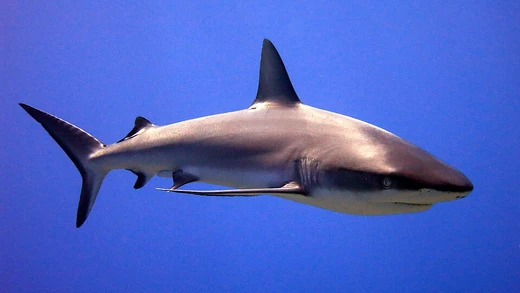
Megalodon
Extinct giant shark known from fragmentary remains and enormous teeth.

Géry PARENT · CC BY-SA 4.0
Otodus megalodon—often called megalodon, meaning "big tooth"—was a giant mackerel shark that lived from about 23 million to 3.58 million years ago, spanning the Early Miocene through the Early Pliocene. Though once classified alongside the great white shark in the family Lamnidae, scientists have since moved it to the extinct family Otodontidae, a lineage that split from the great white’s ancestors during the Early Cretaceous.
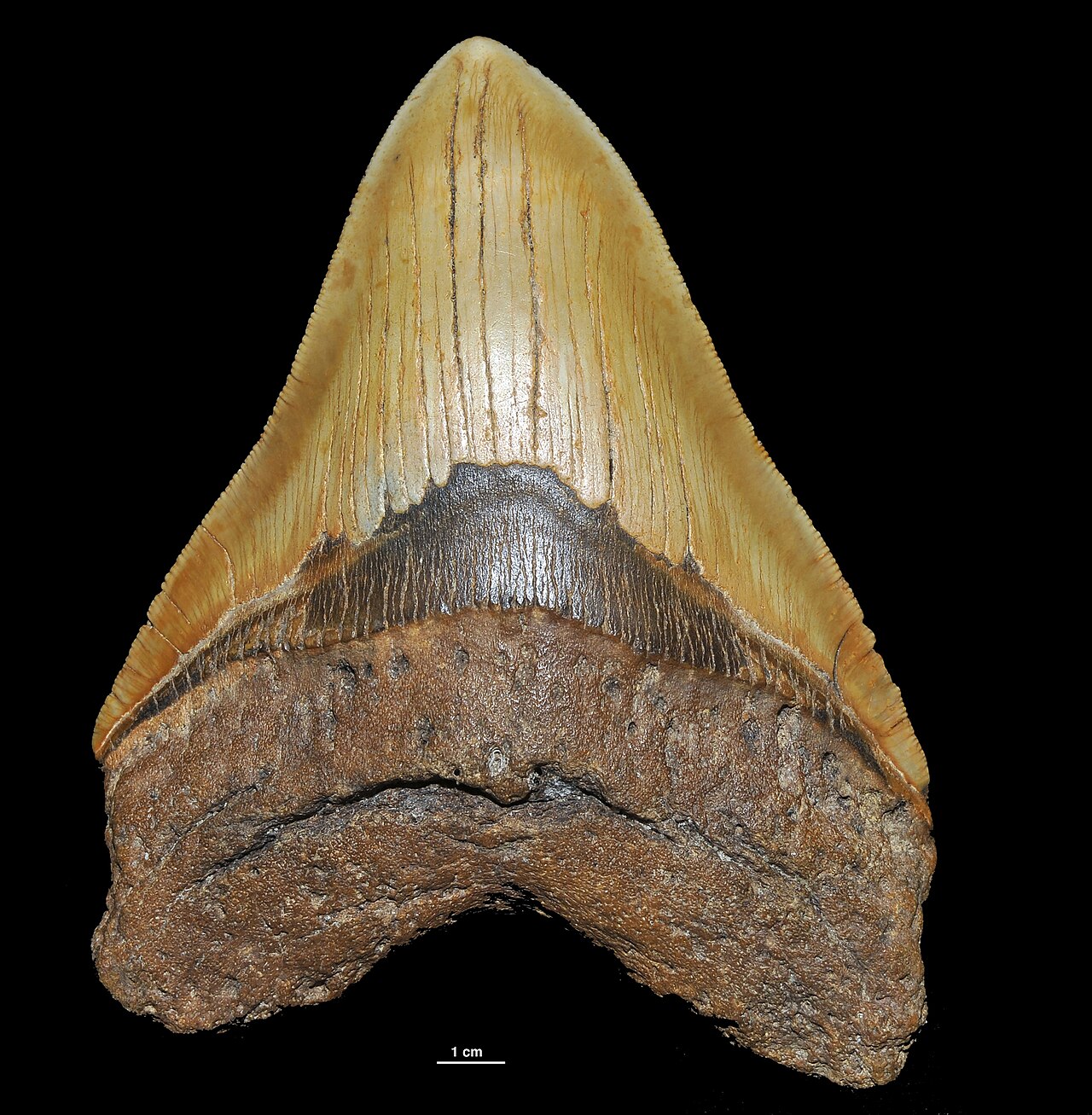
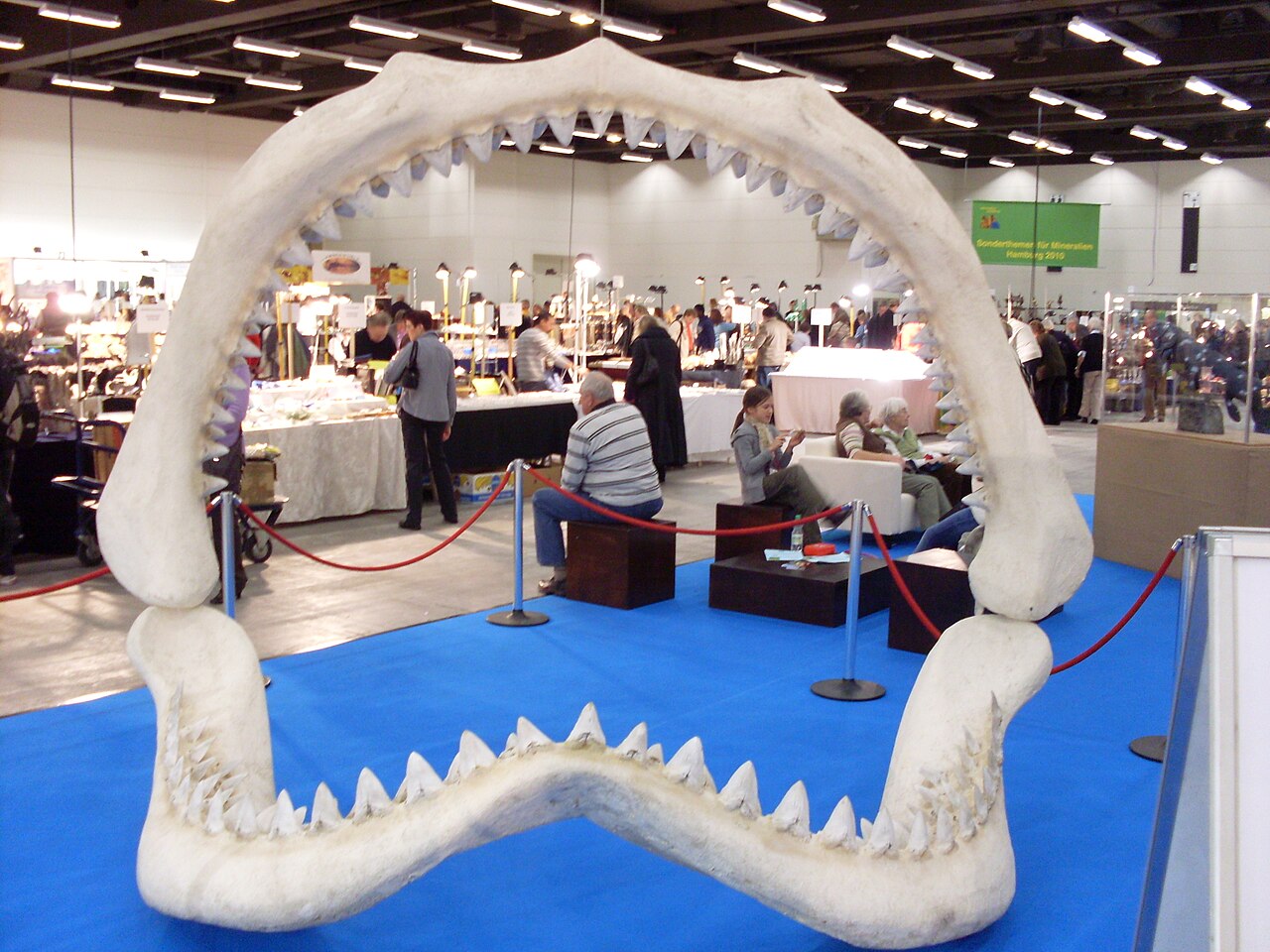
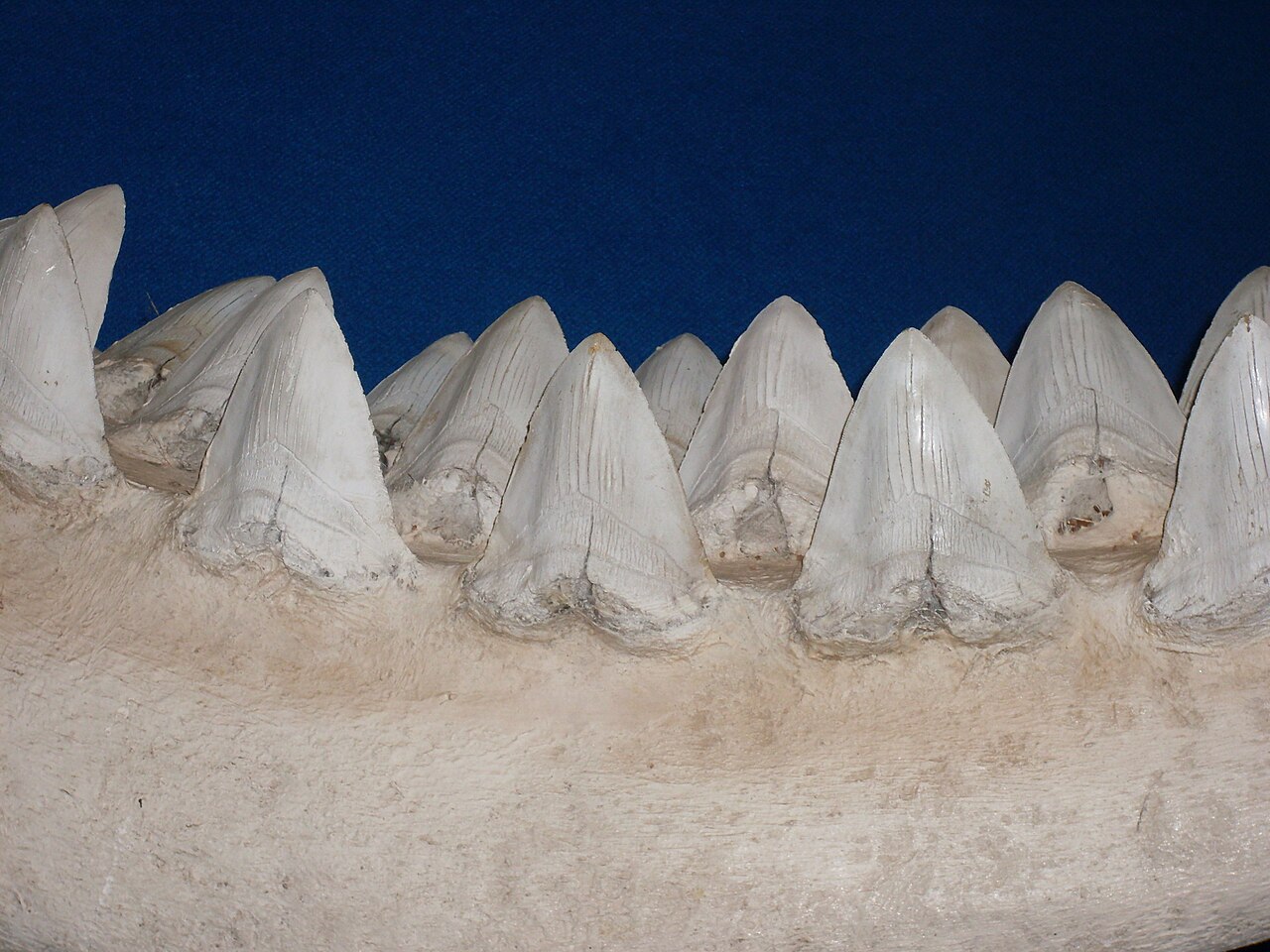
Despite its reputation as one of the largest and most powerful predators ever, megalodon is known only from scattered, incomplete fossils, so its exact appearance and maximum size are still debated. Some researchers think its body was stockier than modern lamniform sharks; others argue it was more elongated. Estimates for total length range from 14.2 to 24.3 meters (47 to 80 feet), but the typical length across all life stages—from juveniles to adults—is thought to be around 10.5 meters (34 feet). Its teeth were thick and sturdy, built for gripping prey and crushing bone, and its massive jaws could deliver a bite force of 108,500 to 182,200 newtons (24,390 to 40,960 pounds-force).
Megalodon likely reshaped marine ecosystems. Its fossils have been found worldwide, suggesting a cosmopolitan range. It probably hunted large animals like whales, seals, and sea turtles. Juveniles stayed in warm coastal waters, feeding on fish and small whales. Unlike great whites, which attack from below, megalodon may have used its powerful jaws to smash through the chest cavity, targeting the heart and lungs.
The shark faced competition from whale-eating cetaceans, including the sperm whale *Livyatan* and other macroraptorial sperm whales, and possibly early killer whales (*Orcinus*), though the role of early *Orcinus* is uncertain—species like *Orcinus citoniensis* likely ate small fish and cephalopods, not large marine mammals. Because megalodon preferred warmer waters, cooling oceans linked to the onset of ice ages, along with falling sea levels and the loss of nursery areas, may have driven its decline. A drop in baleen whale diversity and a shift of those whales toward polar regions could have cut off its main food source. The shark’s extinction coincides with a trend toward gigantism in baleen whales.
**Classification**
**Prescientific and early research history**
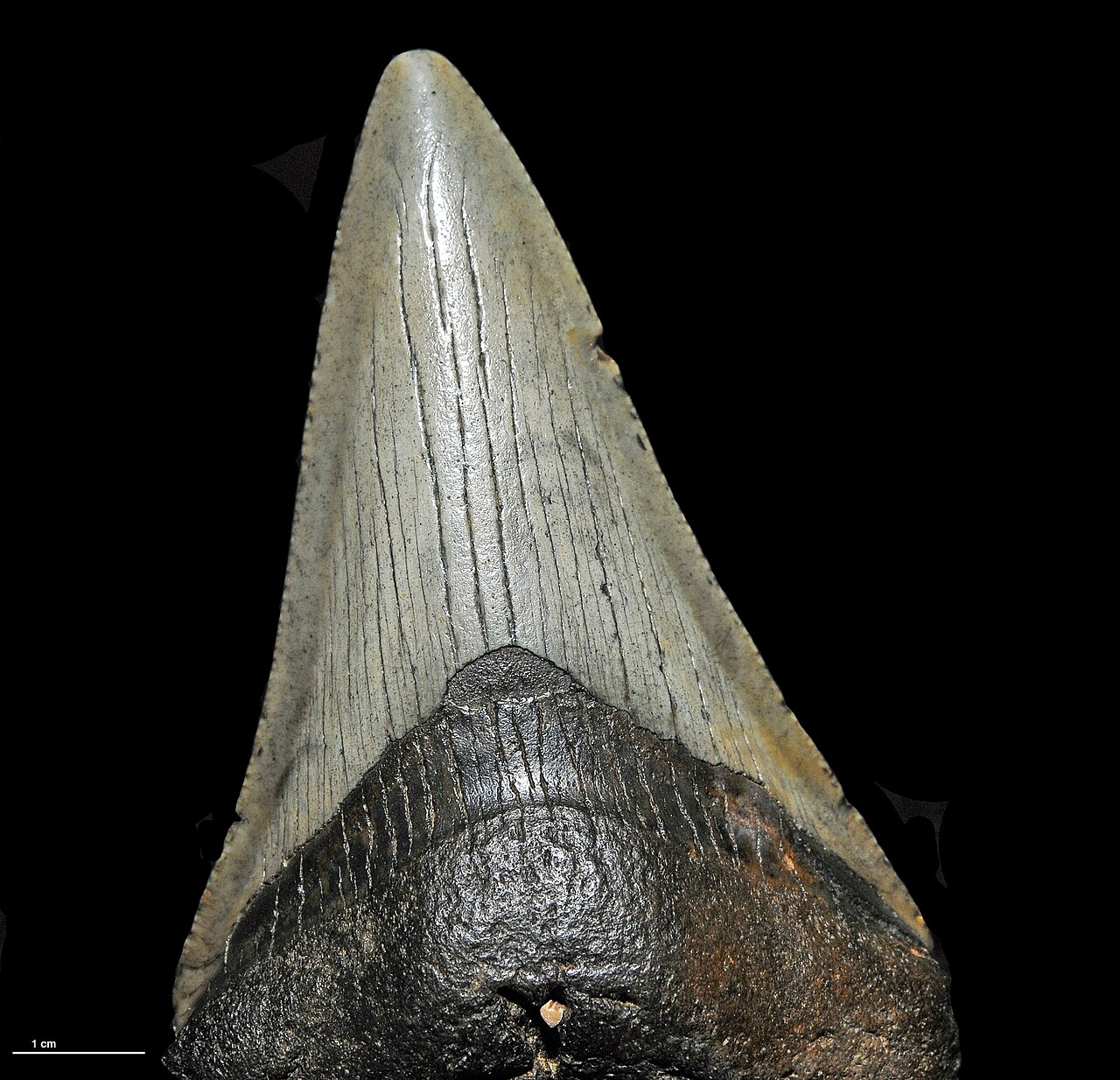
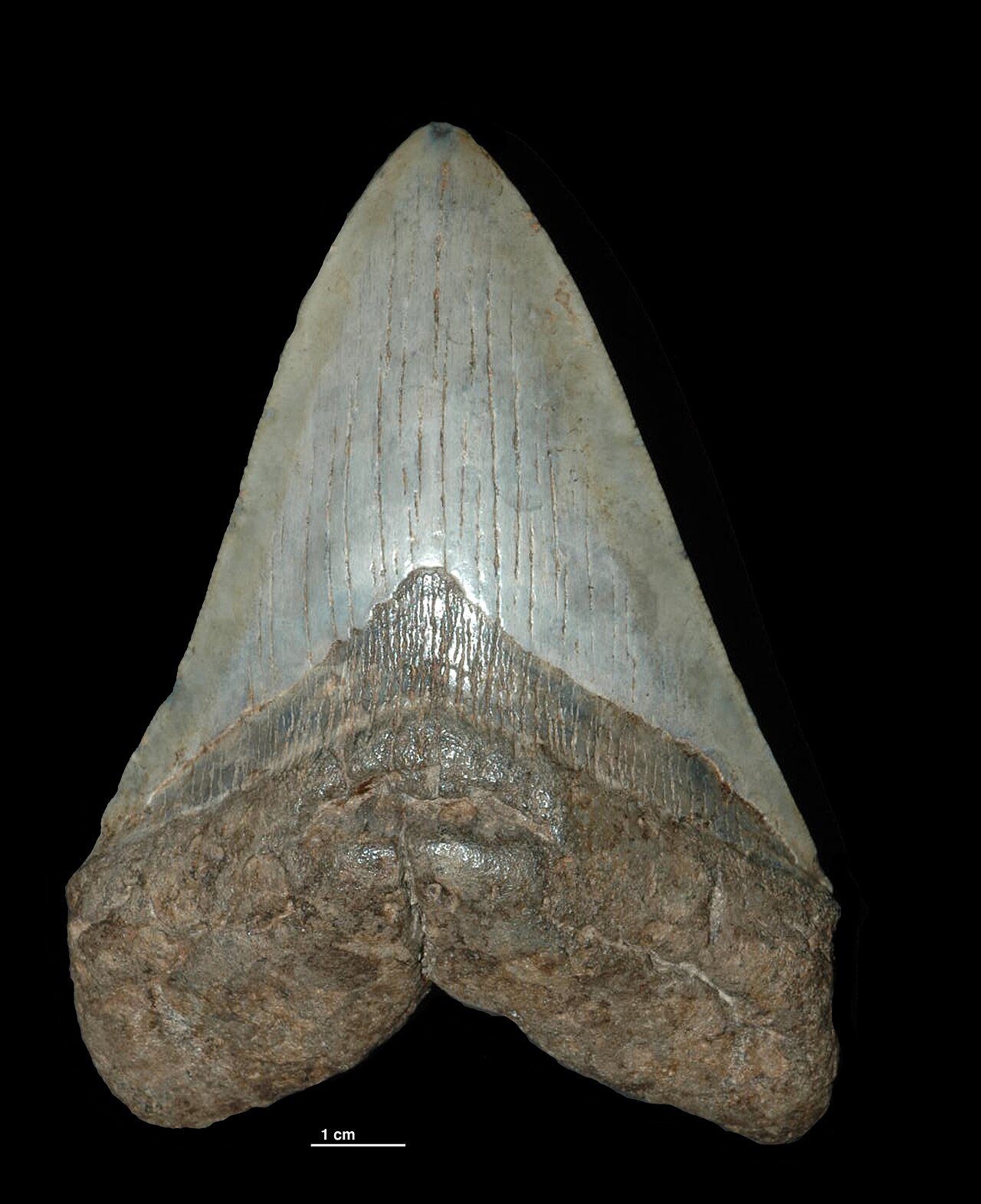
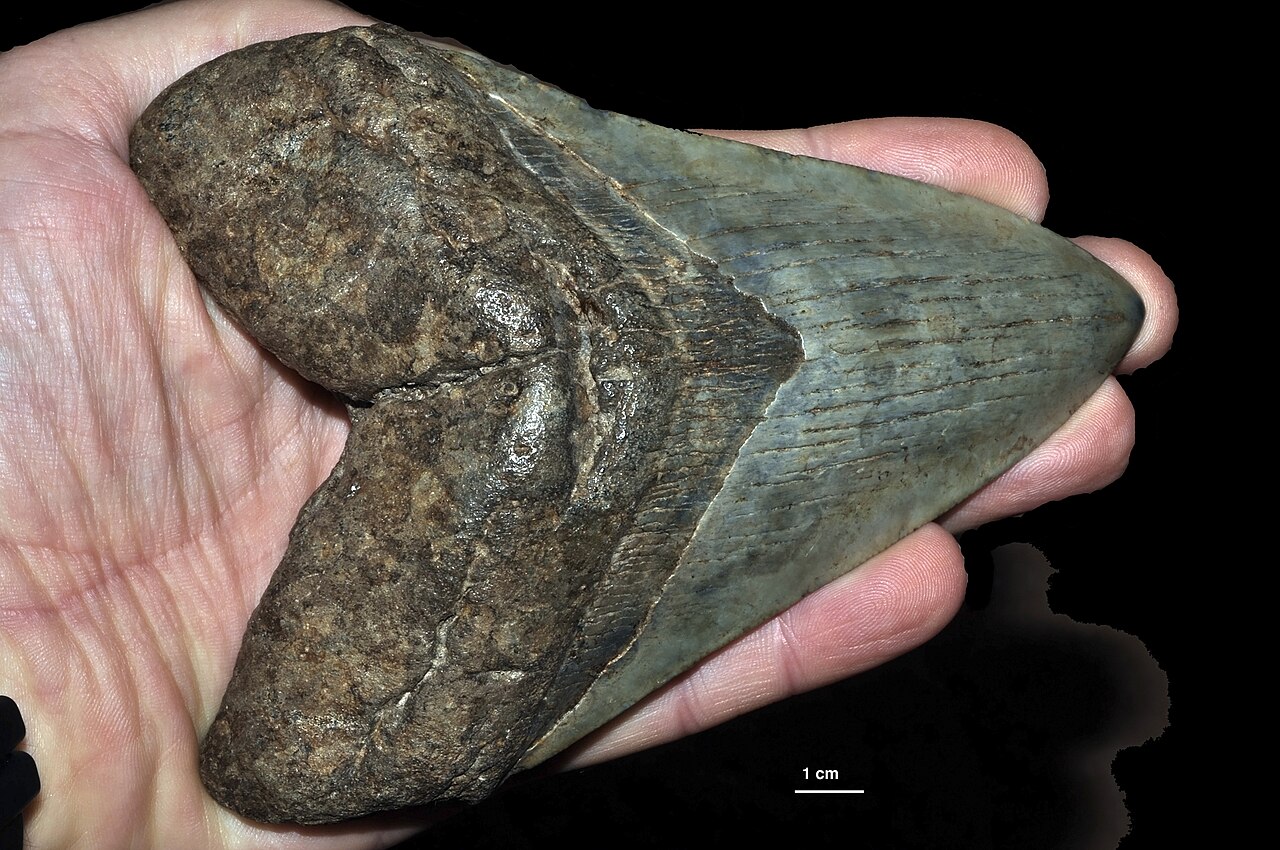
Megalodon teeth have been collected and used for thousands of years. Pre-Columbian cultures in the Americas valued them for their size and serrated edges, turning them into projectile points, knives, jewelry, and funeral items. Some groups, like the Sitio Conte societies in Panama, seem to have used them mainly in ceremonies. As early as 430 BC, Algonquian peoples mined megalodon teeth in the Chesapeake Bay and traded them selectively with the Adena culture in Ohio. The first written mention comes from Pliny the Elder in AD 73, in his *Historia Naturalis*. He described them as resembling petrified human tongues that Roman folklore said fell from the sky during lunar eclipses; they were called *glossopetrae* ("tongue stones"). In 12th-century Maltese tradition, these stones were thought to belong to serpents that Saint Paul turned to stone during a shipwreck, and they were believed to have antivenom powers. From the late 13th to the 16th century, *glossopetrae* appeared in European literature, credited with even more supernatural abilities to cure various poisons. Medieval and Renaissance nobles wore them as protective amulets and used them in tableware, supposedly to neutralize poisoned liquids or bodies. By the 16th century, the teeth were ground up and eaten as ingredients in European-made Goa stones.
The idea that *glossopetrae* were actually shark teeth was suggested by some as early as 1554, when cosmographer André Thevet mentioned it as hearsay, though he didn’t believe it. The first scientific argument came from Italian naturalist Fabio Colonna in 1616. He published an illustration of a Maltese megalodon tooth next to a great white shark’s tooth, noting their strong resemblance. Colonna argued that these fossils were not petrified serpent tongues but shark teeth that had washed ashore. He supported this by burning samples and observing carbon residue, which he took as evidence of organic origin. Still, the shark-tooth interpretation remained largely rejected, partly because it was hard to explain how such teeth ended up far from the sea. The idea was revived in the late 17th century by English scientists Robert Hooke, John Ray, and Danish naturalist Niels Steensen (known as Nicholas Steno). Steno’s argument is the most famous: it came from his dissection of a great white shark’s head caught in 1666. His 1667 report included engravings of a shark’s head and megalodon teeth that became iconic. However, the head in the engraving wasn’t the one Steno dissected, and the fossil teeth weren’t drawn by him. Both images had originally been commissioned in the 1590s by Papal physician Michele Mercati for his book *Metallotheca*. Mercati died before the book could be published, and Steno reused the illustrations on the advice of Carlo Rober.
- born
- Earliest remains reported from Late Oligocene, around 28 million years ago; appearance disputed, with dates ranging to as young as 16 million years ago
- field
- Paleontology
- nationality
- Cosmopolitan distribution
Lore & Background
Megalodon is an extinct giant mackerel shark that lived from the Early Miocene to the Early Pliocene epochs, approximately 23 to 3.58 million years ago. Once classified alongside the great white shark, it has since been placed in the extinct family Otodontidae. Its appearance and maximum size remain uncertain due to fragmentary remains, with scientists debating whether its body was more stocky or elongated than modern lamniform sharks. Estimates for maximum length range from 14.2 to 24.3 meters, though the typical length for individuals across all life stages is estimated at 10.5 meters. Its teeth were thick and robust, adapted for grabbing prey and breaking bone, and its large jaws could generate a bite force between 108,500 and 182,200 newtons. The shark had a cosmopolitan distribution, likely targeting large prey such as whales, seals, and sea turtles. Juveniles inhabited warm coastal waters, feeding on fish and small whales. Unlike the great white, which attacks from the soft underside, megalodon likely used its powerful jaws to breach the chest cavity and puncture the heart and lungs of its prey. Its decline may have been driven by oceanic cooling, sea level changes, loss of nursery areas, and reduced diversity of baleen whales. Competition from whale-eating cetaceans like *Livyatan* and possibly early killer whales may have also played a role.
Reader's Guide
Megalodon's significance lies in its role as a top predator that probably had a major impact on marine community structure. Its fossil record indicates a cosmopolitan distribution, and it likely targeted large prey such as whales, seals, and sea turtles. The shark faced competition from whale-eating cetaceans like Livyatan and possibly smaller ancestral killer whales. Its decline may have been driven by oceanic cooling, sea level changes, loss of nursery areas, and a reduction in baleen whale diversity. The shark's extinction coincides with a gigantism trend in baleen whales. Its classification has been debated: once placed in Lamnidae with the great white shark, it is now considered a member of Otodontidae, with dental similarities to the great white attributed to convergent evolution.
Did You Know?
- Megalodon teeth were once thought to be petrified human tongues that fell from the sky during lunar eclipses.
- The specific name 'megalodon' combines Ancient Greek words meaning 'big tooth'.
Taxonomy & Physical Profile
Megalodon, a name meaning simply "big tooth," was a giant mackerel shark that inhabited Earth's seas from approximately 23 million years ago until 3.58 million years ago, spanning the Early Miocene and Early Pliocene epochs. For decades, paleontologists classified it within Lamnidae, treating it as a close relative of the great white shark. That placement has since been revised: megalodon now belongs to the extinct family Otodontidae, a lineage that diverged from the great white's ancestors during the Early Cretaceous, making the two far more distantly related than earlier taxonomy suggested. Despite its reputation as one of the most powerful predators to have ever existed, megalodon survives in the fossil record only as fragmentary remains, so its precise body shape and maximum size remain genuinely uncertain. Researchers still argue over whether its form was stockier or more elongated than that of modern lamniform sharks. Length estimates from various analyses span 14.2 to 24.3 metres, though the modal size across all ontogenetic stages is estimated at roughly 10.5 metres.
Ecology & Hunting Strategy
Megalodon was a cosmopolitan predator, with fossil evidence placing it across a wide range of ancient seas. Adults likely targeted large marine mammals—whales, seals, and sea turtles—while younger individuals dwelt in warm coastal waters, feeding on fish and smaller cetaceans. Its hunting technique appears to have differed markedly from that of the great white shark. Rather than striking the soft underside of its prey, megalodon probably relied on its powerful jaws to breach the chest cavity directly, puncturing the heart and lungs to bring the animal down quickly. This apex position did not go uncontested. Whale-eating cetaceans such as Livyatan and other macroraptorial sperm whales posed direct competition for the same large-mammal prey. Smaller ancestral killer whales (Orcinus) may also have overlapped ecologically, though this remains uncertain; species like Orcinus citoniensis appear to have been adapted for feeding on small fish and cephalopods rather than large marine mammals, suggesting they occupied a different niche. The sheer bite force megalodon could generate gave it a mechanical advantage in subduing even the largest whales, making it a dominant force in shaping the structure of marine communities during the Miocene and Pliocene.
Decline & Extinction
The end of megalodon's roughly 20-million-year reign coincided with a cascade of environmental shifts. As the ice ages began, global oceanic cooling reduced the warm waters the shark preferred, while simultaneously lowering sea levels and eliminating the coastal nursery areas where juveniles had fed on fish and small whales. With its preferred habitat contracting, megalodon lost the geographic breadth that had sustained its cosmopolitan distribution. Equally critical was a transformation in its primary food supply. Baleen whale diversity declined, and the surviving species shifted their ranges toward polar regions—waters too cold for a warm-water shark to follow. This dietary squeeze arrived at a particularly disadvantageous moment: megalodon's disappearance aligns with a broader trend of baleen whales growing to enormous sizes, meaning the few remaining prey species were becoming larger and harder to subdue. The combination of shrinking habitat, reduced prey availability, and increasing prey size likely pushed this already-fragmentary predator past the tipping point, ending a lineage that had dominated marine food webs since the Early Miocene.
Human Encounters & the Glossopetrae Mystery
Long before science gave megalodon a proper name, its teeth had entered human culture. Pre-Columbian peoples in the Americas shaped the large, serrated fossils into projectile points, knives, jewelry, and funeral accessories; the Sitio Conte societies of Panama appear to have used them primarily for ceremonial purposes. The earliest written account is in Pliny the Elder's Historia Naturalis (AD 73), which described the stones as petrified human tongues that Roman folklorists believed had fallen from the sky during lunar eclipses. A 12th-century Maltese tradition reattributed them to serpents turned to stone by Paul the Apostle, granting them antivenom powers. Medieval and Renaissance nobility fashioned the teeth into protective amulets and tableware, and by the 16th century they were consumed as ingredients in Goa stones.
Common Misconceptions (Editorial)
- Some people believe megalodon was a close relative of the great white shark, but it has been reclassified into the extinct family Otodontidae.
- It is often assumed that megalodon’s appearance and maximum size are well established, but they remain uncertain because only fragmentary remains are known.
- A common misconception holds that megalodon teeth were always recognized as shark teeth, but ancient cultures and medieval Europeans often thought they were petrified human tongues, serpent tongues, or amulets.
Why It Matters (Editorial)
Megalodon endures in the popular imagination because it represents a pinnacle of prehistoric power and mystery—a predator whose true size and look we can only approximate. Its ancient teeth, once mistaken for magical objects, also remind us how human cultures have long interpreted fossils through myth and superstition before science caught up.
Gallery
Frequently Asked Questions
What is Megalodon?
Megalodon is an extinct giant mackerel shark that dominated the oceans during the Miocene and Pliocene epochs. It belongs to its own family, Otodontidae, rather than being a direct ancestor of the modern great white.
How large was Megalodon?
Estimated maximum body lengths range from roughly 14.2 to 24.3 metres, though the precise figure is still debated because only fragmentary fossils have been recovered. It is broadly regarded as one of the most massive predators to have ever lived.
Why is Megalodon's appearance still uncertain?
Paleontologists have only found isolated teeth, occasional vertebrae, and other scattered fragments rather than a complete skeleton, so full body proportions remain a matter of scientific interpretation. This is why different reconstructions in the literature show noticeably different body shapes and sizes.
More in Sharks 1-22
Spotted an error? Know more?
This is a living reference — every entry is fact-audited, and reader corrections feed straight into our audit queue. Suggest an edit · See this site's audit record