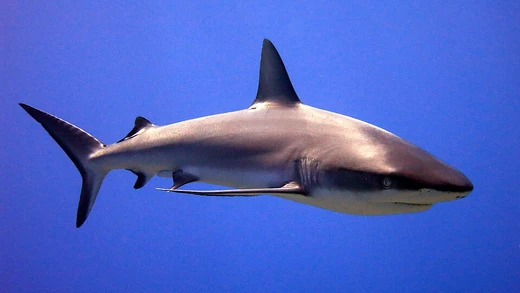
Hammerhead shark
Hammerhead sharks are a group of sharks with distinctive flattened, T-shaped heads called cephalofoils, found worldwide in warmer coastal waters.
Last updated

Eden, Janine and Jim from New York City · CC BY 2.0
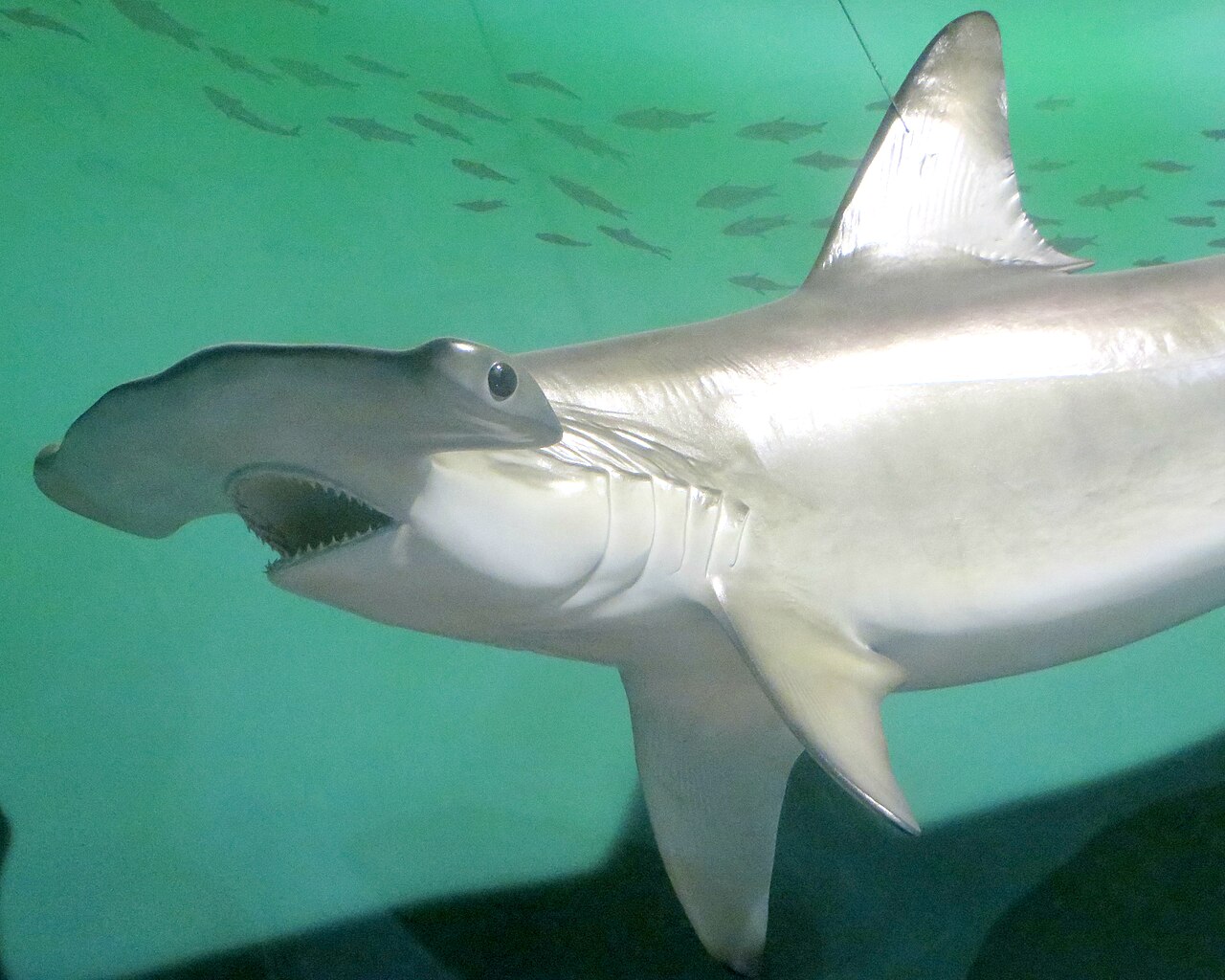
Hammerhead sharks have a flattened, hammer-like head shape.[1] During summer, hammerheads leave warm tropical waters and head for cooler areas in a big migration.[2]
Scientific classification
- KingdomAnimalia
- PhylumChordata
- ClassChondrichthyes
- SubclassElasmobranchii
- DivisionSelachii
- OrderCarcharhiniformes
- FamilySphyrnidae
Named by T. N. Gill, 1872
Sources: Wikipedia taxobox: Hammerhead shark (CC BY-SA 4.0)
Quick Facts
- Number of species
- 9 extant species (8 in genus Sphyrna, 1 in genus Eusphyra)
Facts from the source article.
Description
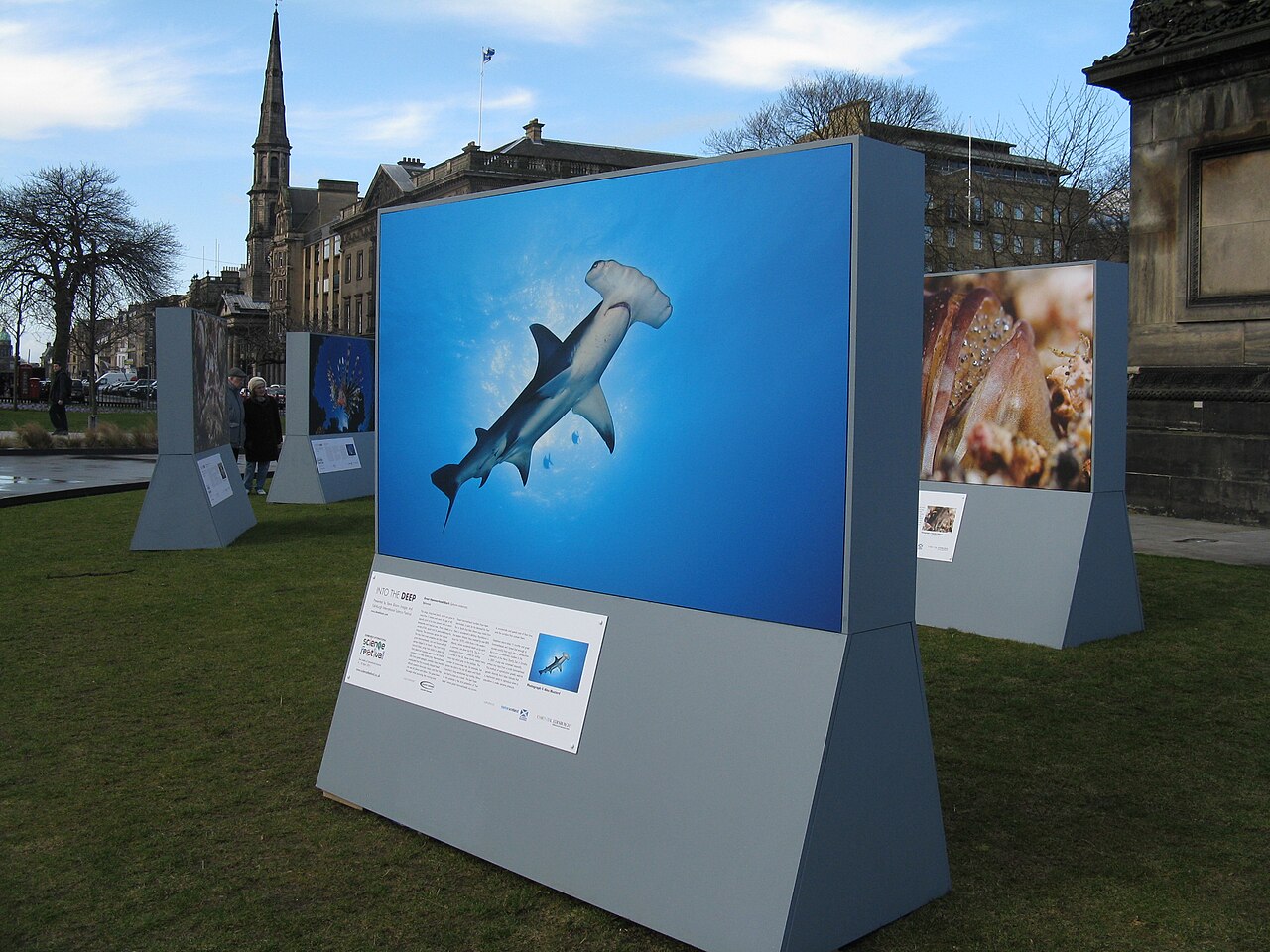
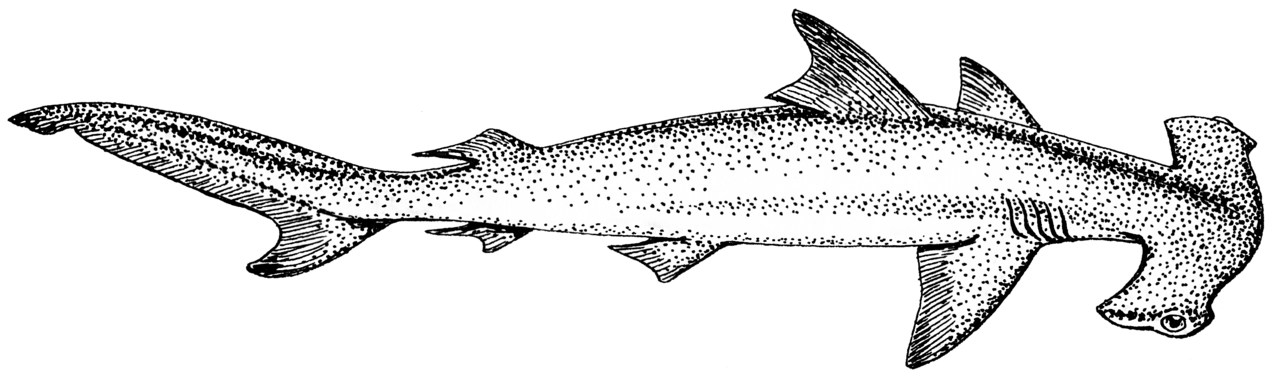
Hammerhead shark species vary in length and weight.[3] The shape differs between species. The great hammerhead has a distinct T-shape, the scalloped hammerhead has a rounded head with a central notch, and the smooth hammerhead has an unnotched rounded head.[4] Compared to other sharks, hammerheads have mouths that are surprisingly small.[2]
Biology and ecology
Stingrays are a favorite meal. Their small, crescent-shaped mouths help them hunt rays, skates, and flounder on the seafloor.[5] They use their unique heads as a tool to pin down and briefly stun prey like rays and flatfishes.[5] Some species are known to form schools, but in the evening they become solitary hunters.[2] In 2007, scientists discovered that the bonnethead shark can reproduce without a mate, the first shark known to do this.[6]
Bonnethead sharks sometimes have seagrass in their stomachs, making up half of what's inside.[5] The great hammerhead sometimes eats other hammerheads, and mothers have been known to eat their own pups.[5] They might swallow the seagrass by accident, but they can break it down a little bit.[7] These sharks mate just once a year, and the male bites the female until she's ready to go along with it.[8]
The male uses claspers to pass sperm, and fertilization happens inside the female.[8] At first, the growing babies get their food from a yolk sac, which later changes into something like a mammal's placenta.[8] Once the pups are born, their parents don't look after them at all.[8]
Distribution and habitat
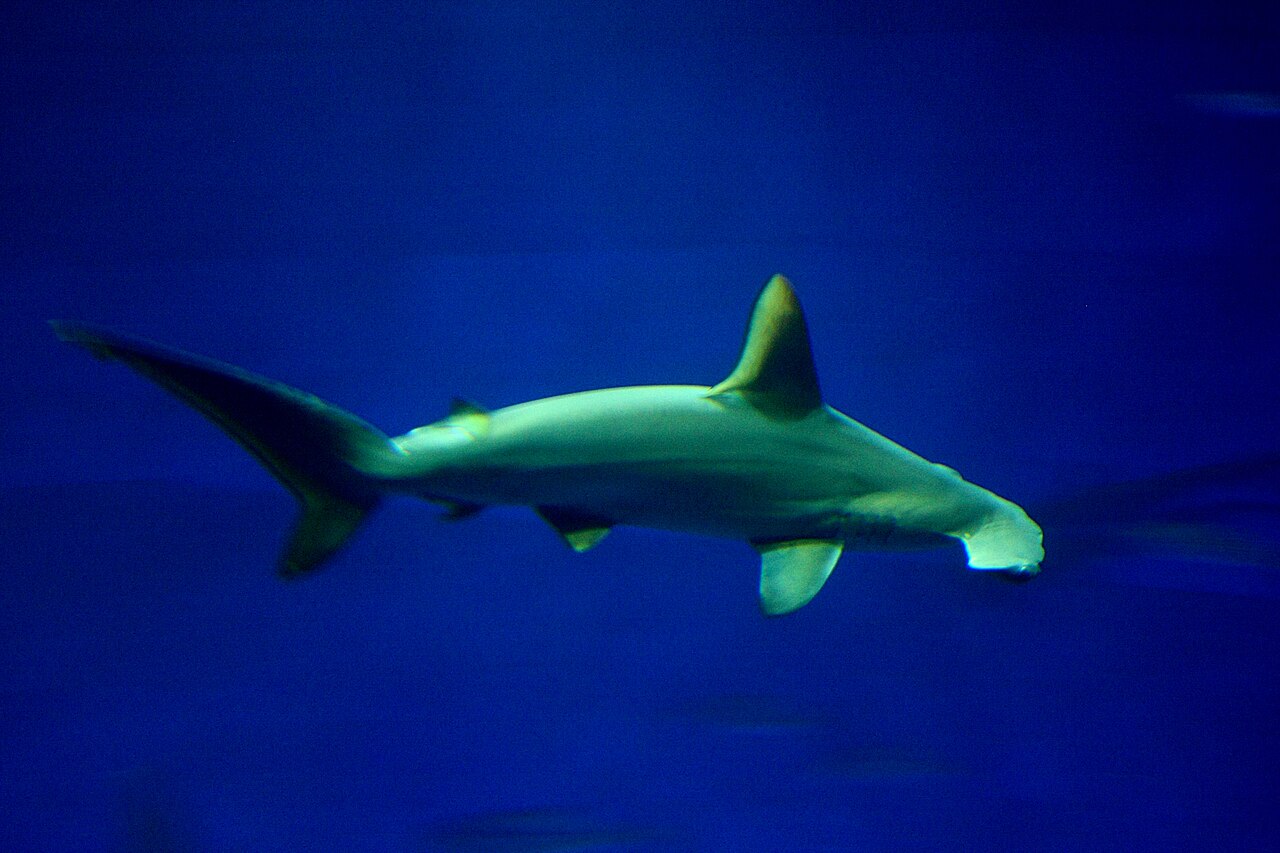
To stay safe from predators, young hammerheads spend most of their time in shallow water near coastlines around the world.[9]
Human interactions
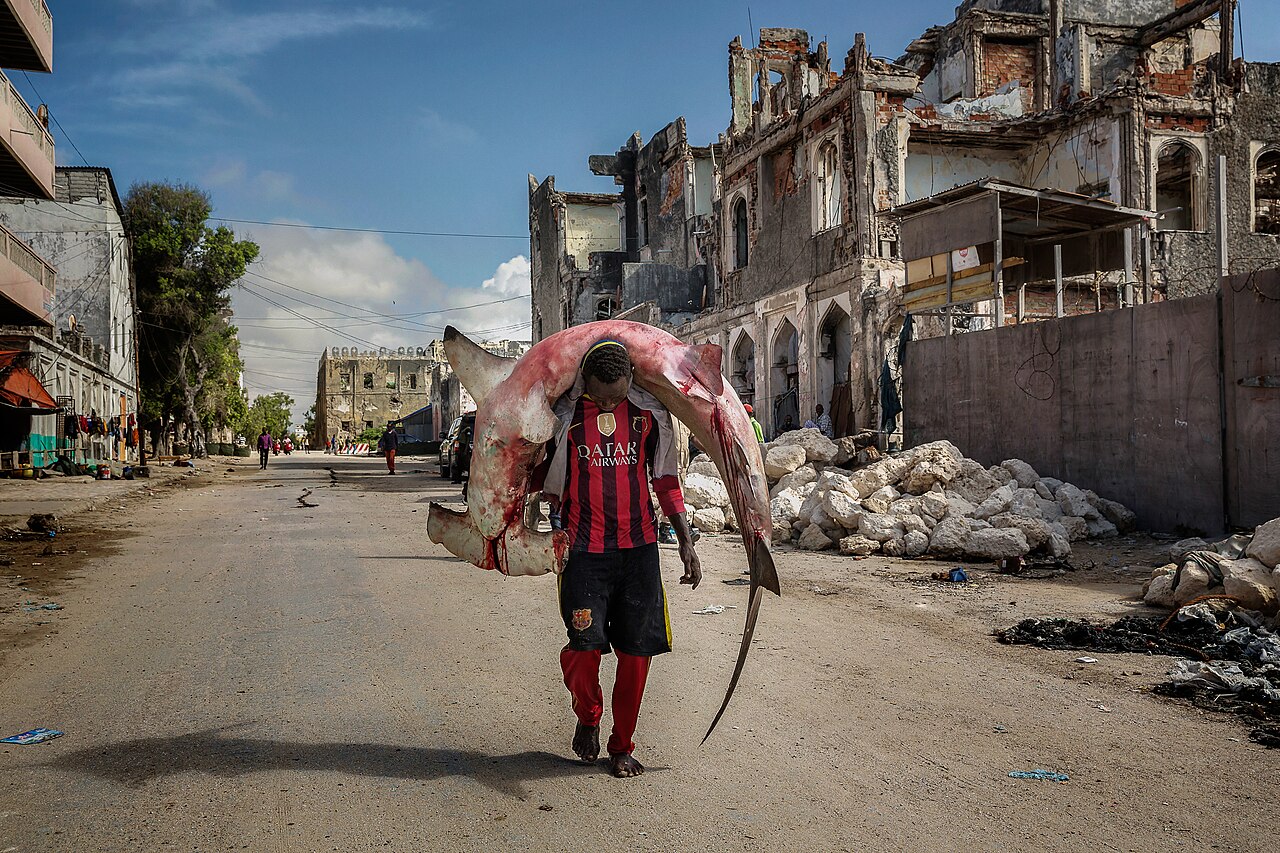
Since 1580, hammerhead sharks have attacked humans 17 times without being provoked.[10] No human fatalities have been recorded, and most species are too small to inflict serious damage.[10] Larger hammerhead species are considered difficult to maintain, even compared to other large sharks kept by public aquariums.[11] The small bonnethead is a common sight in public aquariums because it's much easier to keep in captivity than the bigger hammerhead species.[11]
Taxonomy and phylogeny
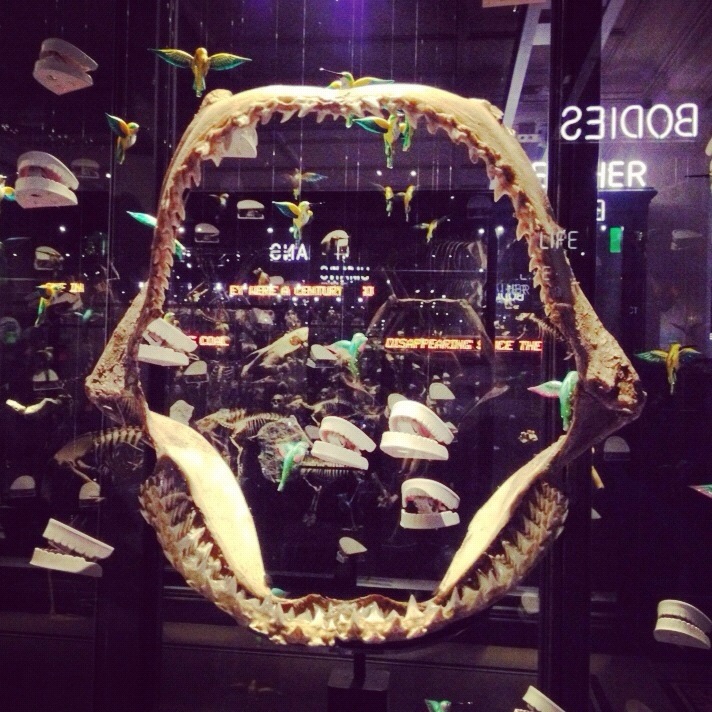
Since sharks don't have mineralized bones, their teeth are pretty much the only fossils we find.[12] The first hammerhead ancestor probably lived during the Cretaceous or Paleocene periods.[12] The oldest definite hammerhead fossils come from the Eocene epoch.[12]
References
- Wikipedia, "Hammerhead shark" (CC BY-SA 4.0), which cites: "Hammerhead Shark", sharks-world.com (original not read by us) en.wikipedia.org
- Wikipedia, "Hammerhead shark" (CC BY-SA 4.0), which cites: "Hammerhead shark study shows cascade of evolution affected size, head shape", ScienceDaily.com, 19 May 2010; "Hammerhead shark Diet, Size, & Facts Britannica", www.britannica.com; Ward-Sing, "Great Hammerhead Shark", Shark Guardian, 2017-05-12; "Hammerhead Shark", NationalGeographic.com, 10 September 2010 (we also read that source) en.wikipedia.org
- Wikipedia, "Hammerhead shark" (CC BY-SA 4.0), which cites: "Great Hammerhead Shark", Oceana; Fisheries, "Bonnethead Shark NOAA Fisheries", NOAA, 2025-04-14; New-York Tribune, "Hammerhead Shark Captured in Florida Waters", Chronicling America, 15 April 1906 (original not read by us) en.wikipedia.org
- Wikipedia, "Hammerhead shark" (CC BY-SA 4.0), which cites: "Marine Species ID: Great Hammerhead vs. Scalloped and Smooth Hammerhead", Sport Diver (original not read by us) en.wikipedia.org
- Wikipedia, "Hammerhead shark" (CC BY-SA 4.0), which cites: "Hammerhead Shark", Aquatic Community; "Great hammerhead shark", Enchanted Learning (we also read that source) en.wikipedia.org
- Wikipedia, "Hammerhead shark" (CC BY-SA 4.0), which cites: Chapman, "Virgin birth in a hammerhead shark", Biology Letters, 22 August 2007, p. 425–7 (original not read by us) en.wikipedia.org
- Wikipedia, "Hammerhead shark" (CC BY-SA 4.0), which cites: Hannah Lang, "This Shark Eats Grass, and No One Knows Why", National Geographic, 29 June 2017; Meekan, "The world's largest omnivore is a fish", Ecology, 2022 (original not read by us) en.wikipedia.org
- Wikipedia, "Hammerhead shark" (CC BY-SA 4.0), which cites: "Hammerhead Shark", Aquatic Community (we also read that source) en.wikipedia.org
- Wikipedia, "Hammerhead shark" (CC BY-SA 4.0), which cites: Royer, "'Breath holding' as a thermoregulation strategy in the deep-diving scalloped hammerhead shark", Science, 12 May 2023, p. 651–655 (we also read that source) en.wikipedia.org
- Wikipedia, "Hammerhead shark" (CC BY-SA 4.0), which cites: "Statistics on Attacking Species of Shark", Florida Museum of Natural History; "Hammerhead Shark", NationalGeographic.com, 10 September 2010 (original not read by us) en.wikipedia.org
- Wikipedia, "Hammerhead shark" (CC BY-SA 4.0), which cites: Compagno, L., "Sharks of the World", HarperCollins, 2004, p. 325; "Elasmobranch Husbandry Manual: Captive Care of Sharks, Rays, and their Relatives", Ohio Biological Survey, March 2025; "Babies Of The S.E.A. – Bonnethead Shark", S.E.A. Aquarium at Resorts World Sentosa, November 2013; "The Bonnethead Shark Sphyrna tiburo: Is it Suitable for Home Aquariums?", TFH Magazine, September 2007; "Elasmobranch Husbandry Manual: Captive Care of Sharks, Rays, and their Relatives", Ohio Biological Survey, March 2025; "Elasmobranch Husbandry Manual en.wikipedia.org
- Wikipedia, "Hammerhead shark" (CC BY-SA 4.0), which cites: Brée, "Combining palaeontological and neontological data shows a delayed diversification burst of carcharhiniform sharks likely mediated by environmental change", Scientific Reports, 19 December 2022, p. 21906; Samonds, "A middle - late Eocene neoselachian assemblage from nearshore marine deposits, Mahajanga Basin, northwestern Madagascar", PLOS ONE, 27 February 2019; Adnet, "Diversity and renewal of tropical elasmobranchs around the Middle Eocene Climatic Optimum (MECO) in North Africa: New data from the lagoonal deposits of Djebel el en.wikipedia.org
Each numbered sentence above was checked against the source it cites before publication. Sentences citing Wikipedia adapt text from the English Wikipedia article Hammerhead shark (contributors), used under CC BY-SA 4.0; this entry is available under the same licence. Other sources were used for facts only; no text or images are copied from them.
More in Hammerhead sharks
Elsewhere in Sharks
Sources
Compiled from Wikipedia and the sources listed below. Text from Wikipedia is available under CC BY-SA 4.0; this entry is adapted from it.
- Wikipedia: Hammerhead shark (CC BY-SA 4.0).
- Word definitions: the Codexery glossary, each quoted from its Wikipedia article.
Spotted an error? Know more?
Reader corrections go straight into our review queue. Suggest an edit · How this site is sourced