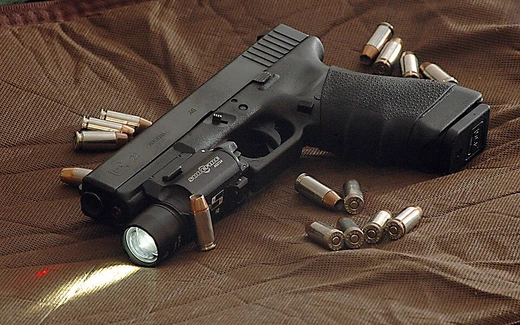
Ortgies semi-automatic pistol
A well-balanced, sturdy German pistol popular in competition and export.

The Ortgies is a hammerless semi-automatic pistol introduced in Germany right after World War I. It was first built by its designer, Heinrich Ortgies, and later by Deutsche Werke. Though inexpensive, the pistol was well-made and performed strongly in shooting competitions, and it sold widely across North and South America.
The pistol came in 6.35 mm, 7.65 mm, and 9 mm Kurz, all using a simple blowback action. Despite its low cost, the design was advanced for its time, with few parts and good sealing against dirt. Metal parts were forged or machined, and assembly avoided screws entirely—even the wooden grips were held by a spring-loaded fastener inside the magazine well, though some examples do use a single screw. The hammerless mechanism relied on a spring-loaded striker, which also served as an ejector when the slide moved back, similar to early Colt and Browning pocket pistols.
Unusual features included the safety and magazine. The safety was a lever set into the back of the grip. When the gun was cocked, pressing a button under the slide forced the lever backward into the "safe" position, which also reduced tension on the firing pin spring. To disengage, the shooter simply squeezed the grip, pushing the lever forward until it was flush with the frame. Early magazines could hold both 7.65 mm (.32 ACP) and 9 mm Kurz (.380 ACP) rounds, and were interchangeable between pistols of either caliber. One side of the magazine had seven holes and markings for 7.65 mm cartridges; the other side had similar holes for 9 mm. Modern replacement magazines are made for only one caliber.
Heinrich Ortgies designed the pistol while living in Liège, Belgium during World War I. After the war, he moved to Erfurt, Germany, and began production in 1919. These early guns had "Ortgies & Co. – Erfurt" on the slide and a circular brass insert in the grip with a stylized "HO". Production shifted to Deutsche Werke in 1921, a shipbuilding company based in Berlin. Slide markings changed first to "Deutsche Werke Aktiengesellschaft Berlin," then to "Deutsche Werke Aktiengesellschaft Werke Erfurt," and finally to "Deutsche Werke – Werke Erfurt." The brass "HO" grip insert continued until late in production, when it was replaced by a trademark showing a crouching cat with a long tail forming an S-curve over its back.
Quick Facts
- Origin
- Weimar Republic
- Is Ranged
- yes
- Designer
- Heinrich Ortgies
- Manufacturer
- Ortgies & Co.
- Production Date
- 1919–1924
- Variants
- 2
- Cartridge
- 6.35×16mmSR / 7.65×17mmSR / 9×17mm Browning
- Action
- Blowback
- Feed
- box magazine (6,7 or 8 rounds)
- Sights
- iron sights
Facts from the source article.
Lore & Background
Heinrich Ortgies designed the pistol while living in Liège, Belgium during World War I. After the war, he moved to Erfurt, Germany, where in 1919 he commenced production in his own factory. The weapons bore the mark "Ortgies & Co. – Erfurt" on their slides and a circular brass insert in their grips marked with a stylized "HO". Production passed to Deutsche Werke in 1921, a shipbuilding company headquartered in Berlin. Slide markings changed over time, eventually settling on "Deutsche Werke – Werke Erfurt". Deutsche Werke pistols continued to feature the "HO" brass grip inset until relatively late in production, when they substituted one with a new trademark depicting a stylized crouching cat with long tail forming an S-curve over its back.
The pistol was of advanced design and high quality construction with relatively few parts, well sealed against dirt. Metal components were forged or machined, and assembly in general made no use of screws, even securing the wooden grips with a spring-loaded metal fastener inside the magazine well, although some examples incorporate a single screw for that purpose. The hammerless action depended on a spring-loaded striker to fire the cartridge. The safety was a lever inset into the back of the grip; engaging it simultaneously reduced tension on the firing pin spring. To disengage the safety, a shooter simply squeezed the grip, pressing the lever forward. At least the earlier Ortgies magazines could accommodate both 7.65 mm and 9 mm Kurz ammunition and were interchangeable between pistols of either calibre.
Reader's Guide
The Ortgies pistol is significant for its combination of low cost and high quality in the difficult economic climate of post-World War I Germany. Its advanced design, with few parts and effective sealing against dirt, made it reliable in adverse conditions. The pistol found considerable favor in competitive shooting: in 1921, prize winners at some 70% of principal shooting competitions had chosen Ortgies 7.65 mm pistols, and the winner of the German championship on 26 September 1921 at Halensee, Germany, took the prize firing an Ortgies. Its popularity extended beyond Germany; the pistol was popular throughout the Americas as an export product. The US outlaw John Dillinger carried an Ortgies, and several hundred Ortgies pistols in both .25 and .32 ACP saw service with Finnish prison authorities throughout World War II. A notable historic example is a 6.35 mm Ortgies presented to Eva Braun by Adolf Hitler, distinguished by a small gold plate inlaid into the side of the slide stamped "Eva Braun". Production ceased in 1924, but the pistol's legacy endures through its innovative safety and magazine design and its strong competitive record.
Did You Know?
- The Ortgies safety lever is inset into the back of the grip and is disengaged by squeezing the grip.
- Earlier Ortgies magazines could hold both 7.65 mm and 9 mm Kurz ammunition, with markings on each side for the respective caliber.
More in Semi-Automatic Pistols 1-24
Spotted an error? Know more?
Reader corrections go straight into our review queue. Suggest an edit · How this site is sourced