Arab world
A region of diverse peoples united by Arabic language and culture, spanning West Asia and North Africa.

Qbox673 · CC BY-SA 4.0
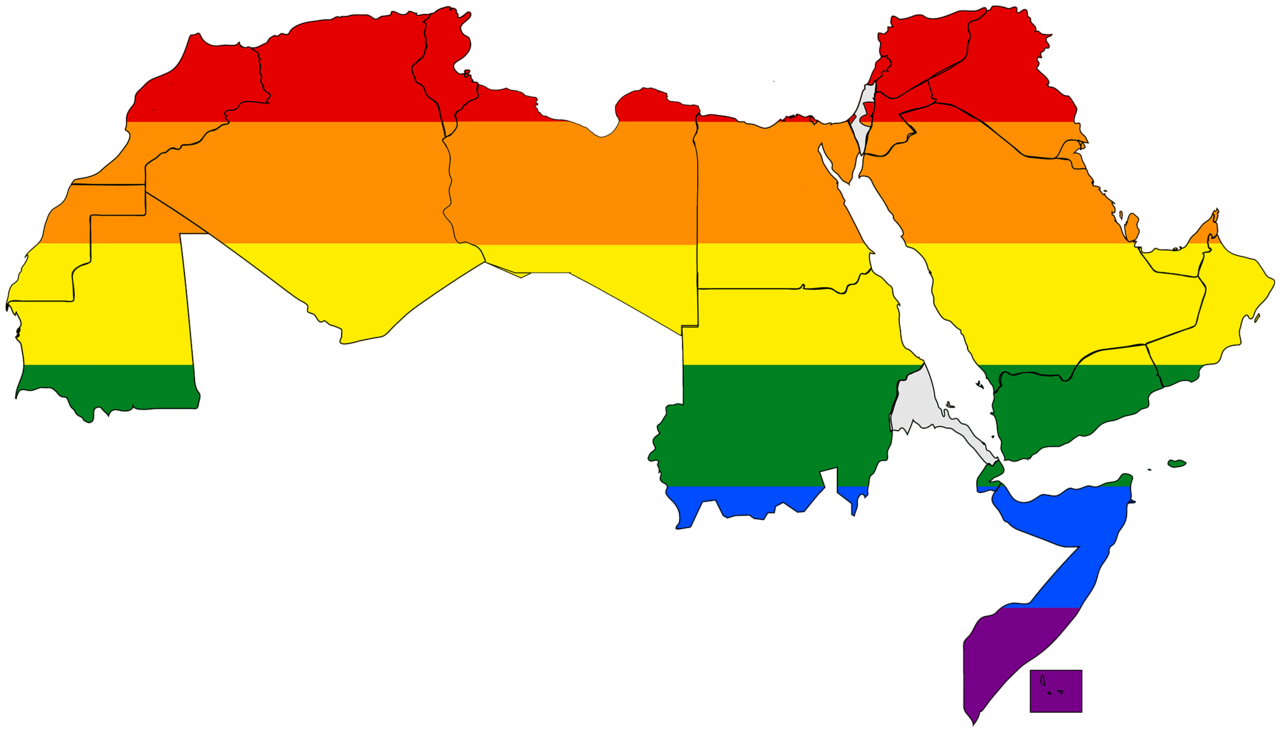
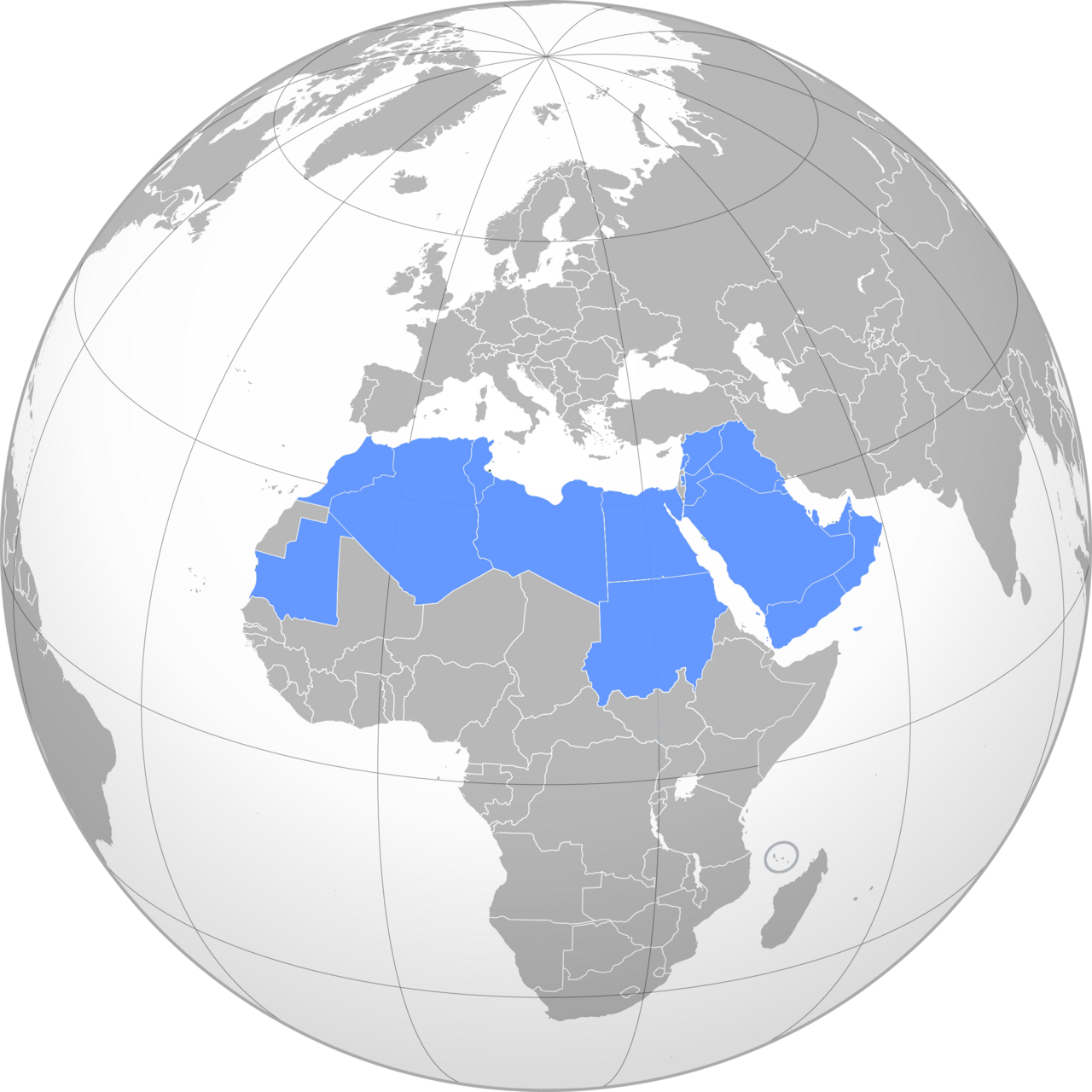
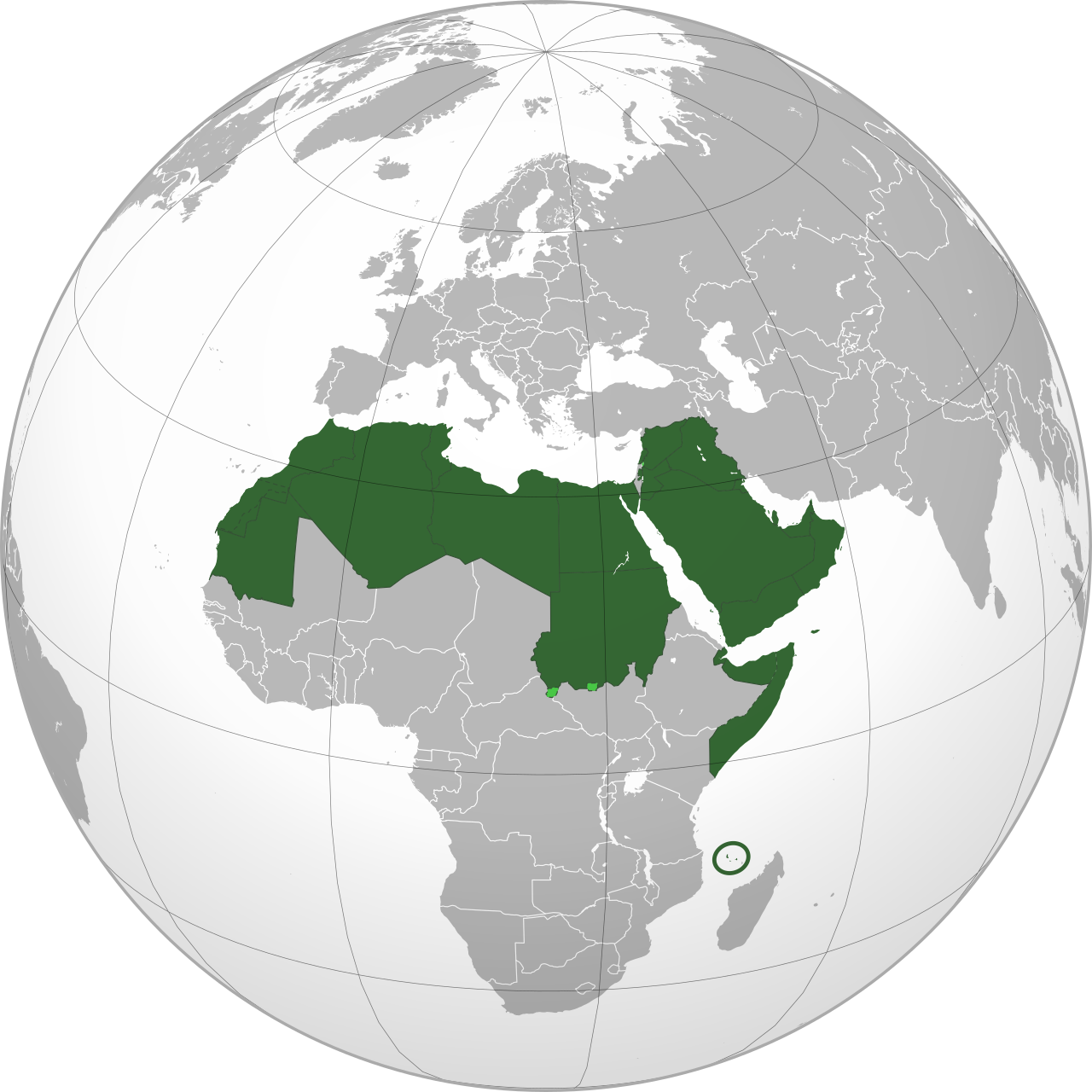
The Arab world is a region spanning West Asia and North Africa, stretching from the Atlantic Ocean to the Arabian Sea and from the Mediterranean to the Indian Ocean. Its eastern part is called the Mashriq, and the western part the Maghreb. While most inhabitants are ethnically Arab, significant populations of Berbers, Kurds, Somalis, Nubians, and other groups also live there. Arabic serves as the region’s common language.
The most common definition includes 19 states where Arabs form at least a plurality of the population. A broader definition includes the 22 members of the Arab League, an international organization founded in 1945 to represent Arab interests and promote pan-Arabism. This adds the Bantu-speaking Comoros and the Cushitic-speaking Djibouti and Somalia. As of 2021, the World Bank reports a total population of 456 million and a gross domestic product of $2.85 trillion. The region is economically diverse, containing both some of the world’s wealthiest and poorest populations.
Historically, the Arab world was linked to the Arab empires and caliphates of the post-classical era. Arab nationalism emerged in the late 19th century alongside other nationalist movements within the Ottoman Empire.
In the 10th century, geographer Al Maqdisi used the term “Arab regions” to describe the Arabian Peninsula (Bahrain, Iraq, Jordan, Kuwait, Oman, Qatar, Saudi Arabia, United Arab Emirates, Yemen), along with Iraq, Upper Mesopotamia, Ash-Sham (Israel, Jordan, Lebanon, Palestine, Syria, Turkey), Egypt, and the Maghreb (Algeria, Libya, Mauritania, Morocco, Tunisia, Western Sahara). Malta, whose national language derives from Arabic, is not included. Chad, Eritrea, and Israel recognize Arabic as an official language but are not members of the Arab League, so they are also excluded.
Linguistic and political identity generally outweighs genealogical ties. Standard Arabic is used by governments, while local vernaculars are called Darija in the Maghreb and Aammiyya in the Mashreq. These share most vocabulary with Standard Arabic but also borrow from Berber, French, Spanish, and Italian in the Maghreb.
No single global definition exists, but all Arab League members are widely accepted. The League defines an Arab as someone who speaks Arabic, lives in an Arabic-speaking country, or desires to join the Arab nation. This standard territorial definition may be supplemented with linguistic criteria, such as whether Arabic is widely spoken, official, or a cognate language is used. For example, Somalia and Djibouti have Arabic as an official language alongside Somali and French, while Somali and Afar are more widely spoken. The Comoros lists Arabic, Comorian, and French as official languages, with Comorian being the most common.
Quick Facts
- Area
- 13132327 km2
- Population
- 456,520,777
- Density
- 29.8/km; 2 (70.4/sq mi)
- Gdp nominal
- $2.782 trillion
- Gdp per capita
- $6,647
- Demonym
- Arab
- Dependencies
- Arab League
- Time
- UTC±00:00 to UTC+04:00
Facts from the source article.
Lore & Background
In post-classical history, the Arab world was synonymous with the historic Arab empires and caliphates. Arab nationalism arose in the second half of the 19th century along with other nationalist movements within the Ottoman Empire. The Arab League was formed in 1945 to represent the interests of Arab people and especially to pursue the political unification of the Arab countries, a project known as pan-Arabism. By 1570, the Turkish Ottoman Empire controlled most of the Arab world. However, Morocco remained under the rule of the Zenata Wattasid dynasty, which was succeeded by the Saadi dynasty in the 16th to 17th centuries. The Ajuran Sultanate also held sway in the southern part of the Horn region.
Reader's Guide
The Arab world is usually defined as the 19 states where Arabs form at least a plurality of the population. At its maximum definition it consists of the 22 members of the Arab League, an international organization, which on top of the 19 plurality Arab states also includes the Bantu-speaking Comoros, and the Cushitic-speaking Djibouti and Somalia. The region stretches from the Atlantic Ocean in the west to the Arabian Sea in the east, and from the Mediterranean Sea in the north to the Indian Ocean in the southeast. The eastern part of the Arab world is known as the Mashriq, and the western part as the Maghreb. According to the World Bank, the Arab world has a total population of 456 million inhabitants and a gross domestic product of $2.85 trillion, as of 2021.
Gallery
More in Regions & Cultural Spheres
Spotted an error? Know more?
Reader corrections go straight into our review queue. Suggest an edit · How this site is sourced