Australia (continent)
Smallest continent, located in Oceania, comprising Australia, New Guinea, and Tasmania.

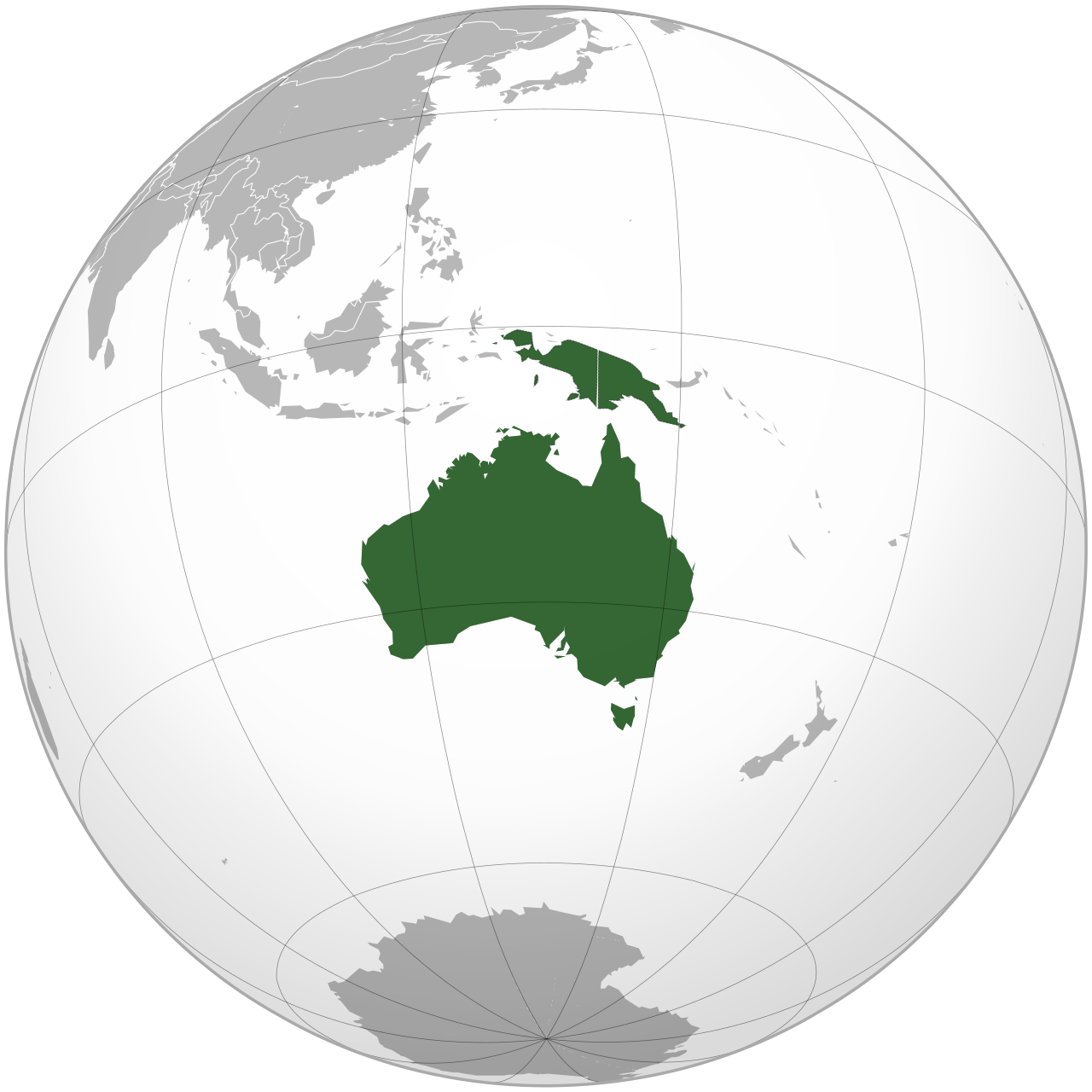
Australia_(orthographic_projection).svg : Ssolbergj derivative work (colouring i · CC BY-SA 3.0
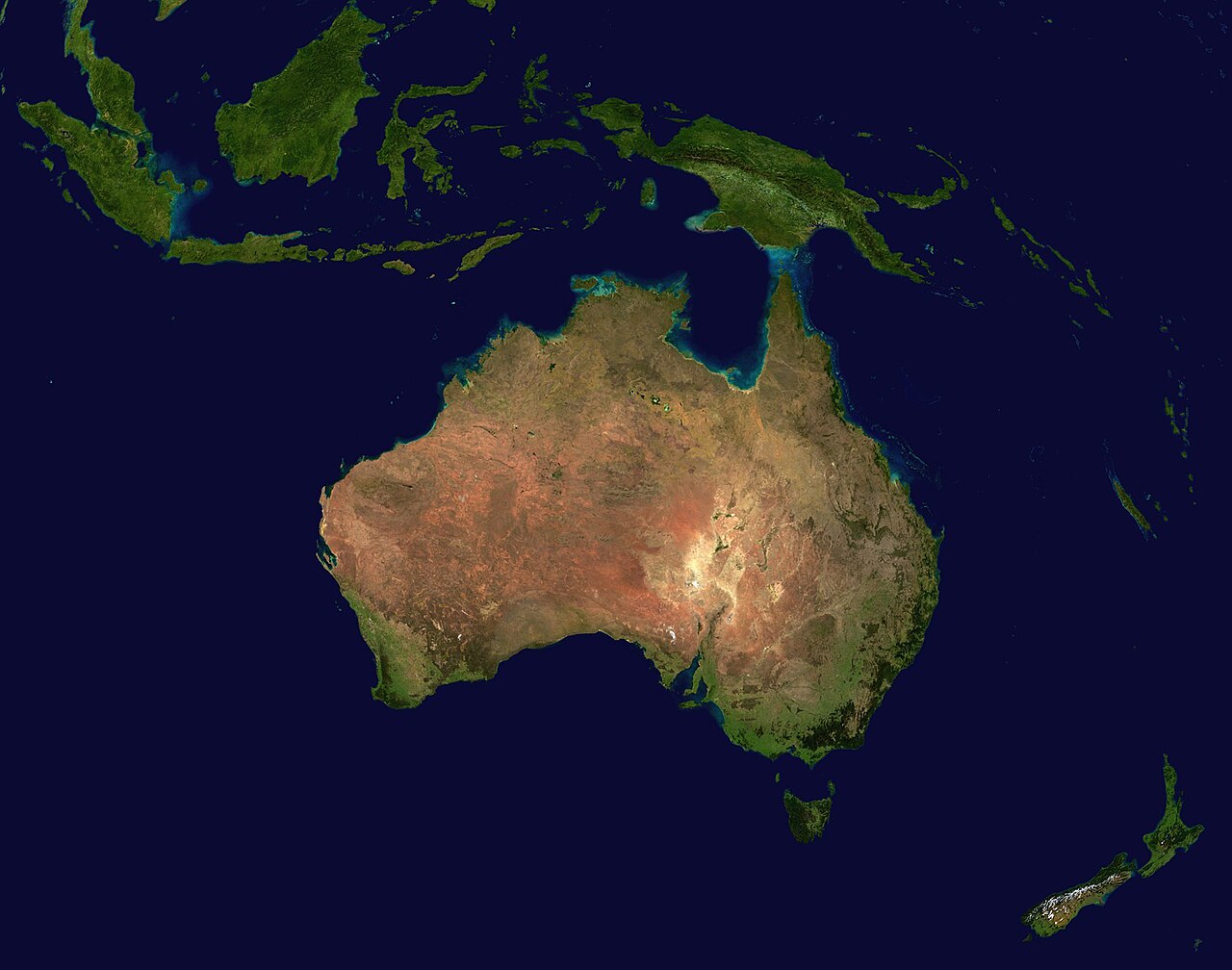
The continent of Australia, sometimes known in technical contexts as Sahul, Australia-New Guinea, Australinea, or Meganesia, is located within the Southern and Eastern hemispheres, near Maritime Southeast Asia. It is the smallest of the seven traditional continents, comprising mainland Australia, Tasmania, the island of New Guinea, the Aru Islands, the Ashmore and Cartier Islands, most of the Coral Sea Islands, and other nearby islands. Its significance lies in its unique geological history, its role as a distinct landmass in the region of Oceania, and its inclusion in various continental models worldwide.
Quick Facts
- Area
- 8600000 km2 (7th)
- Density
- 4.2 /km2
- Demonym
- Australian/Papuan/Indonesian
- Time
- UTC+8
- UTC+9:30
- UTC+10
- Internet
- .au
- .id
- and.pg
- Gdp ppp
- 1.5 trillion
Facts from the source article.
Lore & Background
The continent includes a continental shelf overlain by shallow seas—the Arafura Sea and Torres Strait between mainland Australia and New Guinea, and Bass Strait between mainland Australia and Tasmania. The name 'Sahul' derives from the Sahul Shelf, part of the continent's continental shelf.
Reader's Guide
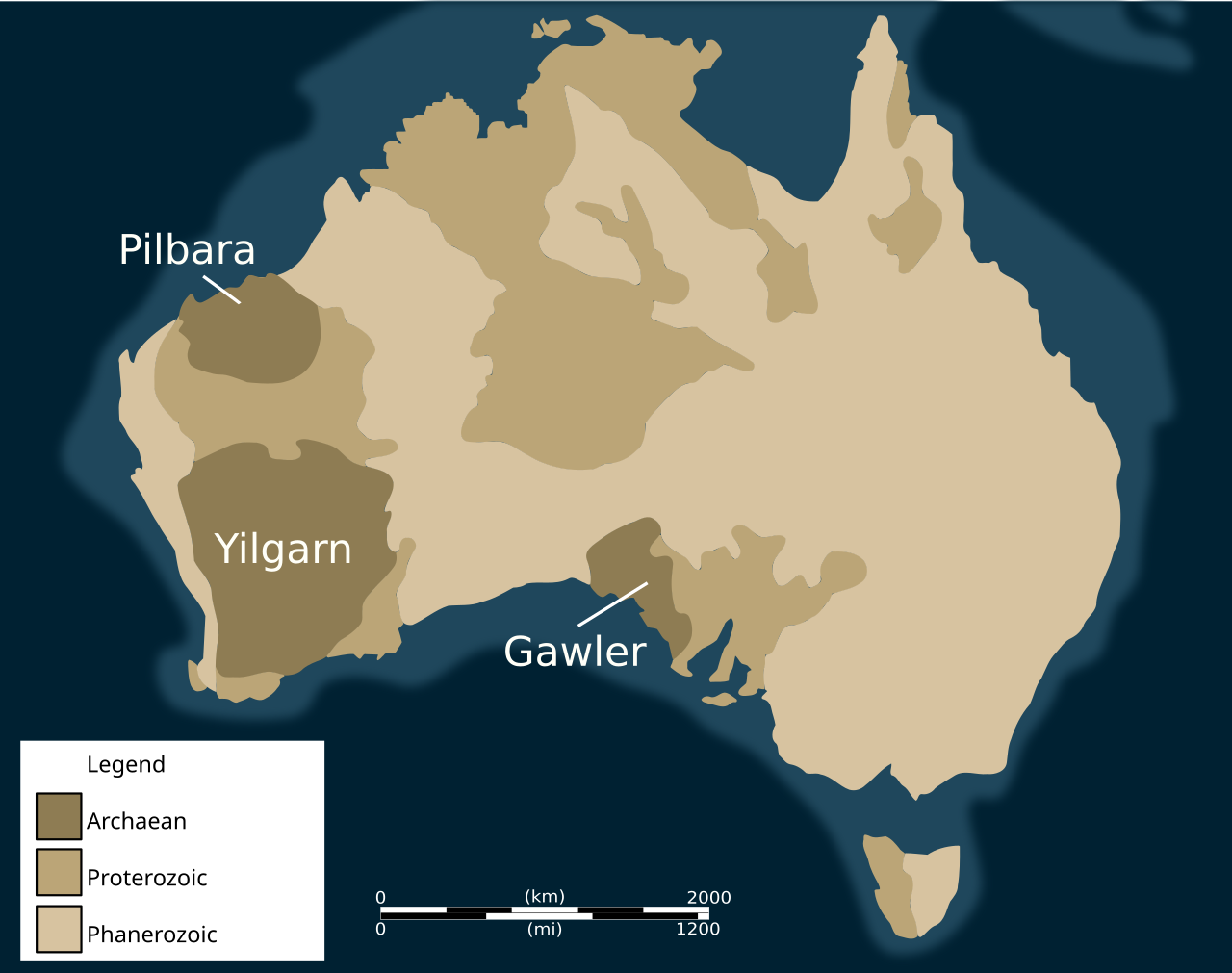
The continent of Australia is significant as the smallest of the seven traditional continents, with a total land area of 8.56 million square kilometres. Its geological history, particularly the Pleistocene landmass of Sahul, illustrates how sea-level changes shaped its current configuration. The continent is home to the country of Australia, which is highly urbanized and has the world's 12th-largest economy, as well as Papua New Guinea, one of the most culturally and linguistically diverse countries, and Western New Guinea, which contains an estimated 44 uncontacted tribal groups. The term 'Oceania' is used by the United Nations as one of the world's five major continental divisions, encompassing the Australian continent, Zealandia, and various Pacific islands. However, definitions vary: some countries treat Oceania as a continent, while others consider Australia itself a continent. The continent's role in global geography and its unique biodiversity and human cultures underscore its importance.
Gallery
More in Regions & Cultural Spheres
Spotted an error? Know more?
Reader corrections go straight into our review queue. Suggest an edit · How this site is sourced