
DJI Inspire
Professional quadcopter camera drone series by DJI.
Last updated

Wo st 01 (There are 682 Pictures in my Category ) See also Toolserver · CC BY-SA 3.0 de
The DJI Inspire is a series of quadcopter camera drones from the Chinese company DJI. The first model, the Inspire 1, was announced on 13 November 2014. It was built on experience from the Phantom 2 and Spreading Wings lines, targeting professional cinematography.
It uses a Zenmuse X3 gimbal and camera with a 12-megapixel 1/2.3-inch CMOS Sony Exmor sensor that records 4K video at 30 frames per second. The arms and landing legs retract upward during flight, letting the three-axis gimbal rotate 360 degrees without obstruction. An Optical Flow system uses a downward camera and ultrasonic sensors for indoor navigation. Power comes from four 350 KV Model 3510 motors driving Model 1345 or 1345s propellers, with a 4500 mAh TB47 battery (or optional 5700 mAh TB48) providing about 18 minutes of flight time.
The camera is detachable for upgrades. In September 2015, DJI released the 16MP Zenmuse X5 and X5R Micro Four Thirds cameras, the latter capable of raw images. In November 2015, the motors were swapped to 420 KV Model 3510H units with an updated propeller locking system to improve performance and controllability without affecting flight time.
Several variants followed. The Inspire 1 Raw and Pro come standard with the Zenmuse X5R and X5 cameras respectively, both using Model 3510H motors and Model 1345T propellers, with flight times of about 15 minutes on a TB47 battery or 18 minutes on a TB48. The Inspire 1 Pro Black Edition, released in January 2016, has a matte black body and controller. The Inspire 1 V2.0 keeps the Zenmuse X3 and Model 3510 motors but uses Model 1345T propellers.
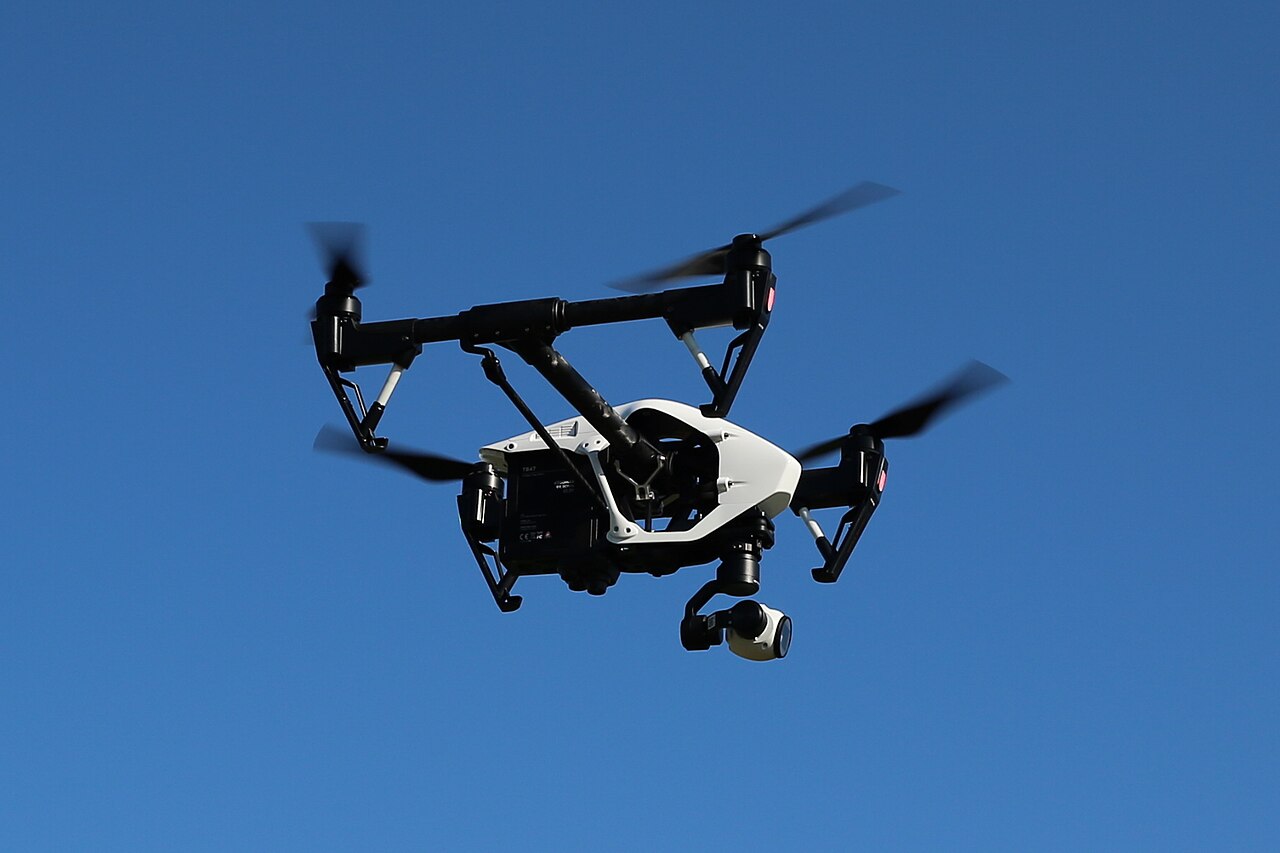
The Inspire 2 launched alongside the Phantom 4 Pro in November 2016. Its body is made of magnesium-aluminum alloy and includes forward, upward, and downward obstacle avoidance sensors. It uses four Model 3512 motors driving 1550T propellers, with a dual-battery system of two 4280 mAh TB50 batteries.
It can be bought without a camera, or with a 20MP 1-inch CMOS Zenmuse X4S, or a 20.8MP 3/4-inch CMOS Zenmuse X5S (which supports raw imaging and interchangeable lenses). Flight time is 27 minutes with the X4S, 25 minutes with the X5S, and 23 minutes with the compatible Zenmuse X7. A forward-facing first-person view camera allows two-person operation: a pilot using the FPV feed and a separate camera operator.
Background
DJI announced the first model, the Inspire 1, on 13 November 2014. Built upon lessons learned from the Phantom 2 and Spreading Wings series, the Inspire 1 featured a removable Zenmuse X3 gimbal/camera with a 12-megapixel 1/2.3" CMOS Sony Exmor sensor capable of shooting 4K video at 30 frames per second. Its arms and landing legs retracted upward in flight, allowing the three-axis camera gimbal to rotate 360 degrees without obstruction. The drone also included an Optical Flow system for indoor navigation.
Power was provided by a 4500 mAh TB47 battery, with an optional 5700 mAh TB48 battery, giving a maximum flight time of about 18 minutes. The Inspire 1 was designed to be future-proof, with a detachable camera to allow upgrades. In September 2015, DJI released the 16MP Zenmuse X5 and X5R Micro Four Thirds cameras; the latter capable of shooting raw images. In November 2015, DJI swapped the original 350 KV motors for new 420 KV Model 3510H motors with an updated propeller locking system.
The Inspire 2 was released alongside the Phantom 4 Pro in November 2016. Its body was made of a magnesium-aluminum alloy, and it featured forward, upward, and downward-facing obstacle avoidance sensors. The Inspire 2 was powered by four Model 3512 motors driving 1550T propellers, with a dual-battery system using two 4280 mAh TB50 batteries. It could be operated by two individuals: a pilot using a forward-facing FPV camera and a main camera operator.
The Inspire 2 was offered without a camera or with a 20MP 1" CMOS Zenmuse X4S or a 20.8MP 3/4" CMOS Zenmuse X5S camera/gimbal; the latter capable of raw imaging and having a swappable lens. The Zenmuse X7 was also compatible. Flight time ranged from 23 to 28 minutes depending on the camera. DJI announced in January 2022 that the Inspire 2 series would be discontinued the following month in favor of the Inspire 3.
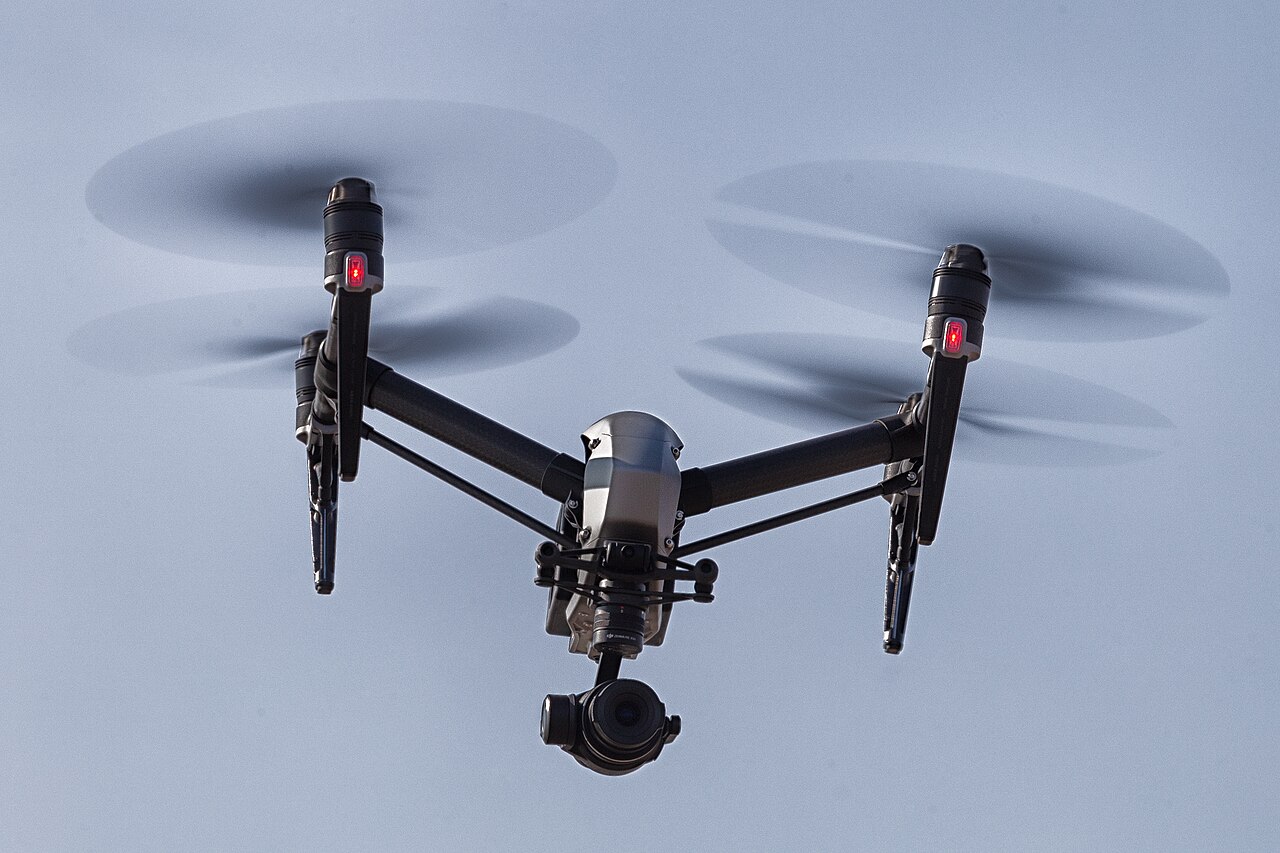
Announced in April 2023, the Inspire 3 featured a more aerodynamic design than its predecessors. It retained two-person control capability and included an FPV camera with a night vision sensor and a Zenmuse X9-8K Air primary camera/gimbal with interchangeable lenses, capable of shooting 8K CinemaDNG video at 25 FPS or 8K ProRes RAW video at 75 FPS; both requiring a license key.
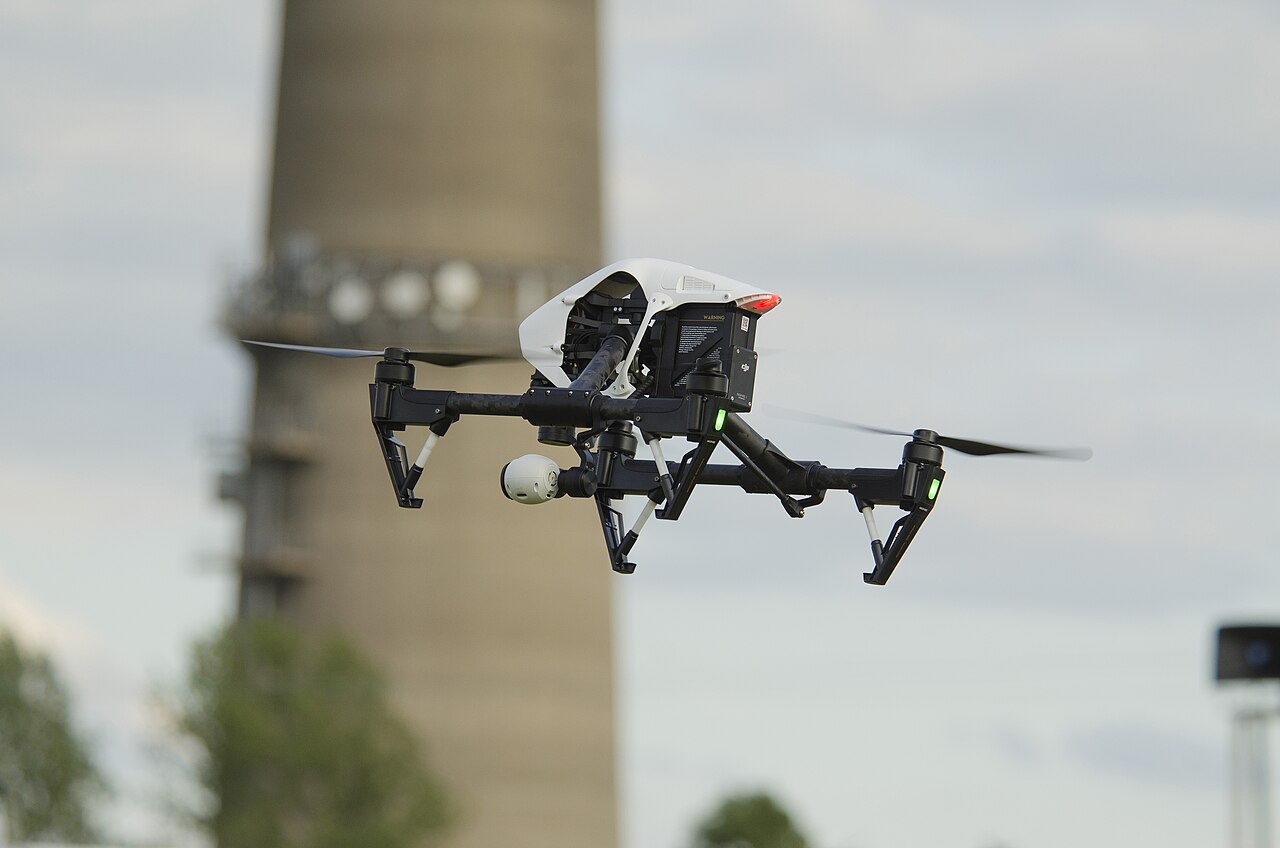
The drone featured an O3 Pro video transmission system, omnidirectional collision avoidance, and GNSS and real-time kinematic (RTK) positioning with GPS, Galileo, and BeiDou satellites. It was powered by four Model 3511s motors driving either Model 1671 standard propellers or Model 1676 high-altitude propellers. Two 4280 mAh TB51 batteries gave a flight time of about 28 minutes with the landing legs extended or 26 minutes when retracted.
Design Philosophy & Mechanical Innovation
DJI's approach to the Inspire line reveals a clear design philosophy centered on unobstructed camera movement. The original Inspire 1, announced in November 2014, drew on lessons from the Phantom 2 and Spreading Wings product lines to create a platform purpose-built for professional cinematography. Its most distinctive mechanical feature is the set of retractable arms and landing legs that fold upward once the drone is airborne, freeing the three-axis gimbal to rotate a full 360 degrees without any structural interference. This design choice fundamentally separates the Inspire from consumer drones, where the airframe often blocks the camera's range of motion.
The second-generation Inspire 2, introduced in November 2016, shifted the structural material to a magnesium-aluminum alloy, lending the airframe greater rigidity while supporting forward, upward, and downward-facing obstacle avoidance sensors. By the time the Inspire 3 arrived in April 2023, DJI had refined the airframe further with a more aerodynamic profile, while retaining the two-person operational model that had become a hallmark of the line. Each generation thus represents an iterative refinement of the core concept: a stable, unobstructed flying platform for a professional camera payload.
Cinematography & Camera Ecosystem
The Inspire series was conceived from the outset as a professional video platform, and its camera ecosystem reflects that ambition. The detachable gimbal design of the original Inspire 1 was explicitly intended to be future-proof, allowing operators to swap in newer sensors as DJI's imaging technology advanced. The initial Zenmuse X3 offered a 12-megapixel Sony Exmor sensor shooting 4K at 30 frames per second, but by September 2015 the 16-megapixel Zenmuse X5 and X5R Micro Four Thirds options arrived, the latter adding raw image capture.
The Inspire 2 expanded the palette further with the 20-megapixel Zenmuse X4S on a one-inch sensor, the 20.8-megapixel Zenmuse X5S with a swappable lens and raw capability, and compatibility with the larger Zenmuse X7. A forward-facing first-person-view camera enabled a two-person workflow: one operator flying the aircraft while a dedicated camera operator managed the primary gimbal. By the Inspire 3, the Zenmuse X9-8K Air delivers 8K CinemaDNG at 25 frames per second or 8K ProRes RAW at 75 frames per second, with interchangeable lenses, pushing the platform firmly into high-end production territory.
Propulsion, Power & Flight Performance
Under the airframe, the Inspire line has seen steady evolution in its propulsion and power architecture. The original Inspire 1 relied on four 350 KV Model 3510 motors paired with Model 1345 or 1345s propellers, drawing power from a single 4500 mAh TB47 battery, with an optional 5700 mAh TB48 extending endurance to roughly 18 minutes. In November 2015, DJI upgraded the standard to 420 KV Model 3510H motors with a revised propeller locking system, targeting improved controllability without sacrificing flight duration.
The Inspire 2 moved to Model 3512 motors driving 1550T propellers and adopted a dual-battery configuration with two 4280 mAh TB50 cells, yielding 23 to 28 minutes of flight depending on which camera was mounted. The Inspire 3 continues this trajectory with Model 3511s motors and a choice between standard Model 1671 or high-altitude Model 1676 propellers, while two 4280 mAh TB51 batteries deliver approximately 28 minutes with landing legs extended or 26 minutes retracted. Navigation aids have also grown, from the Inspire 1's Optical Flow indoor system to the Inspire 3's omnidirectional collision avoidance and RTK positioning across GPS, Galileo, and BeiDou constellations.
Product Lineage & Market Lifecycle
The Inspire family has maintained a complex product lineup that reflects DJI's strategy of serving distinct professional niches. The original Inspire 1, introduced on 13 November 2014 under the company designation Model T600, spawned several variants: the Inspire 1 Raw and Pro, which bundled the Zenmuse X5R or X5 respectively as standard, and the Inspire 1 Pro Black Edition launched in January 2016 with a matte black shell and controller.
The Inspire 1 V2.0, designated Model T601, retained the earlier motor and camera combination while updating to Model 1345T propellers. The second generation, designated Model T650A, launched in November 2016 alongside the Phantom 4 Pro and was offered in three configurations: the baseline Inspire 2, the Inspire 2 ProRes with Apple ProRes pre-activated, and the Inspire 2 L carrying both ProRes and CinemaDNG codecs. DJI announced in January 2022 that the entire Inspire 2 series would be discontinued the following month, making way for the Inspire 3, which was formally announced in April 2023 and introduced the O3 Pro video transmission system as a new standard for the line.
Frequently Asked Questions
What is the DJI Inspire?
The DJI Inspire is a line of professional quadcopter camera drones produced by the Chinese company DJI. The original Inspire 1 was unveiled on 13 November 2014, drawing on design lessons from DJI's earlier Phantom 2 and Spreading Wings platforms to serve working cinematographers.
What camera and video specs does the Inspire 1 carry?
It mounts a Zenmuse X3 three-axis gimbal housing a 12-megapixel Sony Exmor CMOS sensor on a 1/2.3-inch format. That sensor captures 4K-resolution video at up to 30 frames per second.
How long can each Inspire model stay airborne?
The Inspire 1 manages roughly 18 minutes of flight time, the Inspire 2 stretches to 23–28 minutes depending on the attached camera, and the Inspire 3 delivers about 28 minutes with its legs extended or 26 minutes with them retracted.
More in Radio-Controlled Helicopters and Model Aircraft
Sources
Compiled from Wikipedia and the sources listed below. Text from Wikipedia is available under CC BY-SA 4.0; this entry is adapted from it.
- Wikipedia: DJI Inspire (CC BY-SA 4.0).
Spotted an error? Know more?
Reader corrections go straight into our review queue. Suggest an edit · How this site is sourced