Inostrancevia
Largest known gorgonopsian, a saber-toothed predator of the Late Permian.

Radim Holiš · CC BY-SA 3.0 cz
Inostrancevia is a genus of large, meat-eating therapsids from the Late Permian, with fossils found in what is now European Russia and Southern Africa. It is the biggest known gorgonopsian, with only the genus Rubidgea coming close in size. The first fossils were uncovered during a series of digs that ran from 1899 to 1914 along the Northern Dvina in Russia. These included two nearly complete skeletons, which became the first described specimens of the genus and also the first gorgonopsian identified in Russia. Additional finds from the same area caused confusion over how many valid species existed, until only two were formally accepted: *I. alexandri* and *I. latifrons*. A third species, *I. uralensis*, was proposed in 1974, but its remains are sparse and may belong to a different genus. More recent work in Southern Africa turned up specimens assigned to the genus, placed in the species *I. africana*. The genus name honors Alexander Inostrantsev, who was the professor of Vladimir P. Amalitsky, the paleontologist who described the taxon.
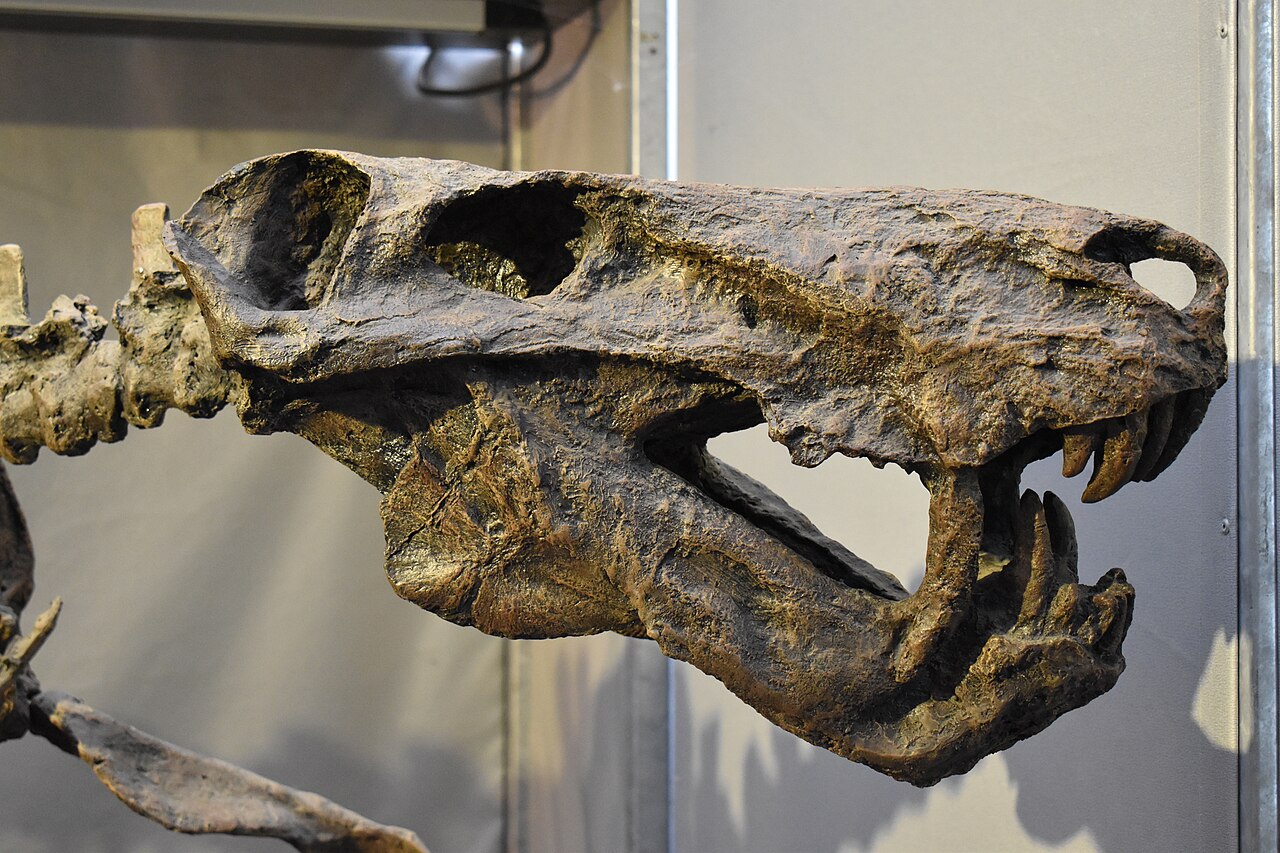
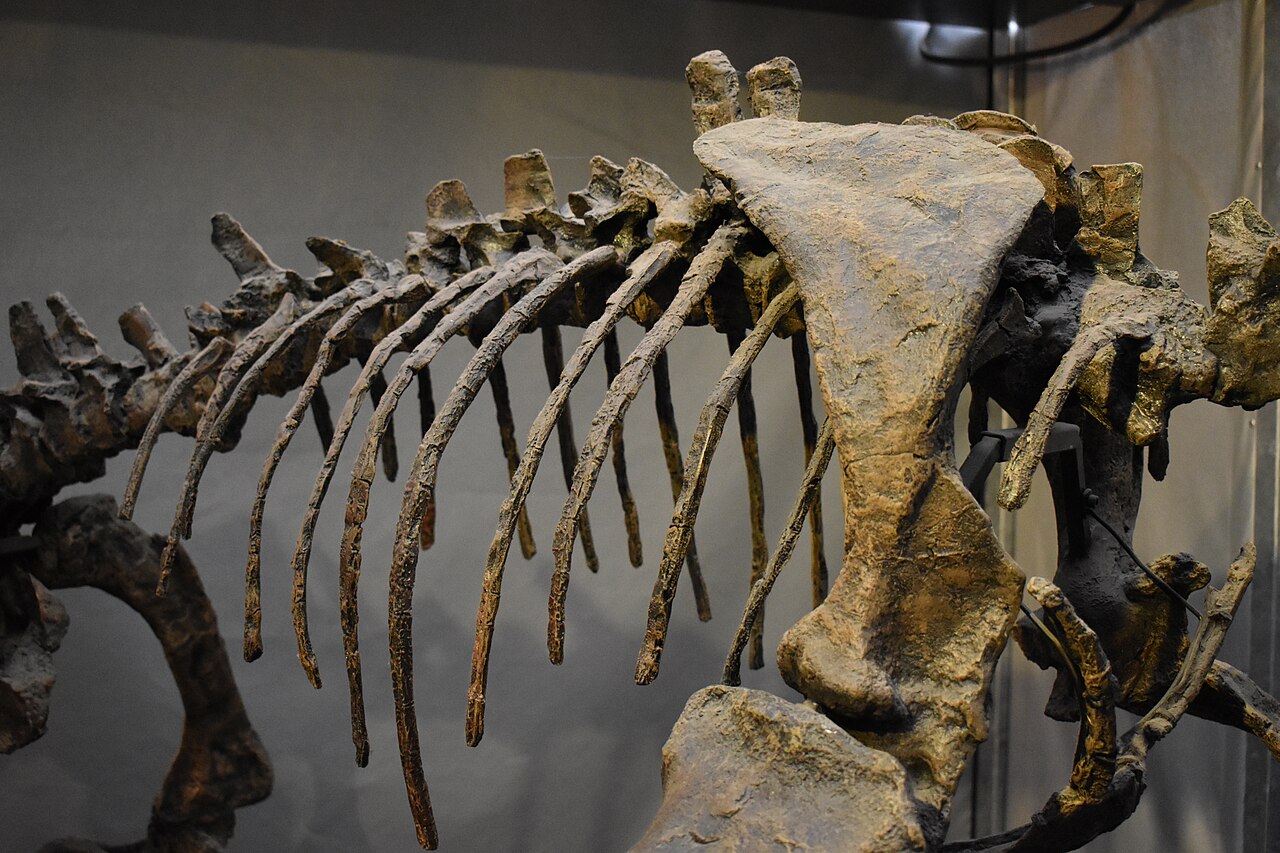
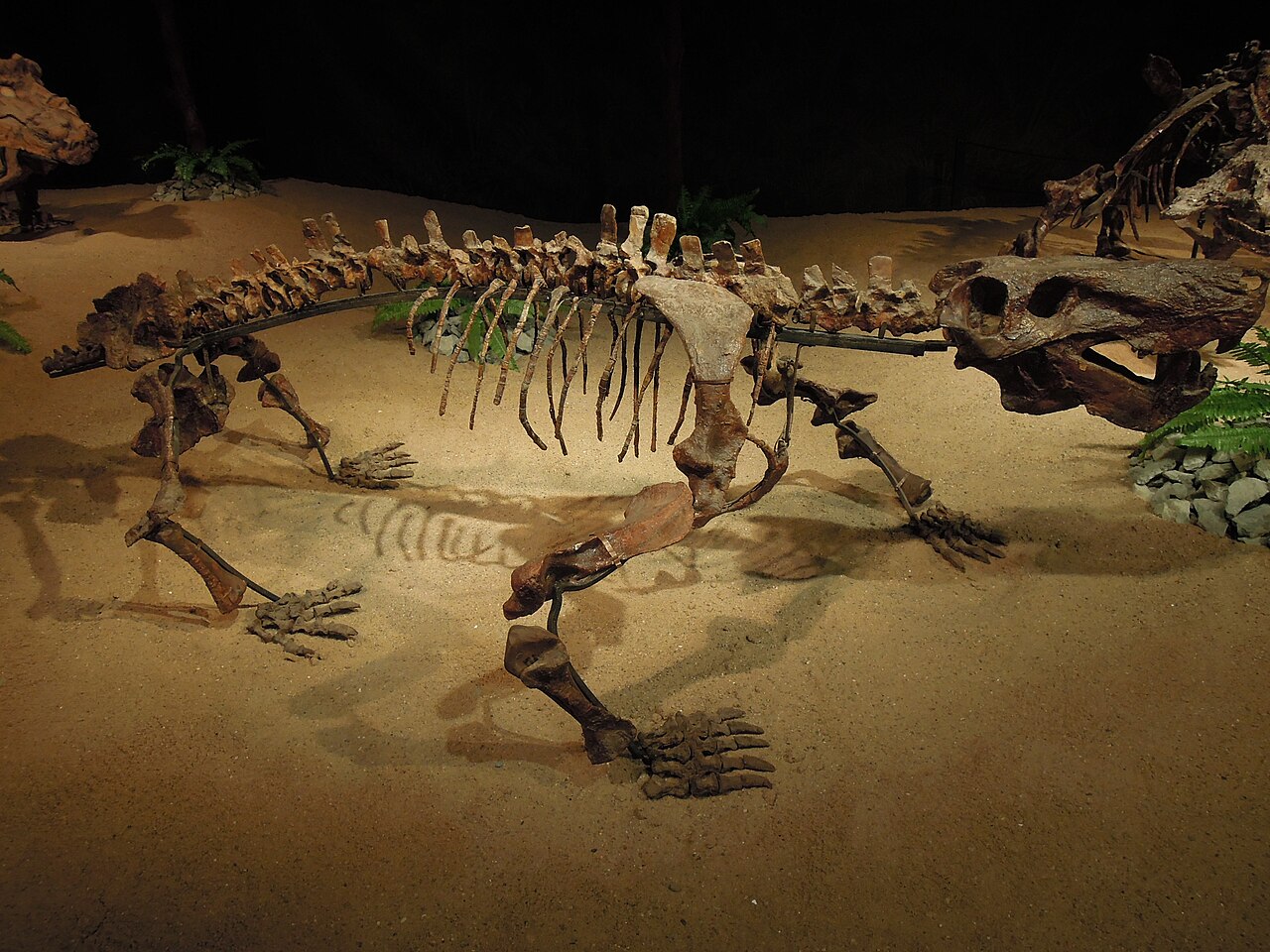
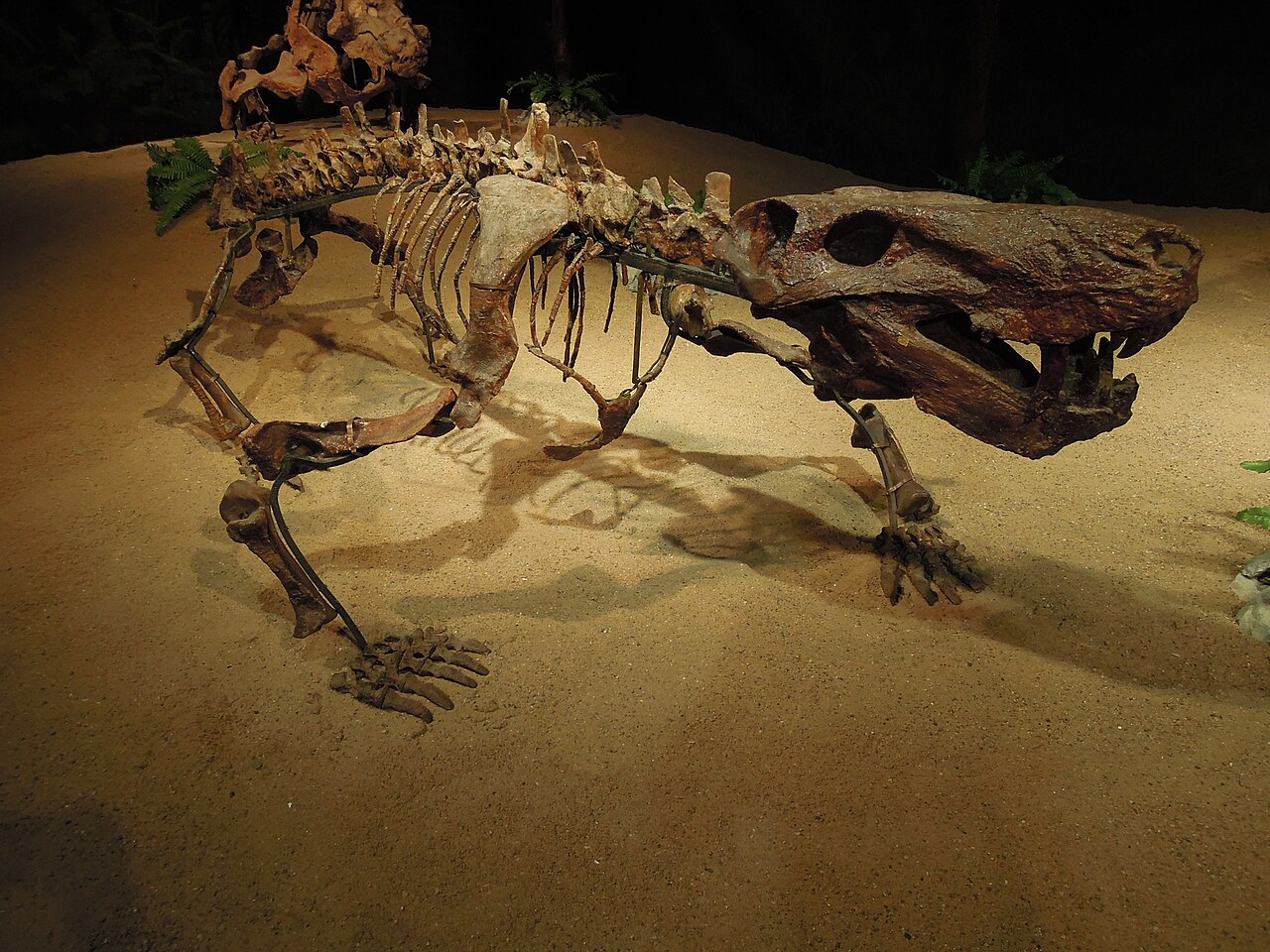
Inostrancevia had a broad, elongated skull with large oval-shaped temporal fenestrae. Its dentition was advanced, featuring big canines—the longest of which could reach a considerable length—that may have been used to slice through prey skin. Like most other gorgonopsians, it could open its jaw very wide, allowing it to deliver fatal bites. These animals were likely fairly fast predators that killed by slashing with their saber teeth. The skeleton was robust, but more studies are needed for a full anatomical description and understanding of its paleobiology.
Gorgonopsians were a group of carnivorous stem mammals with saber teeth that died out at the end of the Permian. Early classifications placed Inostrancevia close to African taxa until 1948, when Friedrich von Huene created a separate family, Inostranceviidae. This view was mostly followed through the 20th and early 21st centuries, but phylogenetic analyses since 2018 place it among derived Russian gorgonopsians, alongside the genera *Suchogorgon*, *Sauroctonus*, and *Pravoslavlevia*, with the last two forming the subfamily Inostranceviinae. Fossils from Russia and Africa show Inostrancevia lived in river ecosystems with many tetrapods, where it appears to have been the top predator. These faunas were dominated by dicynodonts and pareiasaurs, which were likely its prey. In Russia, Inostrancevia was the only large gorgonopsian present, while in Tanzania it briefly coexisted with rubidgeines. After rubidgeines vanished from South Africa, Inostrancevia took over as apex predator before itself disappearing during the Permian-Triassic extinction.
**Research history**
In the 1890s, Vladimir Amalitsky found Upper Permian freshwater sediments in the Northern Dvina region of Arkhangelsk Oblast, Russia. The site, called PIN 2005, is a creek with sandstone and lens-shaped exposures in a bank escarpment, containing many well-preserved fossil skeletons. This fauna, previously known only from South Africa and India, is considered one of the great paleontological discoveries of the late 19th and early 20th centuries. After initial reconnaissance, Amalitsky began systematic work with his companion. The first digs started in 1899, and many finds were sent to Warsaw, Poland, for preparation. Excavations continued until 1914, when World War I halted them. When the war began, Amalitsky tried to save his Warsaw fossil collection by moving it to the Nizhny Novgorod oblast. The October Revolution of 1917 and shifting politics indirectly led to his death that December. His collection was later moved to Leningrad and became part of the city’s university geology department. During World War II, some fossils were transferred to the Paleontological Institute of the Russian Academy of Sciences in Moscow.
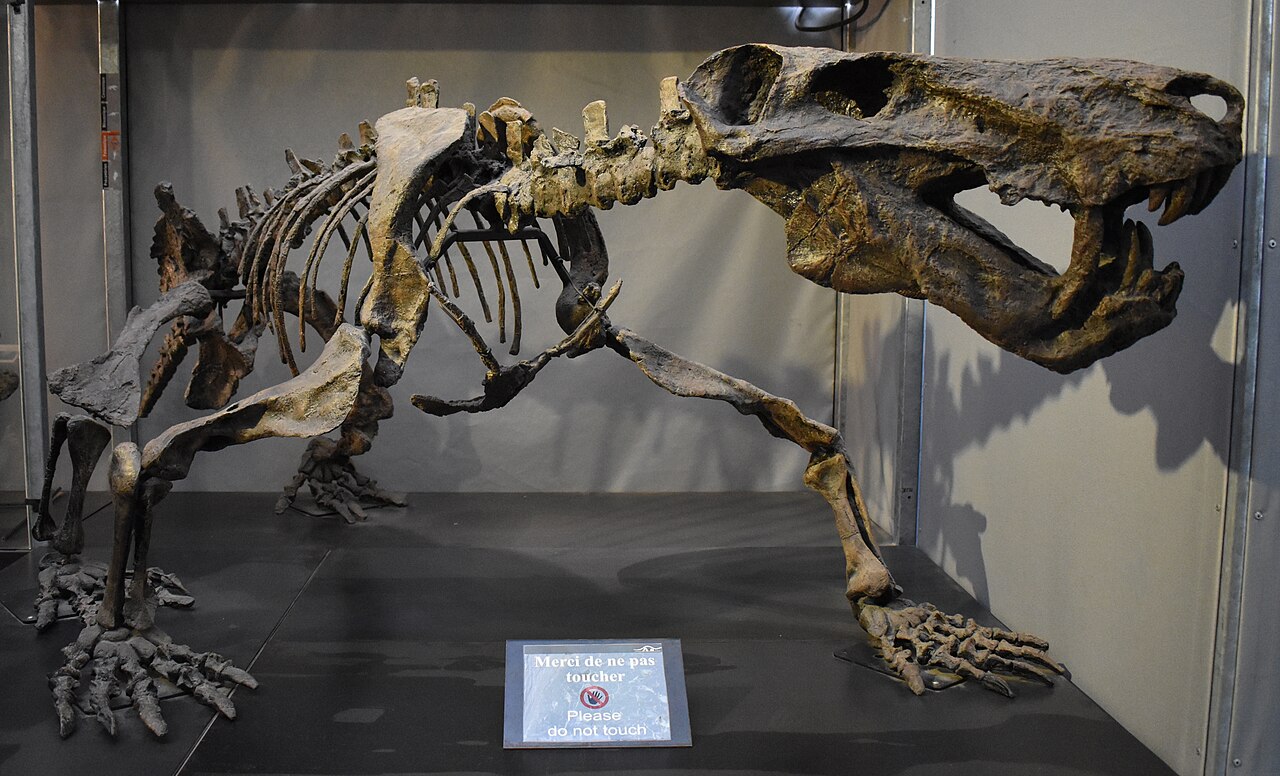
Among the fossils Amalitsky described before his death were two remarkably complete skeletons of large gorgonopsians, cataloged as PIN 1758 and PIN 2005/1578, which he assigned to the new genus and species *Inostranzevia alexandri*. Specimen PIN 2005/1578 was later designated the lectotype. This taxon was the first gorgonopsian identified in Russia, and the fossils also preserved the first nearly complete postcranial remains known for this group of therapsids. Although the animal was not officially described until 1922, the name appeared in scientific literature earlier, notably in works by Friedrich von Huene and Edwin Ray Lankester. Taxonomic issues with the original naming are the subject of a future study. While the etymology of the genus and type species is not given in the earliest descriptions, the full name honors Alexander Inostrantsev.
- field
- Paleontology
- known_for
- Largest known gorgonopsian; saber-toothed carnivorous stem mammal
- time_period
- Late Permian
- location
- European Russia and Southern Africa
Lore & Background
The genus name honors Alexander Inostrantsev, professor of Amalitsky.
Reader's Guide
Inostrancevia is significant as the largest known gorgonopsian, with a skull 40 to 60 cm long and a body length of 3 to 3.5 m. Its advanced dentition included large canines up to 15 cm, likely used to shear prey skin, and its large jaw opening angle would have allowed fatal bites. Gorgonopsians were carnivorous stem mammals with saber teeth that disappeared at the end of the Permian. Inostrancevia lived in river ecosystems with many tetrapods, where it appears to have been the main predator, preying on dicynodonts and pareiasaurs. In Russia it was the only large gorgonopsian; in Africa it briefly coexisted with rubidgeines before occupying the apex predator role and then disappearing during the Permian-Triassic extinction.
Did You Know?
- Inostrancevia is the largest known gorgonopsian, with a body length reaching 3 to 3.5 m.
- The genus name honors Alexander Inostrantsev, professor of paleontologist Vladimir Amalitsky.
Discovery Through Turbulent Times
The story of Inostrancevia's discovery is inseparable from the upheavals of early twentieth-century Russia. In the 1890s, paleontologist Vladimir Amalitsky identified Upper Permian freshwater sediments along the Northern Dvina in Arkhangelsk Oblast, a site later cataloged as PIN 2005. Working alongside his companion Anna P. Amalitsky, he launched systematic excavations in 1899, sending some finds to Warsaw for preparation. The digs continued until 1914, when World War I halted all fieldwork. Amalitsky then scrambled to rescue his fossil collection from Warsaw, but the October Revolution of 1917 and the resulting political chaos indirectly led to his death that December. The collection eventually reached Leningrad's university geological department, and during World War II, portions were relocated to the Paleontological Institute in Moscow. Among the treasures Amalitsky documented before his death were two remarkably complete gorgonopsian skeletons, cataloged as PIN 1758 and PIN 2005/1578. Though the genus was not formally described until 1922, the name appeared in scientific literature as early as the 1900s through the work of Friedrich von Huene and Edwin Ray Lankester. In 1927, colleague Pavel Pravoslavlev produced the first in-depth descriptions of these fossils.
Anatomy of an Apex Hunter
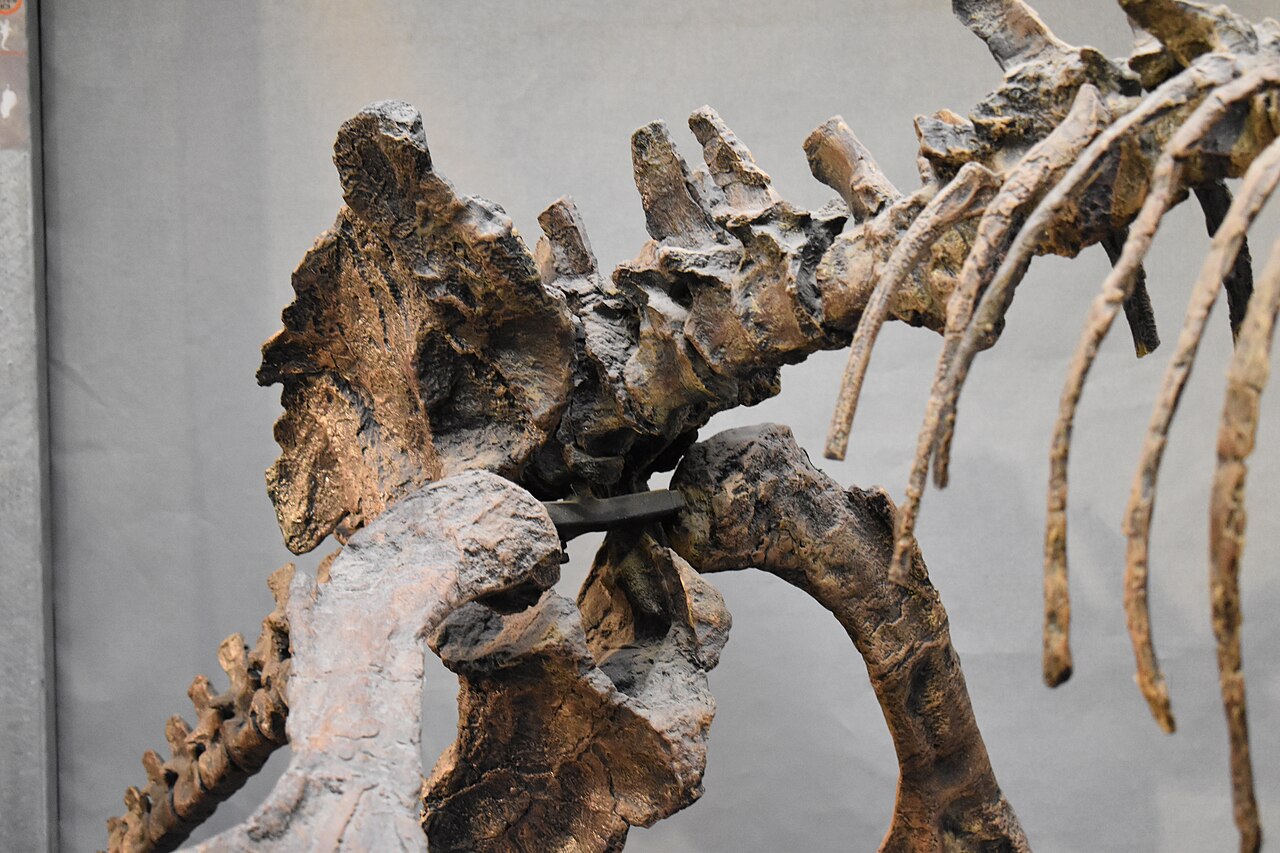
Inostrancevia stands as the largest known gorgonopsian, with a body length reaching three to three and a half meters and a skull spanning roughly forty to sixty centimeters depending on the species. Its skull is notably broad and elongated, featuring large oval-shaped temporal fenestrae that likely accommodated powerful jaw muscles. The dentition is particularly advanced among gorgonopsians, dominated by massive canines—the longest of which can measure up to fifteen centimeters. These sabre-like teeth appear adapted for shearing through the skin of prey. Like its gorgonopsian relatives, Inostrancevia possessed an exceptionally wide gape, enabling it to deliver devastating slashing bites capable of inflicting fatal wounds. The overall skeleton is robustly built, suggesting a powerful, fast-moving predator. However, researchers note that further anatomical study is still needed to fully understand how this animal moved and functioned in life. In terms of size, only the genus Rubidgea comes close to rivaling Inostrancevia among gorgonopsians.
A Taxonomic Puzzle
The species-level identity of Inostrancevia has long been a source of taxonomic confusion. The original Russian finds yielded multiple specimens, and the sheer volume of material initially muddied the question of how many valid species existed. Today, only two species are formally recognized: I. alexandri, the type species named after geologist Alexander Inostrantsev, a teacher of Amalitsky, and I. latifrons. A third name, I. uralensis, was proposed in 1974, but the fossil evidence supporting it is so sparse that it may actually belong to an entirely different genus. Adding to the complexity, more recent research in Southern Africa has identified specimens assigned to this genus under the name I. africana. Classification of the genus itself has also shifted over time. Before 1948, Inostrancevia was grouped closely with African taxa. That year, Friedrich von Huene erected a separate family, Inostranceviidae, a model that dominated the literature for decades. Yet phylogenetic analyses published from 2018 onward place Inostrancevia among a derived group of Russian-origin gorgonopsians, alongside Suchogorgon, Sauroctonus, and Pravoslavlevia, with the latter two and Inostrancevia forming the subfamily Inostranceviinae.
Ruling the Permian Rivers
The fossil assemblages from both Russian and South African sites paint a vivid picture of Inostrancevia's ecological niche. It inhabited river ecosystems teeming with tetrapods, where it clearly occupied the position of principal predator. The faunas of these environments were dominated by dicynodonts and pareiasaurs, which almost certainly formed the bulk of its diet. In the Russian territories, Inostrancevia appears to have been the sole large gorgonopsian present, giving it an unchallenged role at the top of the food web. In Tanzania, it was briefly contemporary with rubidgeine gorgonopsians, but once those rivals disappeared from South African territory, Inostrancevia assumed the apex predator role in their absence. Its reign, however, was cut short. Like all gorgonopsians—a group of carnivorous stem mammals characterized by their sabre teeth—Inostrancevia vanished at the close of the Permian, swept up in the mass extinction event that marked the Permian-Triassic boundary.
Gallery
Frequently Asked Questions
What is Inostrancevia?
Inostrancevia was a large, saber-toothed carnivorous therapsid that lived during the Late Permian. It belongs to the gorgonopsian group, a lineage of predatory stem mammals that preceded true mammals.
How big was Inostrancevia compared to other gorgonopsians?
It is recognized as the largest known member of the gorgonopsian family, with only Rubidgea coming close in overall size. Its near-complete skeletal finds give researchers a solid sense of its impressive build.
Where have Inostrancevia fossils been discovered?
Remains have turned up in both European Russia and Southern Africa, spanning a wide geographic range for a Late Permian predator. The Russian specimens were particularly notable as some of the earliest gorgonopsian material ever catalogued from that region.
What did Inostrancevia eat and how did it hunt?
As a gorgonopsian, it relied on elongated saber-like canine teeth to dispatch prey, fitting its role as an apex carnivore of its ecosystem. Its robust skull and body structure suggest it was a powerful, active hunter rather than a scavenger.
Why does Inostrancevia matter in the study of early mammal ancestors?
Because it sat at the top of the gorgonopsian food chain, it offers a clear picture of how predatory stem mammals evolved before the Permian extinction wiped out most of their relatives. Its well-preserved skeletons also make it a key reference point for understanding therapsid anatomy.
More in Prehistoric Synapsids 1-19
Spotted an error? Know more?
This is a living reference — every entry is fact-audited, and reader corrections feed straight into our audit queue. Suggest an edit · See this site's audit record