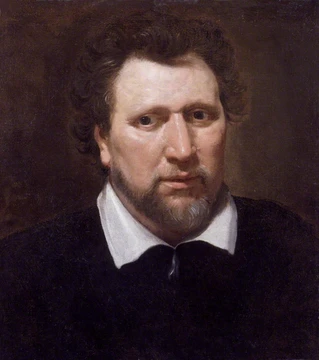
Maxwell Anderson
American dramatist known for historical plays and verse.

James Maxwell Anderson was born on December 15, 1888, in Atlantic, Pennsylvania, the second of eight children to a Baptist minister and his wife, both of Scotch-Irish descent. The family moved frequently for his father’s pastoral posts, and Anderson, often ill as a child, spent much of his time in bed reading. His parents and an aunt were storytellers, which fostered his love of literature. At age eleven, while visiting his grandmother’s farm, he met his first love, a slightly older girl from a wealthier family. He later published an autobiographical tale under a pseudonym to avoid offending relatives, a story that dealt with dark themes including rape and incest. After graduating from high school in Jamestown, North Dakota, in 1908, Anderson worked his way through the University of North Dakota, earning a BA in English Literature in 1911. He taught high school and served as a principal in North Dakota but was fired in 1913 for making pacifist statements to students. He earned a master’s degree from Stanford in 1914, then taught English in San Francisco and later chaired the English department at Whittier College, where he was fired for supporting a jailed conscientious objector. Moving into journalism, he wrote for several newspapers but was repeatedly fired—for an editorial on German war debts, for missing work due to the Spanish flu, and for arguing with an editor. In 1921 he founded a poetry journal. His first play, *White Desert*, ran only twelve performances in 1923 but impressed a critic who became his collaborator on the hit *What Price Glory* (1924), a World War I comedy-drama whose profanity drew protests. Anderson resigned from journalism to become a dramatist. He wrote in varied styles, often using blank verse, and won the Pulitzer Prize in 1933 for *Both Your Houses*. He twice received the New York Drama Critics Circle Award, for *Winterset* and *High Tor*. He enjoyed commercial success with a series of plays set in Tudor England, including *Elizabeth the Queen* and *Anne of the Thousand Days*. Many of his works were adapted for film, and he wrote screenplays for other authors’ works, including *All Quiet on the Western Front* (1930). He was married three times and had a tumultuous personal life. Anderson died in 1959 after a stroke. His papers are held in several institutions, with the largest collection at the Harry Ransom Center at the Univer
- born
- December 15, 1888
- died
- February 28, 1959
- field
- Playwright, author, poet, journalist, lyricist
- nationality
- American
- known_for
- Hit plays such as What Price Glory, Both Your Houses, and The Bad Seed; Pulitzer
Verified Timeline
Lore & Background
Anderson was born on December 15, 1888, in Atlantic, Pennsylvania, the second of eight children to William Lincoln 'Link' Anderson, a Baptist minister, and Charlotte Perrimela Stephenson, both of Scotch-Irish descent. His family moved often to follow his father's ministerial posts, and Maxwell was frequently sick, missing a great deal of school. He used his time sick in bed to read voraciously, and both his parents and Aunt Emma were storytellers, which contributed to Anderson's love of literature. He attended Jamestown High School, graduating in 1908. As an undergraduate, he waited tables and worked at the night copy desk of the *Grand Forks Herald*, and obtained a BA in English Literature from the University of North Dakota in 1911. He became a high school principal in Minnewaukan, North Dakota, but was fired in 1913 for making pacifist statements to his students. He then entered Stanford University, obtaining a master's degree in English Literature in 1914. After teaching high school in San Francisco, he became chairman of the English department at Whittier College in 1917, but was fired after a year for public statements supporting a jailed conscientious objector. He moved to Palo Alto to write for the *San Francisco Evening Bulletin*, but was fired for an editorial stating Germany could not pay its war debt. He then wrote for the *San Francisco Chronicle*, but was fired after contracting the Spanish flu. Alvin S. Johnson hired him to write about politics for *The New Republic* in 1918, but he was fired after an argument with Editor-in-Chief Herbert David Croly. Anderson found work at *The New York Globe* and the *New York World*. In 1921 he founded *The Measure: A Journal of Poetry*. His first play, *White Desert*, ran only 12 performances in 1923, but it was well reviewed by Laurence Stallings of the *New York World*, who collaborated with him on his next play *What Price Glory?*, which was successfully produced in 1924 in New York City. Afterward, Anderson resigned from the *World*, launching his career as a dramatist.
Reader's Guide
Anderson's plays are in widely varying styles, and he was one of the few modern playwrights to make extensive use of blank verse. His first Broadway hit was the 1924 World War I comedy-drama, *What Price Glory*, written with Laurence Stallings. The play made use of profanity, which caused censors to protest, but the chief censor was discredited after being found to have written far more obscene letters. Anderson was awarded the Pulitzer Prize in 1933 for his political drama *Both Your Houses*, and twice received the New York Drama Critics Circle Award, for *Winterset* and *High Tor*. He enjoyed great commercial success with a series of plays set during the reign of the Tudor family. *Anne of the Thousand Days* was a hit on stage in 1948, opening on Broadway starring Rex Harrison and Joyce Redman, and became a 1969 movie with Richard Burton and Geneviève Bujold. *Elizabeth the Queen* opened in 1930 with Lynn Fontanne and Alfred Lunt, and was adapted as *The Private Lives of Elizabeth and Essex* (1939) starring Bette Davis and Errol Flynn. *Mary of Scotland* (1936) was an adaptation of his play, starring Katharine Hepburn as Mary, Queen of Scots. Anderson wrote book and lyrics for two successful musicals with composer Kurt Weill: *Knickerbocker Holiday*, featuring Walter Huston as Peter Stuyvesant and the standout number 'September Song,' and *Lost in the Stars*, based on the Alan Paton novel *Cry, The Beloved Country*. In 1950, Anderson and Weill began a musical adaptation of Mark Twain's *Huckleberry Finn*, but Weill died when only a few songs had been completed. His last successful Broadway stage play was 1954's *The Bad Seed*, Anderson's adaptation of the William March novel. He was hired by Alfred Hitchcock to write the screenplay for *The Wrong Man* (1957), and Hitchcock also contracted him to write the screenplay for what became *Vertigo* (1958), but Hitchcock rejected his screenplay *Darkling, I Listen*. Anderson died in Stamford, Connecticut, on February 28, 1959, two days after suffering a stroke, aged 70. He was cremated. Half of his ashes were scattered by the sea near his home in Stamford; the other half was buried in Anderson Cemetery near his birthplace in rural northwestern Pennsylvania.
Did You Know?
- Anderson's autobiographical tale *Morning, Winter and Night* told of rape, incest and sadomasochism on the farm and was published under the pseudonym John Nairne Michealson to prevent offending family.
- He was fired from his job as a high school principal in Minnewaukan, North Dakota, in 1913 for making pacifist statements to his students.
- When director and star Ingrid Bergman changed much of his dialogue for the film *Joan of Arc* (1948), Anderson called her a 'big, dumb, goddamn Swede!'
- Anderson's partner Mab Maynard killed herself on March 21, 1953, by breathing car exhaust after losing Anderson, facing massive tax debt, and losing her home.
- Anderson was an atheist.
More in Playwrights And Dramatists 1-24
Spotted an error? Know more?
This is a living reference — every entry is fact-audited, and reader corrections feed straight into our audit queue. Suggest an edit · See this site's audit record