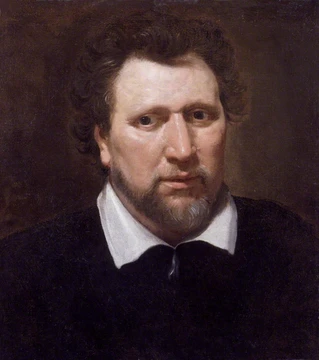
August Strindberg
Swedish playwright and novelist, father of modern Swedish literature.

via Wikipedia: August Strindberg · see source
Johan August Strindberg (22 January 1849 – 14 May 1912) was a Swedish writer and artist whose work spanned plays, novels, poetry, essays, and painting. Over four decades, he produced more than sixty plays and over thirty books, often pulling directly from his own life. He is considered the father of modern Swedish literature; his novel *The Red Room* (1879) is often called the first modern Swedish novel. In Sweden, he is celebrated as a novelist, poet, essayist, and painter, while abroad he is best known as a playwright.
Strindberg was a bold experimenter who constantly pushed boundaries. He moved from naturalistic tragedy and historical plays to techniques that foreshadowed expressionism and surrealism, such as monodrama and dream-like structures. His first major play, *Master Olof*, was rejected by the Royal Theatre in 1872; it finally premiered in 1881, when he was thirty-two, at the New Theatre, marking his theatrical breakthrough. In works like *The Father* (1887), *Miss Julie* (1888), and *Creditors* (1889), he created naturalistic dramas that built on Henrik Ibsen’s prose problem plays but rejected the well-made play structure. These works responded to Émile Zola’s 1881 manifesto “Naturalism in the Theatre” and the example of André Antoine’s Théâtre Libre. In *Miss Julie*, character takes precedence over plot, and heredity and environment shape the “vacillating, disintegrated” characters. Strindberg founded the short-lived Scandinavian Experimental Theatre in Copenhagen in 1889, modeled on Antoine’s, and explored naturalist theory in essays like “On Psychic Murder” (1887), “On Modern Drama and the Modern Theatre” (1889), and the preface to *Miss Julie*, which remains a key statement of naturalist principles.
In the 1890s, Strindberg spent much time abroad conducting scientific experiments and studying the occult. Between 1894 and 1896, he suffered a series of apparent psychotic attacks—his “Inferno crisis”—that led to hospitalization and a return to Sweden. Influenced by Emanuel Swedenborg’s ideas, he resolved afterward to become “the Zola of the Occult.” In 1898, he returned to playwriting with *To Damascus*, a dream-play of spiritual pilgrimage, followed by *The Great Highway* (1909). His *A Dream Play* (1902) radically dramatized the unconscious by abolishing conventional time and space, splitting and merging characters—an important precursor to expressionism and surrealism. He also returned to historical drama, the genre with which he began. From 1907, he helped run the Intimate Theatre in Stockholm, a small venue modeled on Max Reinhardt’s Kammerspielhaus, where his chamber plays—such as *The Ghost Sonata*—were staged.
Strindberg was born on 22 January 1849 in Stockholm, the third surviving son of Carl Oscar Strindberg, a shipping agent, and Eleonora Ulrika Norling, a serving-maid. His autobiographical novel *The Son of a Servant* describes a childhood marked by emotional insecurity, poverty, religious fanaticism, and neglect. When he was seven, his family moved to Norrtullsgatan on the city’s northern outskirts; a year later they moved near Sabbatsberg, staying three years before returning to Norrtullsgatan. He attended a harsh school in Klara for four years, an experience that haunted him as an adult. In 1860, he moved to a more pleasant school in Jakob for a year, then in autumn 1861 entered the Stockholm Lyceum, a progressive private school for middle-class boys, where he stayed six years. As a child, he was keenly interested in natural science, photography, and religion, following his mother’s Pietism. His mother, whom he later recalled with bitterness, resented his intelligence. She died when he was thirteen; his grief lasted only three months, but he later felt a lasting sense of loss and longing for an idealized maternal figure. Less than a year after her death, his father married the children’s governess, Emilia Charlotta Pettersson. Strindberg came to regard his sisters as his worst enemies. He passed his graduation exam in May 1867 and enrolled at Uppsala University on 13 September.
Over the next few years, he alternated between studying for exams and trying non-academic pursuits. He worked as an assistant in a pharmacy in Lund, supported himself as a substitute primary-school teacher, and tutored the children of two well-known Stockholm physicians. He left Uppsala in 1868 to teach school, then studied chemistry at the Institute of Technology in Stockholm to prepare for medical studies, later working as a private tutor and as an extra at the Royal Theatre. In May 1869, he failed his qualifying chemistry exam, which ended his interest in formal schooling.
He returned to Uppsala University in January 1870 to study aesthetics and modern languages.
- field
- Playwright, novelist, poet, essayist, painter
- nationality
- Swedish
- known_for
- Father of modern Swedish literature; naturalistic dramas such as Miss Julie and The Father; precursor to expressionism and surrealism
Verified Timeline
Lore & Background
Strindberg was born in Stockholm, the fourth surviving son of a shipping agent and a serving-maid. His childhood, as described in his autobiographical novel The Son of a Servant, was affected by emotional insecurity, poverty, religious fanaticism, and neglect. He attended a harsh school in Klara for four years, an experience that haunted him in adult life. After his mother died when he was 13, his father married the children's governess, whom Strindberg came to regard as his worst enemy. During the 1890s, he spent significant time abroad engaged in scientific experiments and studies of the occult. Under the influence of Emanuel Swedenborg, he resolved to become 'the Zola of the Occult'.
Reader's Guide
August Strindberg's significance lies in his bold experimentation across genres and his role as a foundational figure in modern Swedish literature. His naturalistic dramas, particularly Miss Julie, broke from the well-made play tradition by emphasizing character over plot and highlighting the determining role of heredity and environment. His preface to Miss Julie is considered a key statement of theatrical naturalism. Later works, such as A Dream Play, anticipated expressionist and surrealist techniques by abolishing conventional time and space and using character splitting and doubling. Despite initial rejections, his persistence reshaped Swedish theatre and literature. His influence extends beyond Sweden, where he is primarily known as a playwright, while in his home country he is also celebrated as a novelist, poet, essayist, and painter. His personal struggles, including the 'Inferno crisis', informed his work and his turn toward occult themes. The Intimate Theatre, modeled on Max Reinhardt's Kammerspielhaus, allowed him to produce chamber plays that further explored psychological and symbolic dimensions. Strindberg's legacy endures as a relentless innovator who expanded the possibilities of dramatic form.
A Dramatist Within the Canon
August Strindberg occupies a defined slot in the great taxonomy of dramatic writers, a category that Wikipedia organizes with the precision of a museum catalogue. He is, first and foremost, a dramatist—someone whose primary creative output is written for the stage, for actors, for the collective experience of an audience in a darkened room. The reference material places him alongside figures from Albania to France, from Assyria to Australia, suggesting that the act of writing for performance is a universal human impulse that transcends any single national tradition. The list does not privilege one language or one culture; it simply gathers, chronologically and geographically, every voice that has shaped the dramatic art. Strindberg's name, in this context, is one thread in a vast tapestry of stage-writers whose works have endured long enough to be catalogued, cross-referenced, and preserved for readers who may never see a single production. His classification as a dramatist, rather than a novelist or poet, anchors his identity in the specific craft of dialogue, scene, and theatrical structure.
The Chronological Canvas
What strikes the reader of the dramatist list is its sheer temporal sweep. Within this arc, Strindberg sits at a particular coordinate—a point where the nineteenth century's experimental ferment meets the early twentieth century's formal ruptures. The chronological ordering is not merely decorative; it implies a conversation across generations, a lineage of writers each responding to, reacting against, or building upon those who came before. A dramatist born in the 1840s or 1850s would have read the Romantics, the Realists, the early Naturalists. Strindberg's position in this crowded century of voices is itself a fact worth noting.
The International Stage
The dramatist list reveals a world far more interconnected than any single national literary history would suggest. The structure implies that dramatic writing is not the exclusive province of any one tradition; it is a craft practiced in dozens of languages, each with its own conventions, its own theatrical institutions, its own audience expectations. Cross-references to lists of German-language playwrights, of Quebec writers, of early-modern British women playwrights, signal that the boundaries between these categories are porous and that a single writer might appear in multiple taxonomies. Strindberg, a Swedish dramatist, is thus part of a global conversation about what the stage can do, what it owes to its audience, and how language shapes the possibilities of live performance in ways that the printed page never fully captures.
The Architecture of the Catalogue
The very act of listing dramatists—by country, by language, in chronological order—reveals something about how we organize and remember our cultural heritage. The reference material is not a narrative; it does not tell a story of influence or rivalry. It simply arranges names and dates, creating a grid in which each writer is a coordinate. Cross-references to a general List of playwrights, to Lists of writers, and to country-specific lists of authors create a web of connections that no single entry can contain. A dramatist is simultaneously a playwright, a writer, a national figure, and a chronological point. The catalogue treats these identities as compatible rather than contradictory. For a reader encountering Strindberg's name in this structure, the effect is one of situatedness: he is not a solitary genius floating above history but a node in a network, a name in a sequence, a voice among many that the collective memory has deemed worth preserving in a shared, ordered, and endlessly expandable record.
Frequently Asked Questions
What are August Strindberg's most famous plays?
His best-known dramatic works include the naturalistic pieces Miss Julie and The Father, both of which remain staples of the international stage. Over his career he produced more than sixty plays, ranging from naturalistic full-length works to experimental one-act and symbolic forms.
What inspired August Strindberg's writing?
Strindberg frequently drew on his own turbulent personal experiences—his failed marriages, mental-health struggles, and political convictions—to fuel his fiction and drama. This deeply autobiographical approach gave his work an intensity that set it apart from much of his contemporaries' output.
How much did August Strindberg write in his lifetime?
Across a career spanning roughly four decades, Strindberg published over sixty plays alongside more than thirty books of fiction, autobiography, history, cultural criticism, and political commentary. His output was so vast that scholars still debate the exact boundaries of his complete collected works.
More in Playwrights And Dramatists 1-24
Spotted an error? Know more?
This is a living reference — every entry is fact-audited, and reader corrections feed straight into our audit queue. Suggest an edit · See this site's audit record