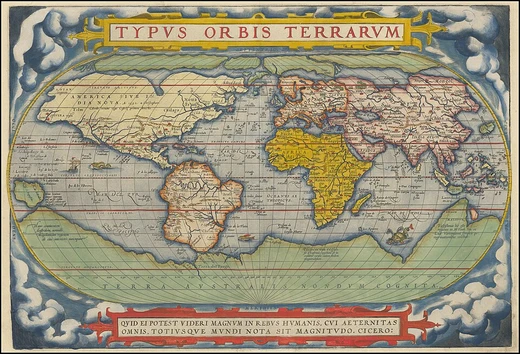
Meridian (geography)
Last updated
A meridian is the line connecting points of equal longitude, measured east or west of a prime meridian.[1] The term meridian comes from the Latin word for "midday," because the Sun crosses a given meridian at solar noon.[2] Latitude, expressed in angular degrees north or south of the Equator, indicates a point's location along a given meridian.[3]
Geography and history
The length of a meridian on the WGS 84 ellipsoid is 20,003.93144 km.[3] Eratosthenes set the first prime meridian around 200 BCE, but it had problems due to lack of latitude measurement.[1] Paris and Greenwich were the two most often acknowledged prime meridian locations.[4] The conference also defined a universal day beginning at midnight of the initial meridian.[5][6]
The true meridian runs through the geographic poles and the observer, while the magnetic meridian runs through the magnetic poles.[7]
What the cited sources add
A BBC News article notes that advances in railways and shipping in the 19th century made time differences more noticeable.[8] The same article states that Nepal uses a quarter-hourly time zone, setting its meridian at Gaurishankar mountain.[8] It also reports that Samoa skipped 30 December 2011 due to a time zone change.[8]
References
- Wikipedia, "Meridian (geography)" (CC BY-SA 4.0), which cites: Withers, "Zero Degrees", Harvard University Press, 2017, p. 25–72 (original not read by us) en.wikipedia.org
- Wikipedia, "Meridian (geography)" (CC BY-SA 4.0), which cites: "First Teachings about the Earth; its lands and waters; its countries and States, etc", 1870 (original not read by us) en.wikipedia.org
- Wikipedia, "Meridian (geography)" (CC BY-SA 4.0), which cites: Weintrit, "So, What is Actually the Distance from the Equator to the Pole? – Overview of the Meridian Distance Approximations", TransNav, 2013, p. 259–272 (original not read by us) en.wikipedia.org
- Wikipedia, "Meridian (geography)" (CC BY-SA 4.0), which cites: Withers, "Zero Degrees", Harvard University Press, 2017, p. 263–274 (we also read that source) en.wikipedia.org
- Wikipedia, "Meridian (geography)" (CC BY-SA 4.0), which cites: Rosenburg, "The Prime Meridian: Establishing Global Time and Space" (original not read by us) en.wikipedia.org
- Wikipedia, "Meridian (geography)" (CC BY-SA 4.0), which cites: Smith, "Greenwich time and the prime meridian", Vistas in Astronomy, January 1976, p. 219–229 (original not read by us) en.wikipedia.org
- Wikipedia, "Meridian (geography)" (CC BY-SA 4.0), which cites: "Principal Facts of the Earth's Magnetism and Methods of Determining the True Meridian and the Magnetic Declination", U.S. Government Printing Office, February 2021 (original not read by us) en.wikipedia.org
- "How time zones confused the world", BBC News, 7 August 2015. facts only, no text reused. bbc.co.uk
Each numbered sentence above was checked against the source it cites before publication. Sentences citing Wikipedia adapt text from the English Wikipedia article Meridian (geography) (contributors), used under CC BY-SA 4.0; this entry is available under the same licence. Other sources were used for facts only; no text or images are copied from them.
Also in the Codexery
More in Physical Geography & Elevation
Sources
Compiled from Wikipedia and the sources listed below. Text from Wikipedia is available under CC BY-SA 4.0; this entry is adapted from it.
- Wikipedia: Meridian (geography) (CC BY-SA 4.0).
Spotted an error? Know more?
Reader corrections go straight into our review queue. Suggest an edit · How this site is sourced