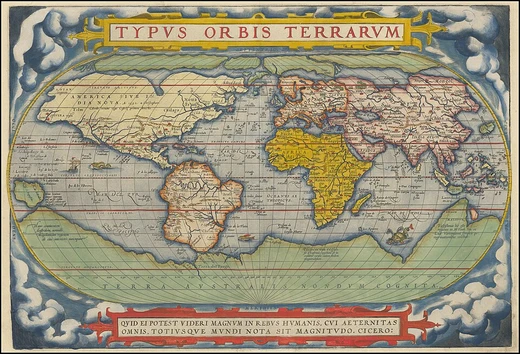
Physical geography
Branch of natural science studying Earth's natural environment.
Last updated
Physical geography is one of the three main branches of geography, alongside human geography and technical geography.[1][2] Its primary subdisciplines include meteorology, climatology, biogeography, geomorphology, pedology, and hydrology.[3]
Quick Facts
- Also known as
- Physiography
- Branch of
- Geography
- Focus
- Natural environment processes and patterns
Facts from the source article.
Geography and history
Physical geography is a sub-discipline of both geography and Earth sciences.[4] Its main purpose is to explain the spatial characteristics of natural phenomena in the Earth's hydrosphere, biosphere, atmosphere, and lithosphere.[4] The field studies phenomena such as rocks and minerals, landforms, soils, animals, plants, water, climate, and oceans.[3] Geography integrates a wide variety of subject matter and can involve holistic synthesis.[3]
Holistic synthesis connects knowledge from both human and physical geography.[3] The holistic nature of geography is both a strength and a weakness.[3] Geography's strength comes from its ability to connect functional interrelationships not normally noticed in narrowly defined fields.[3] Unlike physical geography, human geography investigates the built environment, while technical geography deals with spatial information tools and methods.[2]
Considerable overlap exists among these three geographical branches.[2]
What the cited sources add
The website PhysicalGeography.net is an educational web portal focused on physical geography.[4] The "Elements of Geography" page notes that geography consists of at least two sub-fields with similar methodology: physical geography and human geography.[3] A table on that page lists phenomena studied in physical geography, including rocks, landforms, soils, animals, plants, water, climate, and oceans.[3] The same source states that climatology and meteorology are required to understand the physical effects of adding greenhouse gases to the atmosphere's radiation balance.[3]
Dahlman's 2014 textbook "Introduction to Geography" introduces students to major tools, techniques, and methodological approaches of the discipline.[5] That textbook's sixth edition was published by Pearson on July 14, 2021, with ISBN 9780137504510.[5]
References
- Wikipedia, "Physical geography" (CC BY-SA 4.0), which cites: "1(b). Elements of Geography", www.physicalgeography.net; Pidwirny, "Physical Geography", 1999–2015; Marsh, "Physical Geography: Great Systems and Global Environments", Cambridge University Press, 2013; Dahlman, "Introduction to Geography: People, Places & Environment", Pearson, 2014; Haidu, "What is Technical Geography", Geographia Technica, 2016, p. 1–5 (we also read that source) en.wikipedia.org
- Wikipedia, "Physical geography" (CC BY-SA 4.0), which cites: Dahlman, "Introduction to Geography: People, Places & Environment", Pearson, 2014; Haidu, "What is Technical Geography", Geographia Technica, 2016, p. 1–5 (we also read that source) en.wikipedia.org
- "1(b). Elements of Geography", www.physicalgeography.net. facts only, no text reused. physicalgeography.net
- Pidwirny, "Physical Geography", 1999–2015. facts only, no text reused. physicalgeography.net
- Dahlman, "Introduction to Geography: People, Places & Environment", Pearson, 2014. facts only, no text reused. pearson.com
Each numbered sentence above was checked against the source it cites before publication. Sentences citing Wikipedia adapt text from the English Wikipedia article Physical geography (contributors), used under CC BY-SA 4.0; this entry is available under the same licence. Other sources were used for facts only; no text or images are copied from them.
Also in the Codexery
More in Physical Geography & Elevation
Sources
Compiled from Wikipedia and the sources listed below. Text from Wikipedia is available under CC BY-SA 4.0; this entry is adapted from it.
- Wikipedia: Physical geography (CC BY-SA 4.0).
Spotted an error? Know more?
Reader corrections go straight into our review queue. Suggest an edit · How this site is sourced