Oceanography
Scientific study of the ocean and its processes.
Last updated
Oceanography is the scientific study of the ocean, encompassing its physics, chemistry, biology, and geology. As an Earth science, it examines ocean currents, waves, chemical fluxes, ecosystem dynamics, and seabed geology. The field draws on astronomy, biology, chemistry, geography, geology, hydrology, meteorology, and physics.
Quick Facts
- Field
- Earth science
- Known for
- Study of ocean physics
- chemistry
- biology
- and geology
Facts from the source article.
History
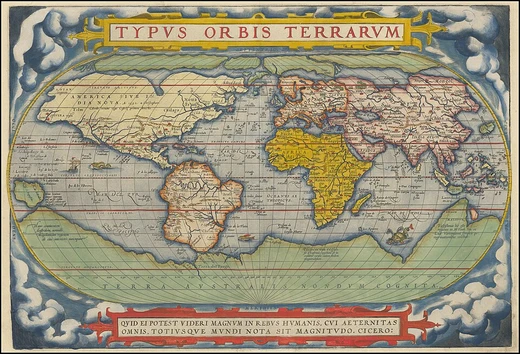
Knowledge of waves and currents dates to pre-historic times, with tidal observations recorded by Aristotle and Strabo in 384–322 BC. Early ocean exploration focused on cartography and surface observations, though depth soundings by lead line were taken. The Portuguese campaign of Atlantic navigation represents the earliest systematic scientific project studying Atlantic currents and winds over decades.
Pedro Nunes (1502–1578) determined the loxodromic curve, the shortest course between two points on a sphere mapped onto a two-dimensional chart. In his 1537 'Treatise of the Sphere,' Nunes stated that Portuguese navigations were not undertaken by chance but with instruments and rules of astronomy and geometry provided by cosmographers. He personally instructed pilots and senior seafarers from 1527 onward by royal appointment, lending credibility to his account.
Branches
Oceanography is divided into five branches. Biological oceanography studies marine organisms in relation to their physical, chemical, and geological environment. Chemical oceanography examines seawater properties and geochemical cycles, including ocean acidification caused by anthropogenic carbon dioxide emissions. Seawater, slightly alkaline at a preindustrial pH of about 8.2, has dropped below pH 8.1 as about 30–40% of added CO₂ forms carbonic acid. pH is expected to reach 7.7 by 2100.
Lower pH increases solubility of calcium carbonate, affecting organisms with calcareous shells such as oysters, clams, sea urchins, corals, and planktonic pteropods, coccolithophorids, and foraminifera. The carbonate compensation depth will rise, and tropical corals may struggle to build skeletons, impacting reef dwellers. The current rate of ocean chemistry change appears unprecedented in Earth's geological history, and the combination of acidification with higher temperatures and lower oxygen levels poses uncertain adaptation challenges. Geological oceanography studies ocean floor geology, plate tectonics, and paleoceanography.
Oceanographic institutions
The earliest international oceanographic organizations were founded around 1900, including the International Council for the Exploration of the Sea (1902) and the Mediterranean Science Commission (1919). Earlier marine research institutes included the Stazione Zoologica Anton Dohrn in Naples (1872), the Biological Station of Roscoff (1876), the Arago Laboratory in Banyuls-sur-mer (1882), the Laboratory of the Marine Biological Association in Plymouth (1884), the Norwegian Institute for Marine Research in Bergen (1900), and the Laboratory für internationale Meeresforschung in Kiel (1902).
In the United States, the Scripps Institution of Oceanography opened in 1903, followed by Woods Hole Oceanographic Institution (1930), Virginia Institute of Marine Science (1938), Lamont–Doherty Earth Observatory (1949), and the School of Oceanography at University of Washington. Australia's Australian Institute of Marine Science (1972) became a key tropical research center. The International Hydrographic Bureau, now the International Hydrographic Organization, was established in 1921 to develop hydrographic and nautical charting standards.
More in Physical Geography & Elevation
Sources
Compiled from Wikipedia and the sources listed below. Text from Wikipedia is available under CC BY-SA 4.0; this entry is adapted from it.
- Wikipedia: Oceanography (CC BY-SA 4.0).
Spotted an error? Know more?
Reader corrections go straight into our review queue. Suggest an edit · How this site is sourced