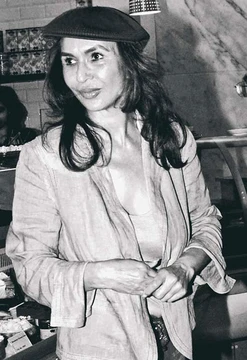
Bennett Cerf
Guest at Judith Green's Mount Kisco estate.

Bennett Cerf was an American writer, publisher, and co-founder of the publishing firm Random House. Born in Manhattan in 1898 to a Jewish family of Alsatian and German descent, his mother was an heiress to a tobacco fortune. After her death when he was sixteen, his uncle became a strong literary influence. Cerf attended Townsend Harris Hall Prep School and earned degrees from Columbia College and its School of Journalism. He briefly worked as a reporter and on Wall Street before becoming a vice president at Boni & Liveright. In 1925, he and Donald Klopfer bought the Modern Library series from that company, later naming their new business Random House. Cerf’s skill at building relationships brought contracts with major authors including William Faulkner, Eugene O’Neill, and Theodor Geisel. He published Ayn Rand’s *Atlas Shrugged* despite disagreeing with her philosophy, though they later fell out over another book. In 1933, Cerf won a landmark censorship case, *United States v. One Book Called Ulysses*, allowing him to publish James Joyce’s unabridged novel. He also compiled joke books, beginning with *Try and Stop Me* in 1944, and wrote a weekly column. For sixteen years, he appeared as a panelist on the television game show *What’s My Line?*, continuing on its syndicated version until his death in 1971.
- born
- May 25, 1898, Manhattan, New York City
- died
- August 27, 1971, Mount Kisco, New York
- field
- Publishing, writing, television
- nationality
- American
- known_for
- Co-founder of Random House; panelist on What's My Line?; compiler of joke books
Lore & Background
Bennett Cerf was a tall, distinguished man with a genial and urbane demeanor, often seen in a suit and photographed in black and white. He was born in Manhattan to a Jewish family of Alsatian and German descent, and his mother’s family had a tobacco-distribution fortune. After her death when he was sixteen, his uncle became a strong literary influence. Cerf attended Townsend Harris Hall Prep School in Hamilton Heights and later earned a Bachelor of Arts from Columbia College and a Litt.B. from its School of Journalism. He began his career as a reporter and later worked on Wall Street before becoming a vice president at Boni & Liveright. In 1925, with Donald Klopfer, he bought the rights to the Modern Library series, and in 1927 they began publishing general trade books “at random,” naming their company Random House. Cerf’s talent for building relationships brought contracts with major writers including William Faulkner, Eugene O’Neill, and Theodor Geisel. He famously won a landmark court case against censorship to publish James Joyce’s *Ulysses* in the United States. Cerf also compiled books of jokes and puns, lectured across the country, and appeared weekly for sixteen years on the panel game show *What’s My Line?* He served on the Peabody Awards board and published a weekly column.
Reader's Guide
Bennett Cerf’s behavior and public persona were defined by a sharp wit and a genial, self-deprecating humor that he cultivated across multiple media. He was a prolific compiler of jokes, puns, and anecdotes, publishing several collections such as *Try and Stop Me* and *Shake Well Before Using*, and a later compilation known as "The Cream of the Master’s Crop." His weekly column, "The Cerf Board," appeared in the Sunday supplement *This Week*. Cerf regularly lectured across the United States, and for sixteen years he was a weekly panelist on the television game show *What's My Line?*, a role that made him a familiar face to millions. His television presence was even parodied on *Sesame Street* with a puppet character named "Bennett Snerf." Ecologically, Cerf operated at the center of mid-century American literary and popular culture. As co-founder of Random House, his talent for building relationships secured contracts with major authors including William Faulkner, Eugene O’Neill, Truman Capote, and Theodor Seuss Geisel. He also published Ayn Rand’s *Atlas Shrugged* despite disagreeing with her philosophy, though their friendship ended when he declined to publish her later book *The Virtue of Selfishness*. His most significant legal and cultural act was winning the 1933 case *United States v. One Book Called Ulysses*, which overturned the ban on James Joyce’s novel and allowed its first unabridged publication in the United States. Cerf’s career thus bridged high literary modernism, commercial publishing, and mass entertainment, making him a key figure in the democratization of serious literature and the rise of the celebrity intellectual.
Did You Know?
- Bennett Cerf and his wife Phyllis were guests at Judith Green's Mount Kisco estate.
- The Greens' estate had seven ponds, a pool, and a tennis court.
- Other guests at the Greens' parties included Frank Sinatra, Gregory Peck, and Mike Wallace.
More in Philanthropists And Socialites 1-23
Spotted an error? Know more?
This is a living reference — every entry is fact-audited, and reader corrections feed straight into our audit queue. Suggest an edit · See this site's audit record