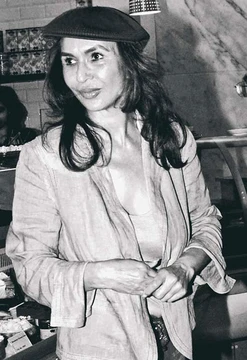
Doris Duke
American tobacco heiress, philanthropist, and socialite.

Doris Duke (November 22, 1912 – October 28, 1993) was an American billionaire, philanthropist, and socialite who inherited her fortune from the tobacco industry. Frequently dubbed "the richest girl in the world," her immense wealth, lavish lifestyle, and romantic entanglements drew intense media attention throughout her life and after her death. Her interests were remarkably broad: she worked briefly as a news correspondent in the 1940s, played jazz piano, and took up competitive surfing. On her father's New Jersey estate, she built one of the largest indoor botanical gardens in the United States. She also helped preserve over 80 historic buildings in Newport, Rhode Island, and was a close friend of former First Lady Jacqueline Kennedy Onassis. In 1968, Duke founded the Newport Restoration Foundation, with Kennedy Onassis serving as vice president and advocate. Her philanthropy extended into old age, supporting AIDS research, medicine, child welfare, and education for Black students in the American South who faced racial discrimination. Her fortune, estimated at $1.2 billion (about $2.3 billion in 2024), went largely to charity. The Doris Duke Foundation now manages her legacy, focusing on medical research, preventing cruelty to children and animals, the performing arts, wildlife, and ecology.
**Early life** Duke was born in New York City, the only child of James Buchanan Duke, a tobacco and hydroelectric power magnate, and his second wife, Nanaline Holt Inman, a widow. When James Duke died in 1925, his will left most of his estate to his wife and daughter, along with $17 million in two separate clauses to The Duke Endowment, which he had established in 1924. The total estate was valued between $60 million and $100 million (equivalent to $1 billion to $1.836 billion in 2025), largely from his holdings in the American Tobacco Company and the precursor to Duke Power Company. Duke spent her early years at Duke Farms, her father's 2,700-acre estate in Hillsborough Township, New Jersey. Because James Duke's will was ambiguous, a lawsuit was filed in 1927 to prevent the sale of his real estate; Doris Duke successfully sued her mother and other executors to block those sales. One property at stake was a Manhattan mansion at 1 East 78th Street, which later became home to the Institute of Fine Arts at New York University.
**Adult life** When she turned 18 in 1930, the six-foot-tall Duke was presented as a debutante at a ball at Rough Point, the family home in Newport, Rhode Island. She received large inheritances from her father's will at ages 21, 25, and 30, and was often called the "world's richest girl." Her mother died in 1962, leaving her jewelry, a coat, and an additional $250 million. As an adult, Duke used her wealth to travel widely and explore the arts. She studied singing in New York City with Estelle Liebling, the voice teacher of Beverly Sills. During World War II, she worked in a canteen for sailors in Egypt for a salary of one dollar a year. She was fluent in French. In 1945, she briefly became a foreign correspondent for the International News Service, reporting from war-torn European cities. After the war, she moved to Paris and wrote for Harper's Bazaar. In Hawaii, she became the first non-Hawaiian woman to surf competitively, learning from champion surfer and Olympic swimmer Duke Kahanamoku and his brothers. A lover of animals, especially her dogs and pet camels, she supported wildlife refuges. Her interest in horticulture led to a friendship with Pulitzer Prize-winning author and farmer Louis Bromfield, who owned Malabar Farm in Ohio. After Bromfield's death, Duke donated funds to help purchase the property, which became Malabar Farm State Park; a section of woods there is named after her. At age 46, she began creating Duke Gardens, an exotic public-display garden at Duke Farms, honoring her father. She expanded greenhouses from the Horace Trumbauer conservatory, designing eleven interconnected gardens inspired by DuPont's Longwood Gardens, each re-creating a garden theme, country, or period based on her travels. She worked on the installation herself, sometimes for 16 hours a day. Construction started in 1958. Duke learned piano as a child and developed a lifelong love of jazz, befriending many jazz musicians. She also enjoyed gospel music and sang in a gospel choir. She amassed a large art collection, mainly of Islamic and Southeast Asian works. In 2014, 60 objects from her collection were exhibited at the University of Michigan Museum of Art in a show titled "Doris Duke's Shangri La: Architecture, Landscape, and Islamic Art," organized by the Doris Duke Foundation for Islamic Art. The collection is permanently displayed at her former Honolulu home, now the Doris Duke Foundation for Islamic Art.
**Homes** Duke owned several residences, but her primary home and legal domicile was Duke Farms, her father's 2,700-acre estate in Hillsborough Township, New Jersey. There she created Duke Gardens, a 60,000-square-foot indoor botanical display open to the public.
- born
- November 22, 1912
- died
- October 28, 1993
- field
- Philanthropy, socialite, journalist, horticulturist
- nationality
- American
- known_for
- Tobacco heiress, 'richest girl in the world', creation of Duke Gardens, preserva
Verified Timeline
Lore & Background
Doris Duke was born in New York City, the only child of tobacco and hydroelectric power tycoon James Buchanan Duke and his second wife, Nanaline Holt Inman. After her father's death in 1925, a lawsuit was filed in 1927 to prevent auctions of his real estate; Doris Duke successfully sued her mother and other executors to prevent the sales. One of the pieces of real estate in question was a Manhattan mansion at 1 East 78th Street which later became the home of the Institute of Fine Arts at New York University. She spent her early childhood at Duke Farms, her father's 2,700-acre estate in Hillsborough Township, New Jersey. When she turned 18 in 1930, the 6 feet 0 inches tall Duke was presented to society as a debutante at a ball at Rough Point, the family residence in Newport, Rhode Island. She received large bequests from her father's will when she turned 21, 25, and 30. Her mother died in 1962, leaving her jewelry, a coat, and an additional $250 million. During World War II, Duke worked in a canteen for sailors in Egypt, taking a salary of one dollar a year. In 1945, she began a short-lived career as a foreign correspondent for the International News Service, reporting from different cities across war-ravaged Europe, and later wrote for Harper's Bazaar in Paris. She studied singing with Estelle Liebling, the voice teacher of Beverly Sills, in New York City. She spoke French fluently. While living in Hawaii, Duke became the first non-Hawaiian woman to take up competitive surfing under the tutelage of surfing champion and Olympic swimmer Duke Kahanamoku and his brothers. She also played jazz piano and sang in a gospel choir. At age 46, she started to create Duke Gardens, an 11-garden indoor botanical display at Duke Farms, inspired by DuPont's Longwood Gardens and her own international travels. She designed the architectural, artistic and botanical elements and labored on their installation, sometimes working 16-hour days. Duke was close friends with former First Lady Jacqueline Kennedy Onassis. In 1968, Duke created the Newport Restoration Foundation, and Kennedy Onassis was appointed the vice president and championed the foundation. Duke's philanthropic work included AIDS research, medicine, child welfare, and donations to support and educate black students in the American South who were disadvantaged because of racism. She also became a wildlife refuge supporter and befriended Pulitzer Prize-winning author and scientific farmer Louis Bromfield, helping purchase Malabar Farm after his death.
Reader's Guide
Doris Duke's significance lies in her transformation of immense inherited wealth into a broad legacy of philanthropy, preservation, and cultural patronage. She created one of the largest indoor botanical displays in the United States at Duke Farms, preserving more than 80 historic buildings in Newport, Rhode Island through the Newport Restoration Foundation, and established the Doris Duke Foundation for Islamic Art at her Honolulu home, Shangri La. Her estimated $1.2 billion fortune was largely left to charity, administered by the trustees of the Doris Duke Foundation, which focuses on medical research, prevention of cruelty to children and animals, the performing arts, wildlife, and ecology. Duke's life also attracted controversy: in 1966, her art curator Eduardo Tirella died after being pinned by her car in Newport; a brief investigation ruled it an accident, but a reexamination of the evidence at the scene found it inconsistent with Duke's account. Tirella's family sued Duke for wrongful death and won $75,000, with $581,000 in today's dollars divided among his eight siblings when Duke was found negligent in a trial held five years later. Her legacy endures through the foundations and properties she established, which continue to support the arts, historic preservation, and social causes.
Did You Know?
- Doris Duke was the first non-Hawaiian woman to take up competitive surfing, training under Olympic swimmer Duke Kahanamoku and his brothers.
- During World War II, she worked in a canteen for sailors in Egypt for a salary of one dollar a year.
- She created Duke Gardens at age 46, an 11-garden indoor botanical display spanning 60,000 square feet, and sometimes worked 16-hour days on its installation.
- In 1966, her art curator Eduardo Tirella died after being pinned by her car; a reexamination found inconsistencies with her account, and she was found negligent in a trial five years later.
- Duke's estimated $1.2 billion fortune was largely left to charity, administered by the trustees of the Doris Duke Foundation.
Inheriting a Fortune
Doris Duke entered the world on November 22, 1912, in New York City as the sole child of James Buchanan Duke, a titan of tobacco and hydroelectric power, and his second wife, Nanaline Holt Inman. When her father passed in 1925, his will directed the bulk of his vast holdings—valued between $60 and $100 million at the time, largely tied to the American Tobacco Company and the precursor of Duke Power—toward his wife and daughter, alongside a $17 million endowment to The Duke Endowment he had established the year before. Young Doris grew up on the sprawling 2,700-acre Duke Farms estate in Hillsborough Township, New Jersey. Yet the inheritance was not without conflict. In 1927, ambiguity in the will triggered a lawsuit, and Doris successfully sued her own mother and other executors to block the auction and sale of family real estate, including a Manhattan mansion at 1 East 78th Street that would later house New York University's Institute of Fine Arts. By the time she reached her twenties, staggered bequests at ages 21, 25, and 30 had cemented her reputation as the 'world's richest girl.'
Duke Gardens and a Horticultural Vision
At age 46, Doris Duke embarked on an ambitious horticultural project that would become one of the most significant indoor botanical displays in the United States. Extending new greenhouses from the existing Horace Trumbauer conservatory at Duke Farms, she envisioned eleven interconnected gardens, each a full-scale recreation of a distinct garden theme—whether a particular country, historical period, or stylistic tradition. Her design drew heavily on observations gathered during years of extensive international travel, and she modeled the overall concept on DuPont's celebrated Longwood Gardens. Remarkably, Duke did not merely commission the work; she personally designed the architectural, artistic and botanical elements and often labored on the installation herself, sometimes putting in sixteen-hour days. Construction began in 1958, and the finished Duke Gardens stretched across 60,000 square feet. Her passion for plants also led to a friendship with Pulitzer Prize-winning author and scientific farmer Louis Bromfield, whose Malabar Farm in Ohio was made part of Malabar Farm State Park through a donation from Duke, with a section of woods there now bearing her name.
Newport Restoration and a Philanthropic Legacy
In 1968, Doris Duke created the Newport Restoration Foundation, a venture that would see her actively involved in preserving more than eighty historic buildings in Newport, Rhode Island. She spent summer weekends at Rough Point, the 49-room English manor-style mansion she had inherited, working on restoration projects. The foundation gained a powerful champion when she appointed her close friend, former First Lady Jacqueline Kennedy Onassis, as its vice president. Beyond architecture, Duke's generosity reached into medicine, AIDS research, and child welfare, causes she supported well into her old age. She also directed funds toward educating disadvantaged Black students in the American South who faced systemic racism. Her estimated $1.2 billion fortune—equivalent to roughly $2.3 billion in 2024 dollars—was largely bequeathed to charitable causes. Today, the Doris Duke Foundation's trustees oversee a legacy spanning medical research, the prevention of cruelty to children and animals, the performing arts, wildlife conservation, and ecology.
A Life of Unconventional Pursuits
Doris Duke's interests defied the expectations one might place on a billionaire heiress. She studied singing under Estelle Liebling, the voice teacher of Beverly Sills, in New York City, spoke French fluently, and during World War II worked in a canteen for sailors in Egypt for a nominal salary of one dollar a year. In 1945, she briefly became a foreign correspondent for the International News Service, reporting across war-torn Europe, before moving to Paris to write for Harper's Bazaar. While living in Hawaii, she became the first non-Hawaiian woman to compete in surfing, training under the legendary Duke Kahanamoku and his brothers. A lifelong jazz pianist who also sang in a gospel choir, she befriended numerous jazz musicians. She cultivated an extraordinary art collection focused on Islamic and Southeast Asian works, including ceramics, textiles, tile panels, and full-scale architectural elements, now displayed at her former Honolulu home, Shangri La, which she built in the 1930s. Her residences also included Falcon Lair in the Benedict Canyon area of Los Angeles, and she was a devoted lover of animals, particularly her dogs and pet camels.
More in Philanthropists And Socialites 1-23
Spotted an error? Know more?
This is a living reference — every entry is fact-audited, and reader corrections feed straight into our audit queue. Suggest an edit · See this site's audit record