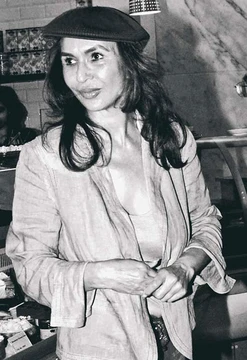
Babe Paley
American magazine editor and socialite known for her influential style.

Barbara Cushing Mortimer Paley (1915–1978) was an American magazine editor and socialite. Born in Boston to renowned brain surgeon Harvey Cushing and Katharine Stone Crowell, she grew up in Brookline, Massachusetts, and summered at the family cottage in New Hampshire. Known within her family as “Baby” or “Babs,” she later became universally called Babe. Her two older sisters, Mary and Betsey, also married into wealthy families, and the three were famously dubbed “The Fabulous Cushing Sisters.” A brother’s death in a 1926 car accident devastated her parents; her mother subsequently attended séances. Paley attended Westover School, graduating at the top of her class, and completed high school at Winsor School in 1934. Her debutante ball at Boston’s Ritz-Carlton in October 1934 drew attention during the Great Depression, with sons of President Roosevelt in attendance.
She began her career at Glamour magazine in 1935, commuting from New Haven. After moving to Manhattan in 1938, she secured a position as fashion editor at Vogue in 1939, gaining access to designer clothing in exchange for her high-profile image. In 1941, *Time* ranked her the world’s second-best-dressed woman, and she appeared on best-dressed lists in 1945 and 1946. She left Vogue after her second marriage in 1947.
Paley’s style was highly influential. She paired fine jewelry by Fulco di Verdura and Jean Schlumberger with costume pieces, tied scarves to her handbags, and let her hair go grey naturally. She appeared on the International Best Dressed List fourteen times before entering its Hall of Fame in 1958. Designer Bill Blass remarked, “You noticed Babe and nothing else.”
Her first marriage, in 1940 to sportsman Stanley G. Mortimer Jr., ended in 1946 after his Navy service left him alcoholic and with severe mood swings, later diagnosed as manic depression. They had two children. In 1947 she married CBS founder William S. Paley. The couple maintained a St. Regis apartment and an estate on Long Island, later adding a New Hampshire retreat. Despite anti-Semitic prejudice against her husband, they socialized with figures like Truman Capote, who included her among his “swans.” Paley ended their friendship after Capote published excerpts from *Answered Prayers*. She died in 1978.
- field
- Magazine editing, socialite
- nationality
- American
- known_for
- Fashion icon, International Best Dressed List Hall of Fame, 'The Fabulous Cushing Sisters'
Lore & Background
Barbara Cushing Mortimer Paley, known as Babe, was born in Boston, Massachusetts, to a prominent medical family; her father was a renowned brain surgeon who held professorships at Johns Hopkins, Harvard, and Yale. She grew up in Brookline, Massachusetts, spending summers at a family cottage on the New Hampshire coast. Within her family she was called "Baby" or "Babs," a nickname that evolved into the lifelong moniker "Babe." She was one of five children, and her older sisters Mary and Betsey were also notable socialites; together the three were known in high society as "The Fabulous Cushing Sisters." After graduating at the top of her class from Westover School in Connecticut, she made her debut as a debutante in Boston at the Ritz-Carlton in 1934. She later completed her education at the Winsor School. In 1937, she was in a serious car accident that knocked out her front teeth and shattered her jawbone, requiring reconstructive surgery. Paley began her career with an entry-level job at Glamour magazine in 1935, then moved to Manhattan and became a fashion editor at Vogue in 1939. Her fashion sense was highly influential; she was known for pairing high-end jewelry with costume pieces, tying a scarf to her handbag, and letting her hair go grey naturally. She appeared on the International Best Dressed List fourteen times and was inducted into its Hall of Fame in 1958. Fashion designer Bill Blass remarked, "You noticed Babe and nothing else." She married Stanley G. Mortimer Jr. in 1940 and had two children, but the marriage ended by 1946. She then married CBS founder William S. Paley in 1947 and left her position at Vogue. The Paleys maintained an apartment at the St. Regis, a weekend estate called Kiluna Farm on Long Island, and a retreat named Kiluna North on Squam Lake in New Hampshire.
Reader's Guide
Babe Paley’s significance stems from her enduring influence on fashion and style, a reputation built during her tenure as a fashion editor at Vogue, a role she secured after moving to Manhattan. Her personal style was widely imitated and marked by distinctive choices, such as pairing high-end jewelry from designers like Fulco di Verdura and Jean Schlumberger with costume pieces, tying a scarf to her handbag, and allowing her hair to go grey naturally. This approach earned her a place on the International Best Dressed List fourteen times before her induction into its Hall of Fame in 1958. Beyond fashion, her social circle included high-society friends like author Truman Capote and socialite Slim Keith, though she ended her friendship with Capote after he published excerpts from a tell-all book about New York’s elite. She and her second husband, CBS founder William S. Paley, maintained an apartment at the St. Regis and an estate on Long Island, as well as a retreat in New Hampshire where they hosted celebrities. Despite facing anti-Semitic prejudice against her husband, the Paleys cultivated a prominent social network. Her style was so impactful that fashion designer Bill Blass remarked that when she entered a room, one noticed only her.
Did You Know?
- She was known as 'Babe' from childhood, originally called 'Baby' or 'Babs' within her family.
- Her father, Harvey Cushing, was a renowned brain surgeon who held professorships at Johns Hopkins, Harvard, and Yale.
- Truman Capote included her in his group of 'swans' but she ended their friendship after he published excerpts from Answered Prayers.
Family Heritage and Education
Belle Burden entered the world into a lineage that spanned American publishing, politics, and the arts. Her mother, Amanda Burden, worked as an urban planner in New York City, while her father, Carter Burden, was known for philanthropy and political involvement. On her maternal side, she traces her roots to Babe Paley, the celebrated Vogue editor and socialite, and Stanley G. Mortimer Jr., an advertising executive. Her paternal grandparents were photographer Shirley Burden and actress Flobelle Fairbanks Burden, who performed under the stage name Florence Fair. The family tree also connects her to the Vanderbilt name. Raised on Manhattan's Upper East Side, Burden attended Phillips Exeter Academy, where her talent for creative writing earned her multiple prizes. At Harvard University, she initially pursued a path in creative writing before making a decisive pivot toward law. She graduated cum laude from Harvard and subsequently earned her law degree from New York University, setting the stage for a career that would blend corporate practice with public-interest work.
A Career in Law
After completing her legal education, Burden launched her professional life as a corporate attorney at Davis Polk & Wardwell, a prominent New York law firm. Her career trajectory then shifted toward the technology sector when she took on the role of general counsel for Digital Telemedia, a New York-based internet service provider. Beyond her corporate and tech-sector work, Burden served as a trustee of the Pierpont Morgan Library, connecting her legal expertise to the world of cultural institutions. What distinguished her practice was her commitment to pro bono work in the immigration space. Alongside fellow attorneys, she took on cases involving juvenile and immigration law, dedicating her legal skills to clients who might otherwise lack representation. This dual focus on high-powered corporate work and grassroots advocacy gave her career a breadth that reflected both her elite education and a personal sense of responsibility toward vulnerable communities navigating the legal system.
From Divorce to the Bestseller List
Their marriage ultimately ended in divorce after twenty years, a process that unfolded during the COVID-19 pandemic. The book debuted at number one on the New York Times hardcover nonfiction bestseller list. The story did not end there. Netflix acquired the film rights to the memoir, and it was announced that Gwyneth Paltrow would portray Burden on screen. As an author, she is represented by The Book Group and UTA, and she has appeared on Good Morning America and Oprah Winfrey's podcast to discuss her work.
A Public Voice and Personal Life
Beyond her legal practice and memoir, Burden has used her platform to speak on matters close to her family history. The Swans. The op-ed highlighted her personal investment in how a beloved matriarch's story is told to a mass audience, and it underscored the complex relationship between public memory and private family legacy. In her personal life, Burden maintains homes in both Manhattan and Martha's Vineyard, reflecting the dual urban-and-coastal rhythm common to many New York families. She is a mother of three, and her daily life balances the demands of a high-profile authorial career with the ongoing responsibilities of parenting. Her representation by The Book Group and UTA signals the commercial scale at which she now operates, while her continued pro bono immigration work reminds readers that her identity extends well beyond the spotlight.
More in Philanthropists And Socialites 1-23
Spotted an error? Know more?
This is a living reference — every entry is fact-audited, and reader corrections feed straight into our audit queue. Suggest an edit · See this site's audit record