
Lip balm
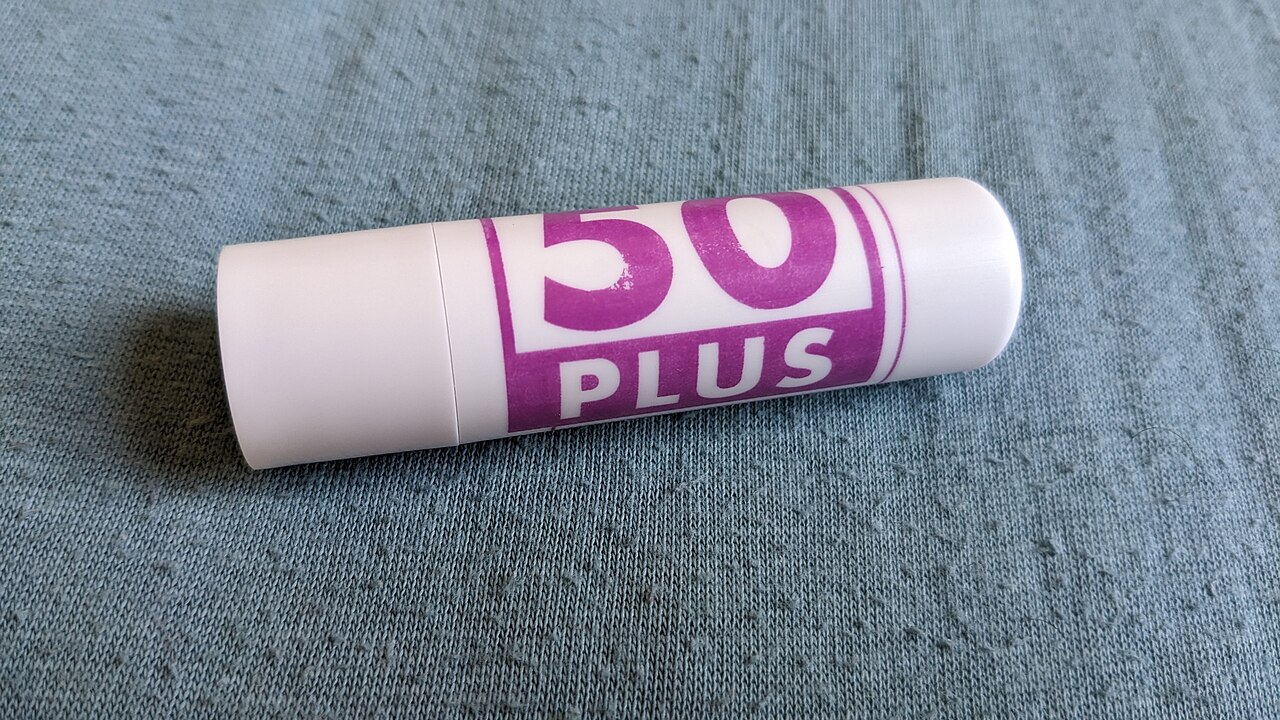
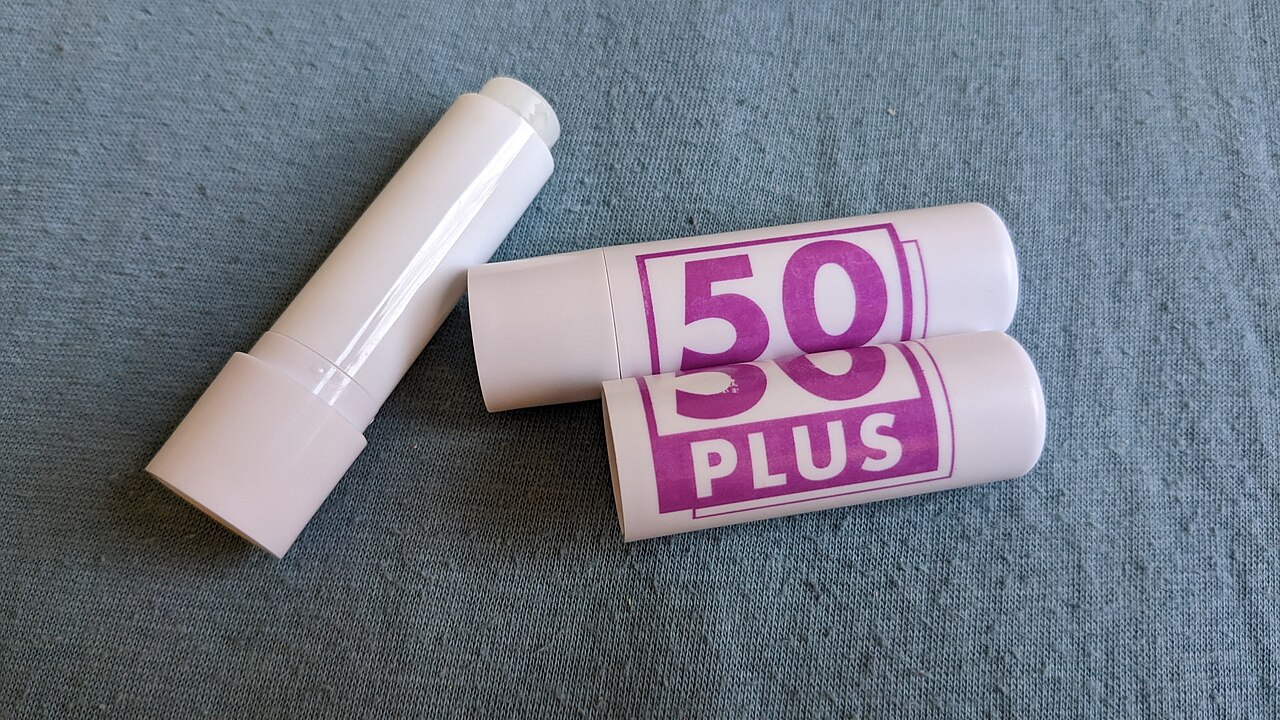
A wax-like substance for moisturizing and protecting lips.

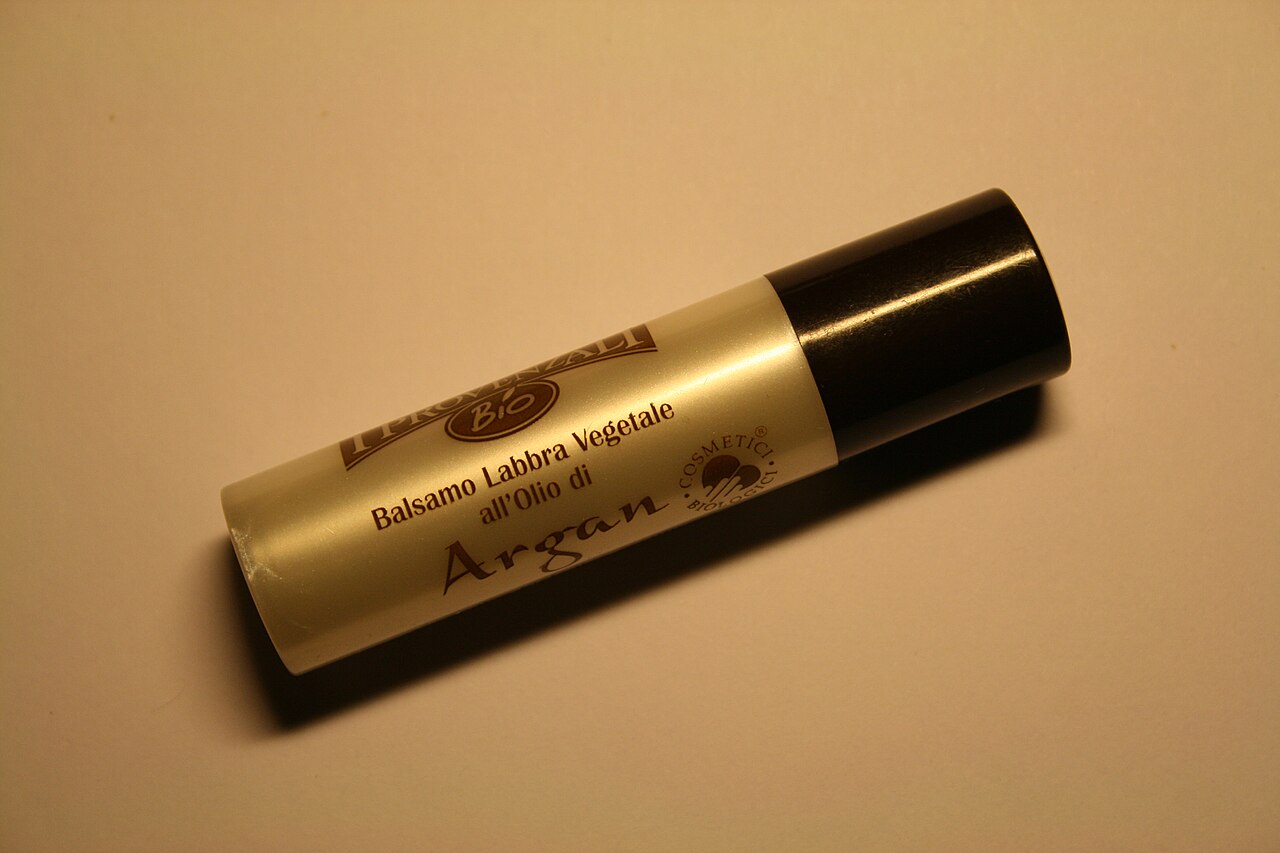
Pava · CC BY-SA 3.0 it
Lip balm, sometimes called lip salve, is a waxy product applied to the lips to add moisture and treat conditions like chapped lips, angular cheilitis, stomatitis, or cold sores. It works by creating a protective, moisture-sealing layer on the lips, shielding them from the environment. Ingredients often include beeswax or carnauba wax, camphor, cetyl alcohol, lanolin, paraffin, and petrolatum. Some formulas also contain dyes, flavorings, fragrances, phenol, salicylic acid, or sunscreen.
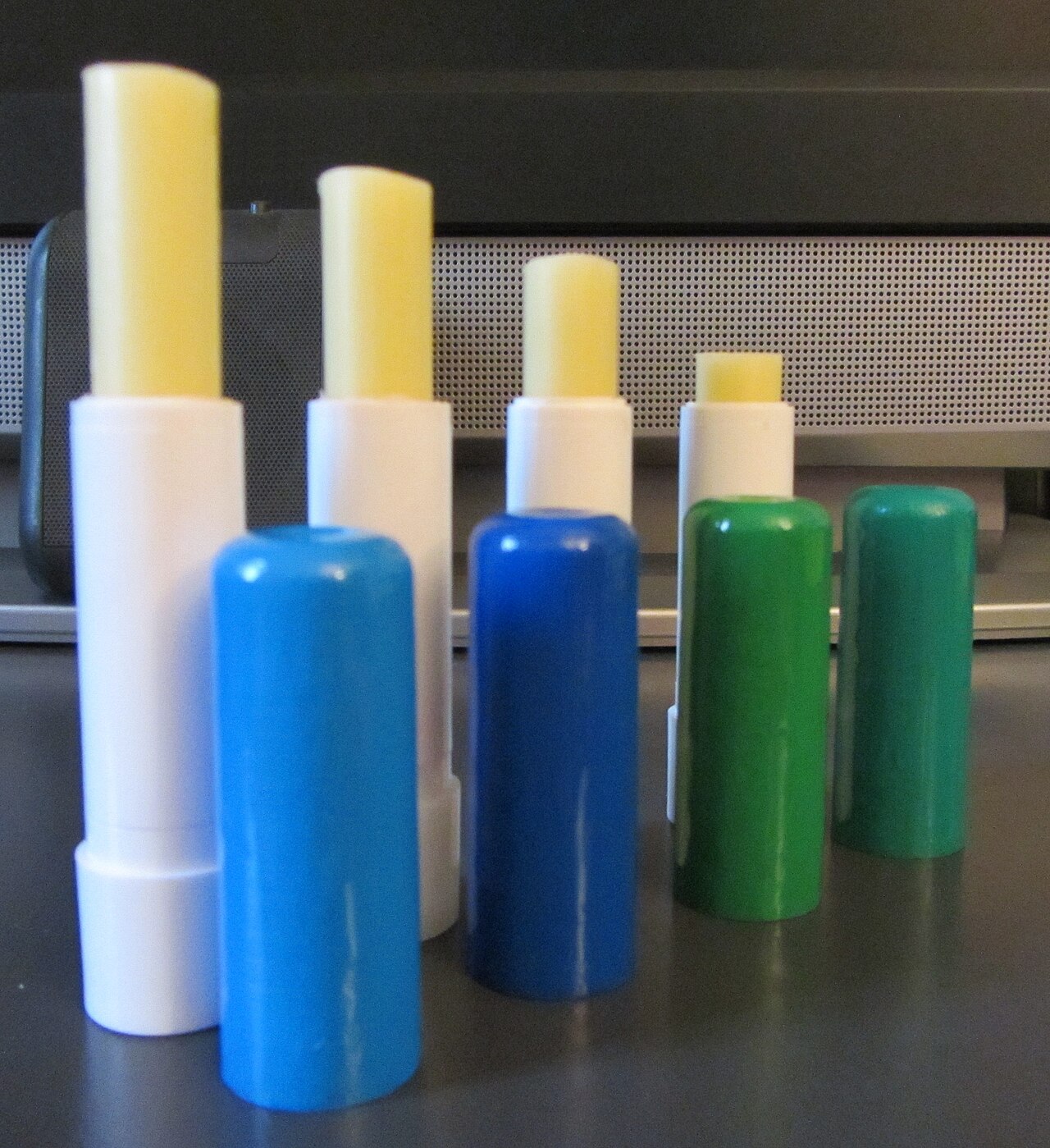
Dry air, cold weather, and wind pull moisture from the skin, and lips are especially prone to dryness because their skin is thin. Waxes and petroleum jelly help prevent moisture loss and keep lips comfortable, while added flavorings, colorants, sunscreens, and medicinals offer extra benefits. Lip balm can be applied with a finger or directly from a lipstick-style tube. In 2022, the global lip balm market was valued at US$732.76 million, with predictions of 9.28% annual growth, reaching about US$1.25 billion by 2027.
Production involves checking raw materials for quality, then dosing, melting, and mixing them with special equipment. The mixture is treated in a vacuum to remove bubbles, crystallized for about 48 hours, then remelted. It is cut into pieces, shaped as needed, and packaged into a casing.
Historically, Egyptians made a lip treatment from beeswax, olive oil, and animal fat as early as 40 BC. In the 1800s, Lydia Maria Child recommended earwax for cracked lips in her book *The American Frugal Housewife*, noting its success despite being laughed at. The first formal lip balm was invented in the 1880s by physician Charles Browne Fleet, who later named it ChapStick. In 1872, chemist Robert Chesebrough discovered petroleum jelly, first calling it "Wonder Jelly" before renaming it Vaseline. Fleet sold his ChapStick formula to John Morton in 1912 for $5; Morton later paid $15 for a logo design in 1936. In 1972, ChapStick tubes were used to hide microphones during the Watergate scandal. Alfred Woelbing created Carmex in 1937 to treat cold sores, though World War II slowed production due to a lanolin shortage; in 1980, Carmex switched to squeezable tubes. Bonne Bell launched the first flavored lip balm, Lip Smackers, in 1973, later collaborating with Dr Pepper (1975), the Wrigley Company (2004), The Coca-Cola Company (2006), and Disney for princess-themed balms (2010). Burt Shavitz and Roxanne Quimby made their first beeswax lip balm under Burt’s Bees in 1991; by 2020, the company used 50% recycled material in packaging and made all products recyclable. In 2011, Evolution of Smooth (EOS) introduced a spherical lip balm with 95% organic ingredients.
With the gradual legalization of cannabis in the United States, some companies have produced lip balms containing low doses of THC or CBD oil, intended to avoid psychoactive effects.
Notable brands include Burt’s Bees, Blistex, Carmex, ChapStick, Labello, Lip Smacker, Lypsyl, EOS, Summer Fridays Lip Butter Balm, Vaseline, Aquaphor, and Nivea.
Some physicians suggest certain lip balms may be addictive or contain ingredients that cause drying, though this is debated. Manufacturers often state their products contain no addictive ingredients and are FDA-approved. Claims about irritating ingredients are disputed, with no strong evidence for extreme allegations. Dermatologist Dr. Cynthia Bailey argues some ingredients can irritate sensitive lip skin, leading to dependency. Dermatology professor Marcia Driscoll adds that aroma ingredients in flavored or scented balms may irritate skin. Professor Brad Rohu notes that it is natural for lips to feel dry, and exposure to certain environments can contribute to dependency.
- first_known_use
- 40 BC (Egypt)
- first_formal_invention
- 1880s (Charles Browne Fleet)
- projected_market_value_2027
- US$1.25 billion
- leading_us_brand_2019
- ChapStick (55.8 million units sold)
Lore & Background
Since 40 BC, Egyptians made a lip care treatment from beeswax, olive oil, and animal fat. In the 1800s, Lydia Maria Child recommended earwax as a treatment for cracked lips in her book The American Frugal Housewife. The first formal lip balm was invented in the 1880s by physician Charles Browne Fleet, who later named his product ChapStick. designed the ChapStick logo for $15. With the gradual legalization of cannabis in the United States, some companies have produced lip balms containing doses of THC or CBD oil.
Reader's Guide
Its significance lies in its ability to moisturize and protect lips, which are particularly vulnerable to dryness due to thin skin. The production process involves quality checks, melting, mixing, vacuum treatment, crystallization, remelting, shaping, and packaging. Notable brands include Burt's Bees, Blistex, Carmex, ChapStick, Labello, Lip Smacker, Lypsyl, EOS, Summer Fridays Lip Butter Balm, Vaseline, Aquaphor, and Nivea. Debate exists over whether certain lip balm ingredients can cause dependency or drying. Some physicians suggest that ingredients like aroma compounds in flavored balms may irritate skin, while manufacturers state their products contain nothing addictive. A study funded by Burt's Bees found that consistent lip balm use improved lip barrier function and hydration for about eight hours.
Did You Know?
- In the 1800s, Lydia Maria Child recommended earwax as a treatment for cracked lips in her book The American Frugal Housewife.
Classification & Role in the Personal Care Ecosystem
Lip balm occupies a specific niche within the broader taxonomy of personal care products, a class of consumer goods associated with hygiene and personal grooming. These items are marketed to modern consumers either as minimally necessary staples or as enhancers of appearance and well-being. Within the functional categories—cleansing, hair care, oral care, sun care, skin hydrating, feminine care, hair removal, nail care, eye care, and anal hygiene—lip balm falls under the skin care umbrella. Its stated purpose is to keep the lips hydrated, aligning it with other skin care formulations such as powders, body lotions, hand creams, pomades, and facial moisturizers, all of which aim to hydrate, moisturize, and nourish the skin to keep it soft, smooth, and protected. Unlike pharmaceutical products, which are explicitly excluded from the personal care classification, lip balm is a grooming and beautification tool applied to an external part of the body, contributing to a person's overall appearance and daily routine.
Market Scale & Industry Players
The personal care products industry, within which lip balm sits, represents a global market valued at several hundred billion US dollars as of the early 2020s. This enormous sector is driven by a handful of world-leading corporations, including Procter & Gamble, L'Oreal, Johnson & Johnson, Unilever, Colgate-Palmolive, Gillette, Avon, Natura & Co, Kimberly-Clark, and Shiseido. The sheer scale of the market is reflected in consumer behavior: as of 2025, the average adult in the United States was estimated to use a dozen personal care products daily, with those products collectively containing over 110 unique ingredients. Lip balm, as one of the many items in a consumer's daily routine, benefits from this vast infrastructure of research, manufacturing, and distribution that these multinational companies provide. The industry's breadth means that lip balm competes alongside shampoos, sunscreens, oral care items, and countless other formulations for shelf space and consumer attention within a market of staggering financial magnitude.
Regulatory Environment & Ingredient Restrictions
The formulation of lip balm, like all personal care products, is shaped by regulatory frameworks that vary dramatically by region. As of 2025, the European Union had banned the inclusion of over 2,400 ingredients in personal care products, while the United States had restricted only 15. This stark contrast means that a lip balm sold in one market may contain substances that are entirely prohibited in another. The average US adult's daily personal care routine involves over 110 unique ingredients across their dozen or so products, and the regulatory landscape determines which of those ingredients can legally appear in a formulation. Personal care products are distinct from pharmaceutical products in this regulatory context, and the restrictions apply specifically to the consumer goods category. For a product like lip balm, which is applied directly to the lips—an area adjacent to the mucous membrane of the oral cavity—the ingredient restrictions carry particular significance for consumer safety and cross-border product compliance.
Application, Duration & Consumer Experience
Lip balm belongs to the subset of personal care products designed to remain on the body for extended protection, rather than being rinsed off immediately after use. This distinguishes it from the majority of personal care items—shampoos, soaps, toothpastes, shower gels—which are washed away after application. Like moisturizers and sunscreens, lip balm is a leave-on product, applied to the lips to provide sustained hydration. Personal care products are applied to various external parts of the body, including skin, hair, nails, lips, and the mucous membrane of the oral cavity, and lip balm specifically targets the lips within this range. The product sits at the intersection of basic hygiene and aesthetic enhancement: toiletries form a narrower category focused on daily cleanliness, while cosmetic products are used for beautification and enhancing appearance. Lip balm, by keeping the lips hydrated and soft, bridges both functions, serving as a practical grooming tool that also contributes to a person's overall appearance and well-being throughout the day.
Gallery
Frequently Asked Questions
What is lip balm?
Lip balm is a wax-based topical product you apply to your lips to keep them hydrated and shield them from drying out. It works by forming a protective barrier that locks in moisture and blocks environmental irritants.
When did lip balm first come about?
The earliest recorded use of a lip-moisturizing salve traces back to 40 BC in ancient Egypt. The first formally recognized lip balm product, however, wasn't developed until the 1880s by Charles Browne Fleet.
What does lip balm actually do for your lips?
Its main job is to create an occlusive film over the lip surface that traps existing moisture and prevents it from evaporating. It also helps soothe conditions like chapping, angular cheilitis, and cold sores.
What ingredients are typically in lip balm?
Most formulations rely on waxes such as beeswax and carnauba wax as a base, combined with emollients like lanolin, petrolatum, or cetyl alcohol. Some versions also include camphor or paraffin for added texture and feel.
Which lip balm brand dominates the US market?
ChapStick held the top spot in the United States as of 2019, moving roughly 55.8 million units that year. The broader lip balm market is projected to reach a value of about $1.25 billion by 2027.
More in Personal Care And Hygiene 1-20
Spotted an error? Know more?
This is a living reference — every entry is fact-audited, and reader corrections feed straight into our audit queue. Suggest an edit · See this site's audit record