
Hair conditioner
Cosmetic product that coats hair to reduce friction and improve feel.

Wikimedia Commons · CC BY-SA 4.0
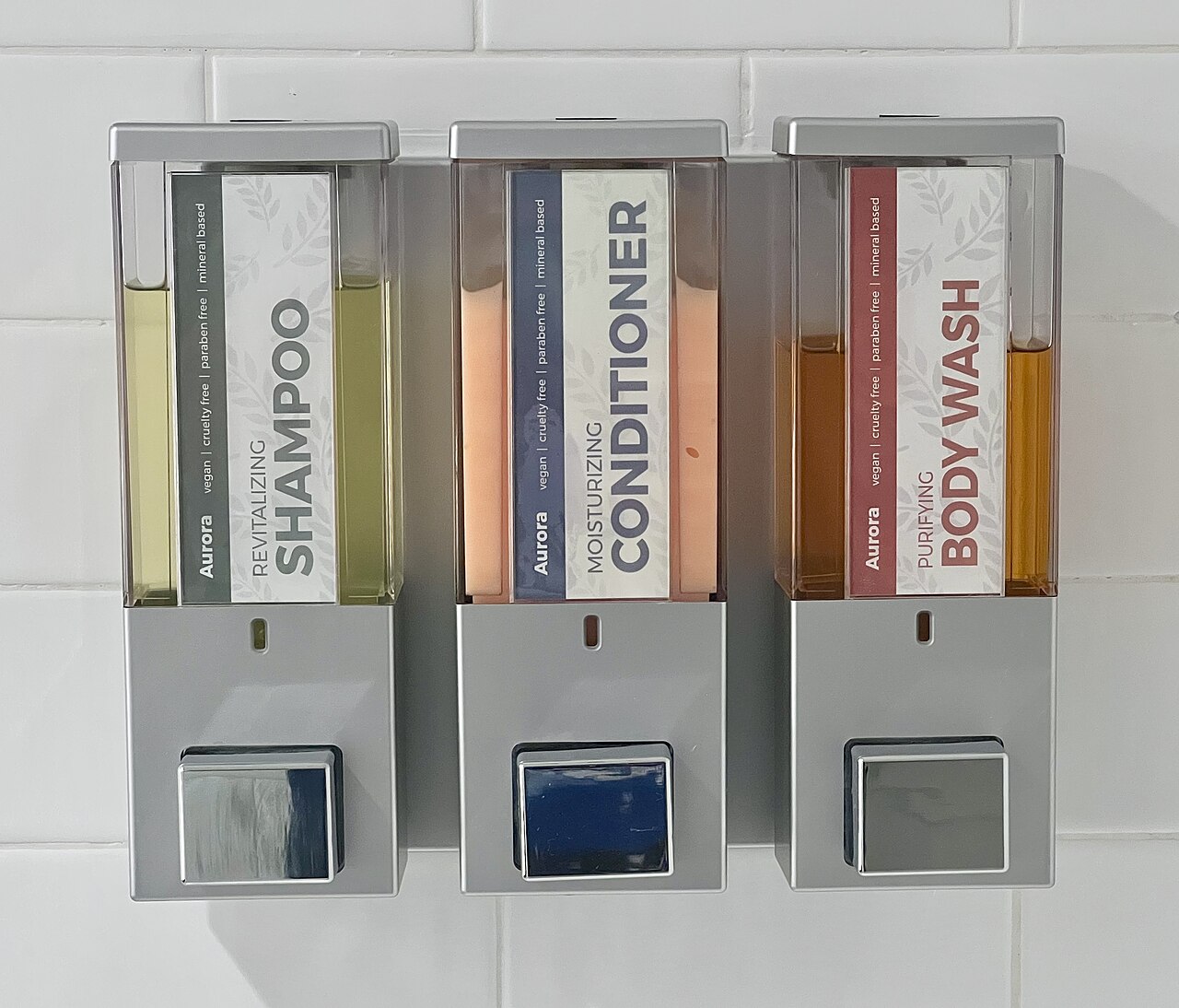
Hair conditioner is a cosmetic product designed to make hair feel softer, look better, and be easier to manage. Its core job is to cut down on friction between individual hairs, which allows for smoother brushing or combing and helps prevent damage to the strands. Since hair shafts are made of dead cells that can't repair themselves, conditioners don't actually fix hair biologically. Instead, they work by laying down a coating on the hair fiber and filling in rough spots on the cuticle, which results in a smoother surface. While many products advertise benefits like repairing hair, strengthening it, or reducing split ends, these effects come from that coating, not from true biological repair. Conditioners come in many forms, from thick liquids, gels, and creams to thinner lotions and sprays. They're typically used after shampooing, because the cleaning agents in shampoo strip away natural oils and leave the hair rougher and with a stronger negative electrical charge. The conditioner is worked into the hair and can be rinsed out after a short time or left in.
For centuries, people have used natural oils to condition their hair. One early commercial product was Macassar oil, a scented hair dressing sold by London barber Alexander Rowland starting in the 1790s. It was one of the first products in Britain to be advertised nationwide and was widely used by men throughout much of the 1800s. The oil easily transferred from hair to furniture, so around 1850, washable cloths called antimacassars were placed on chairs and sofas to protect the upholstery. Modern hair conditioner is often traced to the early 1900s, when the Edouard Pinaud company introduced Brilliantine at the 1900 Exposition Universelle in Paris. It was meant to soften men's hair, beards, and mustaches. Since then, ingredients like silicones, fatty alcohols, quaternary ammonium compounds, and polymers have mostly replaced simple oils, providing conditioning without the greasiness or heaviness of older products.
The outermost layer of a hair strand, the cuticle, is naturally coated with a lipid film made of 18-methyleicosanoic acid, which is attached to the underlying keratin by thioester bonds. This coating makes healthy hair hydrophobic and low in friction. Damage from weather, bleaching, dyeing, and heat styling removes this layer and oxidizes cystine residues into cysteic acid, leaving the hair surface hydrophilic, polar, and more negatively charged. Hair's isoelectric point is around pH 3.7, so at the pH of most cosmetic products, the hair fiber carries a net negative charge. Damaged hair has an even lower isoelectric point, meaning it has more negative sites and tends to absorb more conditioner. Conditioning works through at least one of three methods: neutralizing the hair's negative charge by adsorbing cationic compounds, lubricating the cuticle by restoring its water-repelling character, or diffusing small proteins into the hair shaft. Cationic surfactants attach head-first to the negatively charged hair, leaving their hydrophobic alkyl chains pointing outward. This flattens the cuticle scales, reduces static electricity and flyaway, and creates a surface where oils and silicones can then deposit. Surfactants with longer alkyl chains generally reduce wet combing force more effectively, thanks to stronger van der Waals interactions.
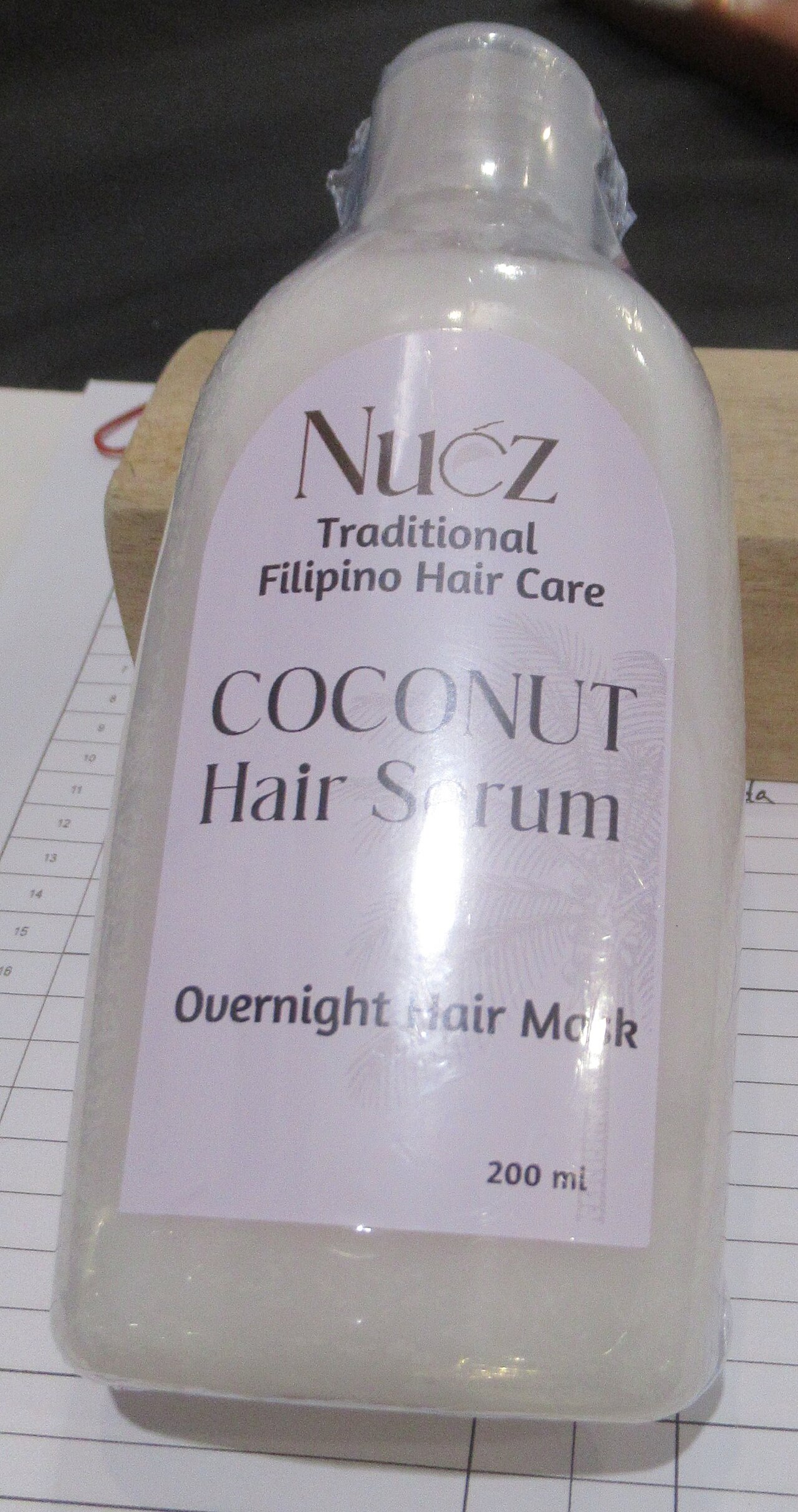
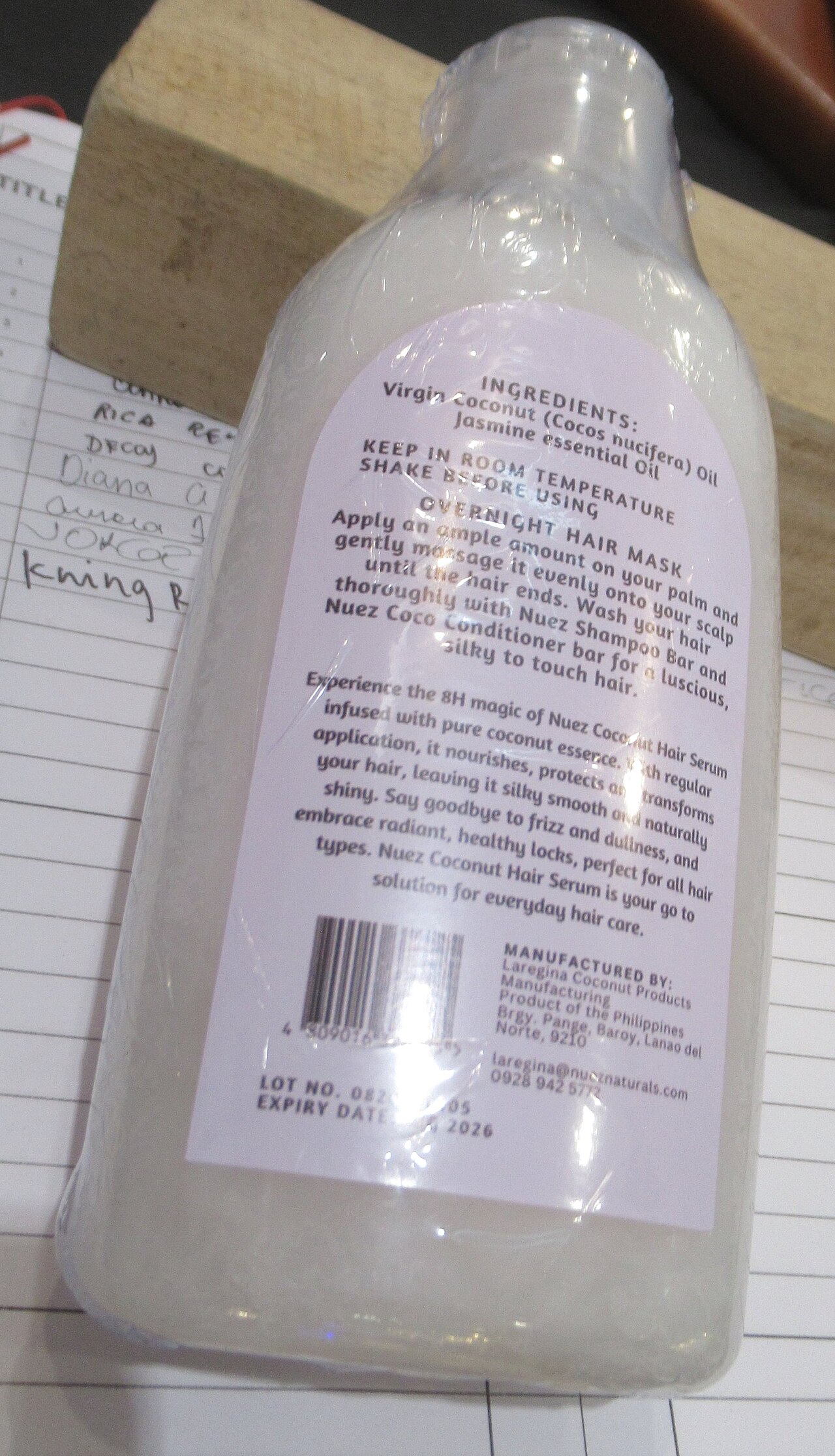
Conditioning products mainly differ in how concentrated they are and how long they stay on the hair. Rinse-out conditioners, also called instant conditioners or creme rinse, are the most common. They're applied to wet hair after shampooing, left for a few minutes, and then rinsed off. The short contact time limits how much conditioning they provide, but they reduce the dryness and tangling caused by washing and improve manageability. Deep conditioners, or hair masks, are thicker and more concentrated, designed for severely damaged or very dry hair. They're usually left on for about 20 to 30 minutes, and applying heat helps lift the cuticle scales to increase penetration of the conditioning agents. Leave-in conditioners are applied to wet or dry hair before drying or styling and are not rinsed out. They're formulated to be light enough not to weigh hair down and often contain silicones or lightweight film-forming polymers like polyvinylpyrrolidone, which coat the fiber, reduce static, and offer some protection from heat and UV light. Conditioning shampoos, including "2-in-1" products, combine cleansing and conditioning in one step. Their effect is weaker than a dedicated conditioner, partly because the anionic detergents and cationic conditioning agents can react to form water-insoluble complexes. Cleansing conditioners are used instead of shampoo, a practice called co-washing. They clean with milder surfactants and are mainly used on dry, sensitive, over-processed, or textured hair. Because they clean less thoroughly, they're usually alternated with a clarifying shampoo, and insoluble silicones are avoided to prevent buildup.
Hair conditioners typically contain several types of ingredients that work together. Acidifiers, most often organic acids like citric acid, keep the product acidic. Since hair's isoelectric point is about 3.7, an acidic product lowers the hair's net negative charge, tightens the cuticle, and reduces frizz. Cationic surfactants, also called quaternary ammonium compounds, are the main conditioning agents. Their hydrophilic ends bind strongly to keratin, so they aren't completely rinsed away, and their hydrophobic ends then become the new hair surface. Examples include cetrimonium chloride, behentrimonium chloride, and stearalkonium chloride. Cationic polymers bind to the hair fiber and act as antistatic and film-forming agents. Common examples are Polyquaternium-10, a quaternized cellulose, and guar hydroxypropyltrimonium chloride.
- field
- Cosmetics
- known_for
- Reducing friction between hair strands and improving manageability
- early_conditioning_oil
- Macassar oil (sold from the 1790s by Alexander Rowland)
Lore & Background
For centuries, natural oils have been used to condition human hair. Macassar oil, a scented hair dressing sold from the 1790s by the London barber Alexander Rowland and one of the first products in Britain to be advertised nationally, was widely used by men through much of the 19th century. Since then, silicones, fatty alcohols, quaternary ammonium compounds and polymers have largely displaced simple oils, delivering a conditioning effect without the greasiness or weight of the earlier dressings.
Reader's Guide
Hair conditioner is significant as a widely used cosmetic product that improves hair feel, texture, appearance, and manageability by reducing friction between strands. Its mechanism involves neutralizing the hair's negative charge, lubricating the cuticle, and diffusing small proteins into the shaft. The product has evolved from natural oils like Macassar oil to modern formulations using silicones, cationic surfactants, and polymers. Conditioners come in various types—rinse-out, deep, leave-in, conditioning shampoos, and cleansing conditioners—each with different concentrations and application times. Ingredients include acidifiers, cationic surfactants, silicones, fatty alcohols, hydrolysed proteins, moisturizers, sequestrants, UV filters, thermal protectants, and preservatives. The legacy of hair conditioner lies in its ability to temporarily improve hair condition without biological repair, addressing damage from weathering, bleaching, dyeing, and heat styling. Its development reflects advances in cosmetic chemistry, moving from simple oils to complex formulations that provide targeted benefits such as reduced static, increased shine, and thermal protection.
Did You Know?
- The isoelectric point of hair is acidic, at about pH 3.7, so at the pH of most cosmetic products the fibre carries a net negative charge.
- Macassar oil, sold from the 1790s, led to the invention of antimacassars—washable cloths placed over furniture to protect upholstery from oil transfer.
- Hair washed in hard water shows measurably higher calcium and magnesium content and a rougher surface than hair washed in distilled water.
Function & Daily Role
Hair conditioners occupy a specific niche within the broader family of hair care products, which also encompasses shampoos, hair oils, and various hair treatments. Their core purpose is to condition and treat hair, working alongside cleansing agents to leave the hair clean and healthy. Like most personal care products in this category, conditioners are typically rinsed off immediately after application, distinguishing them from leave-on formulations such as moisturizers or sunscreens that remain on the body for extended periods. They are applied to the hair, one of the many external body areas—alongside skin, nails, lips, and oral tissues—where personal care products are designed to be used. In the marketplace, these products are positioned either as minimally necessary items for basic grooming or as enhancers of a person's overall appearance and well-being. Professional hair-care brands extend this function further by developing specialized conditioner formulations tailored for both salon environments and at-home use, broadening the range of options available to consumers seeking healthy, well-maintained hair.
Market Scale & Industry Players
Hair conditioners sit within a personal care products industry whose global market size reaches several hundred billion US dollars as of the early 2020s. This staggering figure reflects the sheer volume of daily consumption: by 2025, estimates suggested that the average adult in the United States incorporated roughly a dozen personal care products into their daily routine, with those products collectively containing more than 110 unique ingredients. Conditioners, as part of the hair care subcategory, benefit from this enormous demand. The industry is dominated by a constellation of multinational corporations, including Procter & Gamble, L'Oreal, Johnson & Johnson, Unilever, Colgate-Palmolive, Gillette, Avon, Natura & Co, Kimberly-Clark, and Shiseido. These companies compete across multiple product categories—from cleansing and oral care to sun protection and skin hydration—while also offering specialized hair-care lines. The market positions these items not merely as functional necessities but as products that enhance a consumer's appearance and overall sense of well-being, a marketing angle that drives continued growth across the sector.
Regulatory Landscape & Ingredient Standards
The ingredients found in hair conditioners and other personal care products are subject to varying degrees of governmental oversight depending on the country. As of 2025, the European Union had restricted the use of more than 2,400 ingredients in personal care formulations, whereas the United States had banned only 15. This stark contrast means that a conditioner sold in one market may contain substances that are prohibited in another, creating a complex patchwork of safety standards across borders. The average American consumer, using a dozen personal care products daily with over 110 unique ingredients, is exposed to a far broader chemical palette than their European counterparts. It is also worth noting that pharmaceutical products fall outside the personal care classification entirely, meaning that medicated hair treatments would be regulated under different frameworks. The wide gap between EU and US regulatory approaches highlights how the same product category can exist under very different safety umbrellas, with significant implications for ingredient selection, formulation, and consumer trust in the hair care market.
Categorization & the Broader Grooming Ecosystem
Within the taxonomy of personal care products, hair conditioners belong to the hair care category, one of several functional groupings that also include cleansing, oral care, sun care, skin hydrating, feminine care, hair removal, nail care, eye care, and anal hygiene products. This categorization is based on both the product's function and the specific body area it targets. Hair conditioners are distinct from toiletries, which are defined as narrower products used for basic hygiene and cleanliness as part of a daily routine, and from cosmetic products, which focus on beautification and aesthetic enhancement. In the broader grooming ecosystem, hair care products work in concert with complementary items: scalp massagers are used to promote blood flow in the scalp, while scalp serums hydrate and nourish the scalp itself. Professional brands develop specialized formulations spanning shampoos, conditioners, and scalp treatments for both salon and home settings. This layered approach—combining cleansing, conditioning, and targeted scalp care—reflects the industry's effort to address hair health from multiple angles within a single product family.
Gallery


Frequently Asked Questions
What is Hair conditioner?
Hair conditioner is a cosmetic product in the hair-care field whose job is to coat the hair shaft, smooth out the cuticle, and make strands easier to comb without tugging or breaking them.
What are Hair conditioner's core abilities?
Its primary power is depositing a thin layer of material onto each fibre, filling in rough or damaged spots on the cuticle so that strands slide past one another with far less friction. This is what makes brushing and styling feel smoother and reduces the chance of mechanical damage.
Can Hair conditioner truly repair damaged hair?
No—because the hair shaft is made of dead cells that cannot regenerate, no topical product can biologically rebuild it. Conditioners only mask damage by coating the fibre and filling gaps in the cuticle to create a smoother, more uniform surface.
What is the earliest known version of Hair conditioner?
One of the first dedicated conditioning products was Macassar oil, which Alexander Rowland began selling to the public in the 1790s. It served as a precursor to the modern liquid and cream conditioners found on shelves today.
Why is Hair conditioner considered important in a hair-care routine?
Without it, the cuticle scales on each strand catch on neighbouring fibres, so every pass of a brush or comb generates friction that can split and fray the hair. Conditioner smooths those scales down, letting you detangle with minimal mechanical stress.
More in Personal Care And Hygiene 1-20
Spotted an error? Know more?
This is a living reference — every entry is fact-audited, and reader corrections feed straight into our audit queue. Suggest an edit · See this site's audit record