
Hair loss
Hair loss is a common condition with multiple causes and treatments.

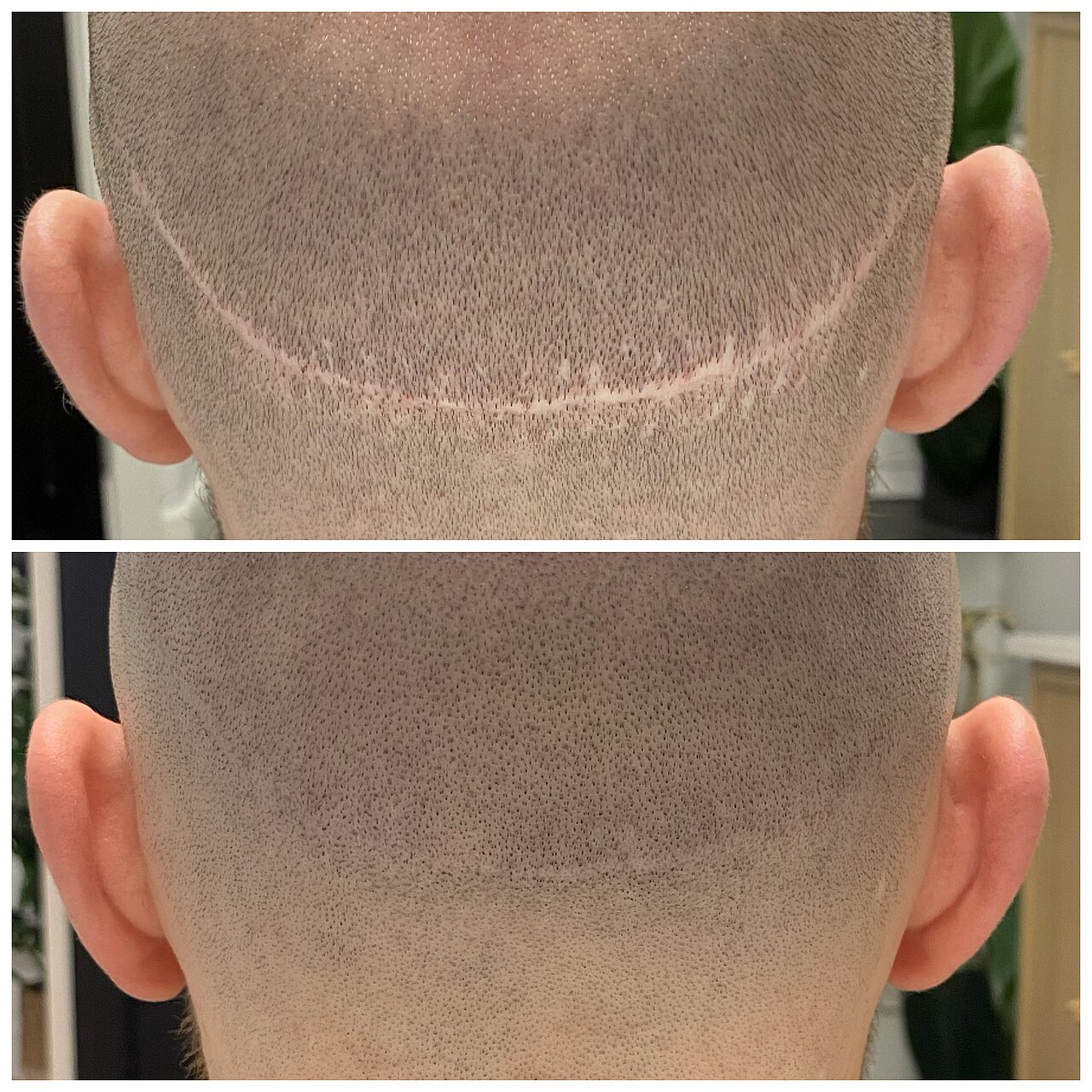
SMPWIKI101 · CC BY-SA 4.0
Hair loss, called alopecia or baldness, is the loss of hair from the scalp or body, usually involving at least the head. It can range from a small patch to complete body hair loss, and typically does not involve inflammation or scarring. For some people, it leads to psychological distress. The main types are male- or female-pattern hair loss, alopecia areata, and a temporary thinning called telogen effluvium. Male-pattern hair loss results from genetics combined with male hormones; female-pattern hair loss has an unclear cause; alopecia areata is an autoimmune condition; and telogen effluvium often follows a physically or psychologically stressful event, such as pregnancy.
Less common causes of hair loss without inflammation or scarring include pulling out hair, certain medications like chemotherapy, HIV/AIDS, hypothyroidism, and malnutrition from deficiencies in vitamin B12 or iron. Causes that do involve scarring or inflammation include fungal infections, lupus erythematosus, radiation therapy, and sarcoidosis. Diagnosis is partly based on which areas are affected. For pattern hair loss, treatment may simply mean accepting the condition, which can include shaving the head. Options like minoxidil, finasteride, or hair transplant surgery can be tried. Alopecia areata can be treated with steroid injections into the affected area, but these need frequent repetition. Hair loss is common: by age 50, about half of men and a quarter of women experience pattern hair loss, and about 2% of people develop alopecia areata at some point.
Baldness is the partial or complete lack of hair growth, part of the broader topic of hair thinning. Its degree and pattern vary, but the most common cause is androgenic hair loss, also called alopecia androgenetica or alopecia seborrheica, the last term used mainly in Europe. Hypotrichosis is a condition of abnormal hair patterns, mostly loss or reduction, often involving vellus hair growing where terminal hair should be. Hair growth is normal after birth, but soon the hair sheds and is replaced by sparse, abnormal hair that is fine, short, brittle, and may lack pigment. Baldness may appear by age 25.
Symptoms of hair loss include patches of hair loss, often circular, along with dandruff, skin lesions, and scarring. Alopecia areata typically shows in unusual areas like the eyebrows, back of the head, or above the ears, where male-pattern baldness usually does not occur. In male-pattern hair loss, thinning starts at the temples and crown, with hair thinning or falling out. Female-pattern hair loss occurs at the frontal and parietal areas. People have between 100,000 and 150,000 scalp hairs, and normally lose about 100 per day. To maintain volume, hair must be replaced at the same rate. Early signs include more hair in the brush or basin after shampooing, or a wider parting or thinning crown. A substantially blemished face, back, and limbs may point to cystic acne, the most severe form of acne, which arises from the same hormonal imbalances that cause hair loss and is linked to dihydrotestosterone production.
The psychology of hair thinning is complex. Hair is seen as essential to identity, especially for women, who often associate it with femininity and attractiveness, while men link a full head of hair with youth and vigor. People experiencing thinning may find their appearance conflicts with their self-image and worry they look older or less attractive. Psychological problems, if present, are usually worst at the onset. Two meta-analyses on androgenetic alopecia found average psychosocial distress levels to be moderate, not severe, and that balding men were no more likely to have depression or low self-esteem than non-balding men. Hair loss from chemotherapy can change self-concept and body image, and for most patients, body image does not return to its previous state even after hair regrows. Such patients may have trouble expressing feelings (alexithymia) and may avoid family conflicts; family therapy can help.
Causes of hair loss, though not fully understood, are many. Pattern hair loss in men is due to genetics and dihydrotestosterone; in women, the cause is unclear. Infections include dissecting cellulitis of the scalp, fungal infections like tinea capitis, folliculitis from various causes, Demodex folliculitis (caused by a mite that feeds on sebum and can cause thinning, especially on oily scalps), and secondary syphilis. Temporary or permanent hair loss can be caused by medications for blood pressure, diabetes, heart disease, and cholesterol.
- field
- Dermatology and trichology
- known_for
- Common types include male- or female-pattern hair loss, alopecia areata, and telogen effluvium
- prevalence_men_by_age_50
- about half
- prevalence_women_by_age_50
- a quarter
- alopecia_areata_lifetime_prevalence
- about 2%
Lore & Background
The cause of male-pattern hair loss is a combination of genetics and male hormones; the cause of female pattern hair loss is unclear; the cause of alopecia areata is autoimmune; and the cause of telogen effluvium is typically a physically or psychologically stressful event. Telogen effluvium is very common following pregnancy. Less common causes of hair loss without inflammation or scarring include the pulling out of hair, certain medications including chemotherapy, HIV/AIDS, hypothyroidism, and malnutrition including vitamin B12 and iron deficiencies. Causes of hair loss that occurs with scarring or inflammation include fungal infection, lupus erythematosus, radiation therapy, and sarcoidosis.
Reader's Guide
Hair loss is a widespread experience, with pattern hair loss by age 50 affecting about half of men and a quarter of women, and about 2% of people developing alopecia areata at some point. Treatment of pattern hair loss may simply involve accepting the condition, which can also include shaving one's head. Interventions that can be tried include the medication minoxidil (or finasteride) and hair transplant surgery. Alopecia areata may be treated by steroid injections in the affected area, but these need to be frequently repeated to be effective. Hair loss can cause psychological distress, with two meta analyses on androgenetic alopecia revealing psychosocial distress levels to be moderate, on average, rather than severe, and that balding men were no more likely to have depression or self esteem issues compared to non-balding men. Hair loss induced by cancer chemotherapy has been reported to cause changes in self-concept and body image, with body image not returning to the previous state after regrowth of hair for a majority of patients.
Did You Know?
- Telogen effluvium is very common following pregnancy, with hair loss often occurring approximately three months after giving birth.
- Male pattern hair loss is believed to be due to a combination of genetics and the male hormone dihydrotestosterone.
- Alopecia areata may be treated by steroid injections in the affected area, but these need to be frequently repeated to be effective.
Gallery
Frequently Asked Questions
Who is Hair loss?
Hair loss, also called alopecia or baldness, is a condition in which a person sheds hair from the scalp or other body areas, ranging from a small patch to the entire head. It generally does not come with inflammation or scarring, and it can affect anyone regardless of sex.
What are Hair loss's main 'subclasses' or forms?
The three most commonly discussed types are male- and female-pattern baldness, alopecia areata (a patchy, autoimmune-driven form), and telogen effluvium, a diffuse thinning often triggered by stress or illness. Fans of the topic usually sort discussions around these three categories.
How widespread is Hair loss in the 'universe'?
By the time they reach 50, roughly half of men and about a quarter of women will experience noticeable thinning. Alopecia areata specifically has a lifetime prevalence of around 2 percent of the population.
Why is Hair loss important to the fan community?
It sits at the intersection of dermatology and trichology, making it one of the most searched personal-care topics. Beyond the medical side, many people report that the condition causes real psychological distress, which keeps it a central and emotionally resonant subject.
How does Hair loss's story typically end?
Outcomes depend heavily on the subtype: some cases of telogen effluvium reverse on their own once the trigger is removed, while pattern baldness is usually managed with topical or oral medications and, in select cases, transplant surgery. A full cure is not guaranteed for every form, so long-term management is often the realistic endpoint.
More in Personal Care And Hygiene 1-20
Spotted an error? Know more?
This is a living reference — every entry is fact-audited, and reader corrections feed straight into our audit queue. Suggest an edit · See this site's audit record