Superheavy element
Synthetic radioactive elements beyond atomic number 103.
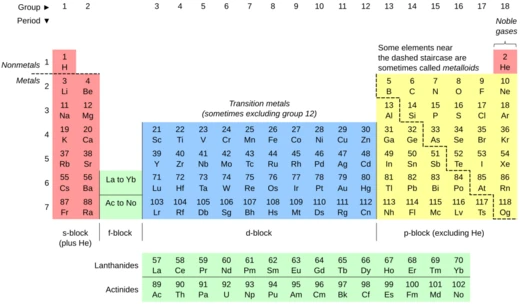
Superheavy elements, also known as transactinide elements, transactinides, or super-heavies, are chemical elements with an atomic number of at least 104, placing them beyond the actinides in the periodic table. They are radioactive, synthetically produced in laboratories, and no macroscopic sample has ever been created. Their study extends the periodic table and tests nuclear stability models, particularly the concept of an island of stability.
- Atomic number range
- 104 and above
- Preceded by
- Actinides (lawrencium, atomic number 103)
- Common property
- Radioactive and synthetic
- Naming basis
- Physicists, chemists, or important locations involved in synthesis
- Minimum lifetime for recognition
- 10 seconds (IUPAC definition)
Lore & Background
Glenn T. Seaborg first proposed the actinide concept, leading to acceptance of the actinide series, and also proposed a transactinide series from element 104 to 121 and a superactinide series approximately spanning elements 122 to 153 (later work suggests the superactinide series may end at element 157). The transactinide seaborgium was named in his honor. Superheavy elements are all named after physicists, chemists, or important locations involved in their synthesis. Superheavy nuclei are created by fusing two nuclei of unequal size in a nuclear reaction. The heavier nucleus forms a target bombarded by a beam of lighter nuclei accelerated to speeds up to one-tenth the speed of light. The fusion probability is expressed as a cross section. The resulting compound nucleus is excited and may eject neutrons or emit gamma rays to become more stable, typically within 10⁻¹⁶ seconds. Detection requires the nucleus to survive about 10⁻⁶ seconds to reach a detector. Superheavy nuclei predominantly decay via alpha decay or spontaneous fission. The liquid drop model suggested spontaneous fission would occur nearly instantly for nuclei with about 280 nucleons, but the nuclear shell model predicted an island of stability near 300 nucleons. Experiments on lighter superheavies and those closer to the predicted island have shown greater stability against spontaneous fission than anticipated, highlighting the importance of shell effects.
Reader's Guide
Superheavy elements represent the frontier of nuclear chemistry and physics, extending the periodic table beyond naturally occurring elements. Their synthesis requires advanced particle accelerators and sensitive detection techniques, as they exist only for fractions of a second. The IUPAC definition that an element exists if its nucleus lasts longer than 10⁻¹⁴ seconds—the time to form an electron cloud—provides a practical threshold for discovery. The element naming controversy for elements 102–109 led to the temporary use of systematic names for many years after discovery confirmation. The concept of an island of stability, where superheavy nuclei with around 300 nucleons might have significantly longer half-lives, drives ongoing research. Discoveries have shown that shell effects provide greater stability than early models predicted, particularly for deformed nuclei intermediate between actinides and the expected island. These elements also test fundamental understanding of nuclear forces, as electrostatic repulsion grows with the square of atomic number while strong interaction binding increases linearly, making superheavies increasingly prone to spontaneous fission. Each new superheavy element adds a row or block to the periodic table and deepens knowledge of nuclear structure.
Did You Know?
- Superheavy elements are defined as those with atomic number at least 104, beyond the actinide lawrencium (103).
- Glenn T. Seaborg proposed both the actinide concept and a transactinide series from element 104 to 121.
- The IUPAC definition requires a superheavy nucleus to last longer than 10 seconds to be recognized as an element.
- All known superheavies except rutherfordium, dubnium, and possibly lawrencium have half-lives of minutes or less.
More in Periodic Table & Elements 1-21
Spotted an error? Know more?
Reader corrections go straight into our review queue. Suggest an edit · How this site is sourced