Rutherfordium
Synthetic element named after physicist Ernest Rutherford.
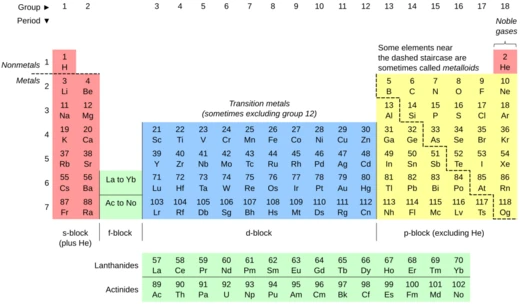
Rutherfordium, a synthetic element with the symbol Rf and atomic number 104, is named for physicist Ernest Rutherford. It is not found naturally and must be created in a particle accelerator. This radioactive element’s most stable known isotope, 267Rf, has a half-life of roughly 48 minutes. On the periodic table, it sits as a d-block element in period 7 and group 4, making it the second of the fourth-row transition elements. Chemical studies have shown that rutherfordium acts as the heavier counterpart to hafnium within group 4, though its chemical properties are only partially understood. While some calculations predicted significant differences due to relativistic effects, experiments indicate its behavior aligns well with other group 4 elements.
The element was first produced in small quantities during the 1960s at the Joint Institute for Nuclear Research in the Soviet Union and at Lawrence Berkeley National Laboratory in California. A dispute over which team first discovered it led to a naming controversy. The Soviet scientists proposed the name kurchatovium (Ku) after Igor Kurchatov, while the Americans suggested rutherfordium (Rf) after Ernest Rutherford. In 1992, the IUPAC/IUPAP Transfermium Working Group concluded that both teams had provided valid evidence for synthesis in 1969 and recommended shared credit. The American group strongly objected, arguing that the Soviet claims had shifted over time and that the working group had overemphasized questionable chemistry experiments. After further debate, the International Union of Pure and Applied Chemistry (IUPAC) officially adopted rutherfordium as the element’s name in 1997.
- Symbol
- Rf
- Atomic number
- 104
- Element category
- synthetic
- Group
- 4
- Period
- 7
- Most stable isotope
- 267Rf
- Half life of most stable isotope
- 48 minutes
Lore & Background
Rutherfordium was reportedly first detected in 1964 at the Joint Institute for Nuclear Research at Dubna (Soviet Union at the time). Researchers there bombarded a 242Pu target with 22Ne ions; a spontaneous fission activity with half-life 0.3 ± 0.1 seconds was detected and assigned to 260Rf. Later work found no isotope of element 104 with this half-life, so that this assignment must be considered incorrect. In 1966–1969, the experiment was repeated, and the team identified spontaneous fission activity contained within a volatile chloride portraying eka-hafnium properties.
In 1969, researchers at University of California, Berkeley conclusively synthesized the element by bombarding a 249Cf target with 12C ions and measured the alpha decay of 257Rf, correlated with the daughter decay of 253No. They were unable to confirm the 0.3-second half-life for 260Rf, and instead found a 10–30 millisecond half-life for this isotope, agreeing with the modern value of 21 milliseconds. In 1970, the American team chemically identified element 104 using the ion-exchange separation method, proving it to be a group 4 element and the heavier homologue of hafnium.
Priority of discovery and hence the name of the element was disputed between Soviet and American scientists. The Soviets suggested the name kurchatovium (Ku) in honor of Igor Kurchatov; the Americans proposed rutherfordium (Rf) to honor Ernest Rutherford. In 1992, the IUPAC/IUPAP Transfermium Working Group assessed the claims and concluded that credit should be shared between the two groups. In 1997, IUPAC established rutherfordium as the official name of the element.
Reader's Guide
Rutherfordium is significant as a synthetic element that extends the periodic table into the transactinide region. Its discovery was marked by a naming controversy between Soviet and American scientists, reflecting Cold War competition in nuclear science. The element's chemical properties have been characterized only partly, but experiments confirm it behaves as the heavier homolog to hafnium in group 4, despite some calculations indicating possible differences due to relativistic effects. Rutherfordium has no stable or naturally occurring isotopes; seventeen different radioactive isotopes have been synthesized, with half-lives ranging from under one microsecond to about 48 minutes for the most stable isotope, 267Rf. The element can only be produced in particle accelerators, and its study has contributed to understanding nuclear stability and the chemistry of heavy elements. The IUPAC resolution of the naming dispute in 1997, adopting rutherfordium for element 104 and dubnium for element 105, established the current naming standard for these elements.
Did You Know?
- Rutherfordium is named after physicist Ernest Rutherford, known as the 'father' of nuclear physics.
- The most stable known isotope of rutherfordium, 267Rf, has a half-life of about 48 minutes.
- The naming controversy between Soviet and American scientists was resolved by IUPAC in 1997, establishing rutherfordium as the official name.
More in Periodic Table & Elements 1-21
Spotted an error? Know more?
Reader corrections go straight into our review queue. Suggest an edit · How this site is sourced