Lutetium
A rare earth element discovered amid priority disputes.

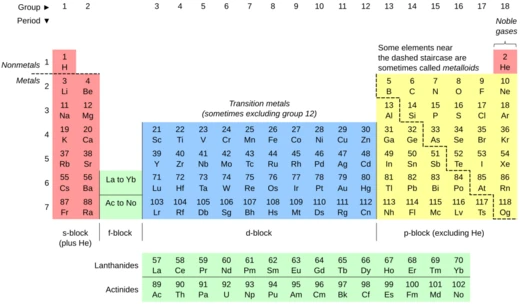
Lutetium is a silvery white metal with the symbol Lu and atomic number 71. It resists corrosion in dry air but tarnishes in moist air. As the final member of the lanthanide series, it is traditionally grouped with the rare earth elements, though it can also be considered the first transition metal of the sixth period.
The element was discovered independently in 1907 by French scientist Georges Urbain, Austrian mineralogist Baron Carl Auer von Welsbach, and American chemist Charles James. All three found lutetium as an impurity in ytterbium. A priority dispute erupted between Urbain and Welsbach, each accusing the other of basing results on the other’s published work. Urbain published first, so he won the naming rights, choosing “lutecium” after the Latin name for Paris, Lutetia. The spelling was changed to lutetium in 1949. Priority was officially granted to Urbain in 1909, and his names became official, though German scientists used Welsbach’s proposed name “cassiopeium” (later “cassiopium”) into the 1950s.
Lutetium is not especially abundant, though it is more common in Earth’s crust than silver. It has few specific uses. The radioisotope lutetium-176, which makes up 2.6% of natural lutetium and has a half-life of about 38 billion years, is used to date minerals and meteorites. Lutetium typically occurs with yttrium and is occasionally used in metal alloys and as a catalyst. The compound 177Lu-DOTA-TATE is employed in radionuclide therapy for neuroendocrine tumors. Lutetium has the highest Brinell hardness of any lanthanide, ranging from 890 to 1300 MPa.
A lutetium atom has 71 electrons arranged as [Xe] 4f¹⁴ 5d¹ 6s². It almost always appears in the +3 oxidation state, having lost its two 6s electrons and the single 5d electron. Because of lanthanide contraction, the lutetium atom is the smallest among the lanthanides, giving it the highest density, melting point, and hardness in the series. Its 4f orbitals are highly stabilized, so only the 5d and 6s orbitals participate in chemical reactions and bonding. This leads some to classify it as a d-block element and a transition metal like scandium and yttrium, rather than a lanthanide.
Lutetium compounds nearly always feature the +3 oxidation state. Aqueous solutions of most lutetium salts are colorless and form white crystalline solids when dried; the iodide is a brown exception. Soluble salts like nitrate, sulfate, and acetate form hydrates upon crystallization. The oxide, hydroxide, fluoride, carbonate, phosphate, and oxalate are insoluble in water. Lutetium metal is slightly unstable in air at standard conditions but burns readily at 150 °C to form lutetium oxide, which absorbs water and carbon dioxide and can be used to remove those vapors from closed atmospheres. The metal reacts slowly with cold water and quickly with hot water, producing lutetium hydroxide. It reacts with the four lightest halogens to form trihalides; except for the fluoride, these are water-soluble. Lutetium dissolves easily in weak acids and dilute sulfuric acid, yielding colorless lutetium ions coordinated by seven to nine water molecules, averaging [Lu(H₂O)₈.₂]³⁺.
Naturally occurring lutetium consists of two isotopes: lutetium-175 (stable) and lutetium-176 (radioactive). Lutetium-176 decays via beta decay with a half-life of 3.70×10¹⁰ years and makes up about 2.6% of natural lutetium, making the element monoisotopic. Forty synthetic radioisotopes have been characterized, with mass numbers from 149 to 188. The most stable synthetic isotopes are lutetium-174 (half-life 3.31 years) and lutetium-173 (half-life 1.37 years). All other radioactive isotopes have half-lives under 9 days, most under half an hour. Isotopes lighter than lutetium-175 decay mainly by electron capture (producing ytterbium isotopes), with some alpha and positron emission; heavier isotopes decay primarily by beta decay, producing hafnium isotopes. Experiments at the Facility for Rare Isotope Beams have reported lutetium-190 from fragments of platinum-198 colliding with a carbon target. The element also has 43 known nuclear isomers; the most stable are lutetium-177m³ (half-life 160.4 days) and lutetium-174m (half-life 142 days), which outlast the ground states of all lutetium isotopes except 173 through 176.
Three scientists discovered lutetium: Urbain, Welsbach, and James. They found it as an impurity in ytterbia, which Swiss chemist Jean Charles Galissard de Marignac had believed to be pure ytterbium. Urbain published first, then Welsbach; James was about to publish when he learned of Urbain’s work and withdrew his claim. Though he stayed out of the priority dispute, James worked on a much larger scale and at the time possessed the largest supply of lutetium. Urbain and Welsbach proposed different names. Urbain chose neoytterbium for ytterbium.
- symbol
- Lu
- atomic_number
- 71
- discoverers
- Georges Urbain, Carl Auer von Welsbach, Charles James
- category
- Lanthanide / Transition metal
Lore & Background
Lutetium is a silvery white metal that resists corrosion in dry air but tarnishes in moist conditions. It is the last element in the lanthanide series and is traditionally grouped with the rare earth elements, though it can also be considered the first element of the sixth-period transition metals. The lutetium atom is the smallest among the lanthanides due to lanthanide contraction, resulting in the highest density, melting point, and hardness of the series; its Brinell hardness ranges from 890 to 1300 MPa. Its electron configuration is [Xe] 4f¹⁴ 5d¹ 6s², and it almost always exhibits a +3 oxidation state, with its 4f orbitals highly stabilized so that only the 5d and 6s orbitals participate in chemical bonding. This leads some to classify it as a d-block transition metal rather than an f-block lanthanide. Lutetium metal is slightly unstable in air and burns readily at 150 °C to form lutetium oxide, which absorbs water and carbon dioxide. It reacts slowly with cold water and rapidly with hot water to produce lutetium hydroxide, and it dissolves in weak acids and dilute sulfuric acid, yielding colorless solutions. Its compounds are typically colorless and form white crystals, except for the brown iodide. The oxide, hydroxide, fluoride, carbonate, phosphate, and oxalate are insoluble in water, while the nitrate, sulfate, and acetate are soluble and form hydrates. Lutetium occurs naturally as two isotopes: stable lutetium-175 and radioactive lutetium-176, which has a half-life of about 38 billion years and constitutes 2.6% of natural lutetium. This radioisotope is used to date minerals and meteorites. Lutetium is not particularly abundant but is more common than silver in the Earth’s crust. It is often found with yttrium and has few specific uses, including in metal alloys, as a catalyst, and in the radionuclide therapy agent Lu-DOTA-TATE for neuroendocrine tumors.
Reader's Guide
Lutetium is not particularly abundant but is more common than silver in the Earth's crust. Lutetium is also used in metal alloys and as a catalyst. Its physical properties are notable: it has the smallest atom among lanthanides due to lanthanide contraction, and the highest density, melting point, and hardness. Chemically, lutetium almost always exhibits the +3 oxidation state, and its compounds are typically colorless. The element's history reflects early 20th-century scientific rivalries and the evolving standards of element naming, with the name lutetium ultimately prevailing despite challenges.
Frequently Asked Questions
Who is Lutetium?
Lutetium is a silvery-white metal carrying the symbol Lu and atomic number 71, sitting at the very tail end of the lanthanide row. It is traditionally grouped with the rare earth elements and is the heaviest member of that family.
How does Lutetium's story end?
As element 71, Lutetium closes out the entire lanthanide series, serving as the final act before the table moves into the heavier transition metals. Its position marks the end of the rare-earth family in the periodic layout.
Why is Lutetium important?
Being the hardest and heaviest lanthanide, Lutetium plays a niche but valuable role in specialized alloys and optical applications. Its rarity and terminal position make it a key reference point for understanding the full scope of the rare-earth family.
More in Periodic Table & Elements 1-21
Spotted an error? Know more?
This is a living reference — every entry is fact-audited, and reader corrections feed straight into our audit queue. Suggest an edit · See this site's audit record