Livermorium
Synthetic superheavy element, named after Lawrence Livermore National Laboratory.

Livermorium is a synthetic element with the symbol Lv and atomic number 116. It is highly radioactive and exists only in laboratory settings, with no natural occurrence; as of 2020, roughly 35 atoms had been produced. Its name honors the Lawrence Livermore National Laboratory in California, which worked with Russia’s Joint Institute for Nuclear Research (JINR) in Dubna to discover the element through experiments from 2000 to 2006. The lab itself takes its name from Livermore, California, which was named after rancher Robert Livermore. The International Union of Pure and Applied Chemistry (IUPAC) officially added livermorium to the periodic table on June 1, 2011, and approved its name on May 30, 2012. Six isotopes are known, with mass numbers from 288 to 293; the most stable is livermorium-293, which has a half-life of about 80 milliseconds. A seventh possible isotope, with mass number 294, has been reported but not yet confirmed.
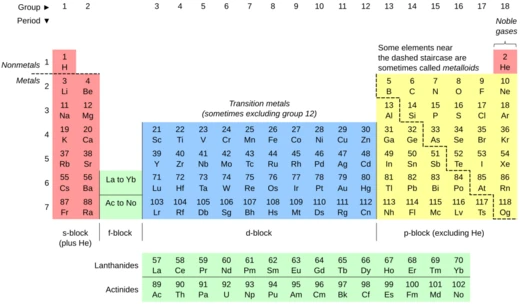
In the periodic table, livermorium sits in the p-block as a transactinide element. It belongs to period 7 and group 16, making it the heaviest chalcogen, though it has not been confirmed to behave like its lighter relative polonium. Calculations suggest it shares some traits with oxygen, sulfur, selenium, tellurium, and polonium, and it is expected to be a post-transition metal, but it should also show several significant differences from them.
The first search for element 116 occurred in 1977, when Ken Hulet’s team at Lawrence Livermore National Laboratory tried to produce it by bombarding curium-248 with calcium-48, but found no atoms. Yuri Oganessian’s group at JINR’s Flerov Laboratory of Nuclear Reactions attempted the same reaction in 1978, also without success. In 1985, a joint experiment between Berkeley and Peter Armbruster’s team at GSI in Germany again yielded nothing, setting a cross-section limit of 10–100 picobarns. Despite these failures, work with calcium-48 beams continued at Dubna. Researchers developed a superheavy element separator in 1989, began searching for target materials and collaborating with LLNL in 1990, produced more intense calcium-48 beams in 1996, and ran long-term experiments with three orders of magnitude higher sensitivity in the early 1990s. This effort directly led to the creation of new isotopes of elements 112 through 118, and the discovery of the five heaviest elements: flerovium, moscovium, livermorium, tennessine, and oganesson.
In 1995, an international team led by Sigurd Hofmann at GSI in Darmstadt, Germany, tried to synthesize element 116 via a radiative capture reaction—where the compound nucleus releases energy purely through gamma emission without neutron evaporation—using a lead-208 target and selenium-82 projectiles. No atoms of element 116 were identified.
In late 1998, Polish physicist Robert Smolańczuk published calculations on fusing atomic nuclei to create superheavy elements, including 118 and 116. His work suggested that these elements might be made by fusing lead with krypton under carefully controlled conditions. In 1999, researchers at Lawrence Berkeley National Laboratory used these predictions and announced the discovery of elements 118 and 116 in a paper in *Physical Review Letters*, with results soon reported in *Science*. They claimed to have performed the reaction krypton-86 plus lead-208, producing oganesson-293 plus a neutron, which then decayed via alpha emission to livermorium-289. The following year, they retracted the claim after other labs could not replicate the results, and Berkeley itself also failed to do so. In June 2002, the lab’s director stated that the original discovery claim was based on data fabricated by lead author Victor Ninov. The isotope livermorium-289 was finally confirmed in 2024 at JINR.
Livermorium was first successfully synthesized on July 19, 2000, at Dubna. Scientists bombarded a curium-248 target with accelerated calcium-48 ions, producing a single atom that decayed by alpha emission with an energy of 10.54 MeV into an isotope of flerovium. The results were published in December 2000. The reaction produced livermorium-293 after three neutron emissions, which then decayed to flerovium-289. The daughter flerovium isotope matched properties of a flerovium isotope first made in June 1999, originally assigned as flerovium-288, which implied the parent livermorium was livermorium-292. Later work in December 2002 showed that the flerovium isotope was actually flerovium-289, so the livermorium atom was reassigned as livermorium-293.
During a second experiment from April to May 2001, Dubna reported two more livermorium atoms. In the same run, they also detected a decay chain matching the first observed flerovium decay from December 1998, which had been assigned to flerovium-289. No flerovium isotope with those same properties has ever been seen again, even in repeats of the same reaction. It was later determined that flerovium-289 has different decay characteristics, and the 1998 atom may have been its nuclear isomer, flerovium-289m. The observation of this isomer in the 2001 experiments could indicate the formation of a parent isomer of livermorium, livermorium-293m, or a rare, previously unseen decay branch.
- symbol
- Lv
- discoverers
- Lawrence Livermore National Laboratory and Joint Institute for Nuclear Research
- element_category
- p-block transactinide, heaviest chalcogen
Verified Timeline
Lore & Background
Livermorium was first synthesized on July 19, 2000, when scientists at Dubna (JINR) bombarded a curium-248 target with accelerated calcium-48 ions. A single atom was detected, decaying by alpha emission with decay energy 10.54 MeV to an isotope of flerovium. The initial assignment of the isotope was later revised from 292Lv to 293Lv after further analysis in December 2002. The name derives from the Lawrence Livermore National Laboratory, which in turn is named after the city of Livermore, California, and ultimately rancher Robert Livermore. The naming ceremony for flerovium and livermorium was held in Moscow on October 24, 2012. Earlier, in 1999, researchers at Lawrence Berkeley National Laboratory announced the discovery of elements 118 and 116, but published a retraction the following year after the results could not be duplicated and data was found to have been fabricated by principal author Victor Ninov.
Reader's Guide
Livermorium is significant as one of the heaviest elements on the periodic table, representing the frontier of superheavy element research. Its synthesis required decades of experimental refinement, including the development of intense calcium-48 beams and advanced separators at the Joint Institute for Nuclear Research. The first search for element 116, using the reaction between 248Cm and 48Ca, was performed in 1977 by Ken Hulet and his team at the Lawrence Livermore National Laboratory, but they were unable to detect any atoms. Yuri Oganessian and his team at the Flerov Laboratory of Nuclear Reactions in JINR subsequently attempted the reaction in 1978 and met failure. Work on reactions with 48Ca continued at Dubna, with a superheavy element separator being developed in 1989, a search for target materials and starting of collaborations with LLNL beginning in 1990, production of more intense 48Ca beams beginning in 1996, and preparations for long-term experiments with 3 orders of magnitude higher sensitivity being performed in the early 1990s. This work led directly to the production of new isotopes of elements 112 to 118 in the reactions of 48Ca with actinide targets and the discovery of the 5 heaviest elements on the periodic table: flerovium, moscovium, livermorium, tennessine, and oganesson. As the heaviest chalcogen in group 16, livermorium is calculated to have some similar properties to its lighter homologues (oxygen, sulfur, selenium, tellurium, and polonium) but also major differences. Its naming after the Lawrence Livermore National Laboratory reflects the international collaboration between the United States and Russia that led to its discovery.
Did You Know?
- About 35 livermorium atoms had been made as of 2020.
- The longest-lived isotope is livermorium-293 with a half-life of about 80 milliseconds.
- The first search for element 116 in 1977 by Ken Hulet's team at LLNL was unsuccessful.
- The name livermorium was adopted on May 30, 2012, and the naming ceremony was held in Moscow on October 24, 2012.
- A seventh possible isotope with mass number 294 has been reported but not yet confirmed.
Frequently Asked Questions
What is Livermorium's role in the periodic table?
As a p-block transactinide, Livermorium occupies the far-right corner of the superheavy-element region and holds the title of heaviest chalcogen. Its extreme radioactivity means it exists only as fleeting atomic traces rather than any stable bulk material.
Why does Livermorium matter to element fans?
It marks the current frontier of human-made matter, pushing the periodic table to its synthetic limits as a period-7 element. Its existence demonstrates that nuclear physics can still forge entirely new elements, even though each one decays within moments of creation.
More in Periodic Table & Elements 1-21
Spotted an error? Know more?
This is a living reference — every entry is fact-audited, and reader corrections feed straight into our audit queue. Suggest an edit · See this site's audit record