Lawrencium
Synthetic actinide element named after cyclotron inventor Ernest Lawrence.

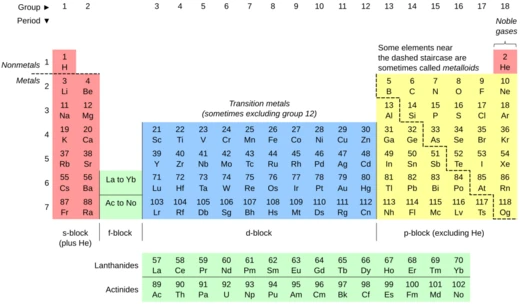
Lawrencium (symbol Lr, formerly Lw) is a synthetic, radioactive metal and the element with atomic number 103. It was named for Ernest Lawrence, who invented the cyclotron, a machine that helped create many artificial radioactive elements. As the eleventh transuranium element, the third transfermium, and the final member of the actinide series, lawrencium can only be made in particle accelerators by smashing lighter elements with charged particles—a requirement for all elements above atomic number 100. Fourteen isotopes are known; the most stable, 266Lr, has a half-life of 11 hours, but the shorter-lived 260Lr (half-life 2.7 minutes) is more commonly used in chemistry because it can be produced in larger amounts. Chemical studies show lawrencium acts as a heavier version of lutetium on the periodic table and is trivalent, meaning it could also be considered the first transition metal of the 7th period. Its electron configuration is unusual for its position, with an s²p arrangement instead of the s²d configuration seen in lutetium, though this oddity does not change its chemical behavior.
- symbol
- Lr (formerly Lw)
- element_type
- synthetic, radioactive metal
- series
- actinide series
- named_after
- Ernest Lawrence
- most_stable_isotope
- 266Lr (half-life 11 hours)
- common_isotope_for_chemistry
- 260Lr (half-life 2.7 minutes)
Verified Timeline
Lore & Background
The first important work on element 103 was done at Berkeley by the nuclear-physics team of Albert Ghiorso, Torbjørn Sikkeland, Almon Larsh, Robert M. Latimer, and their co-workers on February 14, 1961. The first atoms of lawrencium were reportedly made by bombarding a three-milligram target consisting of three isotopes of californium with boron-10 and boron-11 nuclei from the Heavy Ion Linear Accelerator (HILAC). The Berkeley team reported that the isotope 257Lr was detected in this manner, and that it decayed by emitting an 8.6 MeV alpha particle with a half-life of 8±2 s. This identification was later corrected to 258Lr, as later work proved that 257Lr did not have the properties detected, but 258Lr did. The Berkeley team proposed the name 'lawrencium' with symbol 'Lw', after Ernest Lawrence, inventor of the cyclotron. The IUPAC Commission on Nomenclature of Inorganic Chemistry accepted the name, but changed the symbol to 'Lr'.
Reader's Guide
Lawrencium's discovery was disputed between Soviet and American scientists. In 1971, the IUPAC granted the discovery of lawrencium to the Lawrence Berkeley Laboratory, even though they did not have ideal data for the element's existence. But in 1992, the IUPAC Transfermium Working Group (TWG) officially recognized the nuclear physics teams at Dubna and Berkeley as co-discoverers of lawrencium, concluding that while the 1961 Berkeley experiments were an important step to lawrencium's discovery, they were not yet fully convincing; and while the 1965, 1968, and 1970 Dubna experiments came very close to the needed level of confidence taken together, only the 1971 Berkeley experiments, which clarified and confirmed previous observations, finally resulted in complete confidence in the discovery of element 103. Because the name 'lawrencium' had been in use for a long time by this point, it was retained by IUPAC, and in August 1997, the International Union of Pure and Applied Chemistry (IUPAC) ratified the name lawrencium and the symbol 'Lr' during a meeting in Geneva. Chemistry experiments confirm that lawrencium behaves as a heavier homolog to lutetium in the periodic table, and is trivalent. Its electron configuration is anomalous for its position in the periodic table, having an s2p configuration instead of the s2d configuration of its homolog lutetium. However, this does not appear to affect lawrencium's chemistry. Lawrencium is expected to be a solid under normal conditions and have a hexagonal close-packed crystal structure (c/a = 1.58), similar to its lighter congener lutetium, though this is not yet known experimentally. It is the last actinide and is considered a group 3 element, along with scandium, yttrium, and lutetium, as its filled f-shell is expected to make it resemble the other 7th-period transition metals.
Did You Know?
- The most stable isotope of lawrencium is 266Lr with a half-life of 11 hours.
- The shorter-lived 260Lr (half-life 2.7 minutes) is most commonly used in chemistry because it can be produced on a larger scale.
- Lawrencium's electron configuration has an s2p configuration instead of the s2d configuration of its homolog lutetium.
- The Berkeley team initially reported the isotope 257Lr, but this was later corrected to 258Lr.
- In 1992, the IUPAC Transfermium Working Group officially recognized the nuclear physics teams at Dubna and Berkeley as co-discoverers of lawrencium.
Frequently Asked Questions
Who is Lawrencium named after?
Lawrencium honors Ernest Lawrence, the physicist who invented the cyclotron. His particle accelerator was instrumental in producing many of the artificial radioactive elements that follow the naturally occurring ones.
Where does Lawrencium sit on the periodic table?
It is the eleventh transuranium element and the third transfermium element. It also serves as the final member of the actinide series, closing out that row of heavy elements.
What is Lawrencium's most stable isotope?
The longest-lived isotope is 266Lr, which has a half-life of roughly eleven hours. Like all known isotopes of the element, it decays radioactively and cannot persist for any meaningful duration.
Why do periodic-table fans consider Lawrencium a milestone?
As the last actinide, it marks the boundary where the f-block ends and the next series of elements begins. Its discovery also showcased the cyclotron's power, tying the element's identity directly to the instrument that made it possible.
More in Periodic Table & Elements 1-21
Spotted an error? Know more?
This is a living reference — every entry is fact-audited, and reader corrections feed straight into our audit queue. Suggest an edit · See this site's audit record