Hassium
Synthetic superheavy element discovered via cold fusion.

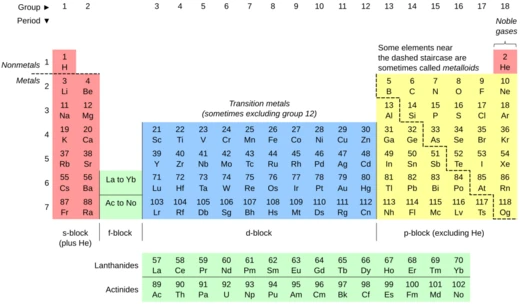
Hassium is a synthetic chemical element with the symbol Hs and atomic number 108. It is a highly radioactive superheavy element, produced in minuscule quantities in a laboratory by fusing heavy atomic nuclei with lighter ones. Its most stable known isotopes have half-lives of approximately ten seconds. One isotope of hassium possesses magic numbers of both protons and neutrons for deformed nuclei, which grants it enhanced stability against spontaneous fission. While natural occurrences of hassium have been theorized, none have ever been observed. On the periodic table, hassium is a transactinide element, belonging to period 7 and group 8, making it the sixth member of the 6d series of transition metals. Chemical experiments have confirmed that hassium behaves as a heavier counterpart to osmium, readily reacting with oxygen to form a volatile tetroxide. Although its chemical properties have only been partially characterized, they align well with those of other group 8 elements.
The discovery of hassium was a landmark achievement in the use of cold fusion, a technique where the fused nuclei are more similar in mass than in earlier methods. This approach relies on the greater stability of target nuclei, which lowers the excitation energy of the compound nucleus and reduces the number of neutrons ejected during synthesis, resulting in heavier, more stable products. The technique was first tested at the Joint Institute for Nuclear Research (JINR) in Dubna in 1974. JINR attempted to synthesize element 108 in 1978, 1983, and 1984; the 1984 experiment yielded a claim of production. Later that same year, a synthesis claim came from the Gesellschaft für Schwerionenforschung (GSI) in Darmstadt, West Germany. A 1993 report by the Transfermium Working Group concluded that the German claim was conclusive, while the Soviet one was not, assigning primary credit to the GSI team. In 1992, GSI formally proposed naming the element hassium after the German state of Hesse (Hassia in Latin), the location of their facility; this name was officially accepted in 1997.
- symbol
- Hs
- atomic_number
- 108
- most_stable_isotope_half_life
- about ten seconds
- group
- 8
- period
- 7
- discovery_credit
- Gesellschaft für Schwerionenforschung (GSI) in Darmstadt, Hesse, West Germany
Lore & Background
Hassium is a synthetic, highly radioactive element with the symbol Hs and atomic number 108. Its most stable known isotopes have half-lives of approximately ten seconds, though one isotope possesses magic numbers of protons and neutrons for deformed nuclei, granting it enhanced stability against spontaneous fission. As a superheavy element, it has only been produced in minuscule quantities in laboratories through the fusion of heavy nuclei with lighter ones; natural occurrences have been hypothesized but never observed. On the periodic table, hassium is a transactinide element belonging to period 7 and group 8, making it the sixth member of the 6d series of transition metals. Chemical experiments have shown that hassium behaves as the heavier homologue to osmium, readily reacting with oxygen to form a volatile tetroxide. While its chemical properties are only partially characterized, they align well with those of other group 8 elements. The element was discovered using cold fusion, a technique where the fused nuclei are more similar in mass, reducing excitation energy and neutron ejection, thereby creating heavier, more stable nuclei. This method was first tested in 1974 at the Joint Institute for Nuclear Research in Dubna, Russia, and later used in attempts to synthesize element 108 in 1978, 1983, and 1984. The 1984 experiment at Dubna produced a claim of synthesis, followed by a separate claim later that year from the Gesellschaft für Schwerionenforschung in Darmstadt, Germany. A 1993 report by the Transfermium Working Group concluded the Darmstadt findings were conclusive, and major credit was assigned to the German team. The element was named hassium after the German state of Hesse, home to the facility, with the name accepted in 1997.
Reader's Guide
Hassium is a synthetic, highly radioactive element with no natural occurrences confirmed, though its existence in nature has been hypothesized. Its most stable known isotopes have half-lives of about ten seconds, but one isotope, 270Hs, possesses magic numbers of protons and neutrons for deformed nuclei, granting it enhanced stability against spontaneous fission. Chemically, hassium has been only partly characterized, but experiments confirm it behaves as the heavier homologue to osmium, reacting readily with oxygen to form a volatile tetroxide, aligning with the chemistry of other group 8 elements. The element was discovered through cold fusion, a technique that uses target nuclei with magic numbers—such as lead-208—to reduce excitation energy and neutron ejection, producing heavier, more stable nuclei. This method was first tested at the Joint Institute for Nuclear Research (JINR) in Dubna, which attempted synthesis of element 108 in 1978, 1983, and 1984; the 1984 experiment yielded a claim of production. Later that year, the Gesellschaft für Schwerionenforschung (GSI) in Darmstadt also reported synthesis. The Transfermium Working Group, formed by IUPAC and IUPAP, concluded in 1993 that the GSI report was conclusive, assigning major credit to the German scientists. GSI proposed the name hassium after the German state of Hesse, home to the facility, and this name was accepted in 1997.
Did You Know?
- Hassium is named after the German state of Hesse, home to the GSI facility.
- Its most stable known isotopes have half-lives of about ten seconds.
- The isotope 270Hs has magic numbers of protons and neutrons for deformed nuclei, giving it greater stability against spontaneous fission.
- Chemistry experiments have confirmed that hassium reacts readily with oxygen to form a volatile tetroxide.
Frequently Asked Questions
What is Hassium?
Hassium is a synthetic superheavy element with symbol Hs and atomic number 108, occupying group 8 of period 7 on the periodic table. It has no natural occurrence and exists only in vanishingly small quantities produced inside a laboratory.
How was Hassium first made?
Scientists at the GSI heavy-ion research center in Darmstadt, Germany, created Hassium by accelerating lighter ions into a heavy target nucleus, a technique called cold fusion. That experiment provided the conclusive evidence the element needed to be formally recognized.
How long does Hassium last before decaying?
Its most stable isotope has a half-life of roughly ten seconds, after which it splits into lighter radioactive products. No one has ever accumulated a visible or weighable amount of the element.
Why is it called Hassium?
The name is derived from Hesse (German: Hessen), the German federal state where the GSI laboratory that confirmed the synthesis is located. It follows the convention of naming new elements after a place or scientist with a direct connection to the discovery.
Why is Hassium important to the periodic table?
Its confirmation proved that cold-fusion methods could reliably reach elements well beyond the actinide series, opening the door to the synthesis of even heavier superheavy elements. It also helped chemists begin mapping the expected electron configurations and group behavior of the 7th-period transition metals.
More in Periodic Table & Elements 1-21
Spotted an error? Know more?
This is a living reference — every entry is fact-audited, and reader corrections feed straight into our audit queue. Suggest an edit · See this site's audit record