Group 6 element
Group 6 transition metals with high melting points and strategic uses.

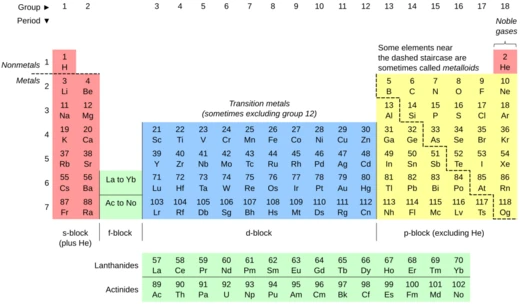
Group 6, as designated by IUPAC, consists of chromium, molybdenum, tungsten, and seaborgium, all of which are transition metals. The first three are also classified as refractory metals. The electron configurations of these elements do not follow a single pattern, as the two lighter members are exceptions to the Aufbau principle, though their outermost shells do relate to trends in chemical behavior. Historically, the group was known as group VIB in the older US (CAS) system and group VIA in the older European system; it should not be confused with the group formerly called VIA (US) or VIB (Europe), which is now group 16. Chromium was first identified in a mineral called Siberian red lead, later recognized as crocoite, and was isolated by Louis Nicolas Vauquelin in 1797 after he produced chromium trioxide and then reduced it with charcoal. Molybdenum was long mistaken for graphite or lead ore until Carl Wilhelm Scheele determined in 1778 that it was a distinct element; Peter Jacob Hjelm isolated the metal in 1781 using carbon and linseed oil. Tungsten was discovered by José and Fausto Elhuyar in 1783, who reduced tungstic acid with charcoal. Seaborgium was first synthesized in 1974 by a team at the Lawrence Berkeley Laboratory, who bombarded californium-249 with oxygen-18 ions. Chromium was initially used in paints and tanning salts, with major chromite deposits later found in the United States and Turkey. Molybdenum saw little use for a century after its isolation until a 1906 patent made it ductile, leading to applications in high-temperature furnaces and light bulb supports; a flotation process developed in 1913 improved ore recovery. Both molybdenum and tungsten gained strategic importance in World Wars I and II for armor plating and steel alloys, with Portugal’s wolframite deposits becoming a key political pressure point.
- members
- chromium, molybdenum, tungsten, seaborgium
- group_number
- 6 (IUPAC); old US system VIB; old European system VIA
- common_properties
- transition metals, refractory metals (Cr, Mo, W), high melting points
- notable_use
- chromium in electroplating and paints; molybdenum in steel alloys; tungsten in arms industry
Lore & Background
The members of Group 6 are chromium, molybdenum, tungsten, and seaborgium. All are transition metals, and the first three are classified as refractory metals. Their appearance varies: chromium is often found in compounds that produce vivid colors, such as the red of rubies, which is due to a small amount of chromium(III). Molybdenum’s principal ore, molybdenite, resembles graphite and can be used to blacken a surface or as a solid lubricant. Tungsten is isolated from ores like scheelite and wolframite. The group’s defining characteristic is that its electron configurations do not follow a unified trend, with the two lighter members being exceptions to the Aufbau principle; however, the outermost shells do correlate with trends in chemical behavior. The chemistry of seaborgium is not well established, so most known chemical behavior is based on the first three elements. Historically, chromium was first used in paints and tanning salts, with early sources including crocoite from Russia and later chromite deposits in the United States and Turkey. Molybdenum saw no industrial use for about a century after its isolation due to difficulties in extraction and metallurgy, but later became crucial in steel alloys, particularly for armor plating during World War I. Tungsten’s resistance to high temperatures made it strategically important for the arms industry, notably influencing political dealings during World War II due to Portugal’s wolframite deposits.
Reader's Guide
Group 6 elements have played significant roles in industrial and military history. Molybdenum saw limited use for a century after isolation due to scarcity and processing difficulties, but its steel alloys proved valuable in World War I for armor plating and as a tungsten substitute, and again in World War II. Tungsten's high-temperature resistance made it vital for the arms industry, and Portugal's wolframite deposits became a strategic pressure point during World War II. The group's chemistry shows that chromium, molybdenum, and tungsten form compounds in oxidation states from −2 to +6, with the stability of the +6 state increasing down the group. Their high melting points and ability to form volatile compounds in higher oxidation states distinguish them from other groups.
Frequently Asked Questions
Who are the members of Group 6 on the periodic table?
Group 6 (IUPAC numbering) consists of four transition metals: chromium, molybdenum, tungsten, and seaborgium. Three of the four—chromium, molybdenum, and tungsten—are specifically classified as refractory metals.
Why is Group 6 so important in real-world industry?
Chromium is a workhorse in electroplating and paint pigments, molybdenum is alloyed into high-strength steels, and tungsten is a key material in the arms and defense sector. Their refractory character makes them hard to substitute in high-temperature applications.
What was Group 6 called under the old naming conventions?
Before IUPAC standardized the numbering, American chemists referred to the group as VIB while European chemists used VIA. Today both simply call it Group 6.
More in Periodic Table & Elements 1-21
Spotted an error? Know more?
This is a living reference — every entry is fact-audited, and reader corrections feed straight into our audit queue. Suggest an edit · See this site's audit record