Ghost pepper
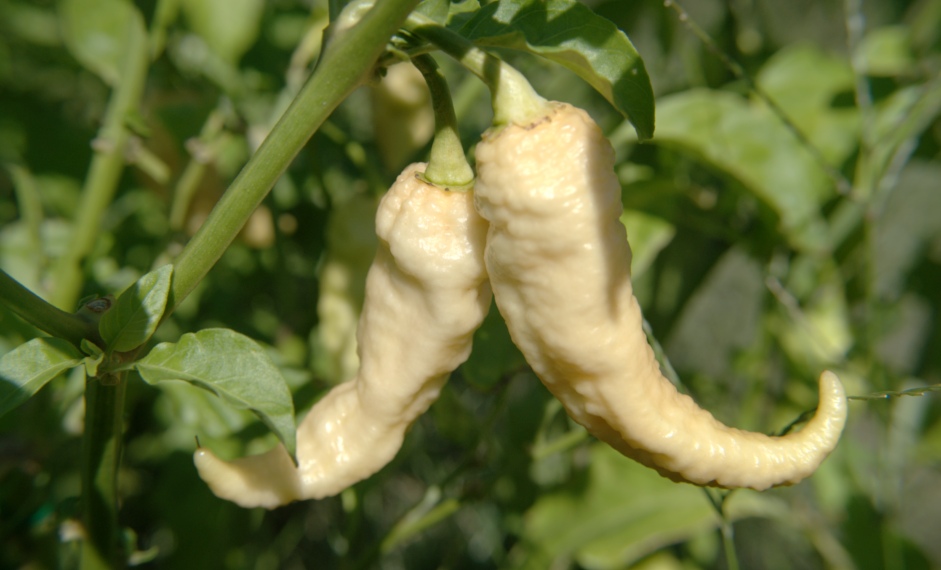
A superhot chili pepper once certified as the world's hottest.
Last updated

Vikramjit Kakati · CC BY-SA 4.0
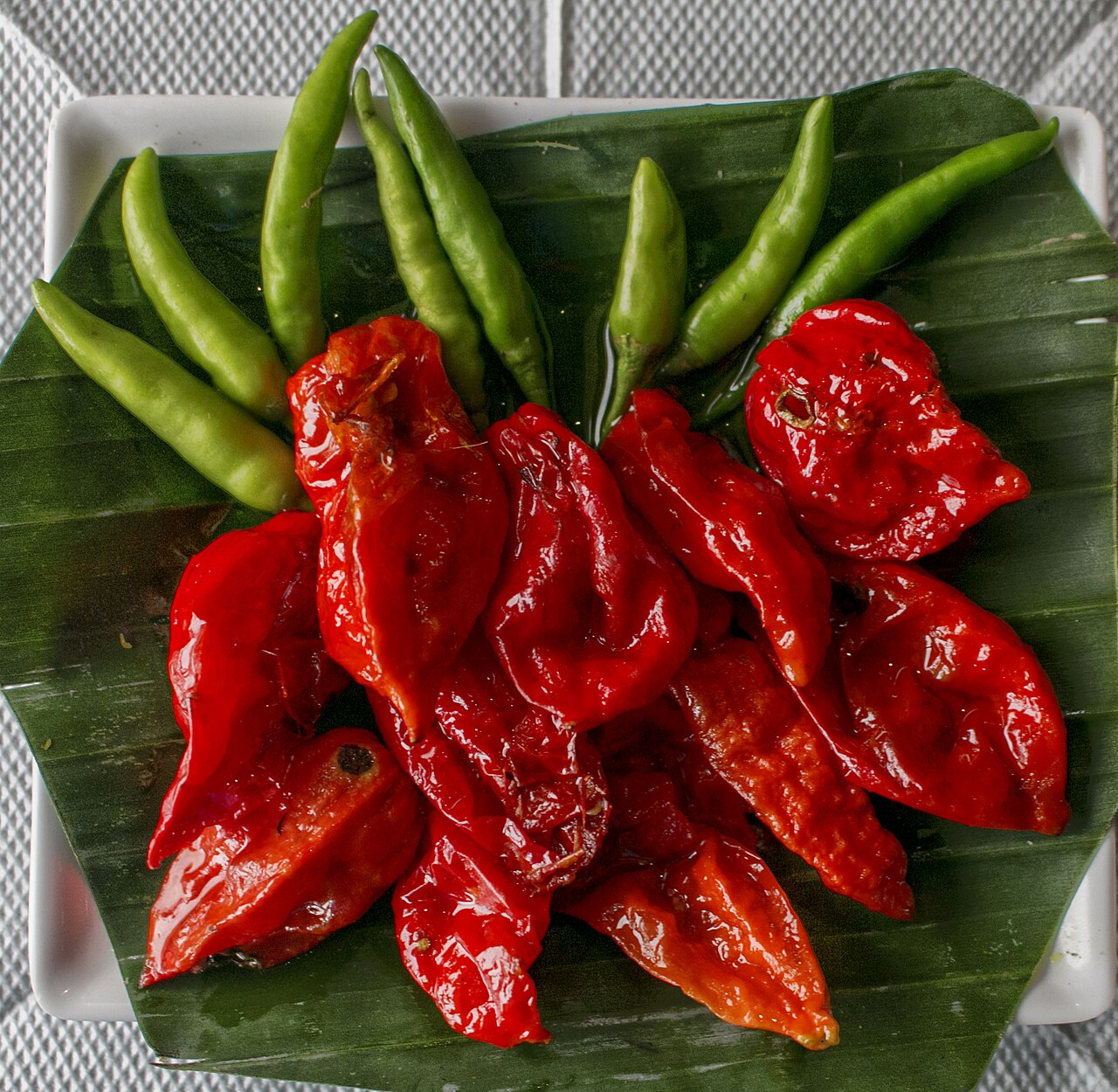
Northeast India is the cultivation region for the superhot chili known as both ghost pepper and bhut jolokia.[1] Guinness World Records recognized this chili as the planet's most pungent in 2007, measuring its heat at 170 times that of Tabasco sauce.[1]
Key facts and history
In Assam, the pepper is also called bih zôlôkia meaning "poison chili"[2] In Nagaland, it is called Raja mirja meaning "king chili"[2] Ghost peppers produce capsaicin in vesicles not only in the placenta but also throughout the fruit.[3] In Assamese, bhut jolokia translates to "Bhutanese pepper," but the word bhut was erroneously linked to a similar-sounding term meaning "ghost."[4]
A Scoville rating of 855,000 SHUs was published in 2000 by India's Defence Research Laboratory, and a subsequent HPLC analysis in 2004 gave a value of 1,041,427 SHUs.[5] To deter wild elephants in northeastern India, people apply the peppers to fences or mix them into smoke bombs.[6]
What the cited sources add
A 2019 article in Taste notes that the ghost pepper is particularly popular with culinary daredevils who make YouTube videos of themselves eating the chiles and suffering consequences like vomiting and headaches.[7] The same article states that in one case, eating a ghost pepper caused a ruptured esophagus.[7] A 2021 article reports that ghost peppers are 400 times hotter than Tabasco sauce and can induce breathing difficulties in diners.[8] That article also notes that ambulances wait nearby at chili-eating competitions in case competitors need their stomachs washed.[8]
The 2021 article confirms that bhut jolokia means "Bhutanese pepper" and is also known as Naga chilli or Raja Mircha.[8]
References
- Wikipedia, "Ghost pepper" (CC BY-SA 4.0), which cites: Gamillo, "Ghost peppers are saving U.S. grasslands—by scaring off hungry mice", Science, 3 August 2018; Deepak, "The Incredible Story of Bhut Jolokia: From Rural India to Dumb YouTube Stunts", Taste, 1 January 2019; "Definition of BHUT JOLOKIA", www.merriam-webster.com; Shaline L. Lopez, "NMSU is home to the world's hottest chile pepper", 2007; "'Ghost chile' burns away stomach ills - Diet & Nutrition - NBC News", 2007 (we also read that source) en.wikipedia.org
- Wikipedia, "Ghost pepper" (CC BY-SA 4.0), which cites: "The origin of the Chili lies in the north-eastern of India, in the region of Assam." https://chili-plant.com/chilli-varieties/bhut-jolokia-chili/; Raktim Ranjan Bhagowati, "Genetic Variability and Traditional Practices in Naga King Chili Landraces of Nagaland", Asian Agri-History, 2009, p. 171–180; Raktim Ranjan Bhagowati, "Genetic Variability and Traditional Practices in Naga King Chili Landraces of Nagaland", Asian Agri-History, 2009, p. 171–180; Raktim Ranjan Bhagowati, "Genetic Variability and Traditional Practices in Naga King Chili en.wikipedia.org
- Wikipedia, "Ghost pepper" (CC BY-SA 4.0), which cites: "NMSU: The Chile Pepper Institute - Home", The Chile Pepper Institute; Shaline L. Lopez, "NMSU is home to the world's hottest chile pepper", 2007; Bosland, "Novel Formation of Ectopic (Nonplacental) Capsaicinoid Secreting Vesicles on Fruit Walls Explains the Morphological Mechanism for Super-hot Chile Peppers", Journal of the American Society for Horticultural Scie (we also read that source) en.wikipedia.org
- Wikipedia, "Ghost pepper" (CC BY-SA 4.0), which cites: "Definition of BHUT JOLOKIA", www.merriam-webster.com; "India's 'ghost pepper' is one of the hottest chillies. Can Britain handle it?", 16 September 2021; "MasterChef Australia features eight of the hottest chillies on the planet; have you tried any?", The Indian Express, 2021-06-02; "Can Ghost Peppers Kill You?", HowStuffWorks, 2015-08-11 (we also read that source) en.wikipedia.org
- Wikipedia, "Ghost pepper" (CC BY-SA 4.0), which cites: Mathur R, "The hottest chili variety in India", Current Science, 2000, p. 287–8; "Bih jolokia", 2006 (original not read by us) en.wikipedia.org
- Wikipedia, "Ghost pepper" (CC BY-SA 4.0), which cites: Hussain, "World's Hottest Chile Used as Elephant Repellent", National Geographic, 20 November 2007; "Ghost Chile Scares Off Elephants", National Geographic News website, 20 November 2007 (original not read by us) en.wikipedia.org
- Deepak, "The Incredible Story of Bhut Jolokia: From Rural India to Dumb YouTube Stunts", Taste, 1 January 2019. facts only, no text reused. tastecooking.com
- "India's 'ghost pepper' is one of the hottest chillies. Can Britain handle it?", 16 September 2021. facts only, no text reused. scmp.com
Each numbered sentence above was checked against the source it cites before publication. Sentences citing Wikipedia adapt text from the English Wikipedia article Ghost pepper (contributors), used under CC BY-SA 4.0; this entry is available under the same licence. Other sources were used for facts only; no text or images are copied from them.
More in Peppers & Citrus Fruits
Sources
Compiled from Wikipedia and the sources listed below. Text from Wikipedia is available under CC BY-SA 4.0; this entry is adapted from it.
- Wikipedia: Ghost pepper (CC BY-SA 4.0).
- Word definitions: the , each quoted from its Wikipedia article.
Spotted an error? Know more?
Reader corrections go straight into our review queue. Suggest an edit · How this site is sourced