Bergamot orange
A fragrant citrus hybrid used in tea and perfumery.
Last updated

Leslie Seaton from Seattle, WA, USA · CC BY 2.0
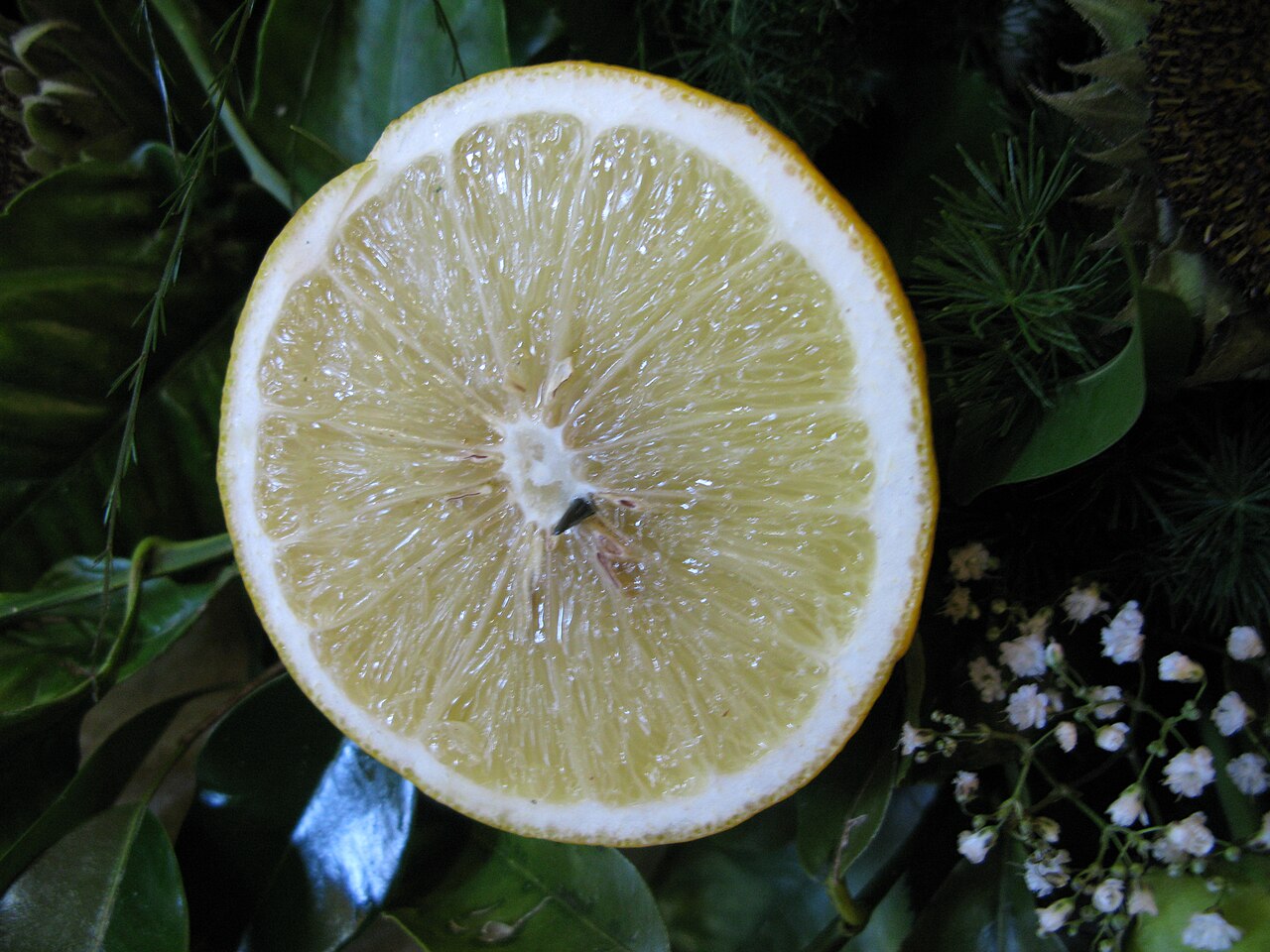
The bergamot orange is a citrus fruit that genetic research suggests is a hybrid of lemon and bitter orange.[1] Food, tea, snus, perfumes, and cosmetics all incorporate bergamot extracts as an aromatic component.[1] Applying bergamot to the skin can heighten photosensitivity, leading to more severe harm from sunlight.[1]
Scientific classification
- CladeTracheophytes
- CladeAngiosperms
- CladeEudicots
- CladeRosids
- OrderSapindales
- FamilyRutaceae
- GenusCitrus
- SpeciesCitrus bergamia
Named by Risso
Close relatives
Other species of Citrus with a Codexery entry.
- Bitter orange Citrus × aurantium
- Citron Citrus medica
- Kaffir lime Citrus hystrix
- Grapefruit Citrus × paradisi
- Lemon Citrus × limon
- Key lime Citrus × aurantiifolia
- Calamansi Citrus × microcarpa
- Citrus australasica Citrus australasica
Sources: Wikipedia taxobox: Bergamot orange (CC BY-SA 4.0)
Quick Facts
- Genus
- Citrus
- Species
- bergamia
Facts from the source article.
Key facts and history
The bergamot is grown mostly in Mediterranean areas, with large-scale production in the Ionian Sea coastal areas of Reggio di Calabria, Italy.[2] Three traditional cultivars are Feminello, Fantastico, and Castagnaro.[2] The name "bergamot" traces back through French bergamote and Italian bergamotta, ultimately taking its name from the city of Bergamo.[3][4] Winter is the blooming season for the small tree Citrus bergamia.[5]
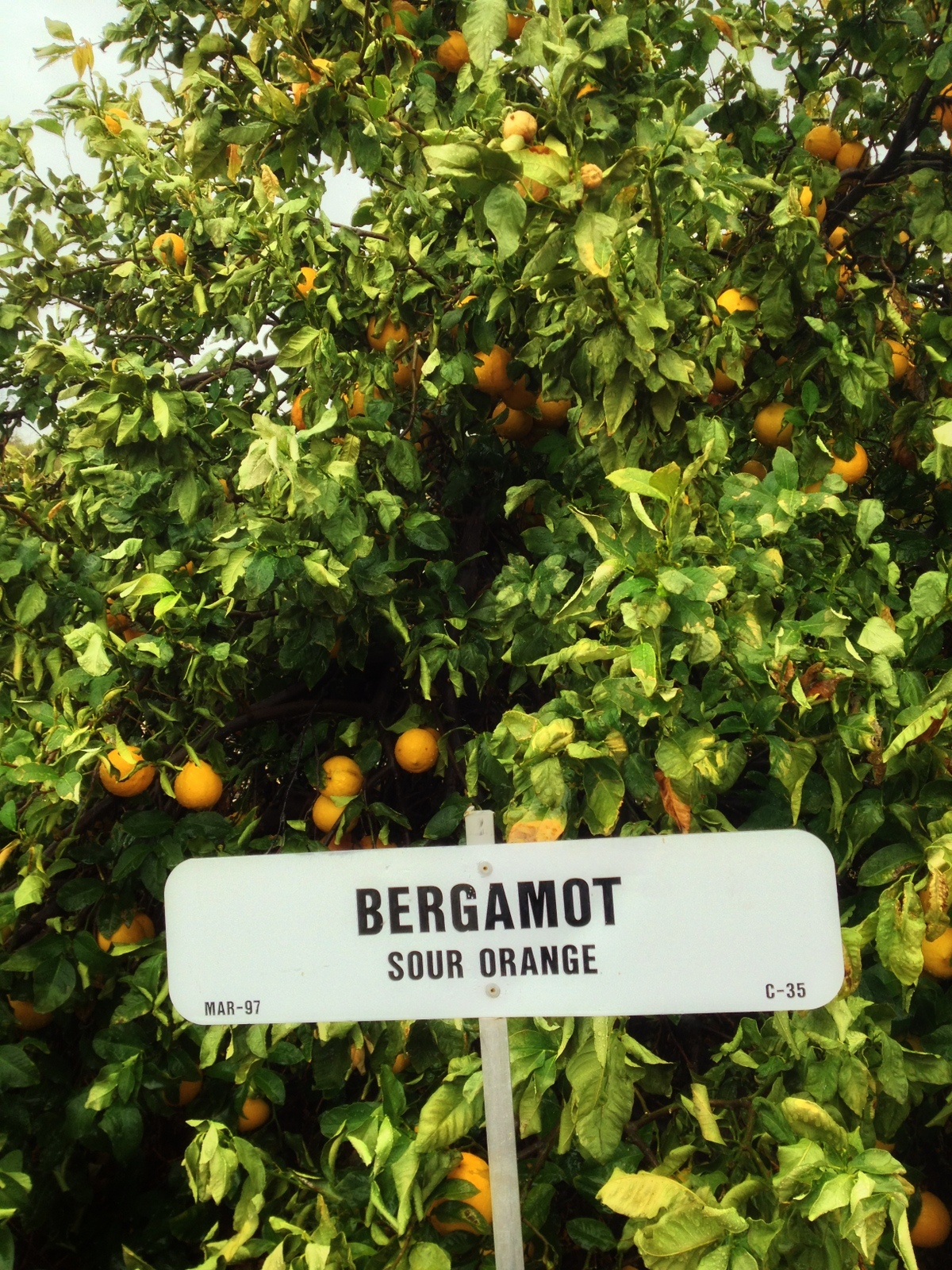
Southern France, the Ivory Coast, and Antalya in Turkey are additional locations where bergamot is cultivated.[6] The body responsible for quality control of the DOP essential oil Bergamotto di Reggio Calabria is the Stazione Sperimentale per le Industrie delle Essenze e dei Derivati dagli Agrumi, situated in Reggio di Calabria.[7]
What the cited sources add
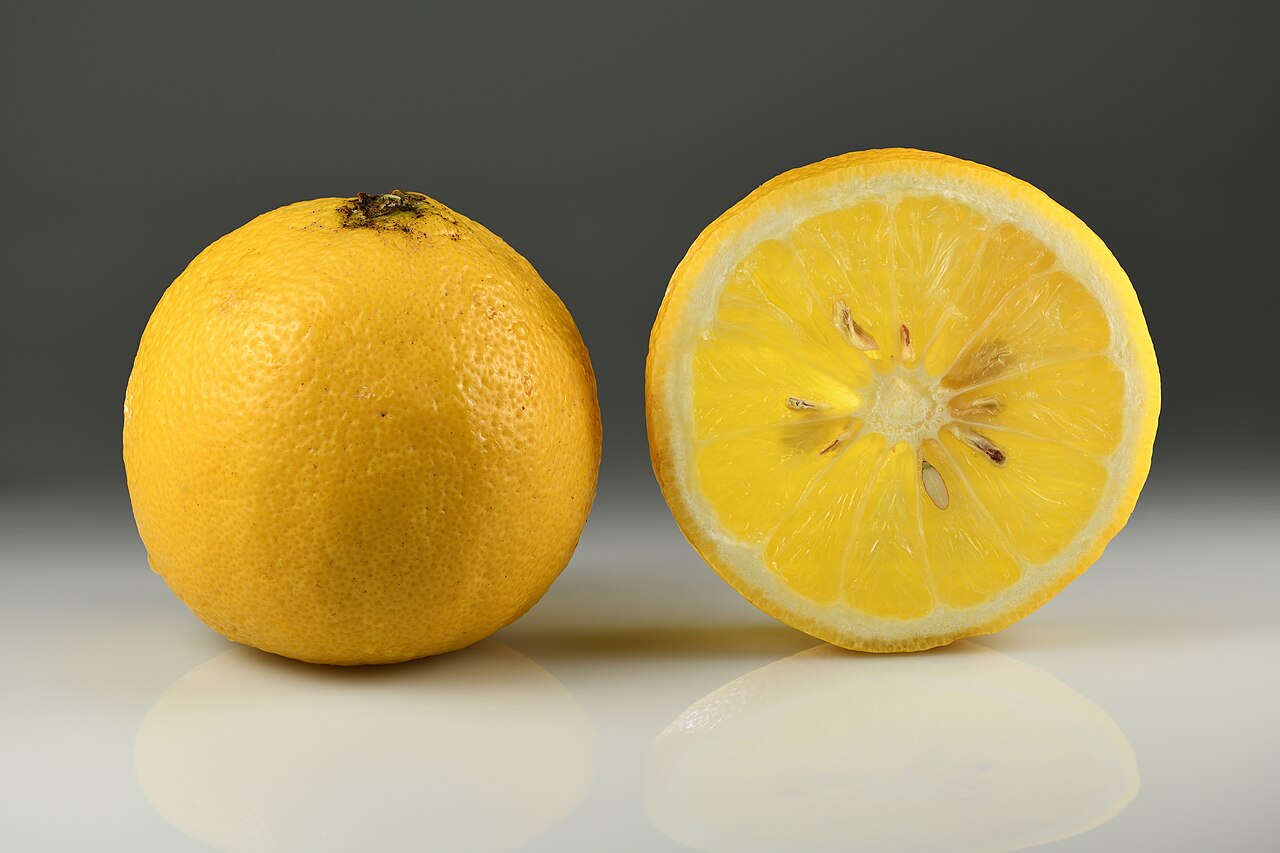
The bergamot orange is closely related to lemons and was originally cultivated as a hybrid of citron and Seville orange.[8] Bergamots are grown almost exclusively on a narrow strip of land about 100 kilometres along the coast of Calabria.[8] The evergreen trees reach heights of up to 2.5 metres.[8] The fruit is the size of an orange, with color ranging from yellow to green, and often has a slightly pear shape with rough, shiny, or ribbed skin.[9]
The herb Monarda didyma was given the common name "bergamot" because its foliage has a scent reminiscent of the essential oil from Citrus bergamia fruit.[9] When encountering "bergamot" in products like Earl Grey tea, it refers to the essential oil from the rind of Citrus bergamia.[9]
References
- Wikipedia, "Bergamot orange" (CC BY-SA 4.0), which cites: Gulsen, "Lemons: Diversity and Relationships with Selected Citrus Genotypes as Measured with Nuclear Genome Markers", Journal of the American Society for Horticultural Science, 2001, p. 309–317; American Society for Horticultural Science, "Genetic origin of cultivated citrus determined: Researchers find evidence of origins of orange, lime, lemon, grapefruit, other citrus species", ScienceDaily, 26 January 2011; Curk, "Phylogenetic origin of limes and lemons revealed by cytoplasmic and nuclear markers", Annals of Botany, 2016, p. 565–583 en.wikipedia.org
- Wikipedia, "Bergamot orange" (CC BY-SA 4.0), which cites: Attlee, "The land where lemons grow: the story of Italy and its citrus fruit", Penguin Books, 2015, p. 159; "Socio-Economic Impact Reports of the Naturals, Bergamot", The International Federation of Essential Oils and Aroma Trades, 2018 (original not read by us) en.wikipedia.org
- Wikipedia, "Bergamot orange" (CC BY-SA 4.0), which cites: "Bergamot"; (we also read that source) en.wikipedia.org
- "Bergamot". facts only, no text reused. etymonline.com
- Wikipedia, "Bergamot orange" (CC BY-SA 4.0), which cites: Anika, "Bergamot orange: planting, care & use", Plantura, 25 October 2021 (we also read that source) en.wikipedia.org
- Wikipedia, "Bergamot orange" (CC BY-SA 4.0), which cites: "Bergamot Orange – Citrus aurantium ssp bergamia", Trade Winds Fruit; Ashari, "Plant Resources of South-East Asia No 19: Essential-oil plants", PROSEA Foundation; Aktas, "Reçellerin gözdesi, Bergamut", Zaman, 26 October 2004; Davidson, "The Oxford Companion to Food", OUP Oxford, 2006, p. 75; Clapton, "Bergamot: Ingredient Guide, Info, Smell & More!", Fragrance Affection, 16 April 2022; Lauro, "The protective role of bergamot polyphenolic fraction on several animal models of pain", PharmaNutrition, October 2016, p. S35–S40; Attlee, "The en.wikipedia.org
- Wikipedia, "Bergamot orange" (CC BY-SA 4.0), which cites: "Decreto 15 novembre 2005 – Designazione della Stazione sperimentale per le industrie delle essenze e dei derivati degli agrumi quale autorità pubblica, incaricata di effettuare i controlli sulla denominazione di origine (original not read by us) en.wikipedia.org
- Anika, "Bergamot orange: planting, care & use", Plantura, 25 October 2021. facts only, no text reused. plantura.garden
- "Is Bergamot a Flower? The Tale of Two Different Plants", Biology Insights, 15 August 2025. facts only, no text reused. biologyinsights.com
Each numbered sentence above was checked against the source it cites before publication. Sentences citing Wikipedia adapt text from the English Wikipedia article Bergamot orange (contributors), used under CC BY-SA 4.0; this entry is available under the same licence. Other sources were used for facts only; no text or images are copied from them.
More in Peppers & Citrus Fruits
Sources
Compiled from Wikipedia and the sources listed below. Text from Wikipedia is available under CC BY-SA 4.0; this entry is adapted from it.
- Wikipedia: Bergamot orange (CC BY-SA 4.0).
Spotted an error? Know more?
Reader corrections go straight into our review queue. Suggest an edit · How this site is sourced