Kenilworth Park and Aquatic Gardens
Tidal marsh and waterlily gardens in Washington, D.C.
Last updated
Where it is
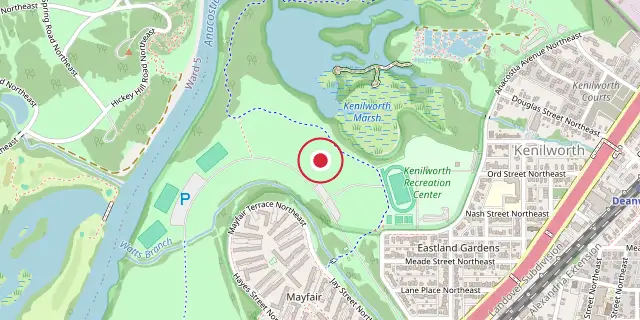
Coordinates: 38°54′32″N 76°56′56″W (38.9090, -76.9490) · Open in OpenStreetMap
Coordinates and connected clubs: the infobox of Wikipedia: Kenilworth Park and Aquatic Gardens (CC BY-SA 4.0). Map: drawn by Codexery from OpenStreetMap tiles.
Tucked into D.C.'s northeast corner near the Maryland line and the Anacostia River, Kenilworth Park & Aquatic Gardens is a National Park Service site. It protects rare waterlilies and lotuses in man-made ponds, plus the city's biggest surviving tidal marsh and a nearby recreation area.
History
Civil War veteran Walter B. Shaw purchased the land in the 1880s. Homesick, he had wild waterlilies from Maine planted there. When they thrived, he added more plants and opened a commercial attraction called W.B. Shaw Lily Ponds in 1912. By then, the Anacostia River had become filled with excess silt, and the U.S. Army Corps of Engineers was called to dredge it, threatening the gardens.
Helen fought to save them, and in 1938 Congress authorized the purchase of the gardens for $15,000 to create the park. In 1942, land south of the gardens was selected as a municipal dump where trash was burned in open piles; the Kenilworth Dump closed in the 1970s. Considerable environmental remediation is still needed there.
Biology
The park hosts a variety of biota once native to the region before urban development. Amphibians, birds, fish, and insects gather in the marshland, along with wildflowers and other plants. A species count recorded 650 insect species, 150 land plant species, 76 bird species, 18 fish species, 9 mammal species, and 8 reptile species, plus algae, archaeans, bacteria, lichens, mushrooms, and worms.
The Audubon Society's annual December bird count in 2007 found 59 bird species; overall, 257 bird species have been sighted across all seasons, including herons, shorebirds, and sparrows. Mammals include beavers, muskrats, minks, deer, foxes, and coyotes. Wetland plants such as wild rice and cattail thrive, though invasive species like snakeheads have been found.
The park today
Kenilworth Park and Aquatic Gardens spans roughly 700 acres and is managed by National Capital Parks-East under the National Park Service. The site includes the water gardens, Kenilworth Marsh, ballfields, and recreational areas. The gardens hold a spot on the National Register of Historic Places and are a Category II Landmark as designated by the Joint Committee on Landmarks of the National Capital. In 1992 and 1993, restoration work on parts of Kenilworth Marsh turned 32 acres of mud flats into tidal marsh.
More in National Park Service Areas in Washington, D.C.
Sources
Compiled from Wikipedia and the sources listed below. Text from Wikipedia is available under CC BY-SA 4.0; this entry is adapted from it.
- Wikipedia: Kenilworth Park and Aquatic Gardens (CC BY-SA 4.0).
Spotted an error? Know more?
Reader corrections go straight into our review queue. Suggest an edit · How this site is sourced